Guitar Salon International
+1 (310) 586.1100 | +1 (877) 771.4321
박물관
클래식 기타
클래식 기타
플라멩코 기타
플라멩코 기타
클리블랜드 컬렉션
클리블랜드 컬렉션
루티에
루티에
장바구니

장바구니가 비어있습니다.

소계: $0.00
총합계: $0.00
장바구니 편집
점검
Museum

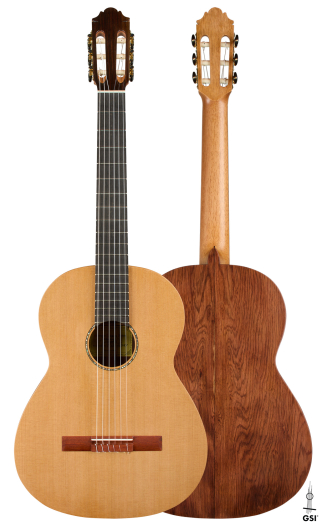
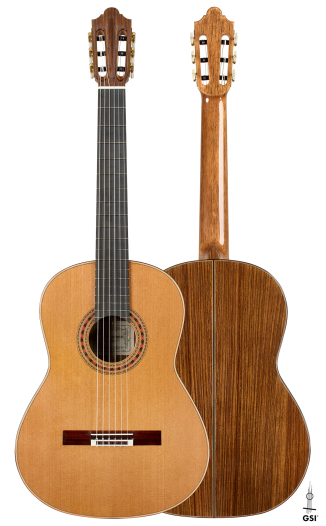
2019 Valerio Licari "Classical Zen" CD/IN

년도 2019
탑 Cedar
뒷면 및 측면 Indian Rosewood
스케일 길이 650 mm
너트 폭 52 mm
마감 Lacquer
국가 Spain
Luthier Valerio Licari

This guitar is no longer available in our inventory. If it interests you, click the ”notify me when available” button to be notified in the event that we re-acquire this guitar for re-sale.

Inquire
See more from Valerio Licari

설명

Inspired by Stradivarius violin making and the Italian style of artisanship, Valerio Licari employs both the use of mathematical, geometric proportions and a simple and minimal design aesthetic for this model. One of the more notable features is the double soundhole system fitted in the upper reaches of the upper bout. The theory behind this design is that the positioning of the soundhole(s) as far as away from the bridge area leaves a larger vibrating surface of soundboard area – indeed in the 1920s, Francisco Simplicio made use of this design, as have several contemporary makers for precisely the same reasons. See this article for a photo of Simplicio’s 1929 example, as well as what looks like a black and white X-ray rendering (called an interferometric holographic analysis), which demonstrates how vibration does not reach the upper bout area of the soundboard. This guitar sounds excellent either plugged in or even played acoustically, in either case they have a balanced sound and rich sustain. Licari builds these with a Piezo undersaddle pickup and contact mic, and the pickup system plugs into a Phantasma EQ controller by Acus Sound Engineering. Overall, this is perfect for the gigging musician needing amplification who seeks a natural nylon sound with no feedback.

배경

Valerio Licari was born in Rome, Italy, in 1981. As a teenager, his musical studies began with the classical guitar but he later learned to play other styles including acoustic fingerstyle, blues and ragtime, and eventually even started taking violin lessons. His academic work was entirely focused on music, including work in ethnomusicology, musical art and performance. He even enrolled in the International School of Violin Making "Antonio Stradivari" in Cremona and did an internship in bow making, ultimately receiving his diploma from this respected institution. In 2012, after working for six months as guitar wood production manager at Tonewood International in Cremona, he moved to Malaga, Spain, for a six-month apprenticeship with classical guitar maker Daniele Chiesa. It was at this time that he decided to settle in Spain - in order to more deeply study its traditional methods in classical and flamenco guitar making. He set up his workshop in Granada where he has remained until late 2019, when he decided to move back to his come country of Italy.


Guitars by Valerio Licari