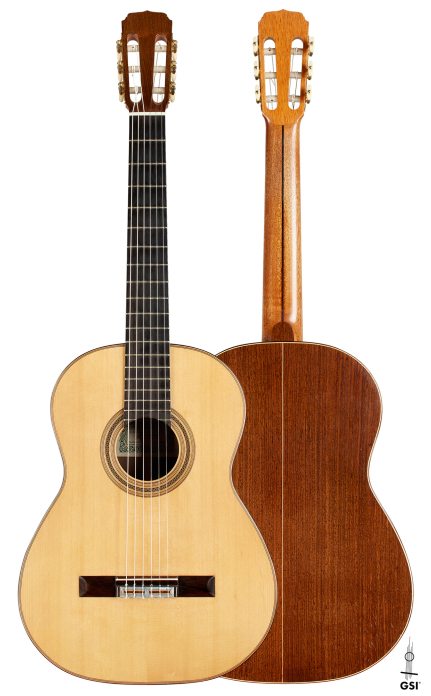
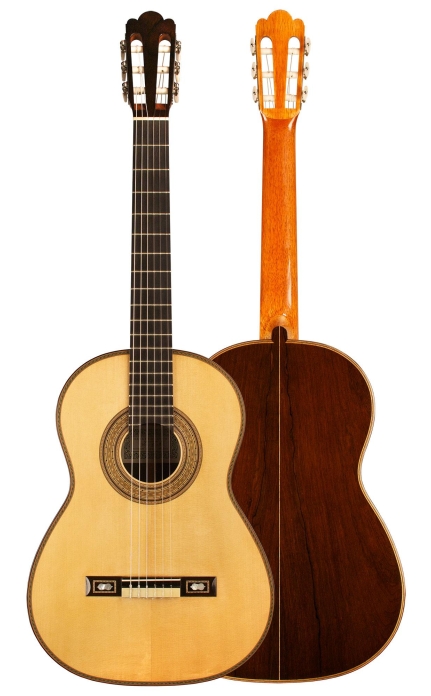
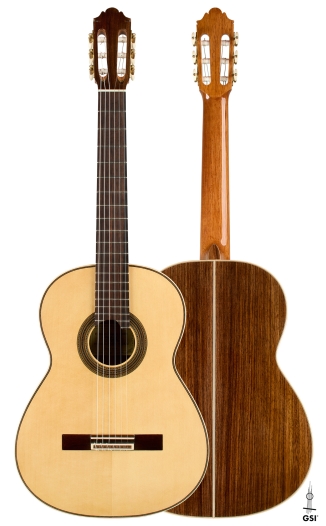
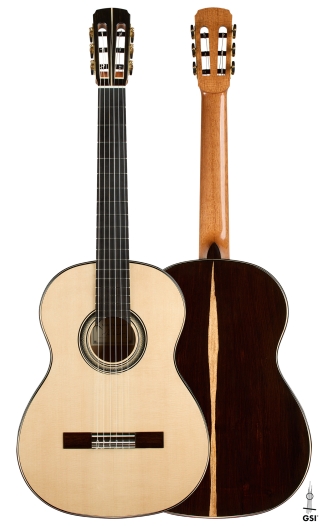
2017 Luigi Locatto SP/CSAR
| 年份 | 2017 |
| 面板 | Spruce |
| 背面和侧面 | CSA Rosewood |
| 弦长 | 650 mm |
| 螺母宽度 | 52 mm |
| 饰面 | French Polish |
| 国家 | Italy |
| 制琴师 | Luigi Locatto |
This guitar is no longer available in our inventory. If it interests you, click the ”notify me when available” button to be notified in the event that we re-acquire this guitar for re-sale.


描述
 This absolutely breathtaking and meticulously built guitar is Locatto's own design. Structurally its plantilla is based on Simplicio however the decorative elements are inspired by an assortment of other great Spanish guitar makers of the past - in particular of some of Torres' more elaborate first epoch guitars, with busy decorative elements and tasteful use of mother-of-pearl in the rosette, head veneer, tie-block and purfling. It has a very low body resonance (close to F natural) that produces a sound that is powerful, dark and beautiful. It is an expressive instrument, rich with color and sensitive to change of timbre, like the old Spanish guitars he so much loves. Materials used are drop-dead gorgeous, particularly the stunning set of CSA rosewood used for the back and sides. His instruments are played by a large number of concert artists, and have been used on several recordings, most notably the Naxos release of Castelnuovo-Tedesco's works by Lorenzo Micheli (winner of GFA 1999), and of Shin-ichi Fukuda's 2007 recording of Barrios and Villa-Lobos for Meister Music. We're very happy to be working with this fine maker and representing his instruments in the US.Orfeo Magazine article on Tacchi, Locatto and Frignani