




Pietro Ruscigno Records at GSI
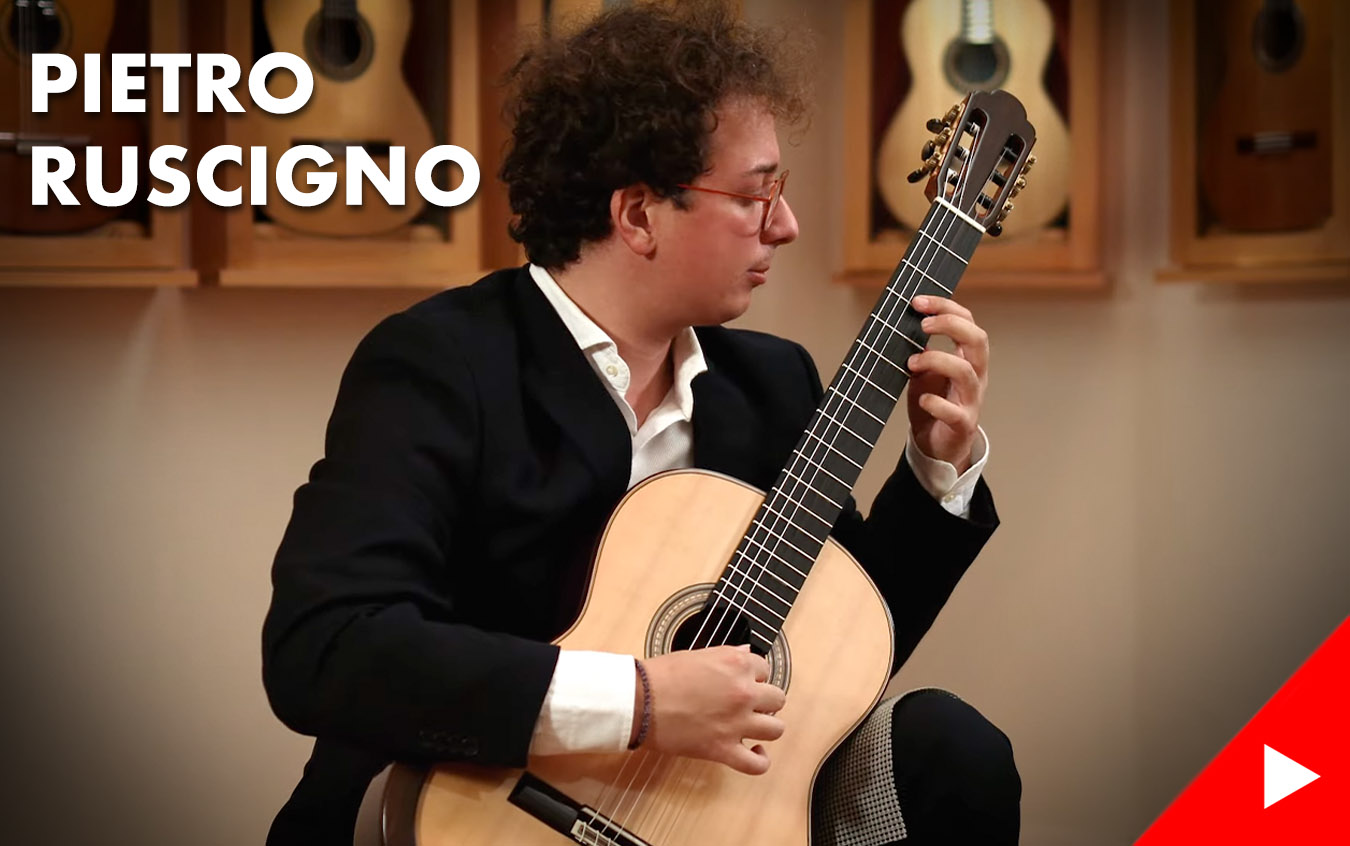 Pietro Ruscigno recently recorded five videos at GSI. An Italian classical guitarist, Pietro Ruscigno was born in 2002 and began studying classical guitar at the age of 11. His interest in other disciplines such as philosophy literature, opera and cinema constitutes a significant part of his musical and artistic choices. Furthermore, his interest in traditional music from Mediterranean Europe allows him to outline a repertoire that ranges from Bach to Rodrigo, passing through Giuliani, Tárrega, Llobet and Barrios. He has won several first prizes in international competitions and has been a student in several masterclasses. He currently lives in LA where he just completed a Master’s Degree in Classical Guitar Performance at USC Thornton under Scott Tennant. He will be returning to USC as a Doctoral in Musical Arts candidate.
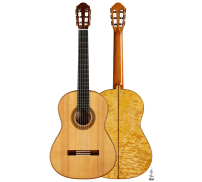
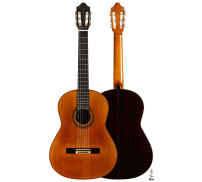
Composed during the Romantic era, Nocturne "Rêverie," Op. 19 epitomizes the lyrical and introspective qualities of Regondi’s style. The title "Rêverie," meaning "daydream" in French, offers a glimpse into the poetic and evocative nature of the work. The Nocturne opens with a delicate, song-like melody that flows effortlessly across the strings, evoking the intimacy of a quiet evening. Regondi's use of arpeggios and harmonic colors demonstrates his deep understanding of the guitar’s idiomatic potential. This piece features some of the best tremolo ever written for guitar. The middle section transitions into a more agitated, impassioned theme, creating a striking contrast and adding depth to the overall structure. This dramatic tension eventually resolves back into the tranquil mood of the opening, concluding with a sense of wistful longing. Pietro recorded this piece on a 2023 Sebastian Stenzel classical guitar made with spruce top and maple back and sides.
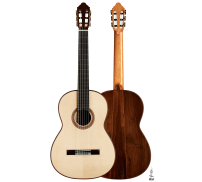
Johann Sebastian Bach’s "Partita No. 2 in D Minor," BWV 1004, for solo violin is one of the crown jewels of Baroque music. Composed around 1720, this partita is part of a collection of six works for unaccompanied violin that have become central to the instrument’s repertoire. The Sarabande is the partita’s slow and introspective third movement. A sarabande is a stately dance of Spanish origin, typically written in triple meter and emphasizing the second beat, giving it a languid and meditative quality. In this piece, Bach transcends the dance form, creating a profound work of art that invites the listener into a deeply spiritual and contemplative space. The Sarabande is notable for its simplicity and purity. The movement unfolds with a single, unaccompanied melodic line, yet within this apparent simplicity lies a wealth of harmonic and emotional depth. The performer must evoke implied harmonies and sustain the delicate balance between structure and expression. The result is an atmosphere of solemnity and quiet introspection, where every note carries weight and significance. Pietro Ruscigno performed Marco Caiazza's arrangement on a 2021 Valerio Licari "Albayzín" classical guitar made with spruce top and Indian rosewood back and sides.
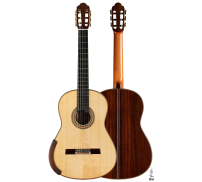
The Beatles’ "Yesterday," composed by Paul McCartney (credited to Lennon-McCartney), is one of the most beloved songs in modern music history. First released on the album Help! in 1965, it has become an iconic ballad known for its poignant melody and introspective lyrics. Its themes of nostalgia and loss resonate universally, making it one of the most covered songs of all time. Japanese composer Toru Takemitsu (1930–1996), renowned for his sensitivity to timbre and his unique blending of Western and Eastern musical aesthetics, created a deeply evocative arrangement of "Yesterday" for solo guitar. Takemitsu’s approach to arrangement transcends mere transcription; it transforms the original material into a meditative, almost cinematic experience. His reimagining pays homage to the simplicity and beauty of the original song while enriching it with his own harmonic language and textural nuance. Pietro recorded this piece on a 2024 Zoran Kuvac "Double Top" made with spruce top and CSA rosewood back and sides.
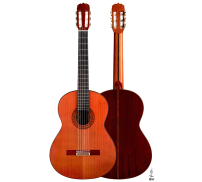
Miguel Llobet, a Catalan guitarist and composer, is renowned for his masterful arrangements of Catalan folk songs, which he transformed into jewels of the classical guitar repertoire. Among these, "La Presó de Lleida" (The Prison of Lleida) holds a special place. This poignant traditional song, originating from the Catalonia region of Spain, tells the story of longing and despair from the perspective of a prisoner in Lleida, a historic city in Catalonia. "La Presó de Lleida" is elevated from a simple folk melody to a sophisticated and emotionally rich guitar work. The arrangement preserves the haunting beauty and melancholic character of the original song while showcasing the expressive possibilities of the guitar. Llobet employs delicate arpeggios, intricate harmonies, and a nuanced use of dynamics to evoke the song’s narrative and emotional depth. Pietro recorded this piece on a 1973 Jose Ramirez "1a" classical guitar made with cedar top and CSA rosewood back and sides.
"Fantasia on Themes from La Traviata", demonstrates his ability to adapt grand operatic themes to the intimacy of the guitar. This fantasia draws from Giuseppe Verdi’s beloved opera La Traviata (1853), a masterpiece of the Italian Romantic repertoire. Verdi’s opera tells the tragic story of Violetta, a courtesan who sacrifices her love for Alfredo to preserve his honor. The opera’s unforgettable melodies have inspired countless adaptations, and Tárrega’s fantasia stands out for its sensitivity and inventiveness. Pietro recorded this piece on a 2024 Giovanni Tacchi classical guitar made with cedar top and Indian rosewood back and sides.
2 comentarios