Choosing a classical guitar might seem daunting at first, however, at GSI it’s our pleasure and duty to ensure that the selection process is a very satisfying experience thanks to the advice of our guitar experts. Our classical guitar store features guitars made by carefully chosen luthiers from around the world and our staff knows each instrument very well. Our experts are able to help you narrow your top picks to just a few guitars which you might want to try by yourself with no commitment to purchase.
What defines a classical guitar?
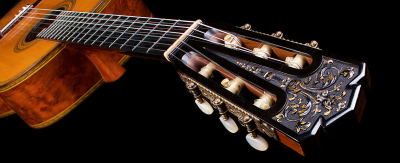
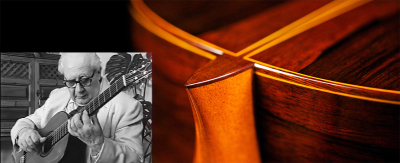
Classical guitar, in the form as we know it today, was largely developed by Spanish guitar maker, Antonio de Torres Jurado (1817-1892). Torres introduced many new innovations to his guitars. Most notably, he increased the size of the body of the guitar, and introduced a fan-strut bracing system, and in his later guitars he started using machine heads. His guitars also had separated saddles which allowed minute adjustments of string heights.
What should I look for when buying a classical guitar?
We should look for:
Establish a budget
Identify what type of sound you like the most. You can also ask our experts for advice.
Decide whether you want a used or new instrument.
Check for ‘wolf’ notes and buzzes. Playability is also very important.
We recommend testing the sound from the perspective of a player and a listener.
What are the differences between classical and flamenco guitars?
The differences between classical and flamenco guitars lie in their materials, construction and sound.
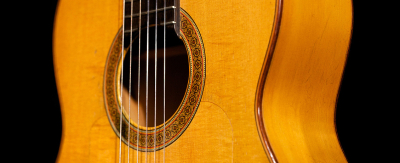
Materials: Classical guitars are generally made with spruce or cedar tops, and on rare occasions, other woods like redwood or pine. Back and sides are mostly made of various rosewoods, maple and mahogany to enhance sustain. In recent years many younger luthiers searching for more sustainable and easy-to-source woods have begun to use some really fantastic materials including granadillo, exotic ebony, wenge, koa, walnut and a variety of other hardwoods. Flamenco guitars are generally made with spruce tops and cypress for the backs and sides to enhance volume and emphasize the attack of the note. However over the past many decades, rosewood flamencos known as “Flamenco negras” have risen in popularity, largely due to Paco de Lucia who first used a rosewood guitar beginning in 1969.
Construction: The body of a classical guitar is generally deeper and the woods are slightly thicker. Flamenco guitars have a flat or negative (before string tension) neck relief, making the action very fast at the cost of some buzzing. The strings are also closer to the body on flamenco guitars to facilitate tapping. Flamenco guitars often bear a "golpeador", which is a sheet of plastic mounted to the face of the guitar to protect its finish from percussive techniques, like tapping the soundboard with the players fingers.
Sound: The classical guitar is designed to give the soloist the tools to perform poly-timbral music: "An orchestra in a box". The attack is soft with a longer and gradual decay. The flamenco guitar is designed to cut through the sound of dancers stomping their feet. The sound is a bit more percussive, a loud and immediate sonic burst followed by a swift decay is characteristic of traditional flamencos.
It is also important to mention that many of these "differences" are finessed to different degrees by different luthiers, depending on their personal taste. Miguel Rodriguez classical guitars for example have always famously had a fast, flamenco-like attack. There are also numerous hybrid-type guitars where the luthier intends for the same instrument to be playable convincingly by both flamenco and classical performers.