


Marko Topchii Performs Dowland, Bach, Poulenc and Brouwer at GSI
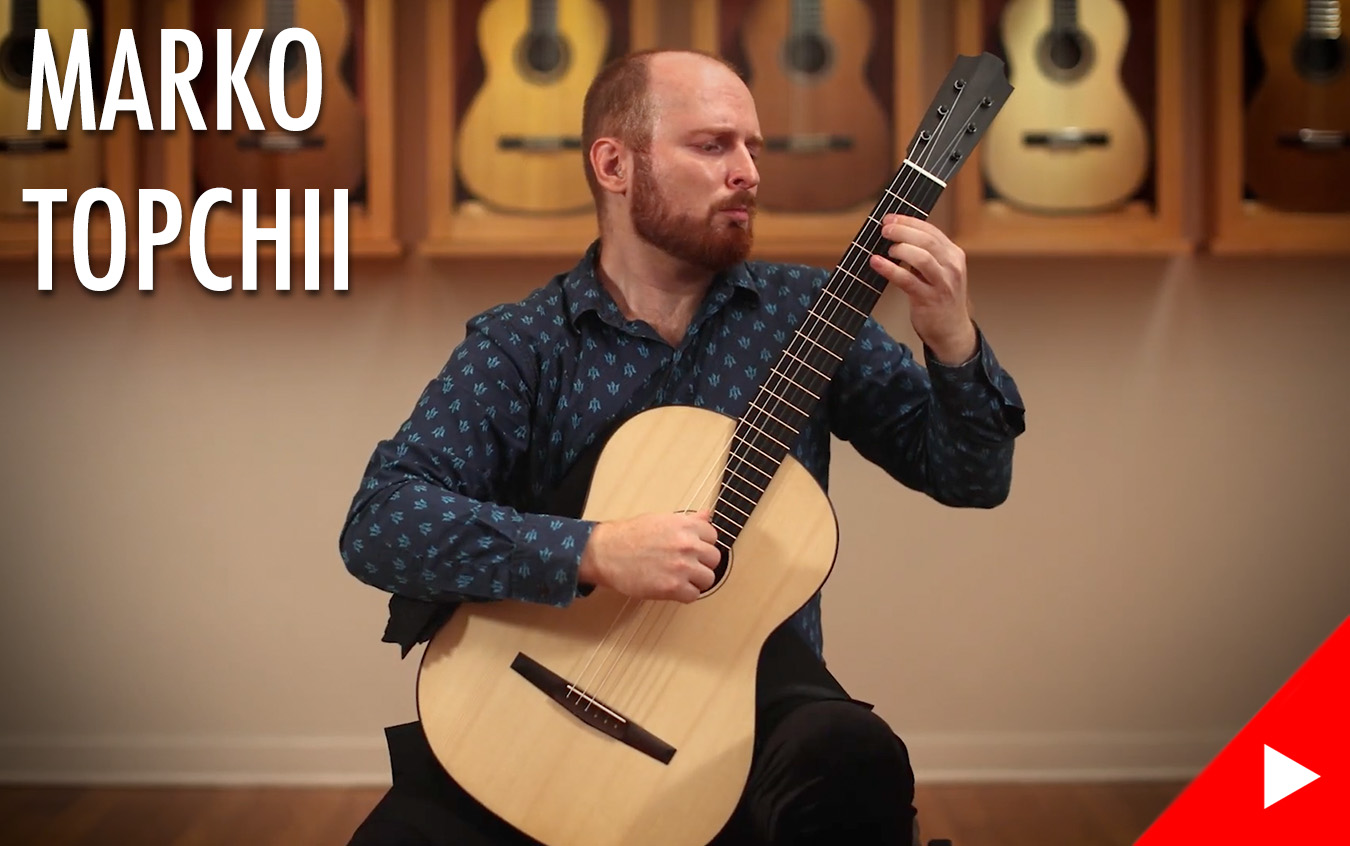 Ukrainian guitarist Marko Topchii visited our GSI showroom for a recording session that spanned four centuries of guitar music, from John Dowland and Johann Sebastian Bach to Francis Poulenc and Leo Brouwer. Performed on four remarkable instruments, the program showcased the musical range and technical command that have made Marko one of the most decorated classical guitarists of his generation, with more than 100 international competition awards, including 55 first prizes. Among them are the 2021 Francisco Tárrega Competition and the 2023 Guitar Foundation of America International Concert Artist Competition. With the final video from the session now released, we are glad to present the complete program in one place.
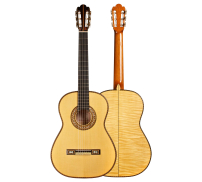
He opened with John Dowland's Fantasia P. 71, performed on a 2019 Fritz Ober guitar. One of the great lute fantasias of the English Renaissance, the piece is built on a chromatic theme that Dowland develops through dense, expressive counterpoint. Marko shaped its long arc with patience, letting the harmonic tension build naturally. The guitar itself is one of the last instruments made by the German luthier Fritz Ober (1955-2020), who was known for building some of the finest Torres and Hauser style guitars of his generation, with a warm, old-world sound well suited to early music.
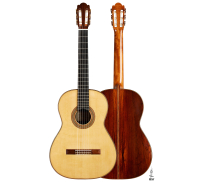
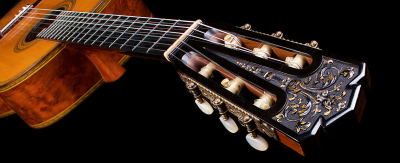
The program continued with three movements from Bach's Partita No. 2 in C minor, BWV 826, in Tristan Manoukian's guitar arrangement, a work that has become a central part of Marko's recital programs. Originally written for keyboard and published in 1727, the partita was later included in the first volume of Bach's Clavier-Übung. Marko recorded it on a 2024 Richard Reynoso guitar with a spruce top and Indian rosewood back and sides. Built in Los Angeles, this instrument introduced several of Reynoso's newest design ideas, including a tapered fingerboard, a rosette that hangs inside the soundhole, and a lightweight bridge without a traditional tie block, all aimed at letting the soundboard resonate more freely.
The Allemande unfolds as a continuous, flowing dance in which melody and bass trade ideas without pause. Marko kept the lines clear and evenly shaped, letting the counterpoint breathe while maintaining the movement's steady forward motion.
At the heart of the partita, the Sarabande slows the pace and turns inward. Marko gave the ornamented melody room to sing, drawing on the Reynoso's rich color palette and long sustain to bring out the movement's reflective, almost vocal quality.
The mood brightens with the Rondeau, a lively dance in triple meter built around a recurring refrain that returns between contrasting episodes. Marko brought out its playful character with crisp articulation and a light, buoyant pulse, keeping the interplay between the voices clear throughout.
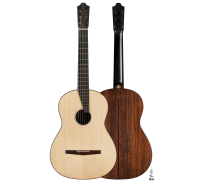
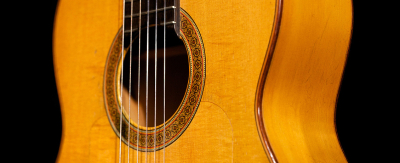
A sarabande of a very different kind followed, as Marko performed Francis Poulenc's Sarabande on a 2014 Gabriele Lodi "Torres" guitar. Written in 1960 for the legendary guitarist Ida Presti, it is Poulenc's only work for solo guitar, a brief and intimate piece that recasts the old Baroque dance in the composer's distinctive harmonic language. The Lodi guitar is a tribute to Antonio de Torres, not a copy of a single instrument but a synthesis of his favorite elements from the many original Torres guitars he has studied and restored, and its spruce top and maple back gave the performance a warm, transparent sound.
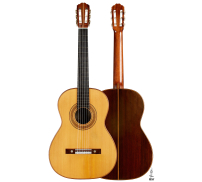
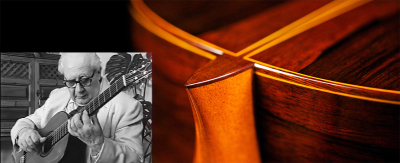
The program concluded with Leo Brouwer's Estudio No. 17 from the Nuevos Estudios Sencillos, performed on a historic 1934 Hermann Hauser I guitar. Built just three years before Andrés Segovia's iconic 1937 Hauser, this instrument was once owned by Vahdah Olcott-Bickford and later by Pepe Romero. Brouwer's studies pair focused technical challenges with vivid musical character, and Marko's performance showed how the Hauser's clarity and balance suit this modern repertoire as naturally as the music of earlier centuries.
Together, these recordings capture an artist moving with ease from Renaissance counterpoint and Bach's keyboard writing to the refined miniatures of the twentieth century, bringing the same command and musical focus to each. We are grateful to Marko for sharing his artistry with us.
0 comments