



Remembering a Legend
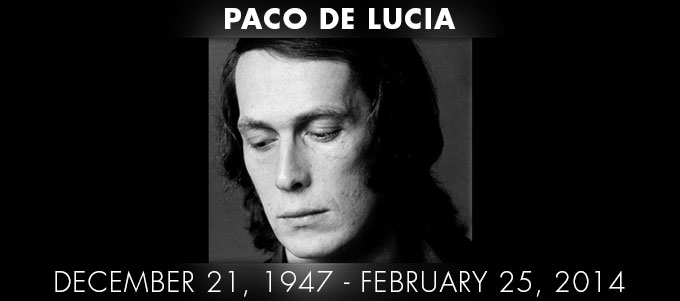
Paco de Lucía has died at the age of 66. By all accounts he spent his last moments on a beach in Mexico, where he suffered a heart attack.
There is little I can say that hasn’t already been said about Paco, so I won’t try to recap his career here or write his obituary. I’ve never felt so devastated by the death of someone I didn’t know personally, and that’s because he had as great an effect on my life as he did on the lives of thousands or millions of others.
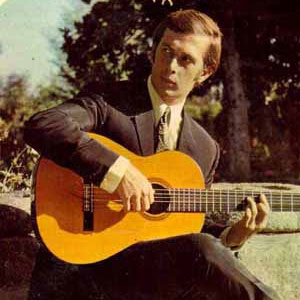 My history with Paco de Lucía goes back a long, long time. I first saw him play in 1989 or 1990 in a concert at Carnegie Hall that featured Sabicas, Paco, and a 12-year-old (or thereabouts) Jeronimo Maya. It was a spectacular show, and clearly what we were witnessing was the old guard, the reigning master and the next generation.
25 years later Paco’s influence on the current generation is as great as it ever was. As monumental a talent as Sabicas was, by the time of his death his influence was waning. As I write this, though, Paco’s influence can be heard in every living player. As a talent and phenomenon he was to the flamenco guitar what Jordan was to basketball, but he also revolutionized the style and changed it forever.
In retrospect it seems like a logical progression – play the instrument better than it’s ever been played before and write music that’s more sophisticated than what’s been heard before; collaborate with the best young singer and musicians in flamenco; open up your ears to the world around you and play with harmony in a new way; borrow instruments, players and sounds from jazz and rock; change your world. After Paco there was no going back.
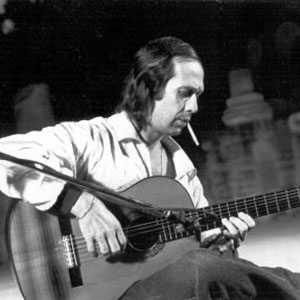 When I first moved to Spain in 1991 I had been playing for four years and thought I was pretty good. My first serious teacher there, a young Gypsy guitarist named Juan Fernandez, said to me ‘what you’re playing used to be flamenco, but it’s not anymore. We’ll have to start from scratch.’ Looking back I realize that what he taught me in those first months was the flamenco version of how to swing, and this was a direct result of what Paco had wrought. I had heard Paco’s record Siroco and while I recognized it as flamenco it also sounded like an alien playing some instrument I had never heard before, but listen to any of Paco’s early recordings and then listen to Siroco, which is just Paco and some percussion (and a lot of reverb), and you’ll hear what I mean.
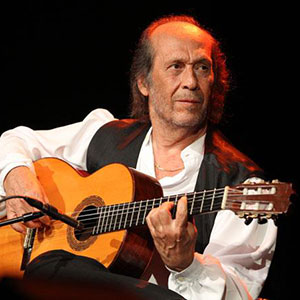 It was Paco that made me want to play flamenco and I think that pretty much every guitarist who wasn’t born with a flamenco guitar in his hands will say the same. But his music didn’t just speak to those of us who love flamenco. He filled halls with people who had no idea what flamenco was. You didn’t have to understand flamenco, or music, to be moved by him. And as a result of Paco’s genius a worldwide audience became aware of flamenco.
I was lucky enough to see him play another half-dozen or so times after that first Carnegie Hall concert, and I always had this strange feeling of awe at the idea that this Paco was a real person. That this music that just blows me away actually comes from the mind and hands of a living man. The last time I saw him play was in Los Angeles. The sound was terrible and I could hardly hear his guitar, which didn’t really matter so much because all the music was already in my head and my brain just filled in the notes for me as I watched the master for what would turn out to be the last time.
18 comments