


Flamenco Guitar for Beginners: Where to Start
 Learning flamenco guitar is an exciting journey, but for someone new to the instrument, it can also feel unfamiliar and even a little mysterious. Flamenco is not simply a collection of guitar techniques. It is part of a living musical culture, with its own language, rhythms, traditions, and way of learning.
Traditionally, flamenco was passed down through an aural and intuitive tradition. Children growing up in flamenco families and communities learned by listening, watching, imitating, and playing alongside others. Much of what they learned was absorbed naturally rather than explained through formal lessons or written theory.
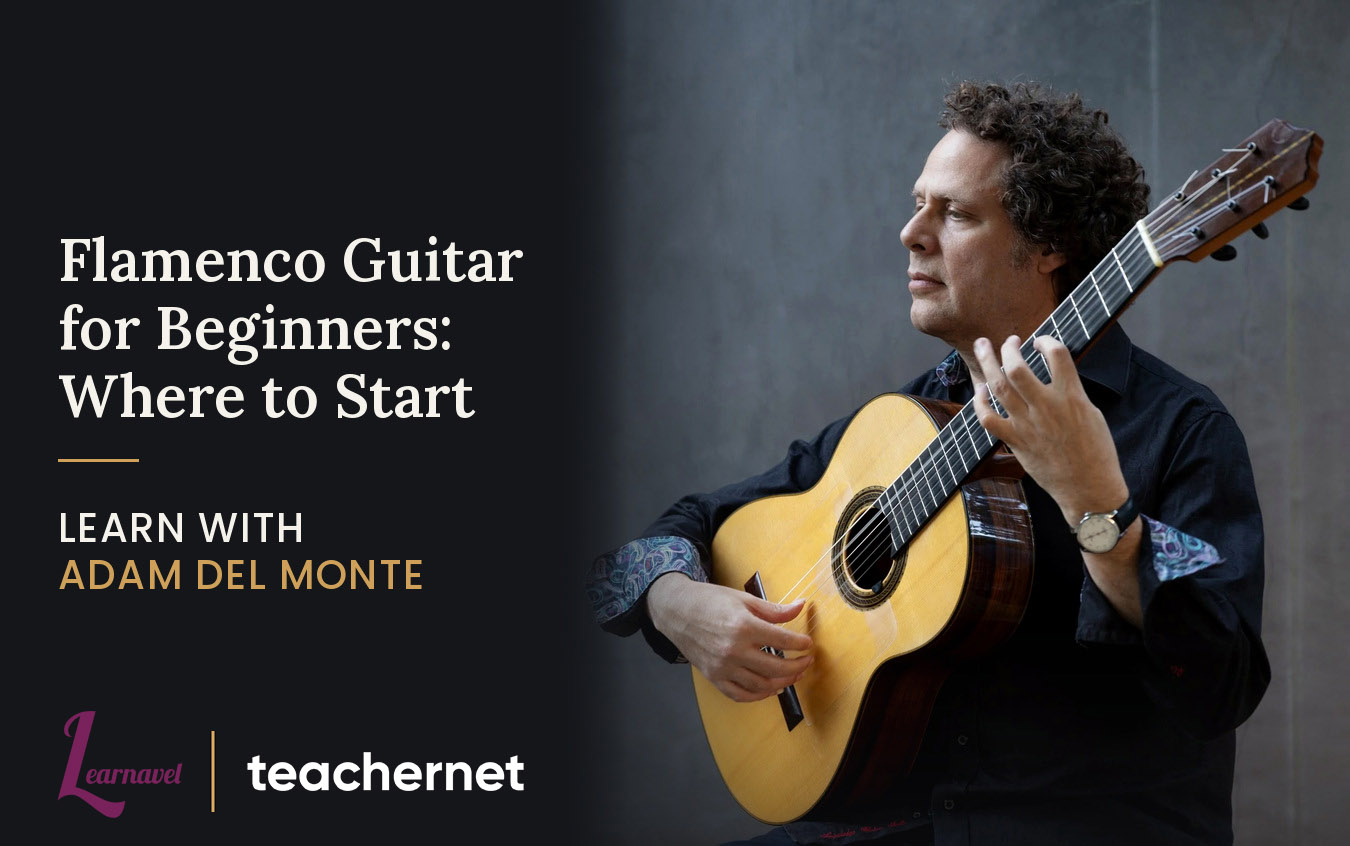
One of our star flamenco teachers on TeacherNet, Adam del Monte, developed a platform with instructional videos learnavel.com that combines the perfect balance between the aural tradition of the visual and intuitive learning with the theoretical and academic style by adding clearly written annotations to help facilitate the learning process. (Browse Adam's pre-recorded lessons)
For students coming from a Western or classical music background—or for someone who has never played guitar at all—this can be difficult to understand at first. The way flamenco is organized, particularly its rhythms and accents, can feel very different from the more linear and structured approach commonly used in Western music education.
This is where a good teacher and a well-designed learning method can make an enormous difference.
Bridging Two Musical Worlds
Adam del Monte has a unique perspective on this challenge. He experienced flamenco at an early age, spending time within the Gypsy flamenco community and absorbing the music in its traditional environment. At the same time, he pursued formal studies in classical guitar and music theory in England.
This combination gives him the ability to act as a bridge between the traditional flamenco way of learning and the needs of the Western-educated student.
Rather than simply teaching students a collection of guitar techniques, his approach helps explain why the music works the way it does while preserving the feel and spirit of the flamenco tradition. For someone who has always wanted to learn flamenco guitar but never knew where to begin, this can provide a clear and approachable starting point, and in case you have any additional questions, you can always book an online 1-on-1 lesson on TeacherNet.
Flamenco Guitar for Beginners on Learnavel.com
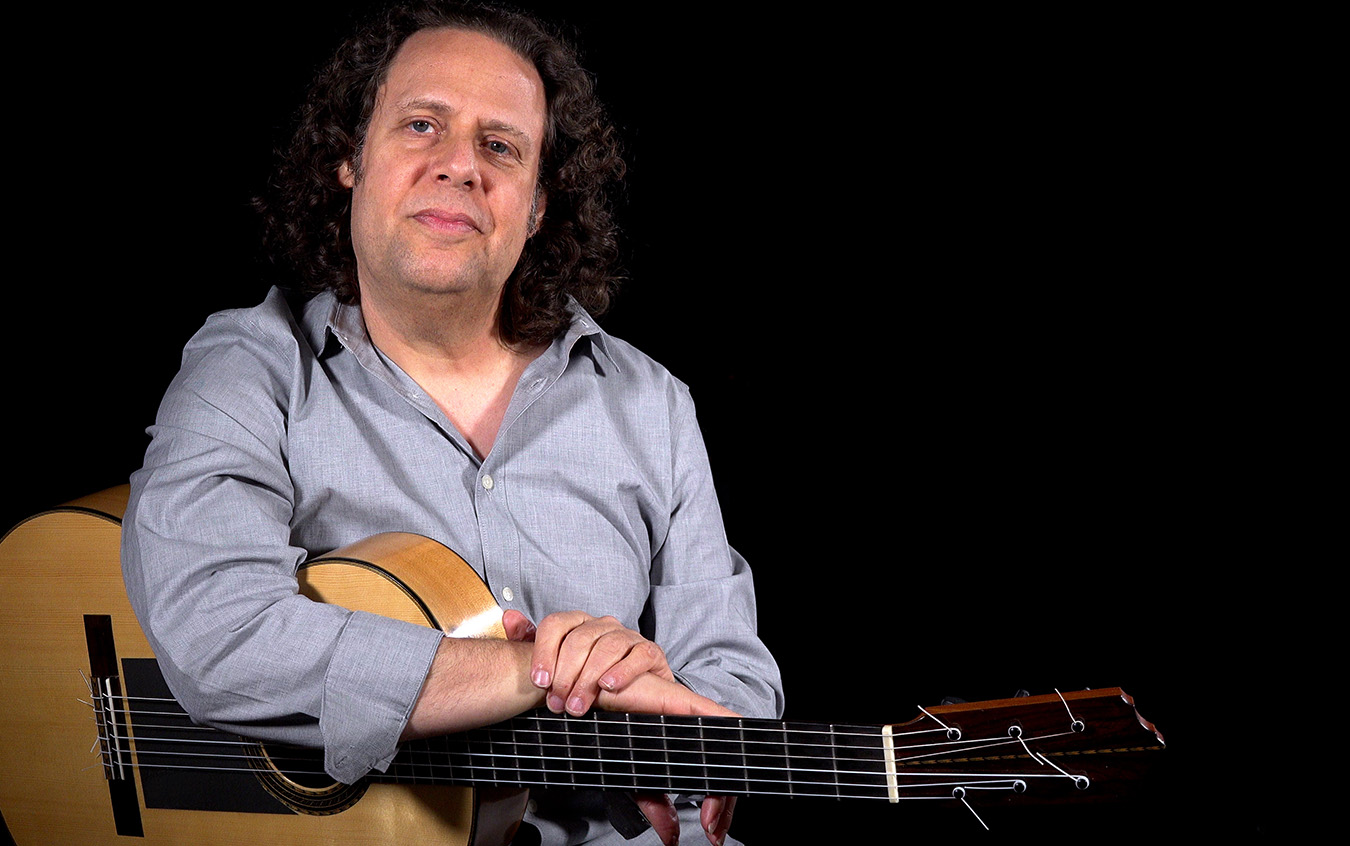 Learnavel offers a comprehensive Flamenco Guitar for Beginners (Part 1) and (Part 2) course taught by Adam del Monte. The course is designed for absolute beginners, including students who have never held a guitar before, but can also be very helpful for those who have already some experience but could use restructuring and curing bad habits and wrong learnings from the past. With regular practice, patience, and commitment, these lessons can take a complete beginner from the fundamentals of playing guitar to a level where they are prepared to begin studying complete flamenco solo pieces. The two parts build on one another, gradually introducing the physical skills, musical concepts, and rhythmic understanding needed to begin playing flamenco with confidence.
Part 1: Building the Foundation
The first course focuses on the fundamentals.
Students learn how to:
- Hold the guitar correctly
- Develop a comfortable and effective seating position
- Use the right and left hands properly
- Develop basic right-hand and left-hand technique
- Perform the golpe, the characteristic flamenco tap on the guitar
- Begin learning rasgueado, the distinctive flamenco strumming technique
- Understand basic music theory
- Work with major and minor scales as they apply to flamenco guitar
These may sound like simple subjects, but they are extremely important. Developing good habits from the beginning makes it much easier to progress later.
The goal is not simply to get the student playing as quickly as possible, but to establish a solid technical foundation that will support more advanced flamenco playing.
Part 2: Understanding Flamenco
The second course begins to open the door to the deeper musical language of flamenco.
Students are introduced to:
- Flamenco scales
- Chord construction and different chord voicings
- Flamenco rhythm and compás
- The structure of Soleá, Alegrías and Tangos
- Where the important accents fall within each style
- How the rhythm, harmony, and guitar techniques work together
For many beginners, this is where flamenco starts to make sense.
Flamenco rhythms can initially seem confusing because the accents do not always fall where a student expects them to. The annotated videos provide an especially useful visual reference, allowing students to see the notes on the fretboard and follow the rhythms and accents as they are being played.
This combination of hearing, seeing, and playing is particularly valuable when learning something as rhythmically complex as flamenco.
From Beginner to Flamenco Player
One of the strengths of these courses is that they do not assume that students already understand flamenco.
You don't need to know how to read music. You don't need to have studied classical guitar. And you don't need to have grown up around flamenco. The music sheet in downloadable PDF include TABS in the case of those who do not read music. You simply need a guitar, a willingness to learn, and the discipline to practice consistently.
The courses are designed to give beginners the tools they need to eventually move beyond exercises and techniques and begin studying complete flamenco solo pieces.
Of course, everyone's progress will be different. How quickly you develop depends on your practice habits, consistency, musical background, and individual ability. But having a clear path on learnavel and the opportunity to connect with Adam del Monte on TeacherNet can make the journey much easier.
A Lifelong Commitment to Teaching Flamenco
What makes this approach particularly meaningful is Adam del Monte's lifelong dedication to flamenco guitar. His teaching reflects years of experience living, performing, studying, and teaching within both the traditional flamenco world and the Western musical tradition. That experience allows him to explain difficult concepts in a way that makes them accessible without losing their connection to the authentic language of flamenco.
For the complete beginner, the most important thing is simply to start.
Book a 1-on-1 lesson on TeacherNet
1 comment