



Max Müller Returns to GSI
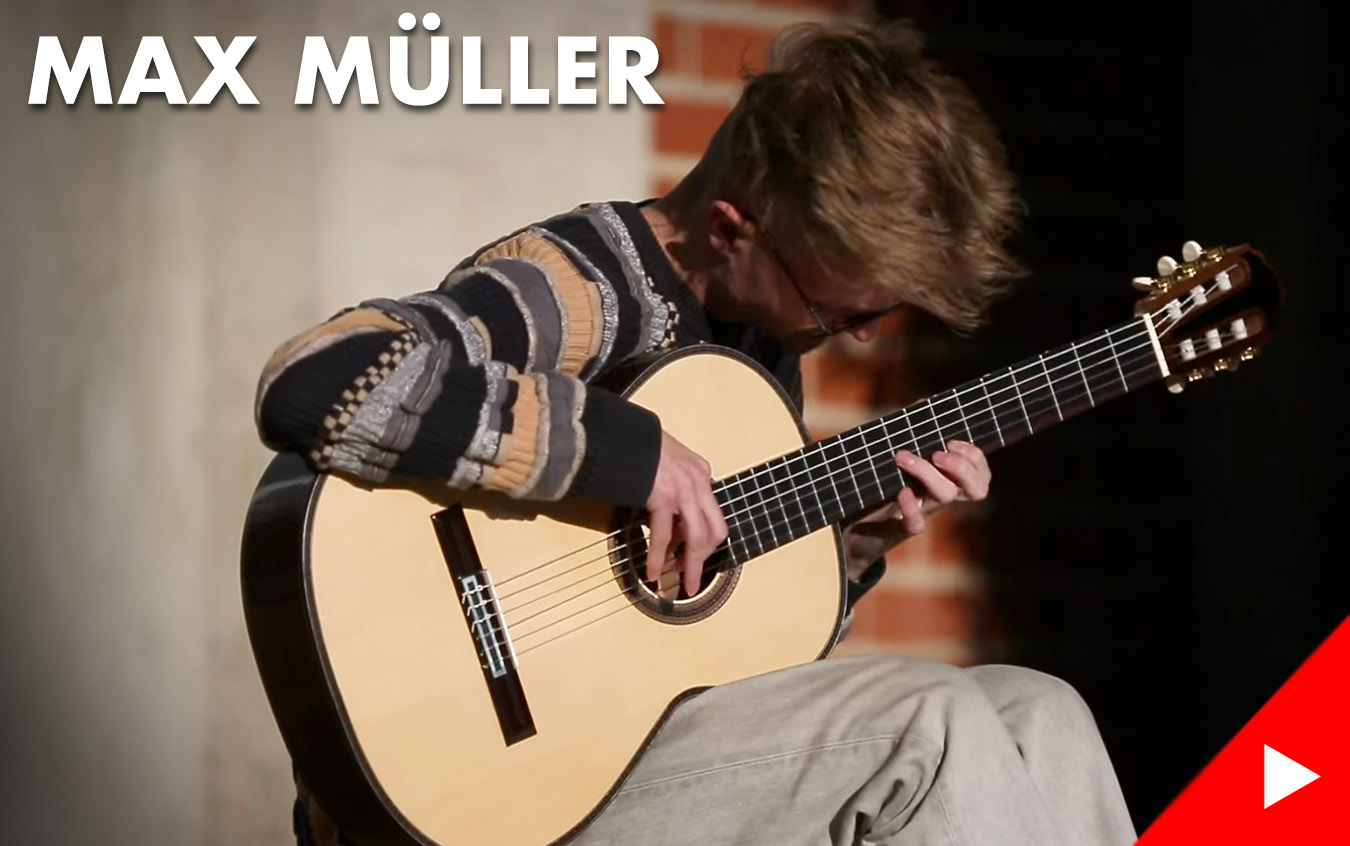 German guitarist Max Müller, a former student of Marco Tamayo, Thomas Müller‑Pering and a current student of Miroslav Tadić, recently returned to GSI and recorded five solo videos.
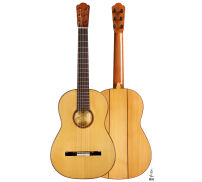
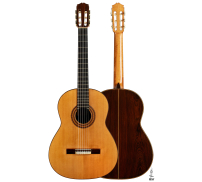
Malcolm Arnold’s "Fantasy for Guitar" Op. 107, written in 1971 for guitarist Julian Bream, is a single-movement work divided into contrasting sections. The Arietta functions as a lyrical centerpiece within the Fantasy which offers a moment of intimacy, simplicity, and emotional stillness. With its graceful melodic lines and gentle harmonic progressions, the Arietta reveals Arnold’s gift for song-like expression. It contrasts the more angular or virtuosic episodes of the Fantasy and provides a deeply introspective pause, evoking a quiet, almost vocal sensibility within the solo guitar idiom. Max recorded this piece on a 1918 Enrique Garcia classical guitar made with spruce top and CSA rosewood back and sides.
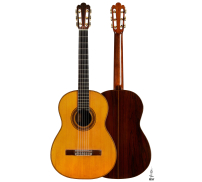
Composed in 1929, "Chôro da Saudade" is one of Agustín Barrios Mangoré’s most beloved works, blending his virtuosic guitar technique with deep emotional expression. The title combines two rich Portuguese concepts: chôro, a Brazilian musical style characterized by lyrical melancholy, and saudade, a complex feeling of nostalgic longing. Barrios captures this mood through flowing arpeggios, bittersweet harmonies, and a singing melodic line. The piece moves between introspective lyricism and brief flashes of rhythmic drive, evoking the essence of remembrance and emotional distance. Max recorded this piece on as 2025 Ariel Ameijenda classical guitar made with cedar top and CSA rosewood back and sides.
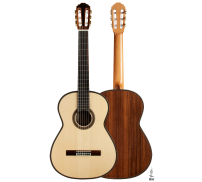
Another piece by Barrios, "Vals, Op. 8 No. 4" is an elegant and emotionally nuanced waltzes. Composed in a Romantic style, the piece combines flowing lyrical melodies with rich harmonic textures and subtle rhythmic shifts. Its expressive character ranges from tender introspection to passionate outbursts, showcasing Barrios’s gift for weaving technical virtuosity into a deeply poetic musical narrative. The waltz form, with its characteristic 3/4 meter, is both preserved and stretched, lending the piece a dreamlike, almost improvisatory feel that continues to captivate guitarists and audiences alike. Max recorded this piece on a 2025 Kenneth Brogger "Mosaic" classical guitar made with spruce top and Indian rosewood back and sides.
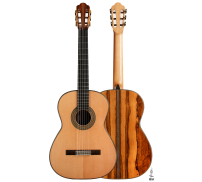
Composed in 1986, "Valseana" is the second movement of Aquarelle, Sérgio Assad’s three-movement suite for solo guitar commissioned by the virtuoso David Russell. Unlike a traditional waltz, "Valseana" unfolds with a gentle, introspective lyricism that emphasizes mood and color over rhythmic regularity. Its lilting 3/4 meter serves as a subtle undercurrent rather than a pronounced dance pulse, allowing Assad’s rich harmonies and long, expressive melodic lines to shine. The piece evokes a sense of quiet nostalgia and emotional depth, embodying the Brazilian spirit of saudade while remaining firmly grounded in classical form. With its seamless blend of technical elegance and poetic expression, "Valseana" is one of Assad’s most beloved contributions to the solo guitar repertoire. Max Muller performed this on a 2025 Dario Garcia "La Leona" classical guitar.
Here's Max performing Manuel Barrueco's arrangement of "Adagio" from Johann Sebastian Bach's "Violin Sonata, BWV 1001". The Adagio from Bach’s Violin Sonata No. 1 in G minor, BWV 1001 is a deeply expressive and contemplative movement that showcases the composer’s mastery of melodic line and harmonic subtlety. Written during Bach’s time in Köthen (1717–1723), this sonata was originally composed for unaccompanied violin and explores the instrument’s full emotional range. The Adagio serves as a lyrical centerpiece with its slow tempo and expressive suspensions, creating a poignant atmosphere of introspection and longing. Its flowing, ornamented melody unfolds over a harmonically rich texture, inviting the listener into a serene yet emotionally charged soundscape. This movement remains a cornerstone of the violin repertoire and is often transcribed for guitar, where its intimate character is beautifully preserved. Max recorded this piece on a 1931 Santos Hernandez (Ex David Gomez Tarrega) classical guitar made with spruce top and CSA rosewood back and sides.
0 comments