




Three Studies to Improve Your Playing! (SHEET MUSIC AVAILABLE)
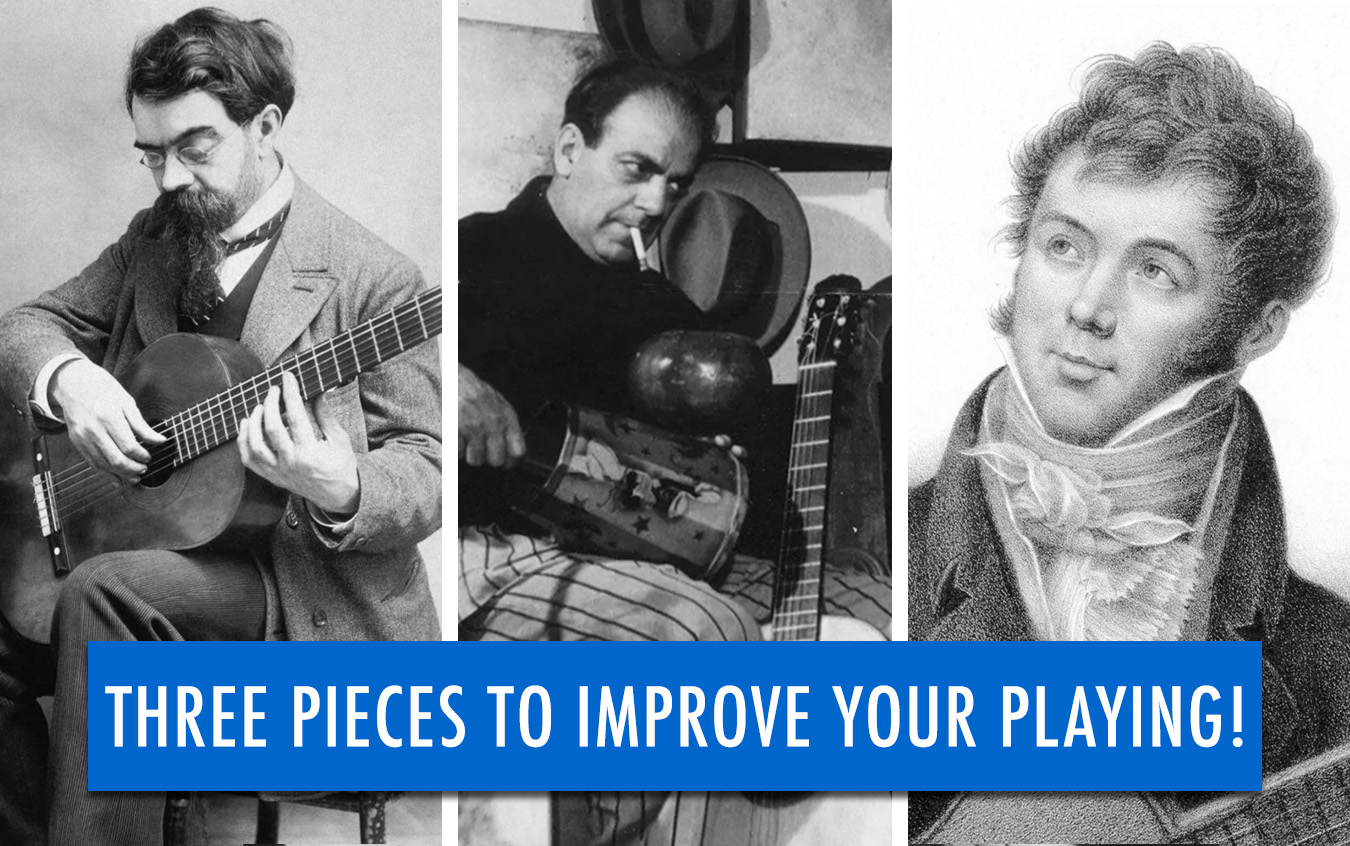 Are you looking for new pieces to improve your guitar skills? Our new GSI intern and former GSI Foundation scholar, Juri Yun, has picked three distinct compositions that will help you develop different aspects of your guitar playing!
“Etude No. 1” by Villa Lobos (buy sheet music)
Heitor Villa-Lobos’ Etude No. 1 is one of the most iconic pieces in classical guitar literature, particularly known for its focus on arpeggio technique. It’s part of his 12 Etudes for Guitar, which are widely performed and studied due to their technical demands and musical depth. The primary technical focus is on fast, repetitive right-hand arpeggios. The etude is designed to develop finger independence, control, and speed in the right hand, with continuous arpeggios across all six strings. While the right-hand technique is the primary challenge, the left hand must also negotiate a series of chord shapes, often involving position shifts up and down the fretboard.
"Estudio in E minor/major" by Francisco Tárrega (download sheet music)
Francisco Tárrega’s "Estudio in E minor/major" is a brief yet beautifully expressive work for guitar that is commonly used for both technical and musical development. The étude encourages legato playing, which involves keeping the sound connected and smooth even when moving between different positions and chords. This helps develop control over both hands and ensures that the music remains flowing without any interruptions or breaks. The piece transitions from E minor to E major toward the end. This shift provides a good exercise in recognizing and interpreting different tonalities. Musically, it teaches the player how to transition smoothly between minor and major keys while maintaining the expressive quality of the music.
“Etude No. 14, Op. 60” by Fernando Sor (download sheet music)
Fernando Sor’s Etude No. 14, Op. 60 is one of the pieces in his collection of 25 Études, Op. 60, which are widely used to develop both technical and musical skills in classical guitar students. The primary purpose of this piece is to develop tone balance in the right hand. The etude is primarily composed of vertical harmonies, however there is a clear melody that needs to be highlighted. This teaches the player to bring out certain voices and by developing right hand finger independence. While the left-hand movements in this etude are not overly complex, there are shifts between different chord shapes. These shifts require careful finger placement to avoid gaps in the sound and to maintain the legato phrasing of the melody.
0 comments