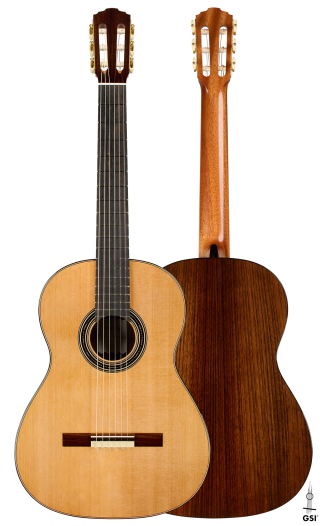
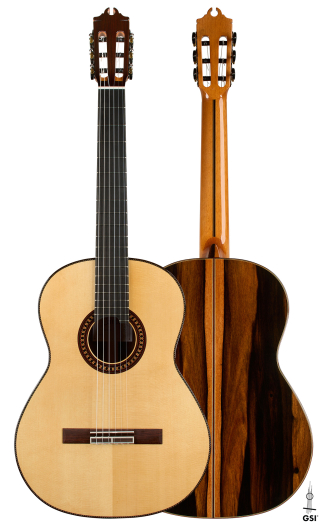
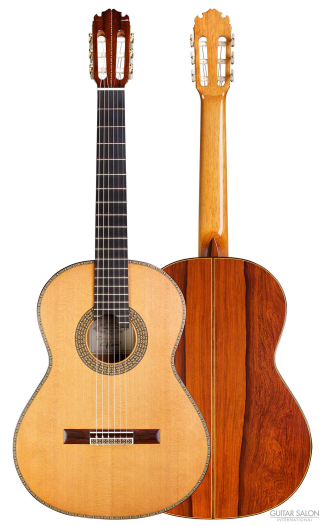
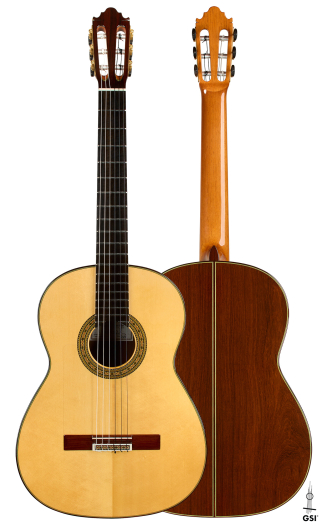
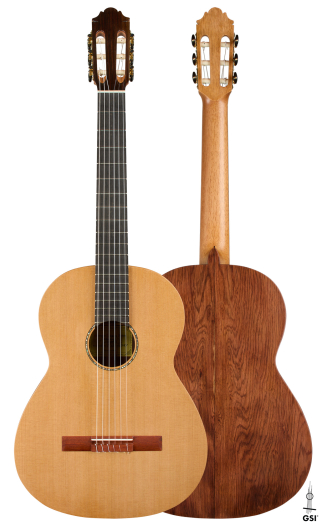
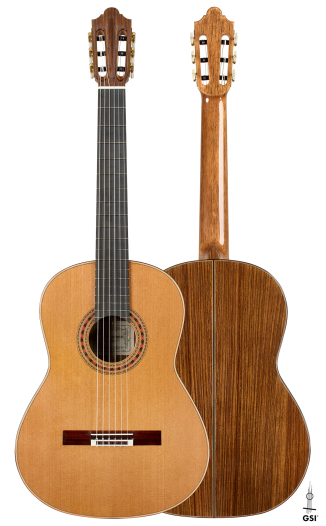
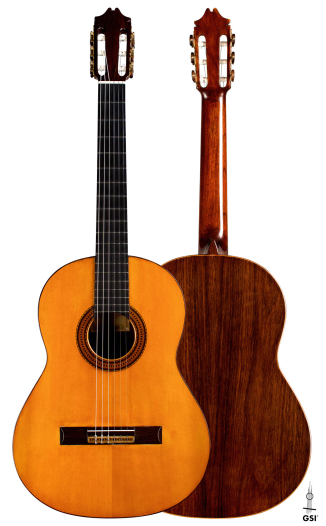
Enrique García (1868–1922) was a Madrid-born guitar maker and the founder of the Barcelona school of guitar making. Trained in the Ramírez workshops, he won first prize at the 1893 Chicago World's Fair, moved to Barcelona in 1895, and influenced Francisco Simplicio, Enrique Sanfeliu, Enrique Coll and Ignacio Fleta.
At a Glance
- Born: 1868, Madrid
- Died: 1922, Barcelona
- Trained: from 1883 with Manuel Ramírez or José Ramírez I (likely both), Madrid
- Workshop: Barcelona from 1895; Paseo de San Juan No. 110 from 1902
- Prize: First prize, Chicago World's Fair, 1893
- Played by: Francisco Tárrega, Domingo Prat
- Pupil: Francisco Simplicio, his only pupil and successor
From Madrid to Barcelona
Enrique García was born in Madrid in 1868. Although he was the son of a guitar maker, Juan García, in 1883 he began an apprenticeship with either Manuel Ramírez or José Ramírez I (or likely both), and continued to work in Madrid for many years. In 1893, his guitars won first prize at the Chicago World's Fair – García was evidently very proud of this achievement as he represented it in pictorial form on his labels following the award. In 1895, he left Ramírez and Madrid for Barcelona where he opened a workshop at calle Aragón No. 309. In 1899, he moved his shop to calle Aragón No. 455. In 1902, he again moved his shop to its final location at Paseo de San Juan No. 110 where he remained until his death in 1922.
Founder of the Barcelona School of Guitar Making

García is considered to be the founder of the "Barcelona school", or "Catalan" style of guitar making. His style influenced subsequent generations of Barcelona makers including Francisco Simplicio and Miguel Simplicio, Enrique Sanfeliu, Enrique Coll and Ignacio Fleta. The two great hallmarks of his style are increased stiffness in the soundboards (his guitars commonly featured 8 asymmetrical fans instead of the traditional 7; years later, Ignacio Fleta would increase this number to 9), and a weakness for elaborate decoration. Aesthetically, his instruments ranged from the very simple to the wildly ornate, where extensive inlay work and extravagantly carved headstocks became synonymous with his name.
An International Reputation
García was one of the most sought-after and famous makers at the turn of the century. His reputation very early on was truly international, largely thanks to Domingo Prat and Francisco Tárrega, who both played his guitars. In 1897 it was García who repaired Tárrega's beloved 1864 Torres – the guitar we know today as FE 17 – and his repair label is still inside it. By 1912, he was exporting many of his instruments, primarily to South America, where a thriving and very important guitar scene, based mainly in Buenos Aires, Argentina and Montevideo, Uruguay, was forming. His guitars have always been prized by performers and collectors for their intimate charm and unique style.
For more on García, his move to Barcelona and his work on Tárrega's Torres, see the page of his pupil Francisco Simplicio.
Enrique García Guitars at GSI
Many Enrique García guitars have passed through our doors over the years. You'll find guitars currently in stock by clicking the "Guitars In Stock" button in the header of this page as well as earlier examples in our Museum by clicking the "Guitars In Museum" button.
Frequently Asked Questions
Who was Enrique García?
A Madrid-born guitar maker (1868–1922), trained in the Ramírez workshops, who founded the Barcelona school of guitar making.
What is the Barcelona school of guitar making?
The Catalan style García began: stiffer soundboards (often 8 asymmetrical fans) and rich decoration, carried on by Francisco Simplicio, Enrique Sanfeliu, Enrique Coll and Ignacio Fleta.
Which prize did García win?
First prize at the 1893 Chicago World's Fair, which he pictured on his labels.