







Performance Videos

Tarrega's "Gran Vals" played by George Sakellariou on an 1862 Antonio de Torres

Tarrega's "Adelita" played by Rafael Elizondo on an 1862 Antonio de Torres

Tarrega's "Prelude No. 2" played by Rafael Elizondo on an 1862 Antonio de Torres

Tarrega's "Lagrima" played by Rafael Elizondo on an 1862 Antonio de Torres

Legnani's "Caprice No. 29" played by Rafael Elizondo on an 1862 Antonio de Torres
Specifications
Description
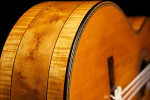
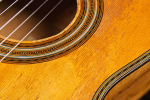
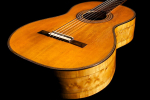
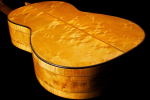
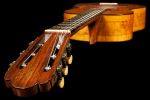
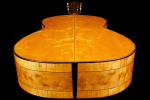
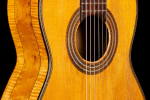
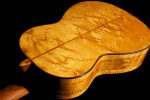
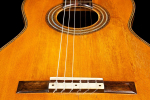
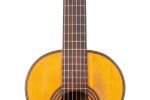
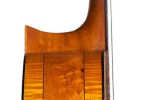
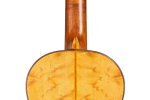
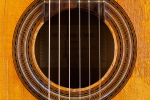
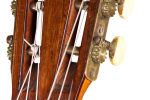
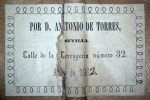
 This is a fantastic example of an incredibly well-preserved first-epoch Torres guitar, made in his Seville workshop at Calle de la Cerrageria No. 32 in 1862. Built the same year as the famous "paper mache" guitar, it has the unique and creative feature of using colored paper as part of the rosette (in bright red and blue) and veneer lines in the top purfling (in blue). It is one of Torres' more elaborately made instruments, featuring 3 piece sides (with flamed maple at the edges and birdseye maple in the mid-section). The back is birds-eye maple, the top European spruce. Master repairman Yuris Zeltins recently cleaned-up a few old repairs and also did a fresh setup job which makes this one of the easiest and most enjoyable instruments to play that we have seen in years. The surprising effortlessness required of the player yields the most intoxicating results in terms of beauty and quality of tone, the guitar itself being ultra-responsive (due in large part to its featherlight build) to the most delicate or aggressive touch, with a huge palette of tonal colors to choose from, all available with the slightest change of right hand position. It is mind-bending to experience this while realizing at the same time that this instrument is over 150 years old! Truly a very rare and unique example of one of the great masterpieces in the history of guitar making.
George Sakelleriou performing on this very Torres which he used to record his album "The Sound Of Torres"
For more information on the life of Antonio de Torres, be sure to read this short biography and this excerpt about the Torres sound from the Jose Romanillos book, "Antonio de Torres". We also have an interview between Pepe Romero and Kenny Hill about the master luthier.
Orfeo Magazine #9 - The 200th Anniversary of Antonio de Torres
Background
The name of Antonio de Torres (1817-1892) is to guitarists what the name of Antonio Stradivari is to violinists. Taken as a whole, the corpus of instruments made by this legendary maker’s hand are today regarded as the foundational basis of the modern guitar. Most or nearly all, of Torres’ structural and tonal improvements are still in use by all the top builders of the current generation. The impact these instruments made on successive generations of guitar makers is no less impressive – still to this day, the overwhelming influence of Torres and his work remains more pervasive in the guitar making community than ever before, thanks largely to the research efforts and masterclass training courses that have been Jose Romanillos’ focus over the past two decades. In Torres’ own day, the leading players such as Julian Arcas and Francisco Tarrega were already performing on his masterpieces, and successive generations of players over the 20th century continued to play them. Although increasing values on Torres over the past many decades has resulted in their placement largely within sphere of collectors, they are still highly desirable for many top concert players and occasionally make their way into the recording studio. Pepe Romero, Wulfin Lieske, Marc Teicholz and probably more than anyone else - Stefano Grondona have brought these great instruments to life in recorded sound and we all hope this trend continues in the future, especially as more Torres instruments come to the public’s attention.