Guitar Salon International
+1 (310) 586.1100 | +1 (877) 771.4321
Museum
Classical Guitars
Classical Guitars
Flamenco Guitars
Flamenco Guitars
Cleveland Collection
Luthiers
Luthiers
Your Cart

Your shopping cart is empty!

Sub-Total: $0.00
Total: $0.00
Edit cart
Checkout
Museum

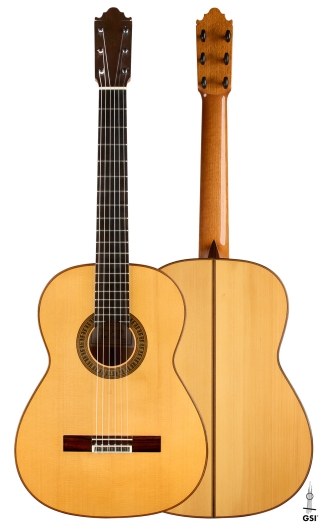
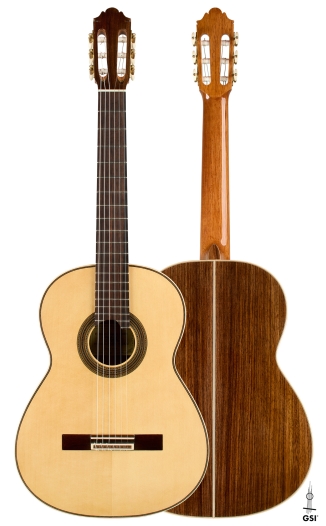
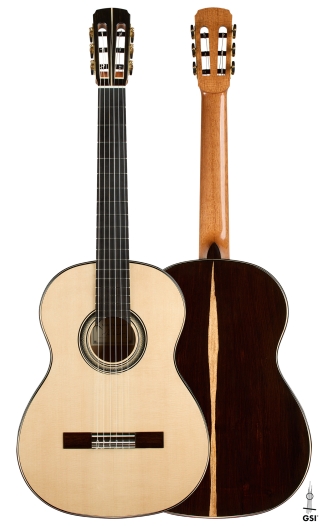
2017 David J. Pace "Double-Top SP/SP" SP/IN

Year 2017
Top Spruce/Spruce
Back & Sides Indian Rosewood
Scale Length 650 mm
Nut width 52 mm
Finish French Polish
Country USA

This guitar is no longer available in our inventory. If it interests you, click the ”notify me when available” button to be notified in the event that we re-acquire this guitar for re-sale.

Inquire

Description

Made by American Luthier David J. Pace out of Baltimore, Maryland. He builds both double-tops and traditional guitars and this instrument is his Sitka spruce composite double-top model. The top is made from two separate layers of wood, with a thin layer of Nomex (a paper-like material processed into honeycomb-textured sheets, originally for aviation and aerospace purposes) sandwiched inbetween. The bracing inside is traditional, 7-fans. This design, which was pioneered by the luthiers Gernot Wagner and Matthias Dammann, is intended to enhance a guitar’s volume and projection.

Other features of the guitar include a half-raised fingerboard and hardwood armrest - which is beveled underneath, so it does not make contact with the vibrating portion of the soundboard. The advantages of this option include increased forearm comfort, reduced friction during right arm movement, elimination of soundboard damping caused by forearm contact, and protection of the varnish and soundboard surface. It is also fitted with a 20th fret fingerboard extension for repertoire requiring a high c-natural. The neck has an internal carbon fiber reinforcement for an excellent and stable setup and the box’s linings are solid strips of hardwood, rather than the traditional kerfed linings and the lower bout is stiffened with buttresses. The linings and buttresses add stability to the instrument, helping it withstand the stresses brought on by seasonal changes of humidity and by string tension. Although a used instrument, it is in excellent structural condition with no prior damage or repairs, only playing wear in the finish due to regular use by its previous owner.

Background

From the luthier's website:

"I work as an independent artisan, personally building each instrument by hand in my private workshop. From the selection of raw materials, to the varnish and final set-up, nothing is outsourced. My goal is to produce an instrument that not only sounds good and plays well, but also holds up over time. To that end, I use techniques to increase the stiffness of the back, sides and neck assembly while maintaining a lightweight and resonant structure. I install robust, solid linings made from formed laminations of hardwood. Additionally, I install buttresses to further stiffen to the lower bout. These structural enhancements help to stabilize the instrument through years of string tension. The neck is internally reinforced with a solid beam of carbon fiber. This limits neck bow as well as fluctuations in playing action that result from changes in humidity. These efforts produce a dual benefit. The increased frame stiffness enhances projection, and the overall structure is more resistant to distortion. I construct guitars with traditional solid soundboards as well as composite double-top soundboards. The soundboard bracing designs are slightly different between the two, and are my own variations of a traditional 7-fan pattern. Regarding tonality, my goal is to render warm, yet firm bass notes with maximum sustain, a rich and complex midrange that responds to subtle variations in playing attack, and a high register that presents a strong fundamental while maintaining good definition and clarity."

- David J. Pace