This guitar is no longer available in our inventory. If it interests you, click the ”notify me when available” button to be notified in the event that we re-acquire this guitar for re-sale.
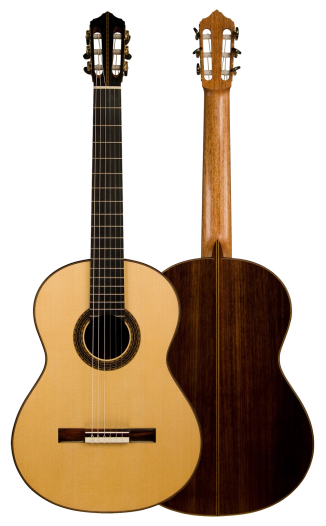
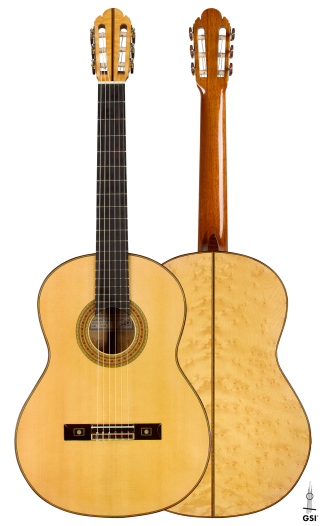
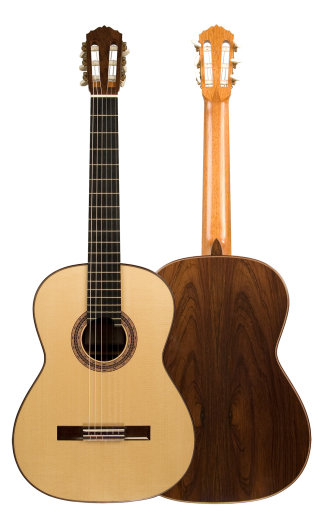
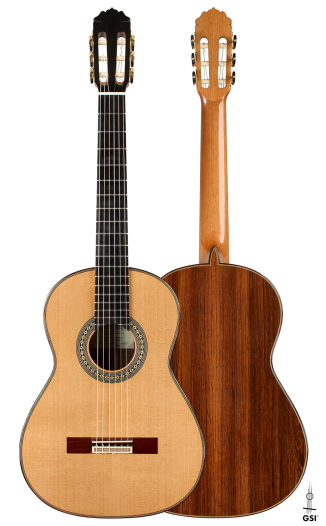
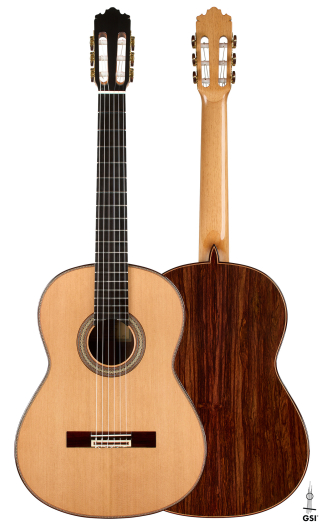
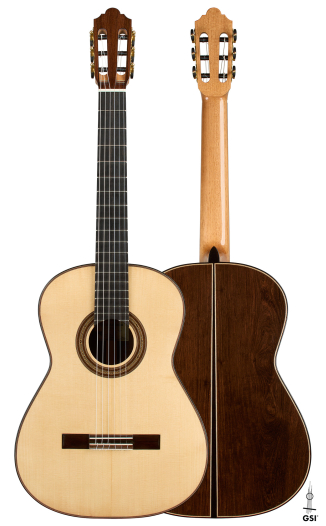
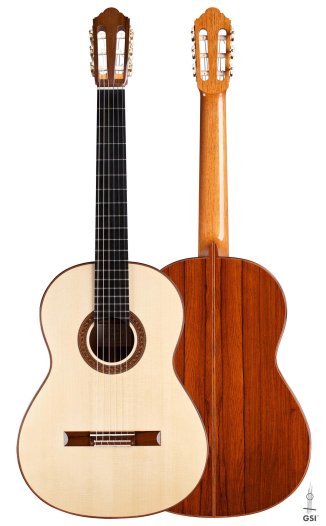
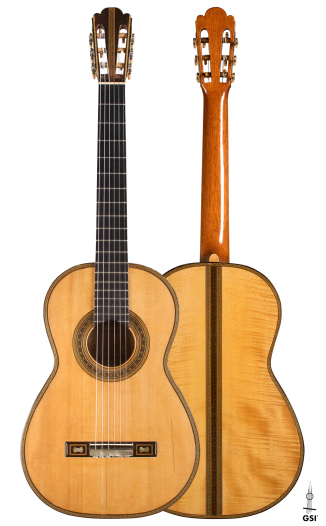
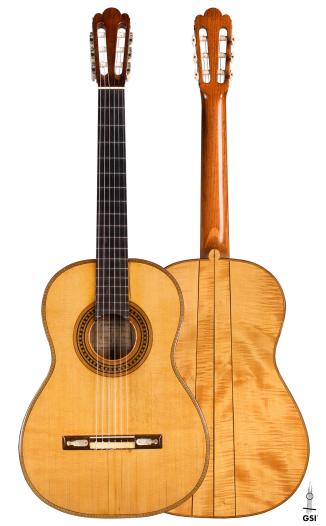
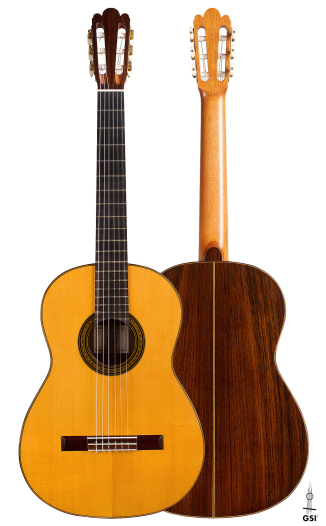
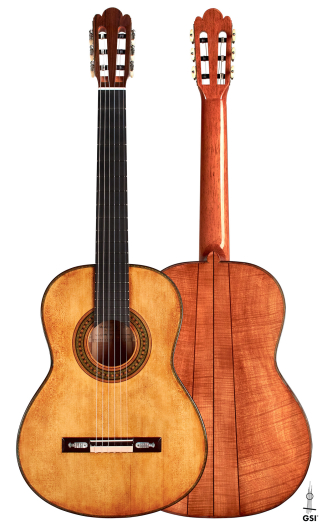
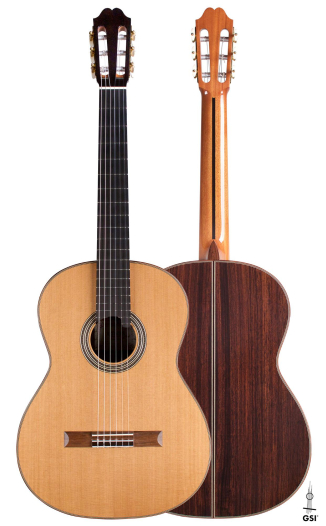
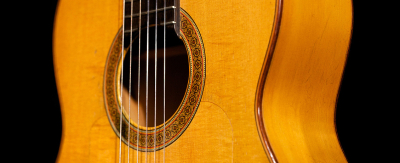
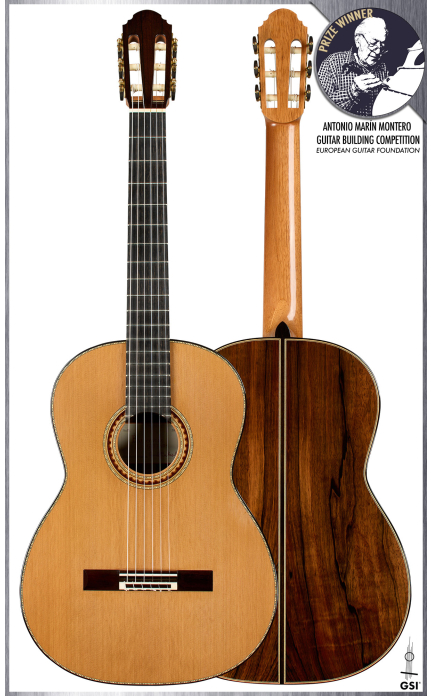
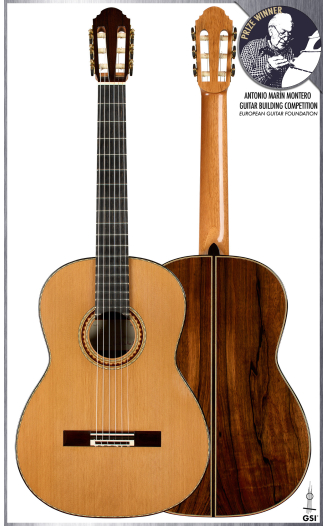
Built by Danish luthier Henrik Ballowitz, this guitar is made with western red cedar for the soundboard paired with an exceptionally beautiful and colorful set of Malaysian blackwood for the back and sides. This is THE actual award-winning classical guitar that Henrik showcased at the eighth Antonio Marin Montero Guitar Making Competition held in Granada, Spain in July/August, 2025 and we are thrilled to have this guitar here. Internally it is braced similarly to a one-off Bouchet (#55) - which was the first to use the under-bridge brace, but still utilize the 7-fan system (regarded as the "transitional" guitar between Bouchet's 2nd and 3rd/final phase). Soundwise, this guitar is quite extraordinary. It ranks in the top-tier of guitars we've seen for having an internally consistent or "unified" quality of sound. The transition from lowest bass note all the way up the scale to the highest registers includes no "jump" in the sound quality - even when moving from the steel-wound bass strings to the G string. The G string is not tubby (no need for a carbon or composite 3rd string), and the balance of the overtone content in relation to fundamental in every note is identical to the ear. And this is one of those guitars that sounds like it looks - a lush, rich, creamy, milk-chocolatey quality of sound. And the responsiveness - minimal effort is required by the right hand to produce a full, wholesome tone. In other words a guitar very hard to put down! Henrik also did some really lovely and personal detailing including a subtle (but effective) symmetrical/repeating checkerboard pattern in the purflings around the top and on the inside and outside parts of the rosette. And he tells us that after he saw some rosettes from Vicente Arias that inspired him to work with round shapes - a very challenging task which is almost impossible with normal mosaic building techniques. Despite this, he still was able to design the central part of the rosette using a motif modeled on the rising and setting sun on the horizon. No matter how you evaluate this instrument, it is not possible to find a fault anywhere in it. This is really a great guitar by this talented young maker and we look forward to many more guitars from him.
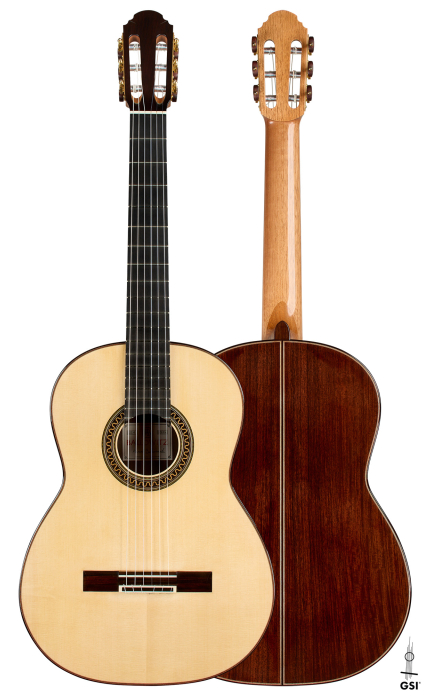
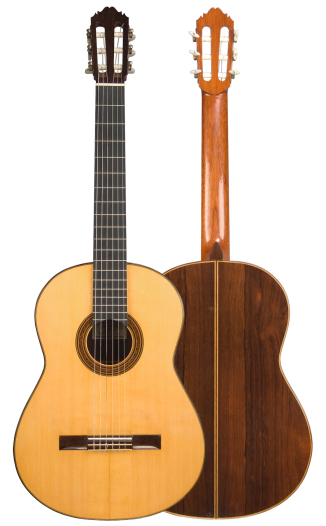
Photos of this guitar taken just prior to shipping









-326x526.jpg "1976 Jose Ramirez \"2a\" CD/CSAR")