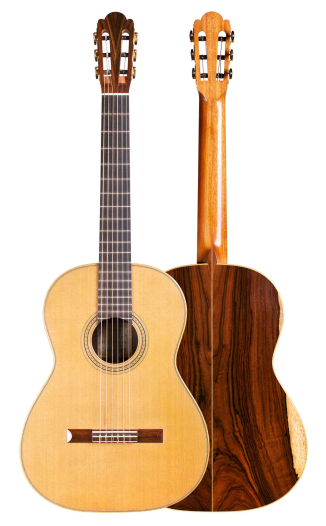
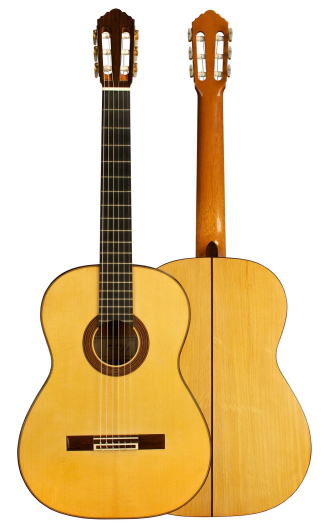
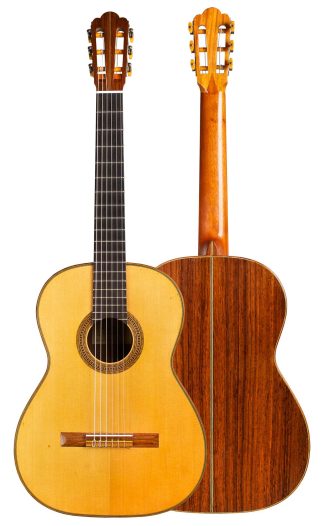
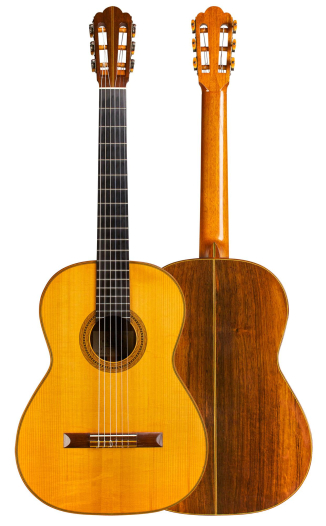
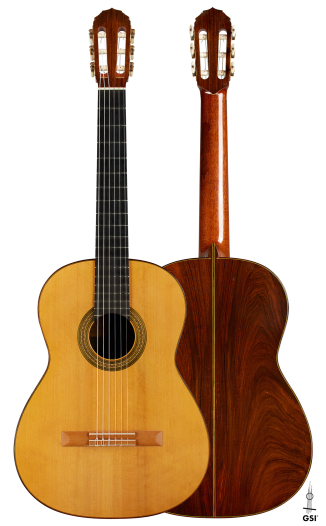
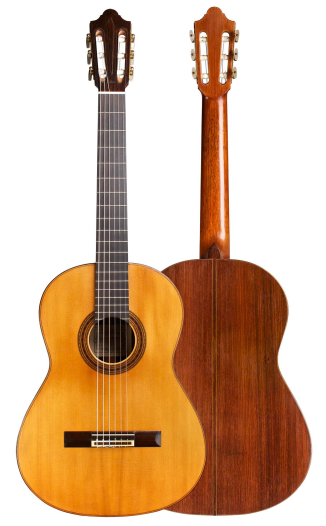
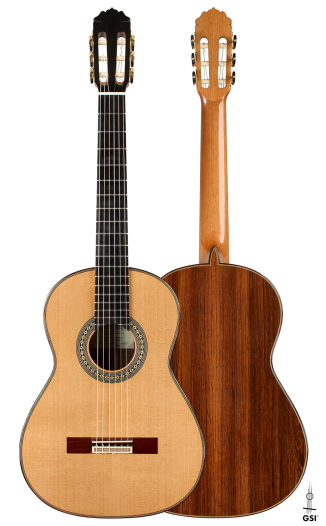
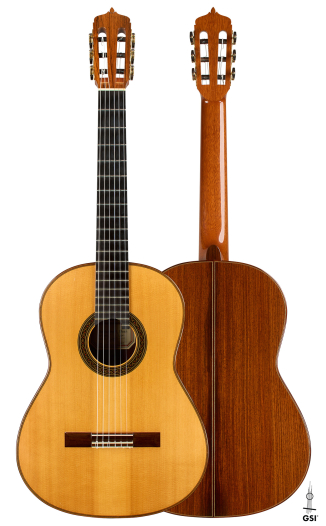
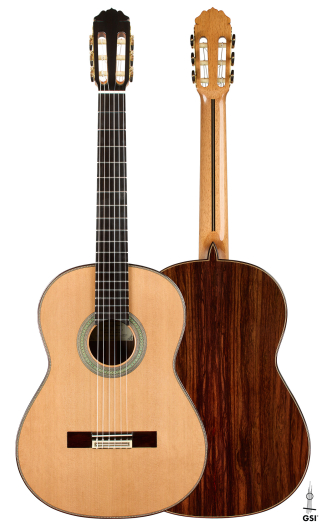
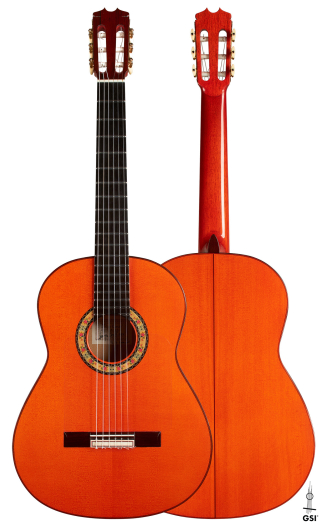
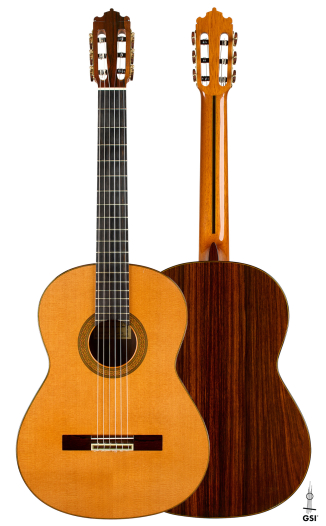
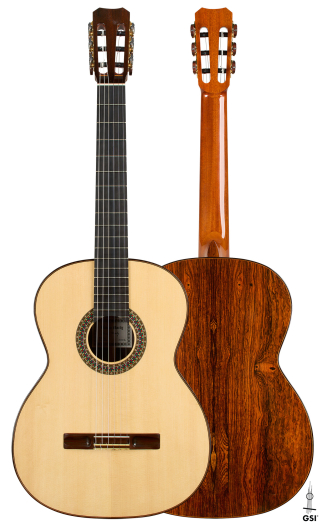
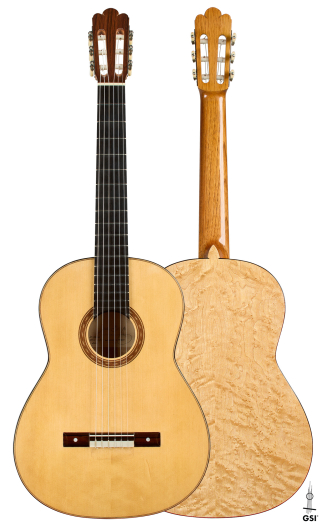
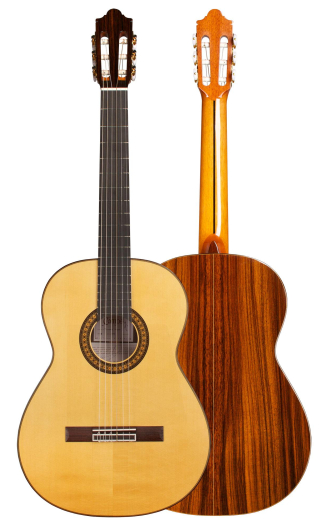
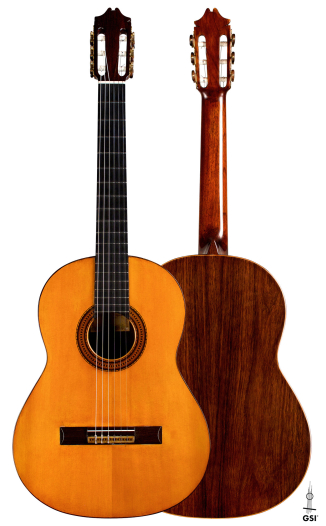
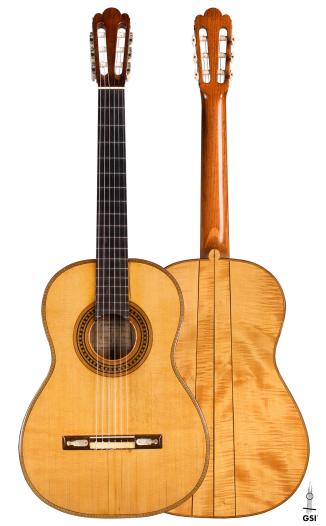
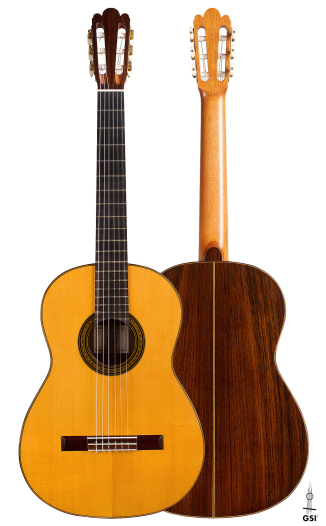
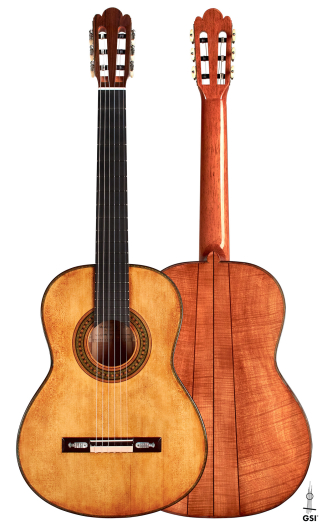
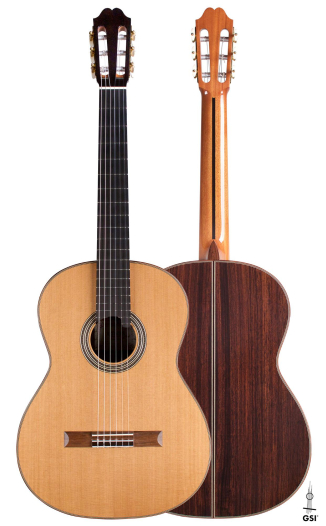
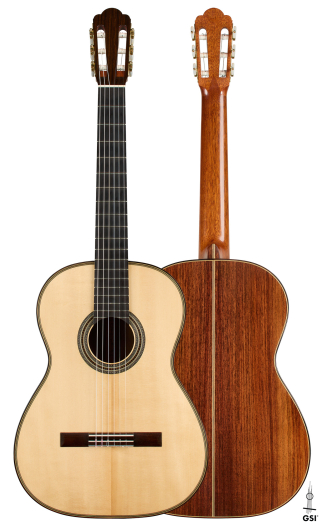
2025 Manuel Arango "Negra" SP/IN
| Year | 2025 |
| Top | Spruce |
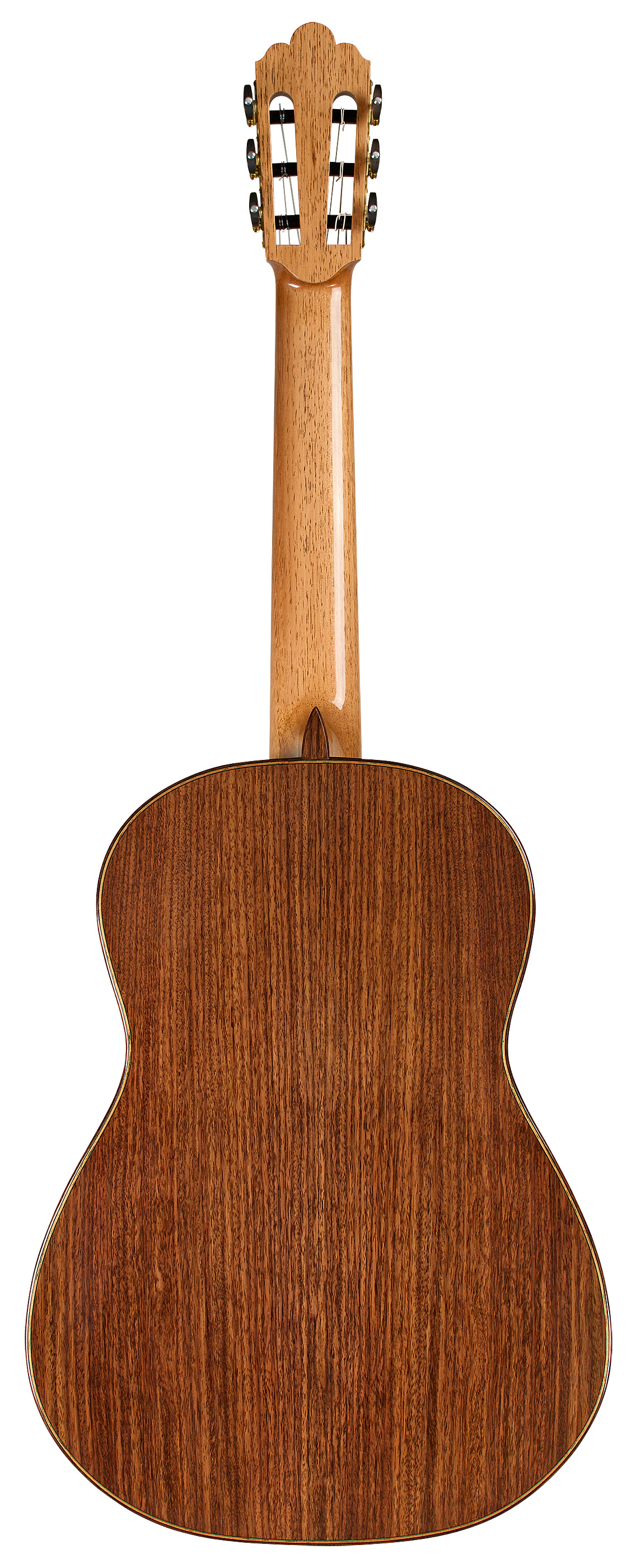
| Back & Sides | Indian Rosewood |
| Scale Length | 650 mm |
| Nut width | 52 mm |
| Finish | French Polish |
| Country | Switzerland |
| Condition | New |
| Exchange | ExchangePlus |
$7,000.00
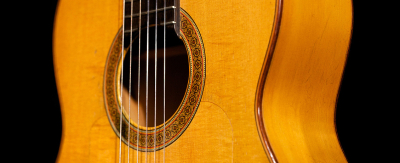
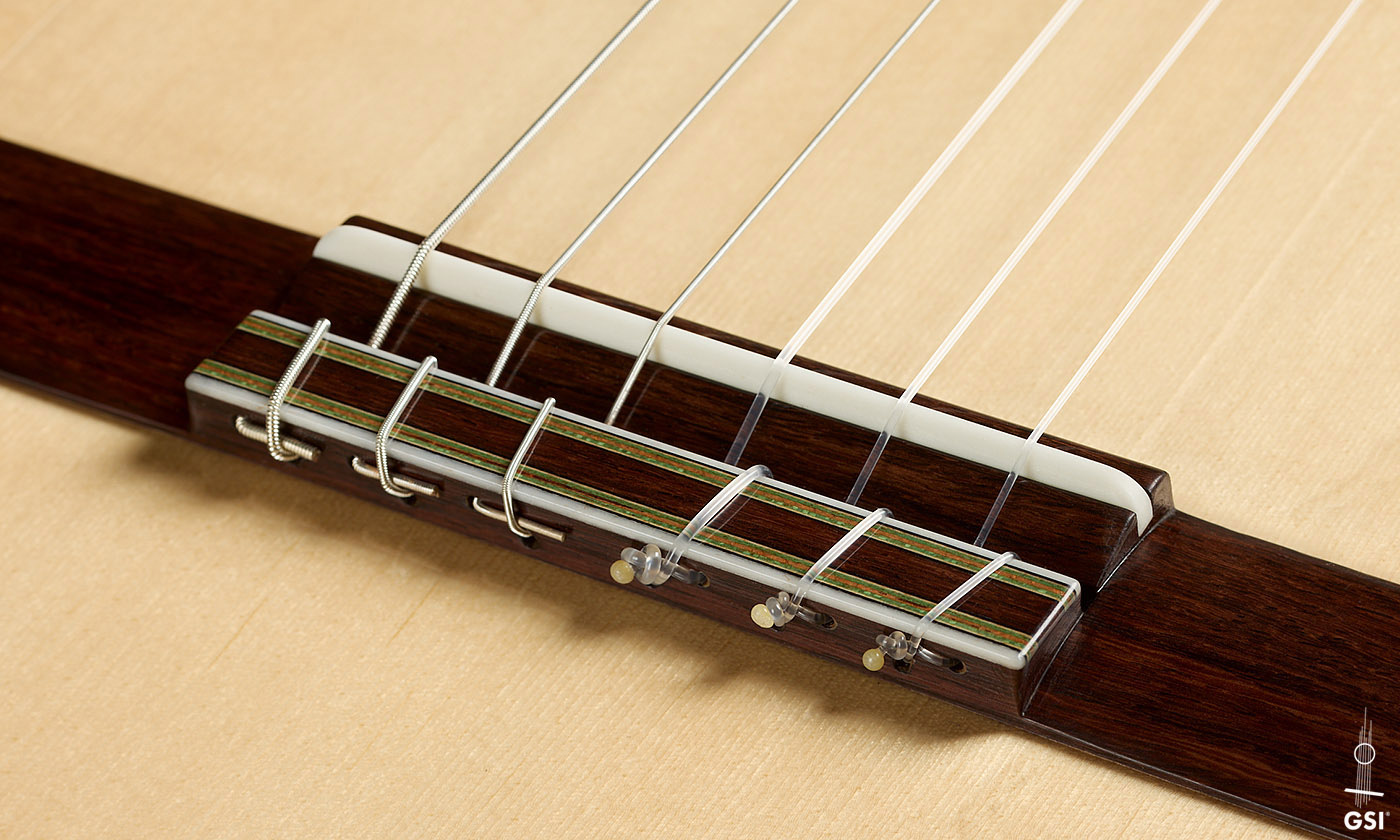
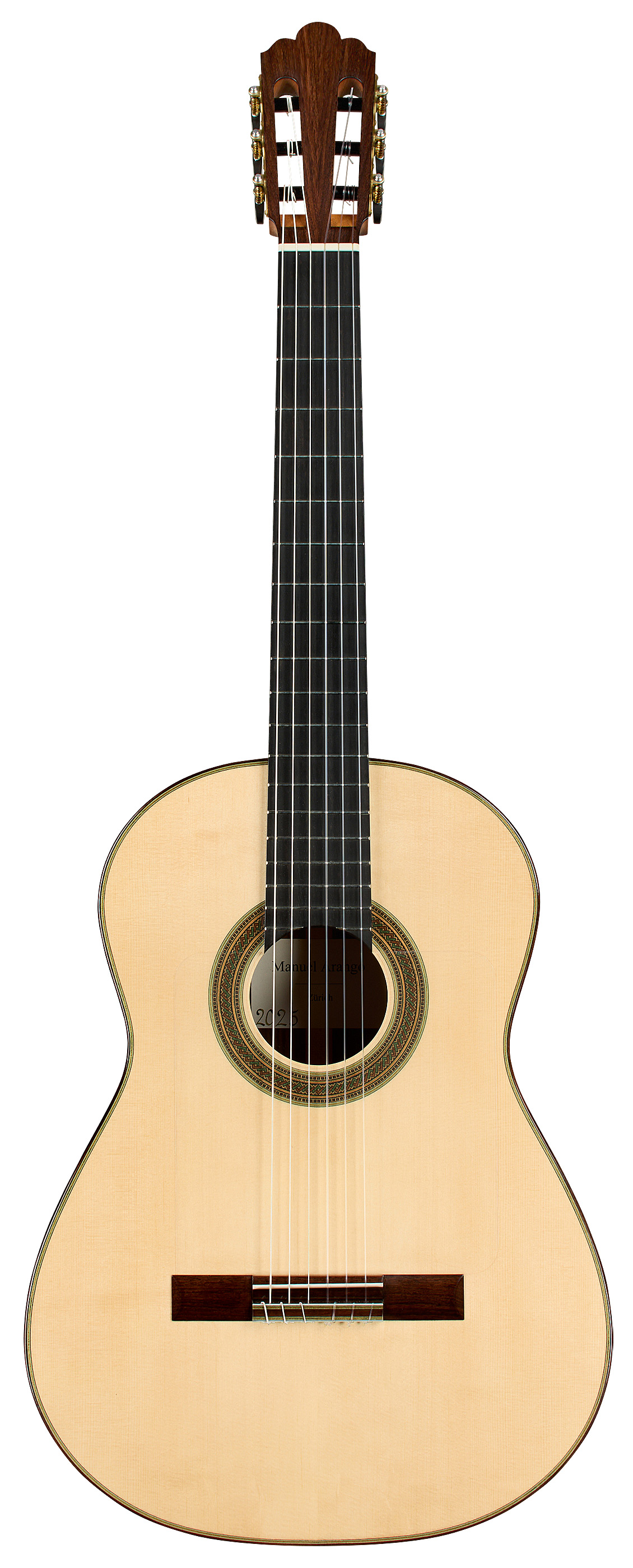
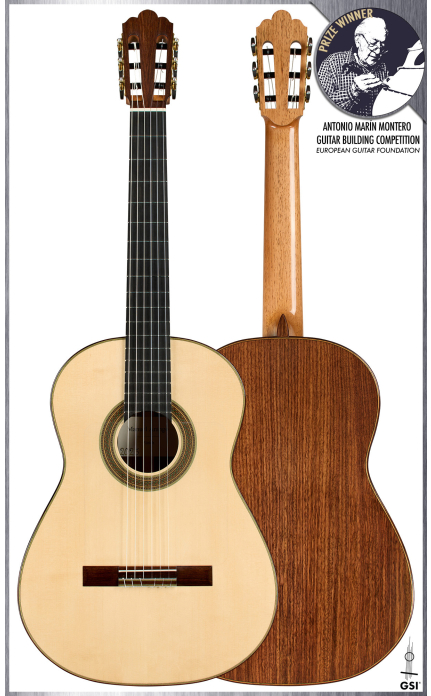
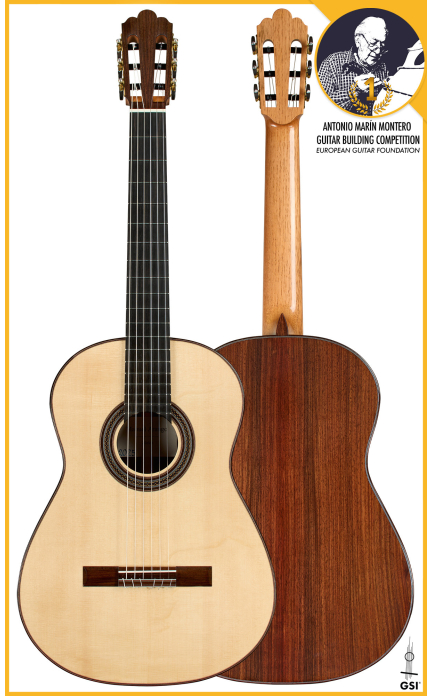
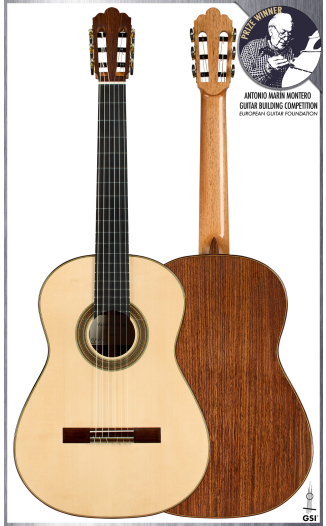
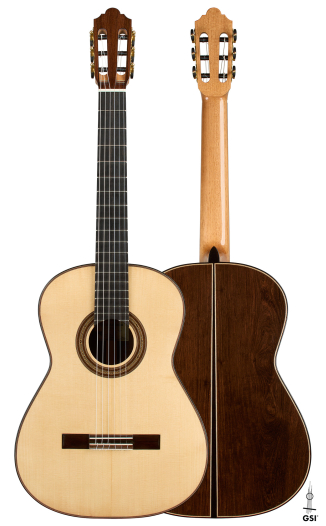
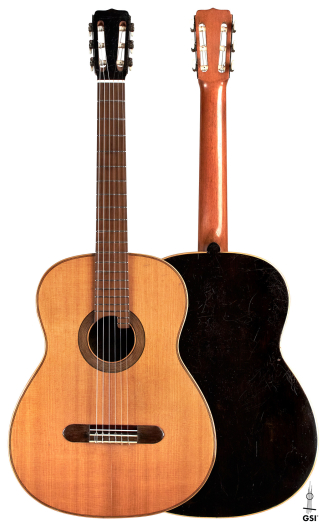
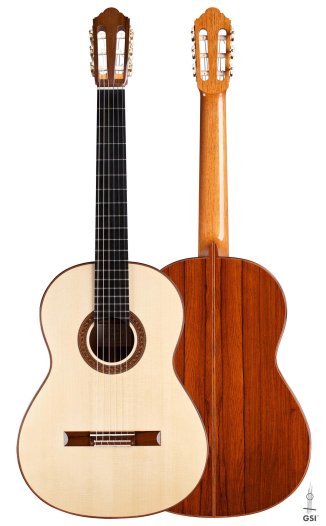
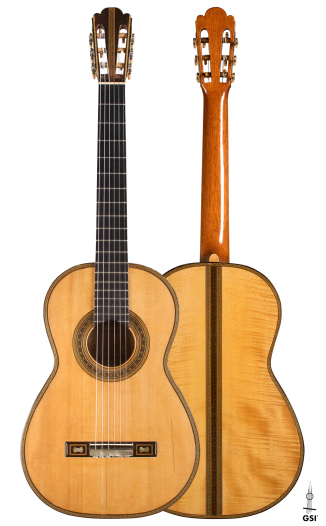
We first met Swiss guitar builder Manuel Arango at the 8th Antonio Marin Montero Guitar Making Competition in Granada, Spain in 2025, where he took first prize for his classical and second prize for his flamenco guitar. The guitar we present here is the actual winning flamenco guitar from this very event. This features Manuel's base design which consists of an asymmetric 7-fan bracing for the top. The fans themselves are arranged in a symmetrical layout, with the lower harmonic bar being tilted to shorten the treble side of the top, introducing the asymmetry in that manner. Manuel's primary influence for this approach is based on a 1930s Santos Hernandez that he was able to inspect during his university studies. He also draws a lot of influence from the Torres style of fan braces, but Manuel has been modifing his gradually over the years, making them slightly narrower and taller. He uses the same basic design for both his classical and flamenco - the only substantial difference is in the thicknessing and nuancing of the tops - the flamencos tend to be thinner than the classicals, but Manuel also makes other additional but small adjustments to favor each style of sound. For his rosette and marquetry work Manuel has studied a lot of Mudéjar art and architecture in Spain as well as Islamic art in general. His mosaic designs are inspired by this great art style and he always strives to incorporate a sense of "flow" in his rosettes. Color is also a very important factor, and finding a combination of materials and hues is always a very important part of his aesthetic decision-making. In particular, the color theory of Swiss expressionist painter Johannes Itten has been a big influence on Manuel's work. Other design elements are rooted in the Spanish and French traditions of guitar making. The plantilla as well as the headstock shape are influenced by the work of a variety of makers - most notably Antonio de Torres, Daniel Friederich, Dominique Field and Santos Hernandez.
Soundwise, the guitar has a very focused and piercing quality to every note making it a very agressive flamenco negra. It has lightning-fast responsiveness which gives the player a nice "assist" when playing rapid picado, rasguado and alzapua passages. For volume, the guitar's default position tends to be on the noticeably "powerful" side however when played delicately, its responsiveness remains consistent (attack, sustain, balance) no matter how hard or lightly the guitar is driven by the player. Playability is superb as well which should be no surprise given Manuel's background as a player and the years of feedback he's received from his brother Lucas, a professional flamenco guitarist. Overall a superb instrument in every way. We look forward to many more of this maker's guitars in the future!
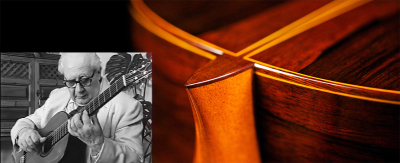
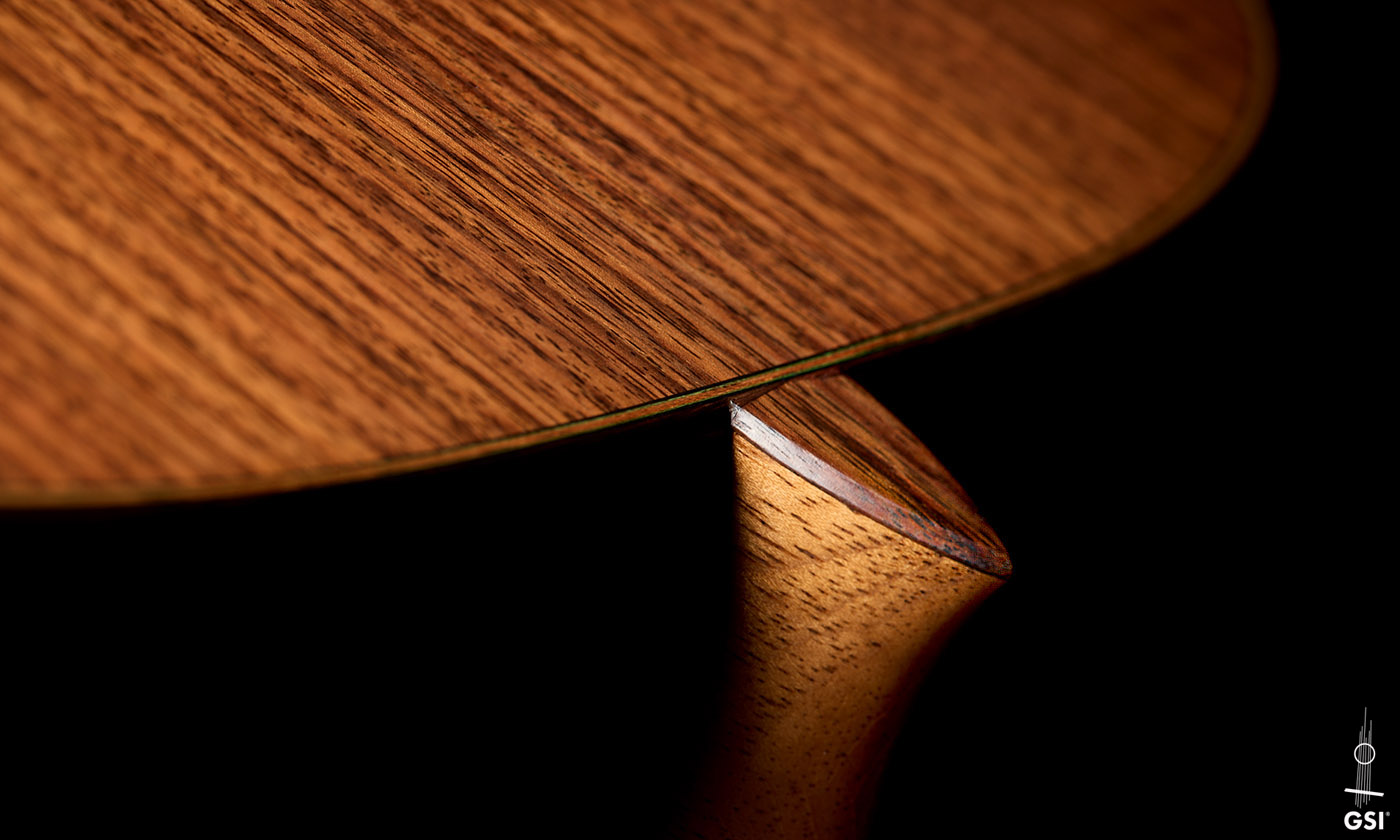
Photos of this guitar (and the award winning flamenco guitar) taken just prior to shipping

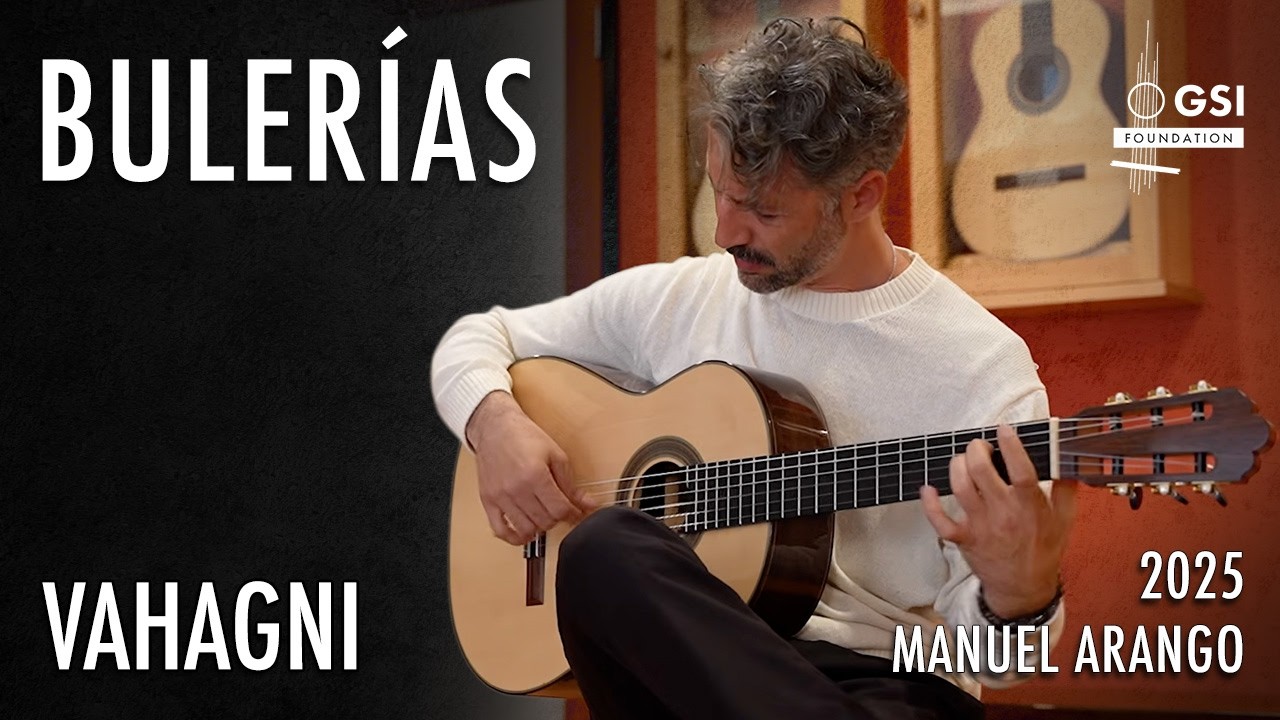
Videos
We first met Swiss guitar builder Manuel Arango at the 8th Antonio Marin Montero Guitar Making Competition in Granada, Spain in 2025, where he took first prize for his classical and second prize for his flamenco guitar. The guitar we present here is the actual winning flamenco guitar from this very event. This features Manuel's base design which consists of an asymmetric 7-fan bracing for the top. The fans themselves are arranged in a symmetrical layout, with the lower harmonic bar being tilted to shorten the treble side of the top, introducing the asymmetry in that manner. Manuel's primary influence for this approach is based on a 1930s Santos Hernandez that he was able to inspect during his university studies. He also draws a lot of influence from the Torres style of fan braces, but Manuel has been modifing his gradually over the years, making them slightly narrower and taller. He uses the same basic design for both his classical and flamenco - the only substantial difference is in the thicknessing and nuancing of the tops - the flamencos tend to be thinner than the classicals, but Manuel also makes other additional but small adjustments to favor each style of sound. For his rosette and marquetry work Manuel has studied a lot of Mudéjar art and architecture in Spain as well as Islamic art in general. His mosaic designs are inspired by this great art style and he always strives to incorporate a sense of "flow" in his rosettes. Color is also a very important factor, and finding a combination of materials and hues is always a very important part of his aesthetic decision-making. In particular, the color theory of Swiss expressionist painter Johannes Itten has been a big influence on Manuel's work. Other design elements are rooted in the Spanish and French traditions of guitar making. The plantilla as well as the headstock shape are influenced by the work of a variety of makers - most notably Antonio de Torres, Daniel Friederich, Dominique Field and Santos Hernandez.
Soundwise, the guitar has a very focused and piercing quality to every note making it a very agressive flamenco negra. It has lightning-fast responsiveness which gives the player a nice "assist" when playing rapid picado, rasguado and alzapua passages. For volume, the guitar's default position tends to be on the noticeably "powerful" side however when played delicately, its responsiveness remains consistent (attack, sustain, balance) no matter how hard or lightly the guitar is driven by the player. Playability is superb as well which should be no surprise given Manuel's background as a player and the years of feedback he's received from his brother Lucas, a professional flamenco guitarist. Overall a superb instrument in every way. We look forward to many more of this maker's guitars in the future!
Photos of this guitar (and the award winning flamenco guitar) taken just prior to shipping
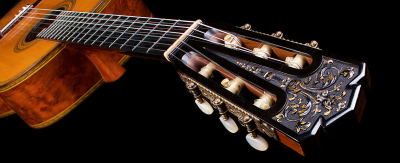
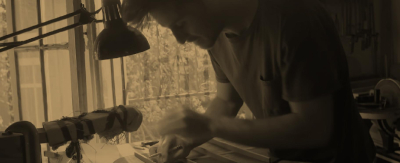
Manuel Arango was born in 1994 in Zurich, Switzerland, to a Swiss mother and Colombian father. Music was always present in their household and so through his parents, Manuel developed an interest in making music at a very early age. Encouraged by his father's love of Latin American music, he started playing classical guitar at age 9. Later, he became interested in woodworking as a teenager and discovered the ultimate point of intersection for these two interests in the art of guitar building.
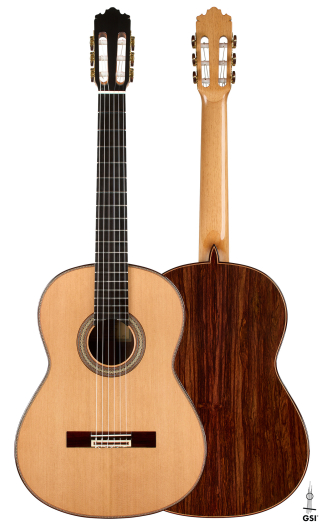
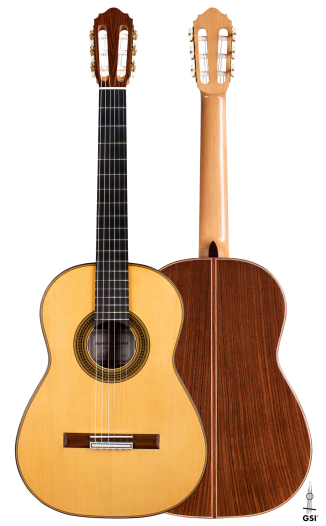
Manuel's older brother, Lucas, is a professional flamenco guitarist, and ever since Manuel began to delve into the craft of guitar making in 2015, the two brothers have regularly exchanged ideas and collaborated on the development of instruments that would suit the needs of high-level players - both classical and flamenco. Their focus has been on quality of sound, playability and of course classy aesthetics as well. Manuel's current models represent the latest development of this ongoing process.
After building his first instruments in Switzerland, Manuel moved to Germany where he studied from 2016-2021 at the Westsächsische Hochschule in Markneukirchen, graduating with a degree in musical instrument design and building as well as the title of master craftsman. His graduation paper was on the topic of Islamic art and design in classical guitars. In 2022 he established a workshop in Zurich and has been building guitars under his own name since then.
In 2025 Manuel participated in the prestigious 8th Antonio Marin Montero Guitar Making Competition in Granada, where he won the first prize for his classical and second prize for his flamenco guitar.
Feel free to contact us with any questions. It’s what we’re here for!