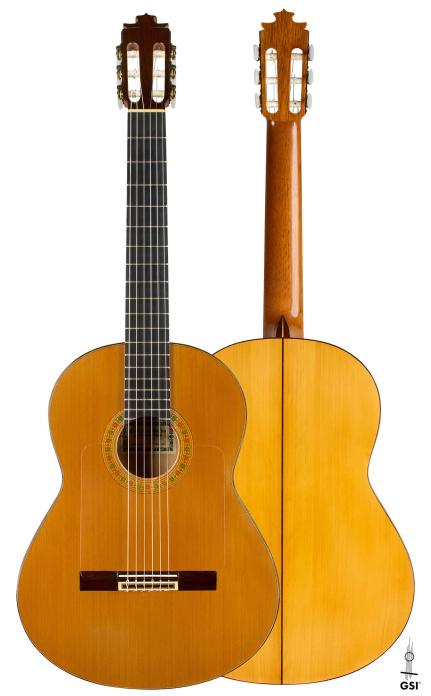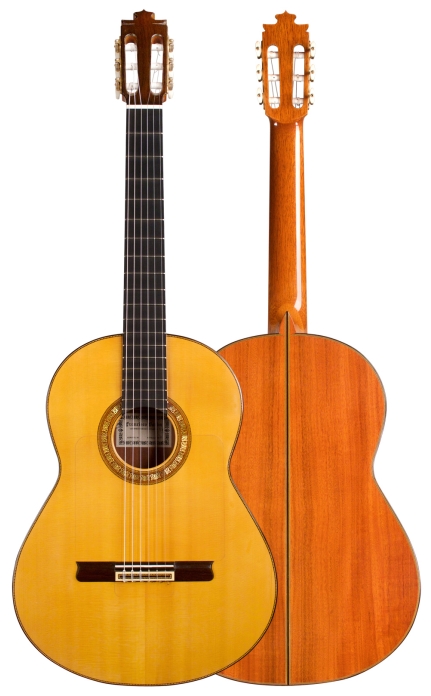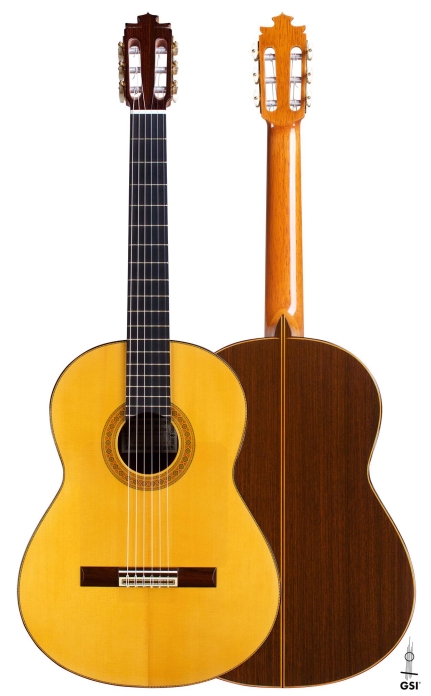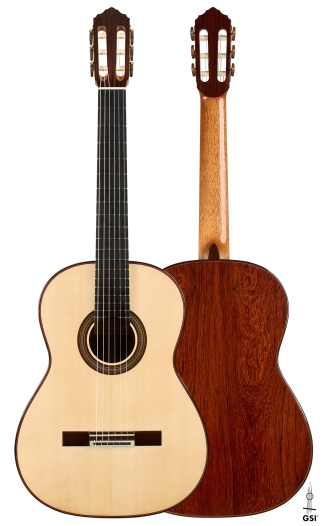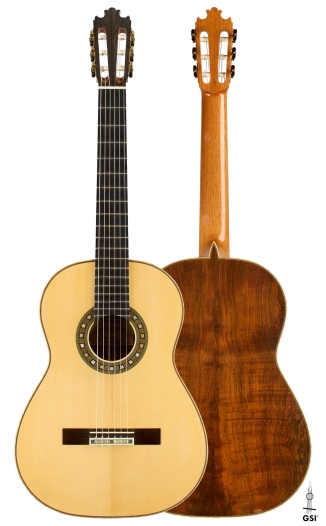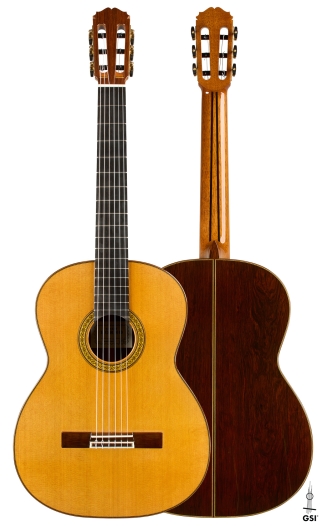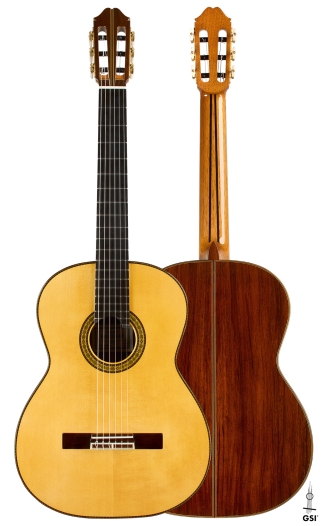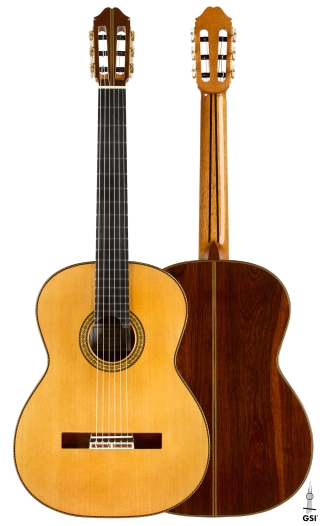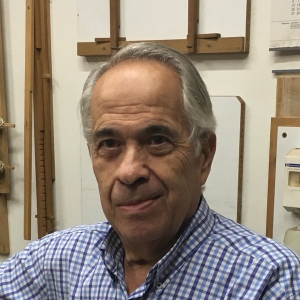
Francisco Barba (b. 1939) is a self-taught guitar maker from Seville, the city's best-known builder and one of the most celebrated makers of flamenco guitars in Spain, of the same generation as Manuel Reyes and Gerundino Fernández. For more than thirty years he has built his guitars with his sons, Francisco (Paco) and Juan Antonio, in the family workshop on Calle Arroyo.
At a Glance
- Born: 1939, Seville, Spain
- Trained: Self-taught; started in his father's carpentry shop
- First guitar: At the age of eighteen
- Workshop: Calle Arroyo, Seville
- Works with: His sons, Francisco (Paco) and Juan Antonio Barba
- Builds: Flamenco blancas and negras, and classical guitars
- Known for: Featherlight, fast flamencos with a fat, punchy Andalusian voice
- Signature: The bold Barba headstock and his rose, star and label-pattern rosettes
A Self-Taught Guitar Maker from Seville
It was his Andalusian roots and his love of flamenco that led Francisco Barba to guitar making. At fourteen he began working wood in his father's carpentry business, and at eighteen he taught himself to build his first guitar. He never had a teacher, nor the special tools of the trade, so he had to invent everything for himself – which explains his very personal way of building. A José Ramírez guitar of the 1960s that came his way made a deep impression on him: he did not copy it, but its workmanship spurred him to perfect his own.
In 1992 he celebrated 25 years as a guitar maker with a special series of 15 guitars – 12 in rosewood and just 3 blancas – made from his finest materials and fitted with a commemorative label. Today, with more than sixty years of experience behind him, he is still building in the same workshop on Calle Arroyo, a street lined with orange trees in the very heart of Seville.
Francisco Barba and His Sons: Guitars Made by Six Hands
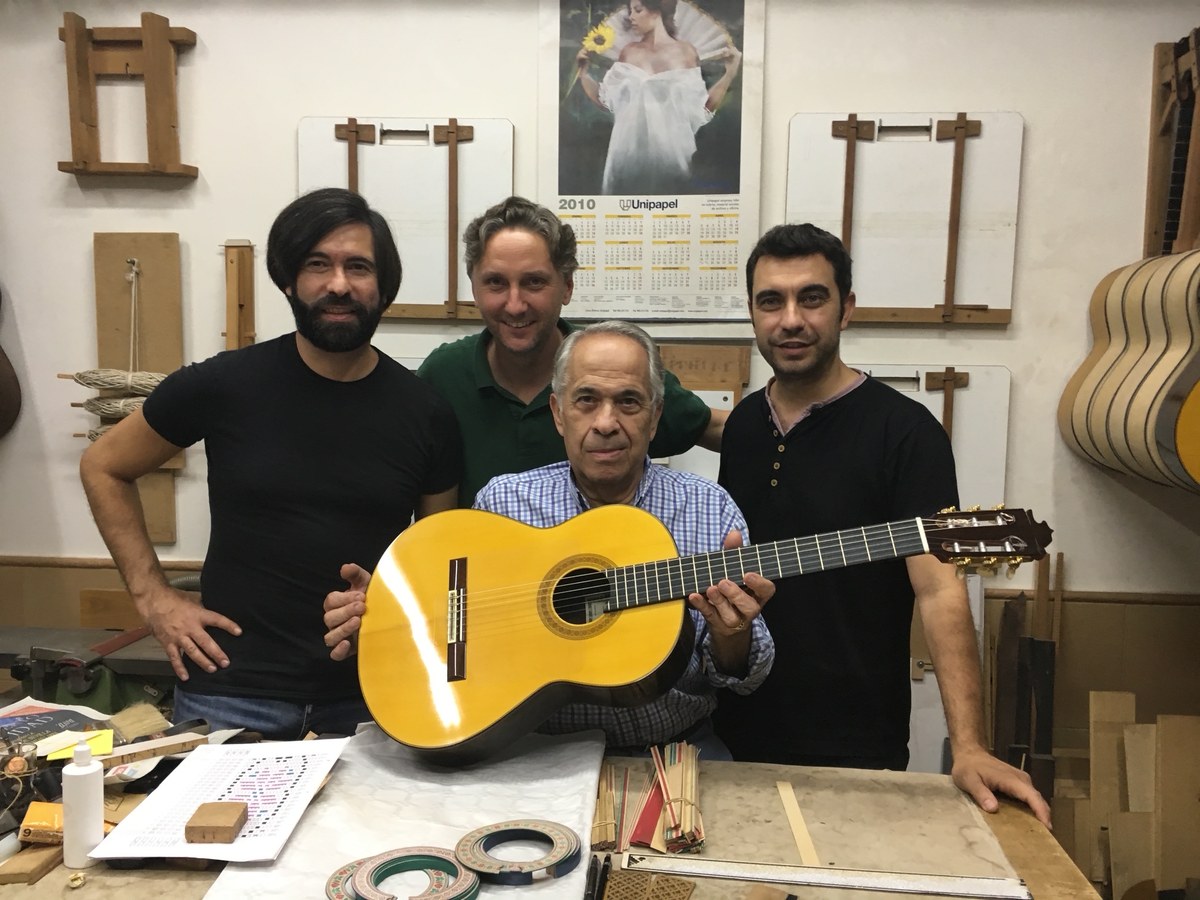
Francisco works with his two sons, Francisco – known as Paco – and Juan Antonio, who learned the craft from him. The three do not divide the work by specialty: whoever feels like making bridges one day makes bridges, and whoever wants to work on soundboards does so, with the aim of keeping the same sound and quality in every guitar. They choose their woods together, tapping many boards before settling on one, and at the end they adjust the sound of each guitar together. The label says "Francisco Barba", but as Francisco told Orfeo Magazine, every guitar from the workshop is built by all three of them – guitars made by six hands.
The next generation passes the craft on as well: in June 2025 Juan Antonio Barba was the master luthier of the flamenco guitar-building course at the Solera Artisans School, near Montserrat outside Barcelona.
How Barba Builds His Guitars
Barba's methods are his own. He does not use a solera (the domed work board of the Spanish tradition) to shape the soundboard; instead he assembles the guitar around an inner mould, as violin makers do. In place of the traditional individual glue blocks (peones), his guitars have kerfed linings cut from a single piece and bent into shape, and the top is braced with a dense fan. His flamencos have a slightly broader waist and shallower sides than his classicals, with lower action, so the strings can give that touch of rasp on the frets that flamenco players love.
The family works with both spruce and cedar for the tops, and with cypress just as much as rosewood for the backs and sides, along with the occasional mahogany guitar. Barba guitars come with one of four rosettes – red stars, blue stars, roses, or a pattern copied from the design on his label – and are fitted with tuners, traditional wooden pegs or modern geared pegs, as the player prefers.
The Barba Flamenco Sound
Barba's flamencos are featherlight, in line with the best guitars of Marcelo Barbero, Arcángel Fernández and even Santos Hernández, and they answer with lightning speed. The tone is fat and balanced, with a lot of punch, volume and flamenco edge, and the easy, sleek necks and low action make them a breeze to play. Many players regard Francisco Barba as the greatest living builder of flamenco guitars.
Played by Seville's Great Flamenco Guitarists
Barba guitars have been played by many of the finest flamenco guitarists of Seville and all of Andalucía, among them Rafael Riqueni, Manolo Franco, Niño de Pura, Pedro Peña, Manuel Molina and Quique Paredes.
Francisco Barba in Orfeo Magazine

Orfeo Magazine No. 25 – Flamenco: Origins of the Flamenco Guitar
The Spring 2025 issue visits the Barba workshop in Seville: "Francisco Barba and his sons, guitars crafted by six hands".
Francisco Barba Guitars at GSI
Many Francisco Barba guitars have passed through our doors over the years. You'll find guitars currently in stock by clicking the "Guitars In Stock" button in the header of this page as well as earlier examples in our Museum by clicking the "Guitars In Museum" button.
Frequently Asked Questions
Who is Francisco Barba?
A self-taught guitar maker from Seville, born in 1939, regarded as one of the greatest makers of flamenco guitars in Spain. He builds with his sons, Francisco (Paco) and Juan Antonio, in his workshop on Calle Arroyo.
Who plays Francisco Barba guitars?
Many of Andalucía's finest flamenco guitarists, including Rafael Riqueni, Manolo Franco, Niño de Pura, Pedro Peña, Manuel Molina and Quique Paredes.
Does Francisco Barba make classical guitars?
Yes. He is best known for his flamenco blancas and negras, but the workshop also builds classical guitars, with a different construction and bracing.
What rosettes does Francisco Barba use?
Four designs: red stars, blue stars, roses, and a pattern copied from the decoration of his label.