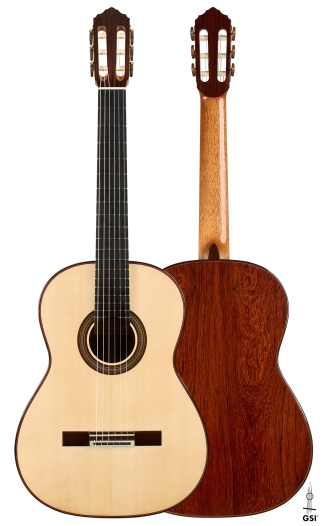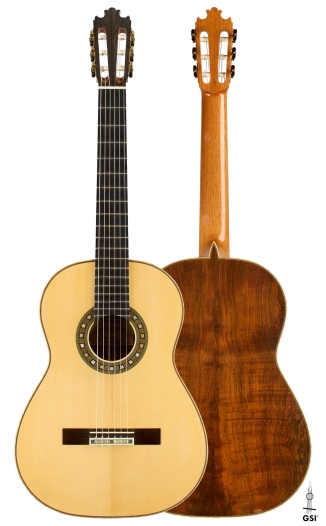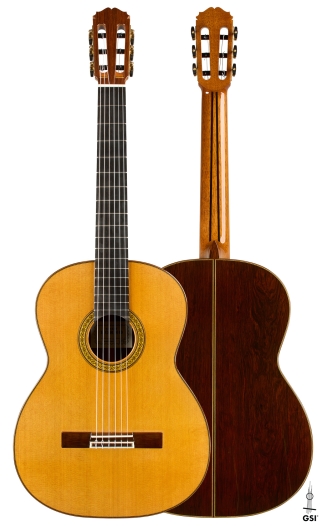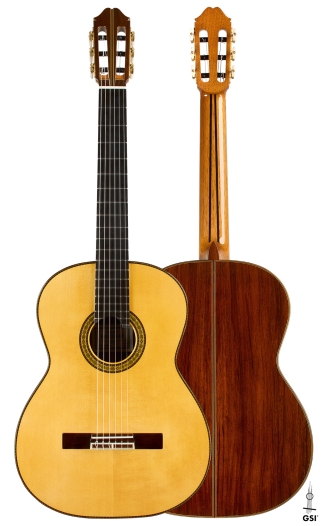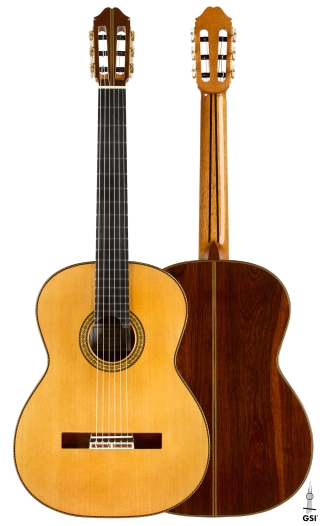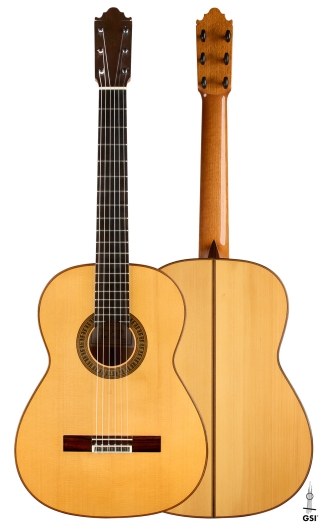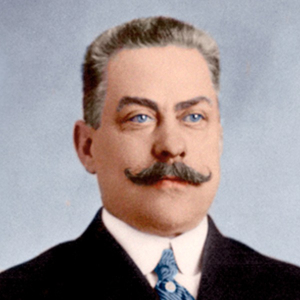
Manuel Ramírez (1864–1916) was a Madrid guitar maker whose workshop was the most important of the early post-Torres era. The brother and pupil of José Ramírez I, he employed Santos Hernández, Domingo Esteso and, very likely, Enrique García, and his shop made the famous 1912 guitar played by Andrés Segovia, now in the Metropolitan Museum of Art.
At a Glance
- Born: 1864
- Died: 1916
- Workshop: Madrid, Spain
- Trained: With his brother, José Ramírez I
- Craftsmen: Santos Hernández, Domingo Esteso, Modesto Borreguero, Pascual Viudes and, very likely, Enrique García
- Most famous guitar: Segovia's 1912 Manuel Ramírez, built by Santos Hernández (Metropolitan Museum of Art)
- Shop sign: "Luthier del Real Conservatorio"
- After 1916: Instruments completed under the label "Viuda de Manuel Ramírez"
Carrying the Torres Guitar into the 20th Century
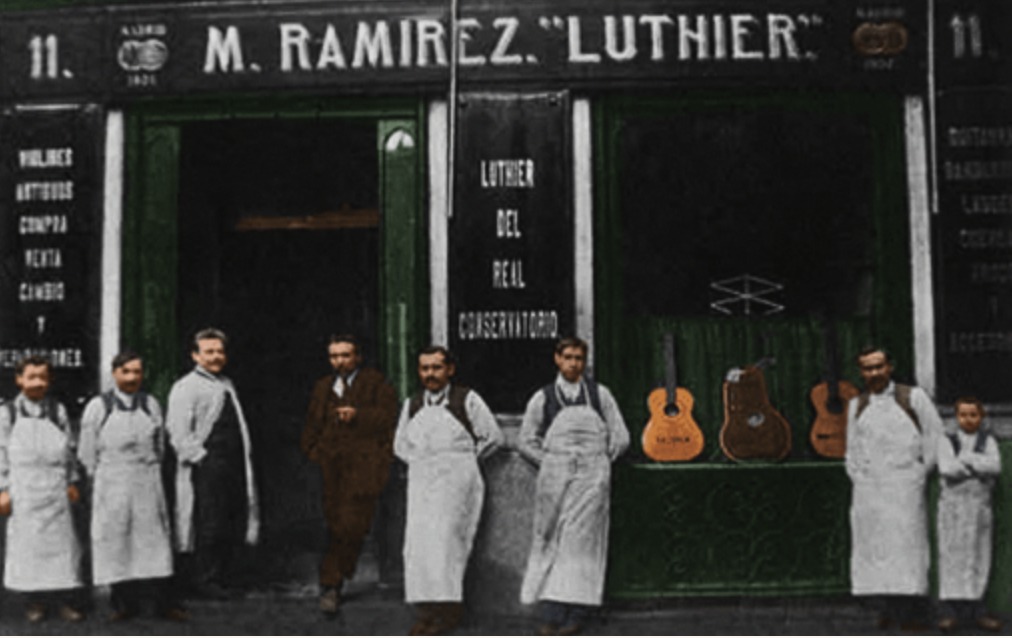
The Manuel Ramírez shop is undoubtedly the most important guitar workshop of the early post-Torres era. Manuel trained with his older brother José Ramírez I – a pupil of Francisco González – but the two became estranged, and while José's large tablao guitars served the flamencos of the cafés cantantes, many flamencos came to prefer the smaller, lighter guitars of Manuel's shop. Manuel committed himself to ensuring the survival of the Torres design into the 20th century and beyond. With his vision and determination, and a shop of the finest builders alive at the time – Santos Hernández, Domingo Esteso, Modesto Borreguero, Pascual Viudes and very likely Enrique García – he produced great guitars that secured the legacy of Antonio de Torres for all future generations of guitar makers. His shop sign proudly read "Luthier del Real Conservatorio".
Segovia's 1912 Manuel Ramírez
The shop's most famous guitar is the 1912 Manuel Ramírez that the young Andrés Segovia played – built by Santos Hernández, and today housed in the Metropolitan Museum of Art in New York, alongside Segovia's 1937 Hermann Hauser I. We have had several Ramírez guitars from the same year, including one remarkably close to Segovia's in its dimensions.
The Sound of a Manuel Ramírez
Manuel Ramírez guitars are feather-light, with incredible volume and an instant response. They have deep basses, warm or sparkling trebles, and rich textures of sound interwoven with clear, bell-like fundamentals – a sound that is unmistakably Spanish: deep, dark and mysterious. It is no wonder that in recent years more and more contemporary luthiers have set out to rediscover this style of build. Made before the distinction between "classical" and "flamenco" guitars existed, they accommodate virtually any style brought to them.
Viuda de Manuel Ramírez and the Shop's Legacy
After Manuel's death in 1916, the shop continued to complete instruments under the label of his widow, the "Viuda de Manuel Ramírez" – our 1916 example is signed inside by Santos Hernández. His craftsmen went on to found the great Madrid workshops of the next generation: Santos Hernández on Calle de la Aduana from 1921, and Domingo Esteso at Gravina 7, the workshop that became the home of the Conde family.
Manuel Ramírez Guitars at GSI
Many Manuel Ramírez guitars have passed through our doors over the years. You'll find guitars currently in stock by clicking the "Guitars In Stock" button in the header of this page as well as earlier examples in our Museum by clicking the "Guitars In Museum" button.
Frequently Asked Questions
Who was Manuel Ramírez?
A Madrid guitar maker (1864–1916), brother of José Ramírez I, whose workshop was the most important of the early post-Torres era.
Who built Segovia's 1912 Manuel Ramírez guitar?
Santos Hernández, then working in Manuel Ramírez's shop. The guitar is now in the Metropolitan Museum of Art in New York.
Who worked in the Manuel Ramírez workshop?
Santos Hernández, Domingo Esteso, Modesto Borreguero, Pascual Viudes and, very likely, Enrique García.
What does "Viuda de Manuel Ramírez" mean on a label?
"Widow of Manuel Ramírez": after his death in 1916, the shop completed instruments under his widow's label.
Are Manuel Ramírez guitars classical or flamenco?
They were made before the two were distinguished, and work beautifully for both.