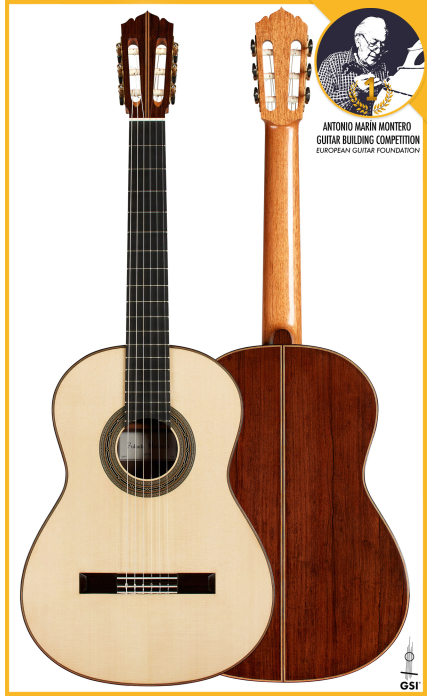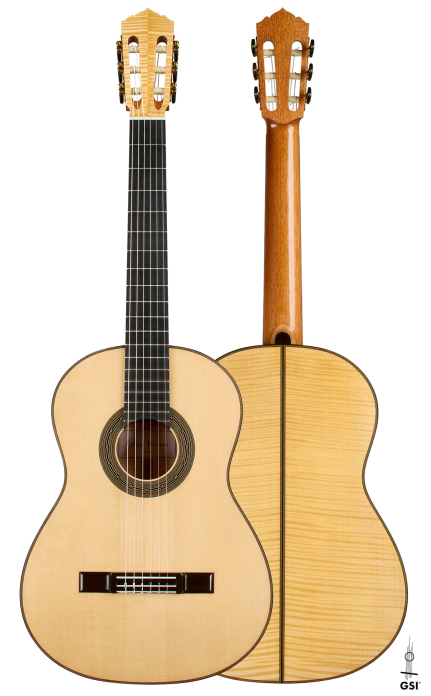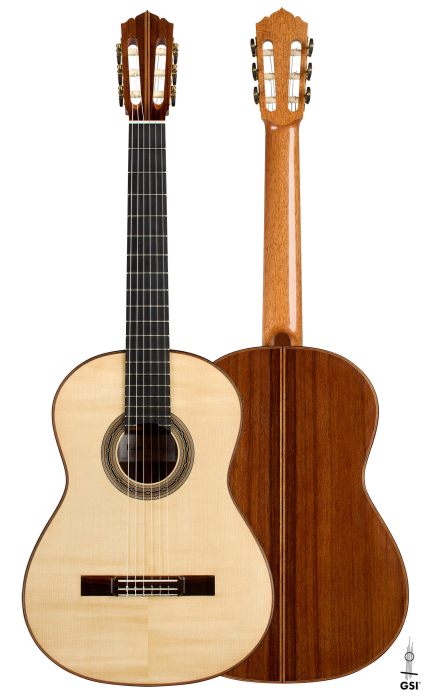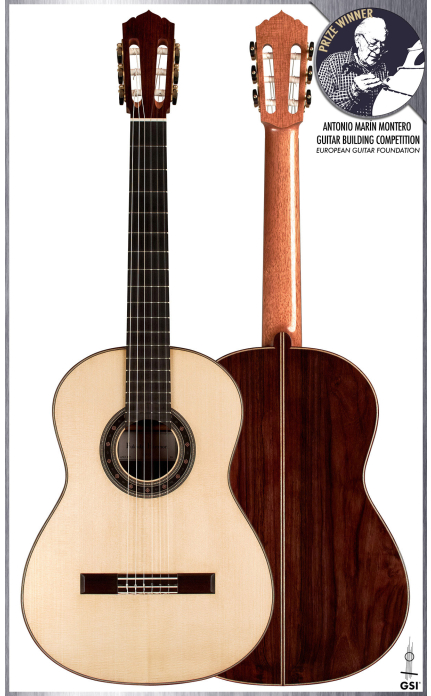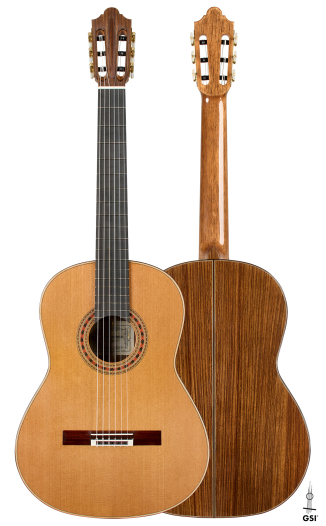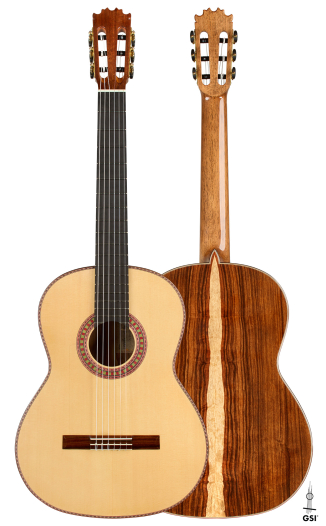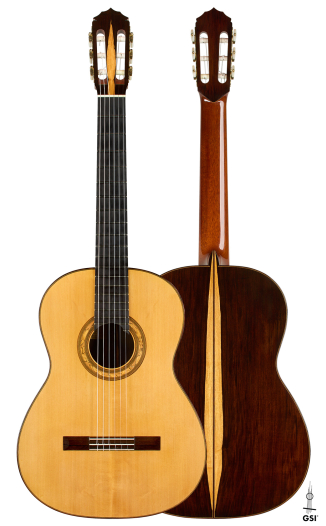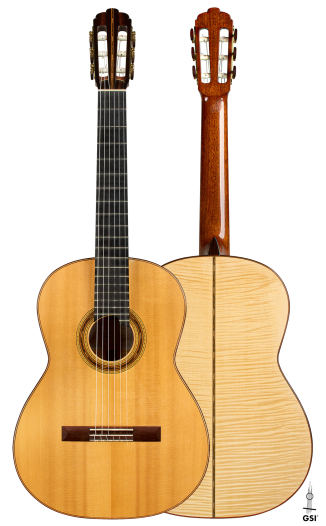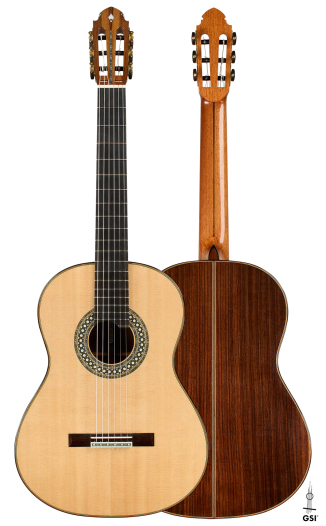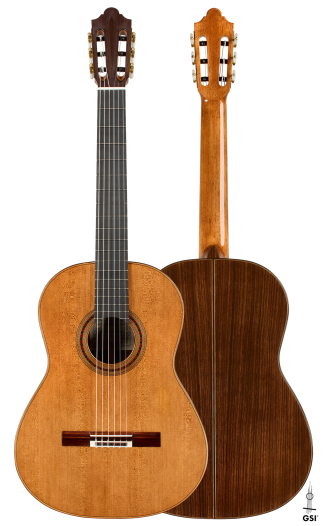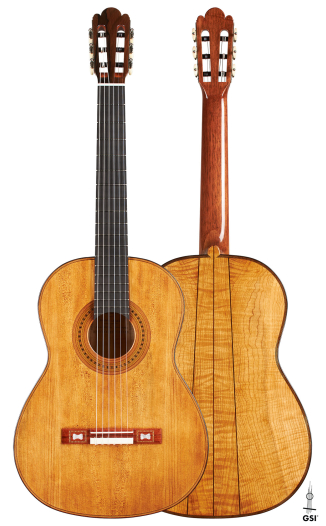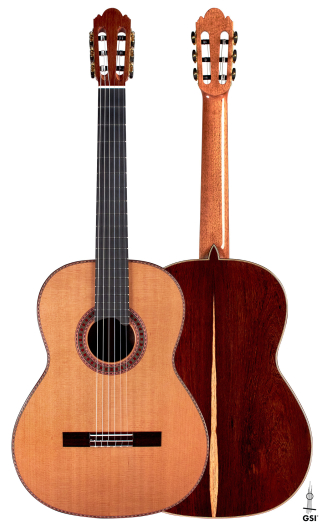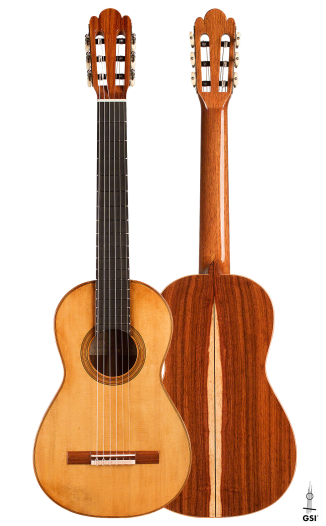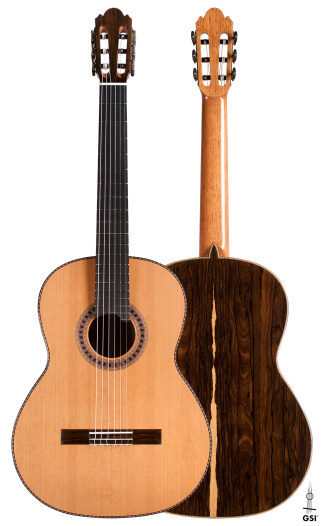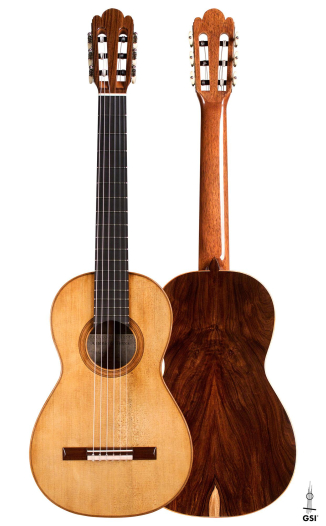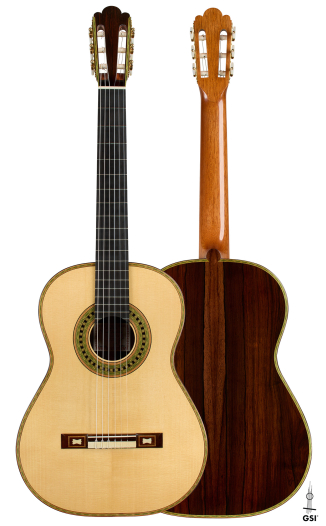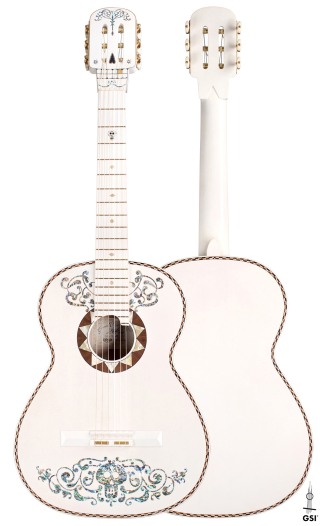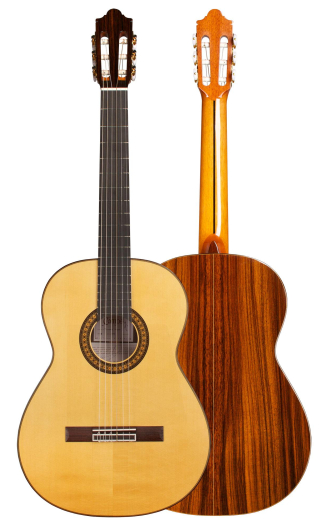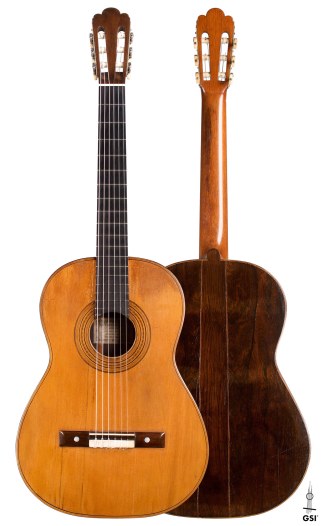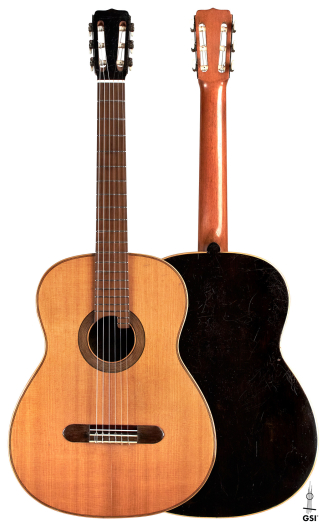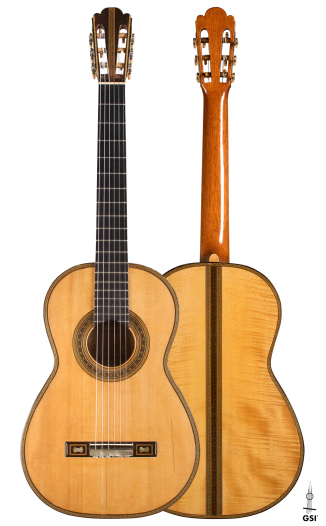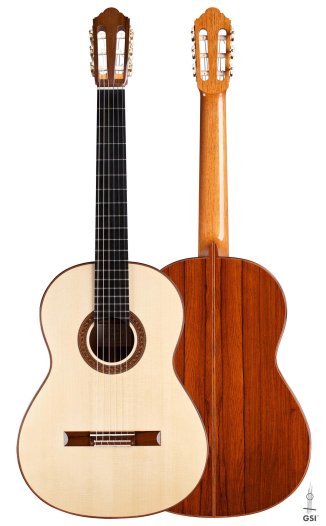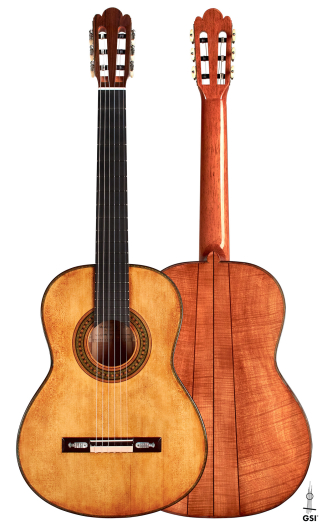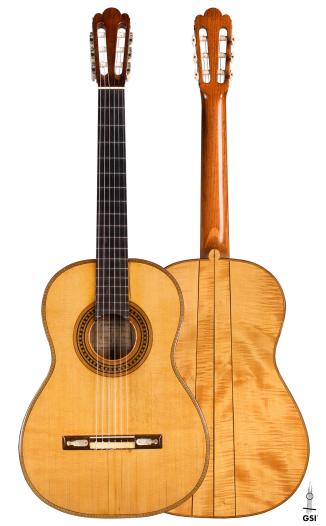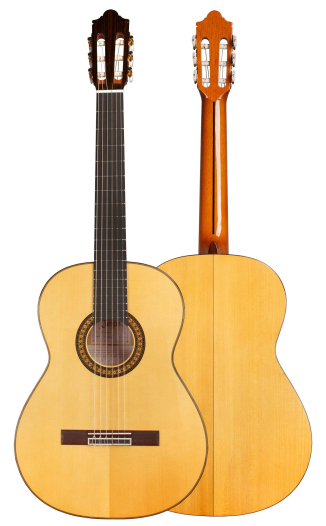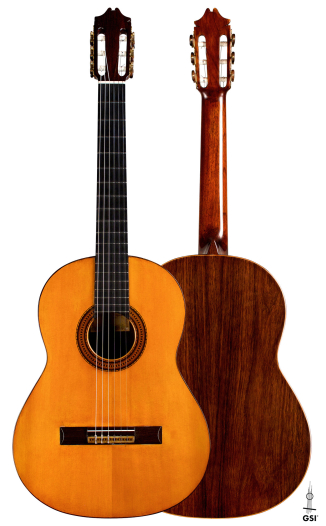
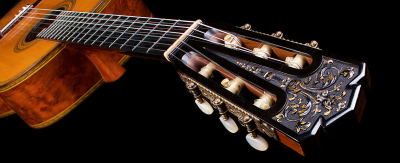
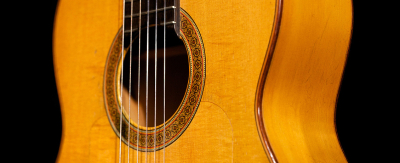
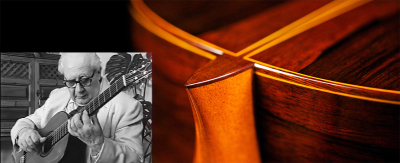
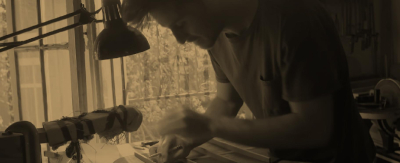





Hironori Fukuda is a Japanese classical guitar maker based in Osaka, who completed his first guitar in 2001, and winner of First Prize for classical guitar at the 2024 Antonio Marín Montero International Guitar Making Competition in Granada, Spain.
At a Glance
- Workshop: Osaka, Japan
- First guitar: 2001, a Santos Hernández model in spruce and maple
- Studied: self-taught from textbooks; attended the summer course of José Romanillos (2007)
- Influences: Santos Hernández, Antonio de Torres and the old Spanish masters
- Methods: traditional Spanish construction, hide glue and French polish, nearly all by hand
- Awards: First Prize, classical guitar, seventh Antonio Marín Montero Guitar Making Competition (2024); Third Prize, 3rd Antonio Marín Montero Competition (2019)
An Early Love of Craft
From an early age, Hironori Fukuda loved working with his hands, taking up a variety of crafts and model building. He first played classical guitar at university in Kyoto, where he joined the university guitar club. He was passionate about playing, but thanks to his lifelong love of craftwork, it wasn't long before his attention turned to how guitars are made.
The Santos Hernández Revelation
As soon as Hironori began gathering materials and researching construction techniques, he discovered how hard it was to find good-quality tonewoods, especially those of the rosewood family. Then, in 1998, he attended a concert where the guitarist played a 1933 Santos Hernández made of spruce and maple. Hironori was deeply impressed by its wonderful sound, and the experience inspired him to build a guitar without rosewood. He spent three years studying lutherie from textbooks while refining his woodworking skills, and in late 2001 he completed his first guitar: a Santos Hernández model with a spruce top and maple back and sides!
Lessons from Torres, Santos and Romanillos
Since then, Hironori has had the opportunity to examine several important vintage instruments by makers such as Antonio de Torres and Santos Hernández, while gaining experience in building, repairing, and restoring guitars. In 2007, he attended the famous summer course given by José Romanillos. It had a profound influence on his approach, inspiring him to build guitars with great color, a beautiful, singing melodic voice, and many of the other charming qualities he found in the old Spanish instruments.
Traditional Spanish Construction
Hironori builds his guitars using purely traditional Spanish methods, and nearly all of the work is done by hand with very few power tools. He is very careful about the quality and selection of his materials. He uses only air-dried European spruce for his soundboards, and because he wants his guitars to bring out the natural sound of the wood as fully as possible, he avoids heat processing and synthetic reinforcements. He assembles with hide glue, fills the pores with shellac and pumice powder, and finishes with a traditional French polish applied by pad. His aesthetic is elegant and subtle: he makes his rosettes and inlays only from woods in their natural, undyed colors.
First Prize in Granada
GSI first met Hironori at the 3rd International "Antonio Marín Montero" Guitar Building Competition in Granada in 2019, where he took third prize, and we have followed his work closely ever since. Five years later he returned and took First Prize for classical guitar at the seventh Antonio Marín Montero Guitar Making Competition in Granada, Spain, in July/August 2024.
Frequently Asked Questions
Where does Hironori Fukuda build his guitars? In Osaka, Japan, where he lives and works.
What awards has Hironori Fukuda won? First Prize for classical guitar at the 2024 Antonio Marín Montero International Guitar Making Competition in Granada, and third prize at the same competition in 2019.
What influenced Hironori Fukuda's guitars? Hearing a 1933 Santos Hernández in concert in 1998, studying vintage guitars by Torres and Santos Hernández, and the summer course of José Romanillos in 2007.
How does Hironori Fukuda build his guitars? With purely traditional Spanish methods: air-dried European spruce tops, hide glue, and a French polish applied by pad, with nearly all the work done by hand.