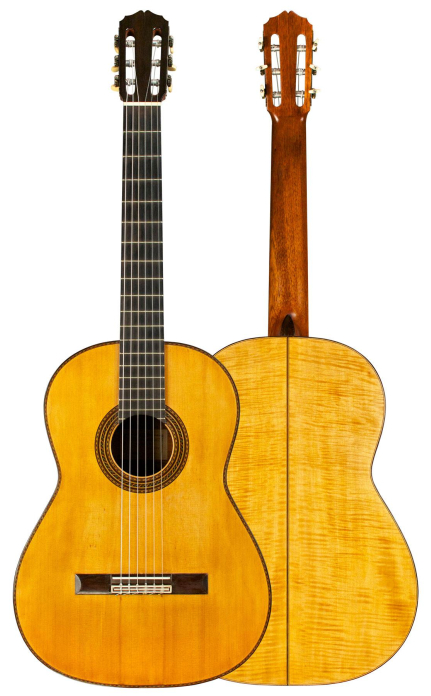
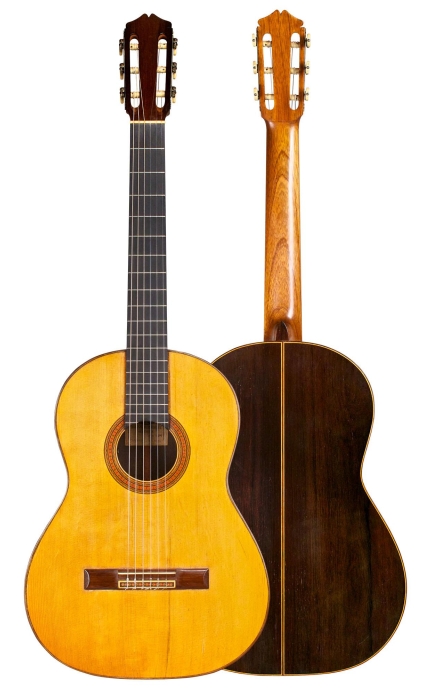
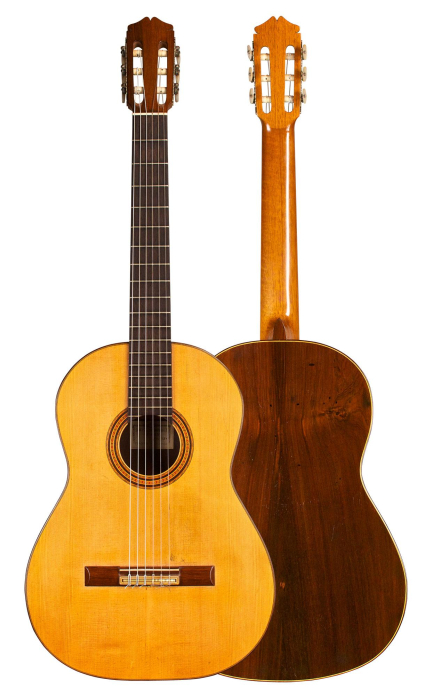
1922 Santos Hernández w/pegs SP/CY
| Year | 1922 |
| Top | Spruce |
| Back & Sides | Cypress |
| Scale Length | 653 mm |
| Nut width | 51 mm |
| Finish | French Polish |
| Country | Spain |
| Luthier | Santos Hernández |
This guitar is no longer available in our inventory. If it interests you, click the ”notify me when available” button to be notified in the event that we re-acquire this guitar for re-sale.
Description
This 1922 Santos Hernández is a spruce and cypress flamenco blanca with wooden pegs, made in Madrid – built ultra-light for a bullet-like attack.
A 1922 Santos Flamenco Blanca
This particular guitar, a flamenco blanca, was built in 1922 and is a gorgeous example of Santos' most skilled work. It was built ultra-light, which gives it a bullet-like attack and immediate response, making it a thrill to play. Tone is punchy and clear with a deep, old-world sound, and it has plenty of volume for any concert or recording setting. Playability is excellent and the wooden pegs work amazingly well with little effort.
Condition

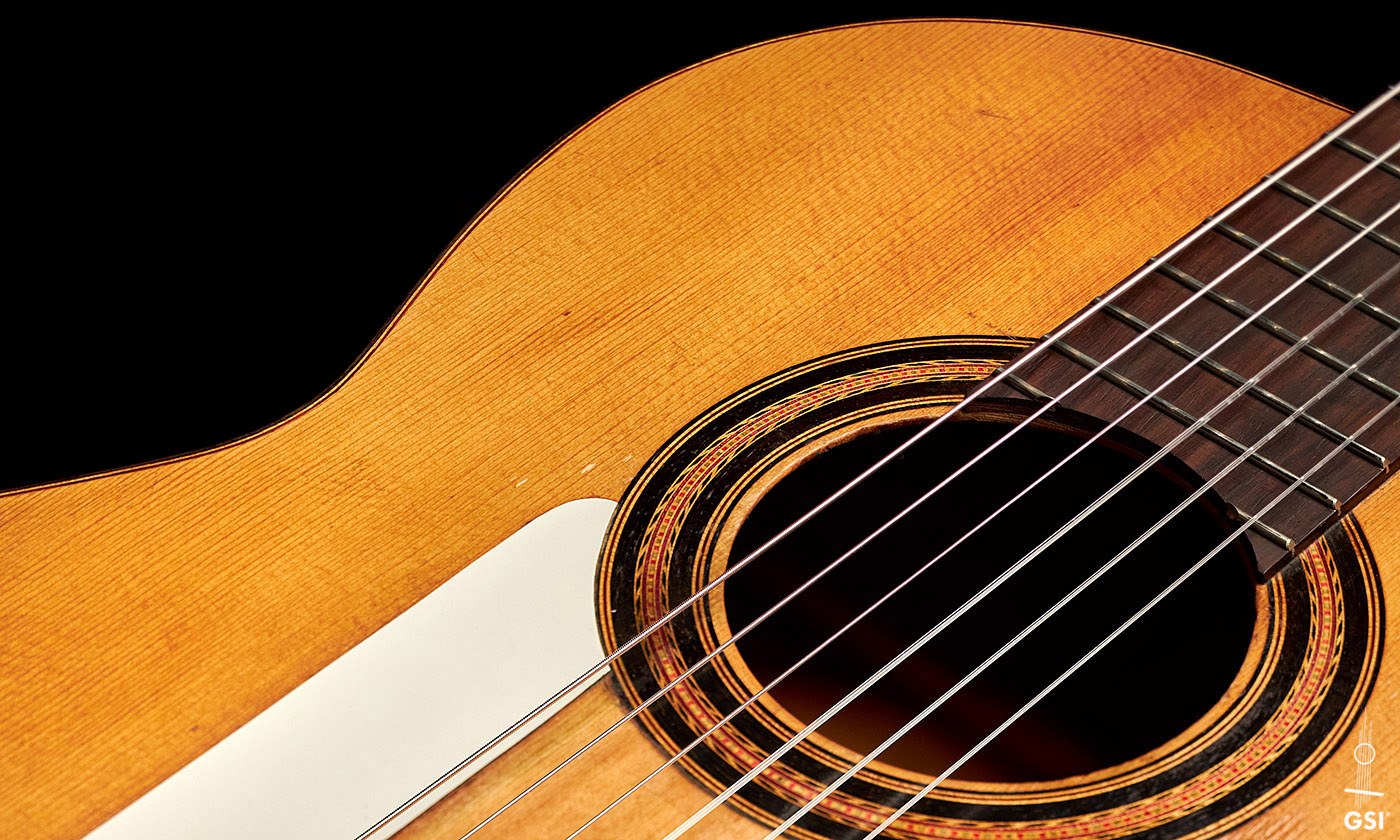
Condition is excellent, with 1 well-repaired crack in the top to the side of the tap plate, 1 crack in the upper bout of the back, repaired with glue only, and 2 hairline cracks (invisible from the outside) to the bass side "rib", repaired conservatively with cleats. Its charming, very "Spanish" quality of tone makes it a wonderful example of Santos at his best.

Background
Santos Hernández and Segovia's 1912 Manuel Ramírez
Santos Hernández (1874–1943) is one of the elite makers of the historical pantheon – along with Torres and Hauser I in terms of collectibility and historical importance. Santos became a very established maker early in his career when he became known as the builder of the Manuel Ramírez guitar of 1912 that was owned and played by Andrés Segovia – this very guitar currently resides in the Metropolitan Museum of Art in New York, right next to Segovia's 1937 Hauser I.


From the Ramírez Workshop to Calle de la Aduana, Madrid
Born in Madrid, Santos started out as a boy making the gold and silver trimmings for bullfighters' suits, and turned to the guitar in 1886. After his apprenticeship and five years of military service, Manuel Ramírez – the teacher he always considered his true one – took him into his workshop, where he became foreman. Two years after Ramírez's death in 1916, Santos set up his own shop, soon on Calle de la Aduana, where the great guitarists of the day came to visit and where he worked until his death in 1943.
A Guitar for the Great Players of His Day
Many others have played his instruments, including Regino Sainz de la Maza (for whom the "Concierto de Aranjuez" by Joaquín Rodrigo was written), Eduardo Abreu, Daniel Fortea, and the Romero family among others, as well as flamenco masters such as Ramón Montoya and Sabicas. Players for the past 100 years have valued these instruments for their charming, introverted quality of tone.