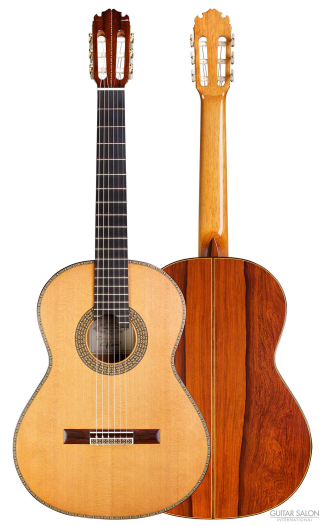
1981 José Romanillos "La Toronto" SP/IN
| Year | 1981 |
| Top | Spruce |
| Back & Sides | Indian Rosewood |
| Scale Length | 650 mm |
| Nut width | 51 mm |
| Finish | French Polish |
| Country | England |
| Luthier | José Luis Romanillos |
This guitar is no longer available in our inventory. If it interests you, click the ”notify me when available” button to be notified in the event that we re-acquire this guitar for re-sale.


Radamés Gnattali's "Petite Suite" performed by Michael Váscones on a 1981 Jose Romanillos guitar

1981 Jose Romanillos “La Toronto” SP/IN AVAILABLE NOW at guitarsalon.com
Description
 This 1981 José Romanillos "La Toronto" is a classical guitar with a spruce top and Indian rosewood back and sides, built in Semley, Wiltshire, England – No. 593, from the Hauser-based "5" series that began with Julian Bream's guitar.
All the Qualities of an Exceptional Romanillos
This instrument has all the qualities of an exceptional Romanillos – in short, a sweet and lyrical tone with excellent separation. The volume is excellent and yet it's almost "noiseless" – string noise and nail noise are absorbed and not amplified, allowing the notes themselves to sound unhindered. All in all, this is a remarkable musical instrument.
Moorish Arches in the Head and Rosette
The guitar has the classic Romanillos aesthetic – the Moorish arches in the headshape and in the mosaic of the rosette. The instrument is a bit on the smaller side.
No. 593 and the Romanillos "5" Series, After Sérgio Abreu's 1930 Hauser I
Notably, it is numbered 593, meaning it's the 93rd guitar built in the "5" series – guitars Romanillos built that were structurally based on Sérgio Abreu's 1930 Hauser I. The first 3 Romanillos guitars in this series, from 1973, went famously to Julian Bream (#501), Sérgio Abreu (#502) and his brother Eduardo Abreu (#503). Bream would also later own another Romanillos built in 1981, just 1 guitar before this one (#592 "La Lechuza")! This instrument therefore represents (in great style and amazing sound) that for which Romanillos is most famous. This is a top example from this maker – there may be equals but nothing finer.
Condition
Condition is amazing, having only had some light finish touch-up and fret/setup work done over the course of its life. Highly desirable for either performer or collector – this is a masterpiece from one of the top luthiers of the 20th century.