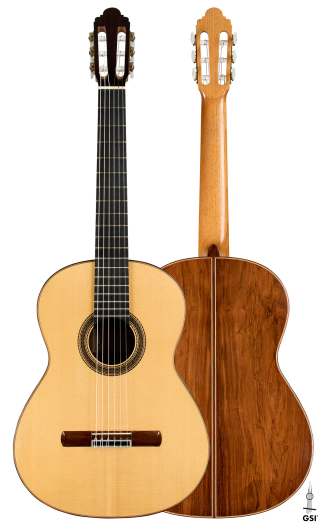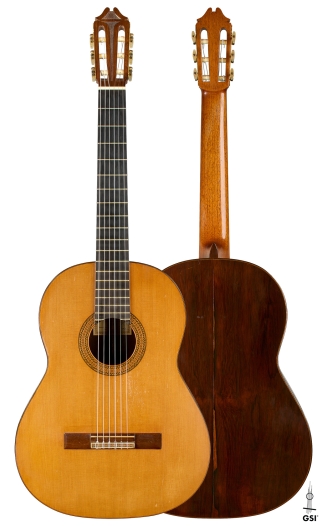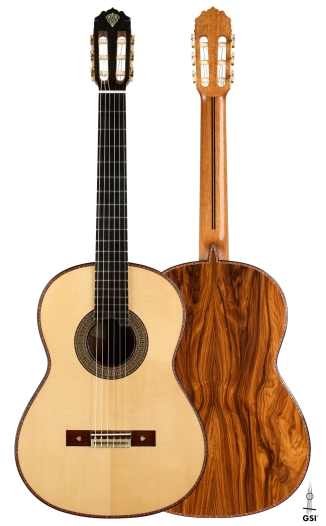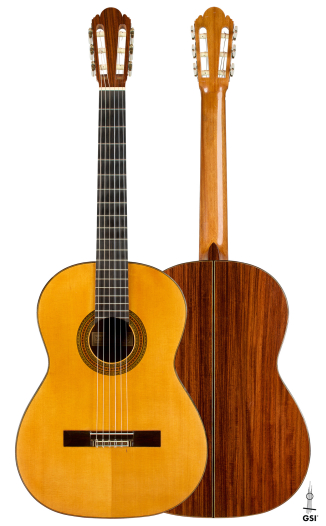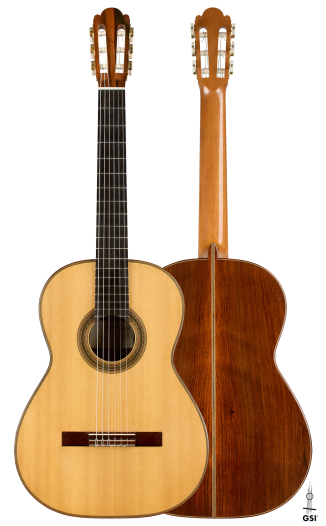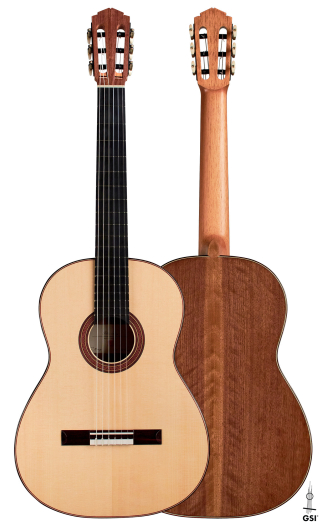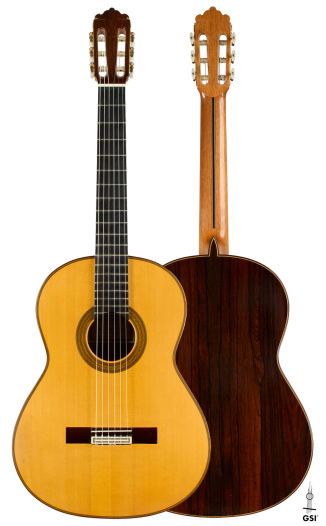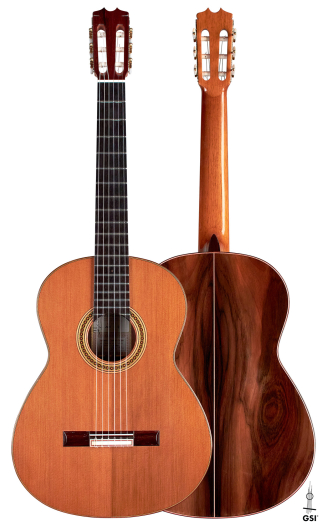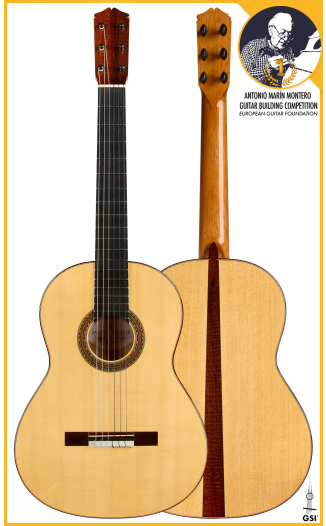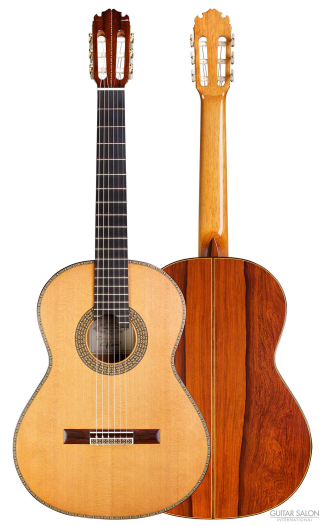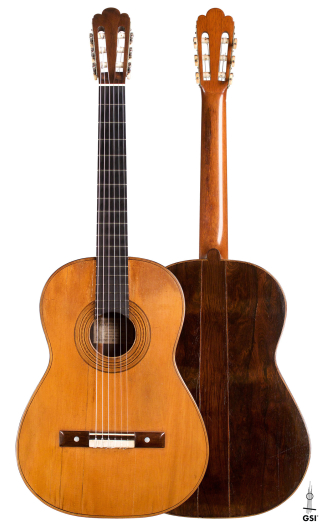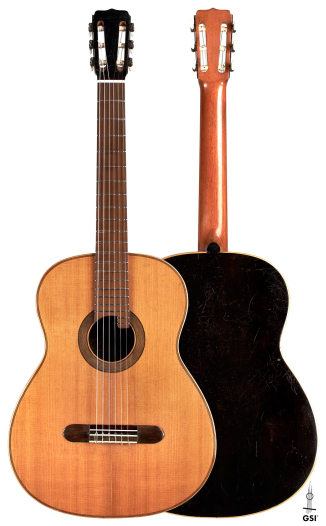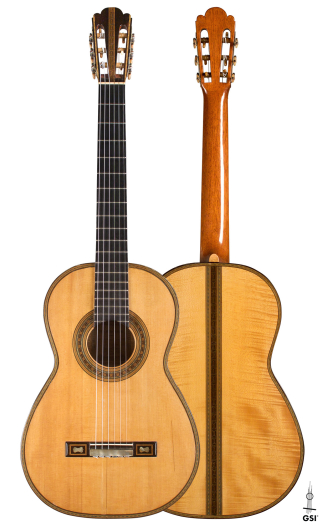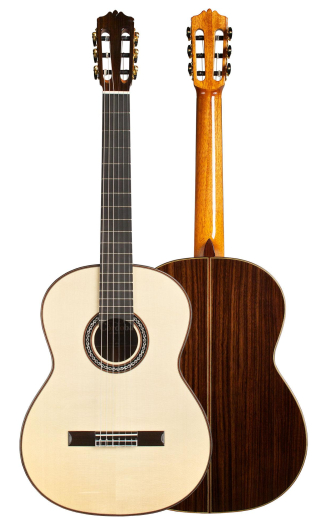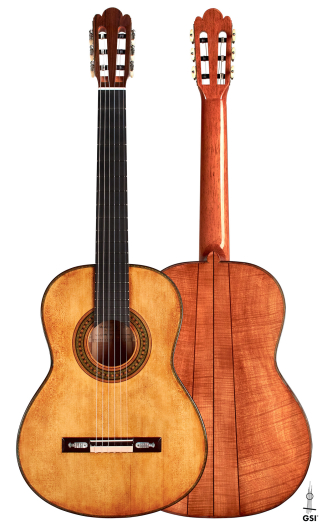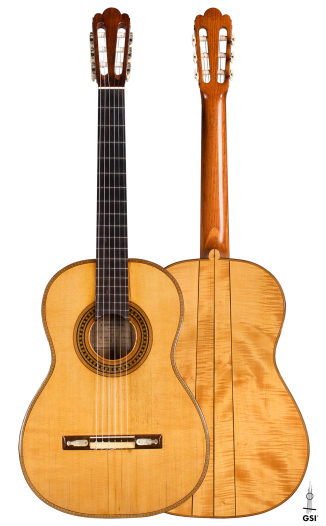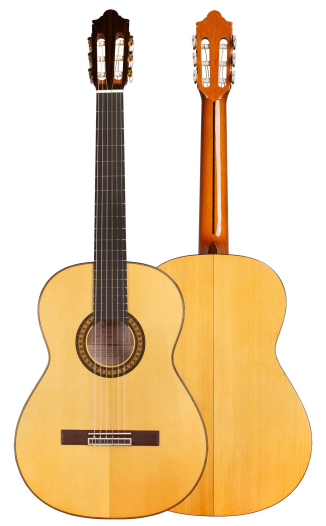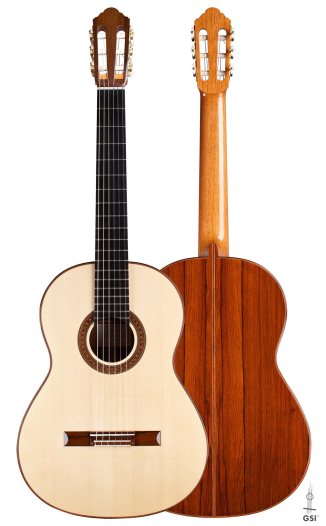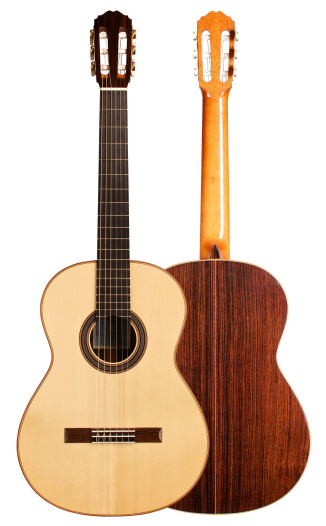

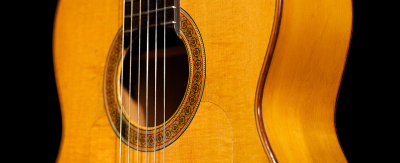







2011 Thomas Norwood "1935 Santos" SP/IN
| Year | 2011 |
| Top | Spruce |
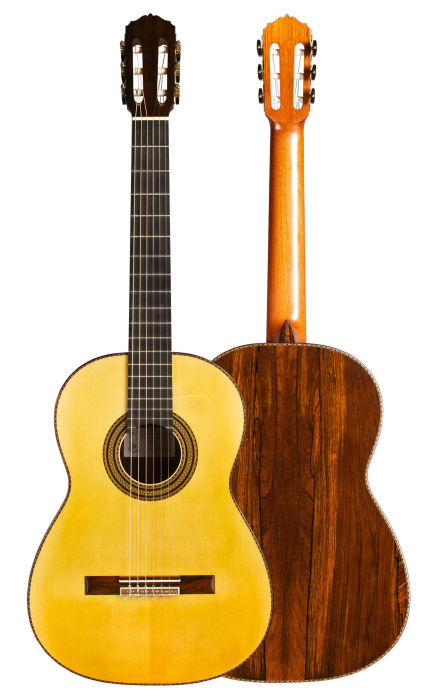
| Back & Sides | Indian Rosewood |
| Scale Length | 655 mm |
| Nut width | 52 mm |
| Finish | French Polish |
| Country | France |
| Luthier | Thomas Norwood |
This guitar is no longer available in our inventory. If it interests you, click the ”notify me when available” button to be notified in the event that we re-acquire this guitar for re-sale.


Robert Wetzel - Thomas Norwood '1935 Santos': Classical Guitar at Guitar Salon International
Description

This 2011 Thomas Norwood “1935 Santos” is a spruce and Indian rosewood replica of a 1935 guitar by Santos Hernández – the first Norwood we offered.
The Model Friederich Liked Best
When we visited Tom in Paris in 2010 he was making three models, replicas of the guitars that had made the strongest impression on him: a 1910 Manuel Ramírez, a 1932 Domingo Esteso and a 1935 Santos. We ordered all three, and began with the one that had impressed Daniel Friederich the most – the Santos. The label reads “Thomas Norwood, Luthier à Paris, Année 2011”.
Sound
It captures the charm, feel and appearance of the original: although built in 2011, the sound was old, warm and very loose – the most successful Santos replica we had seen. Robert Wetzel plays it in the video above.
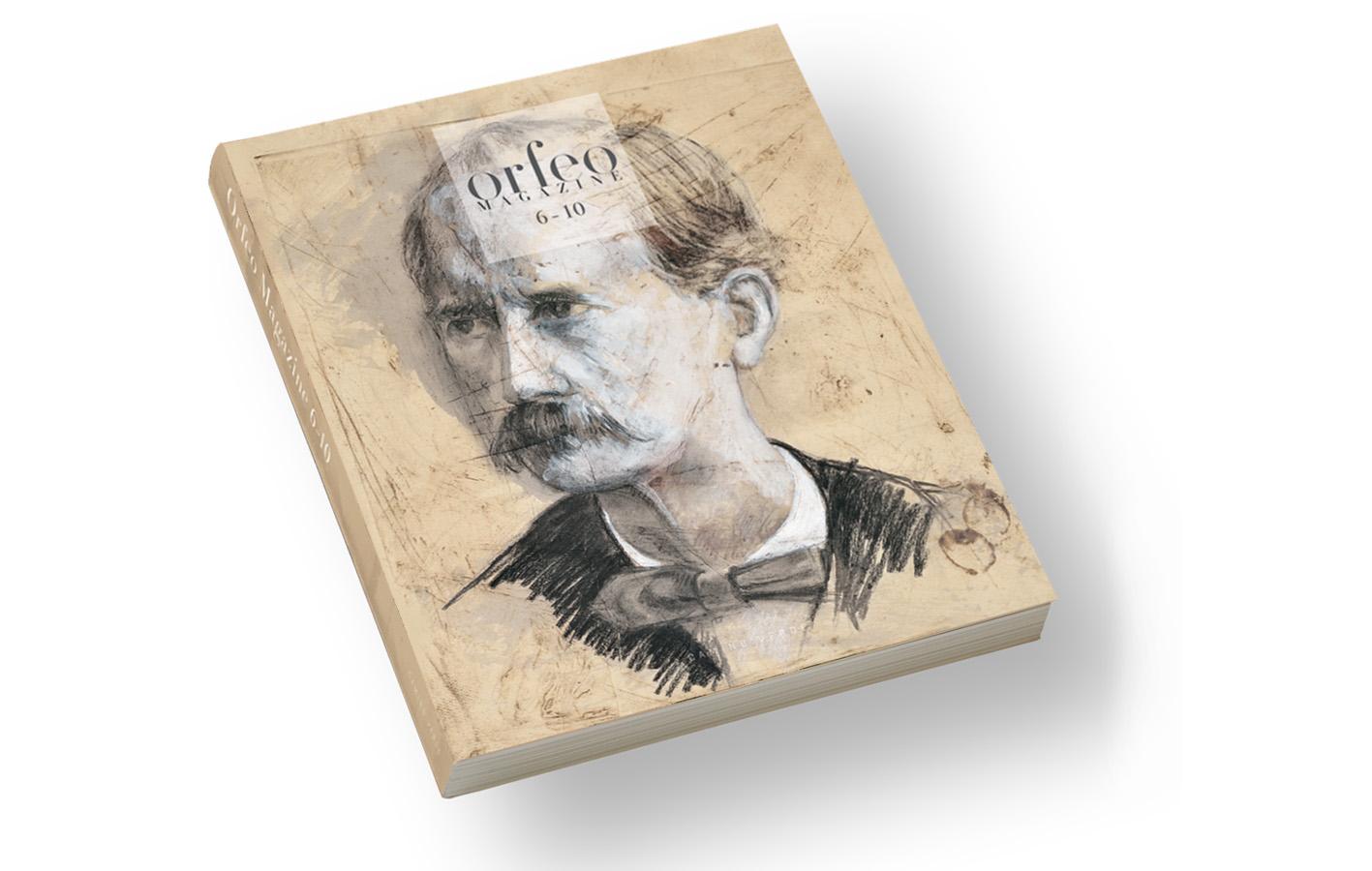
Read more: Orfeo Magazine No. 7 – An American in Paris: Thomas Norwood – also available in print in the collected edition Orfeo Magazine 6–10: