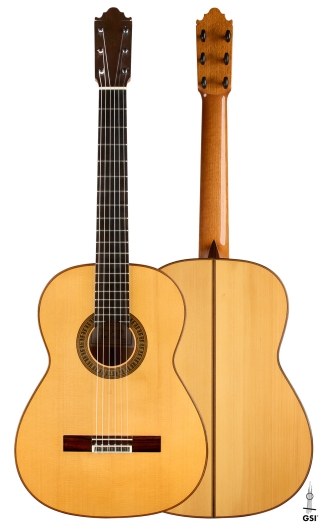
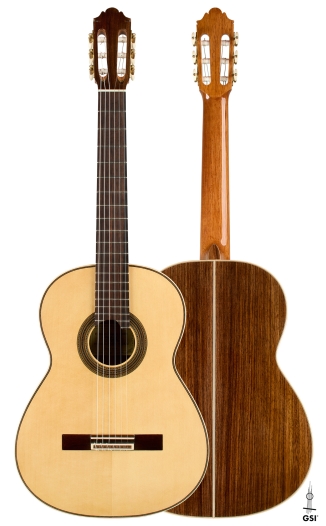
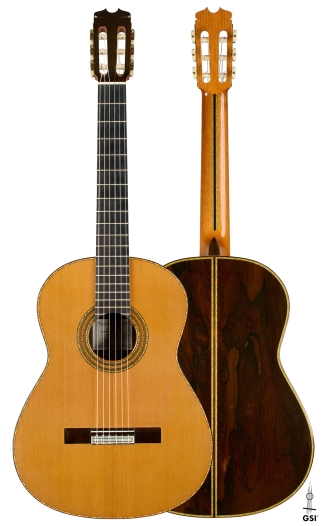
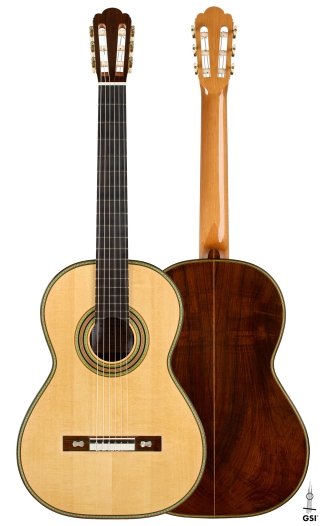
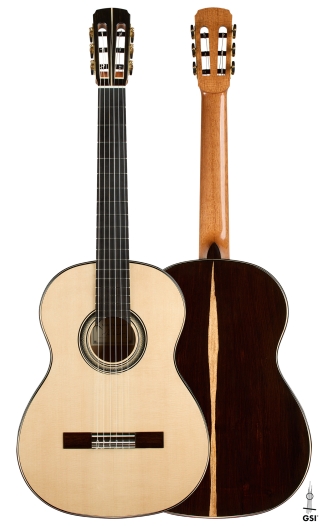
2017 Enrico Bottelli SP/CSAR
| Year | 2017 |
| Top | Spruce |
| Back & Sides | CSA Rosewood |
| Scale Length | 650 mm |
| Nut width | 51 mm |
| Finish | French Polish |
| Country | Italy |
| Luthier | Enrico Bottelli |
This guitar is no longer available in our inventory. If it interests you, click the ”notify me when available” button to be notified in the event that we re-acquire this guitar for re-sale.


"Desperado" played by Yenne Lee

"If" by Bread played by Yenne Lee
Description

A 2017 classical guitar by Enrico Bottelli, with a lightweight spruce top and a three-piece, highly figured CSA rosewood back – No. 263, from his workshop "The Art Guitars" in Voghera, Italy.
In the videos above, Yenne Lee plays "Desperado" and Bread's "If" on this guitar.
In Enrico Bottelli's Words
"This instrument is similar in construction to the last guitar I sent you ("Twelve"), basically following the Hauser pattern with some of my personal modifications. I used a lighter piece of wood for the top in the attempt to have a bit more of quick and powerful resonance with less effort for the player. And doing this without losing sustain, or in the 'roundness' in the tonal quality. I used a 3 piece highly figured back, and a highly flamed Honduras mahogany neck. I wanted to let the beauty of the wood be protagonist."
As Good as It Looks
And what a stunning instrument this is – it sounds as good as it looks. Super-responsive and traditionally inspired, it has a wide range of tone colors, deep basses, a warm mid-range and clear, round, singing trebles, with plenty of power for any hall. The craftsmanship is precise, with refined inlay work in the rosette and purfling throughout. Breathtaking!
Read more: Orfeo Magazine No. 13 – Italia Special (with a feature on Enrico Bottelli)