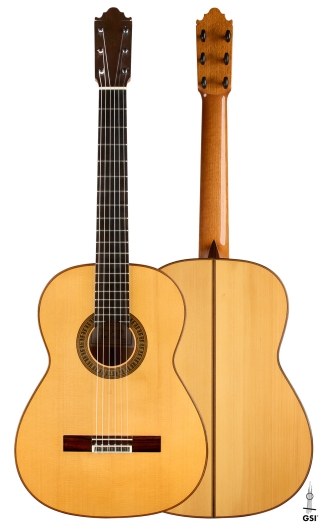
2017 Thomas Norwood "Torres SE 69" SP/MP
| Year | 2017 |
| Top | Spruce |
| Back & Sides | Maple |
| Scale Length | 650 mm |
| Nut width | 51 mm |
| Finish | French Polish |
| Country | France |
| Luthier | Thomas Norwood |
This guitar is no longer available in our inventory. If it interests you, click the ”notify me when available” button to be notified in the event that we re-acquire this guitar for re-sale.


Description

This 2017 Thomas Norwood “Torres SE 69” is a spruce and maple classical guitar with pegs – a maple version of his replica of the 1884 Antonio de Torres SE 69.
Norwood’s Torres
For years people asked Tom to copy a Torres, but he only did so after he played SE 69 – “I loved the 1884 Torres SE 69 from the moment I touched it,” he told Orfeo – and he was able to study it at length, since its owner was a collector and a friend. This was the first Norwood “Torres” we had seen, after his Manuel Ramírez, Esteso and Santos models. The label reads “Thomas Norwood, Luthier à Paris, Année 2017”.
Sound and Pegs
Lightweight in build, it is incredibly energetic and friendly to the player’s hands: the sound is immediate, jumps out of the box with minimal effort and captures the old-world charm of great Torres guitars. It is fitted with old-school wooden pegs, and the oil-finished head grips them well, making them very easy to use.
Read more: Orfeo Magazine No. 7 – An American in Paris: Thomas Norwood – also available in print in the collected edition Orfeo Magazine 6–10: