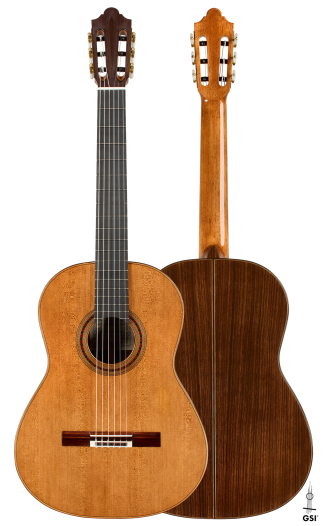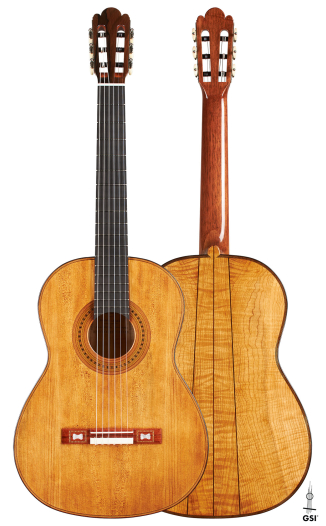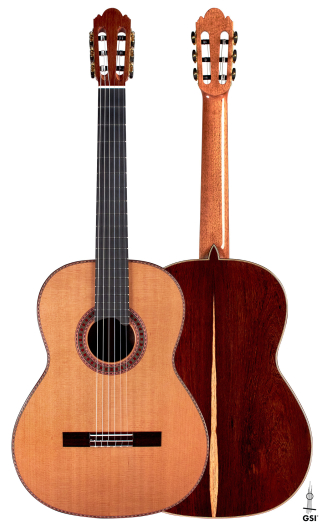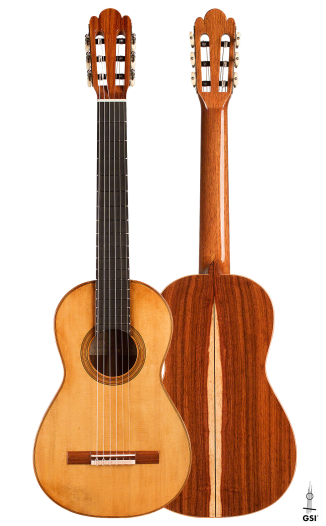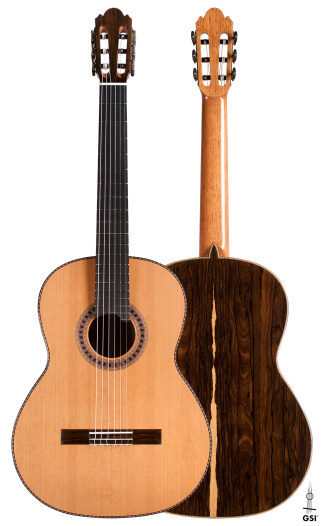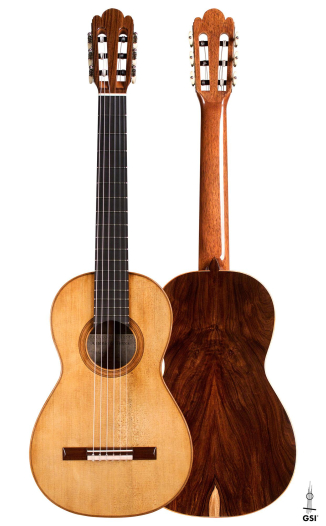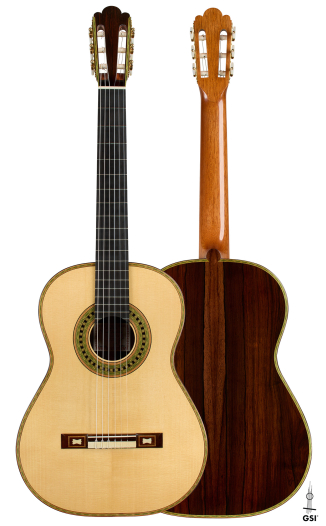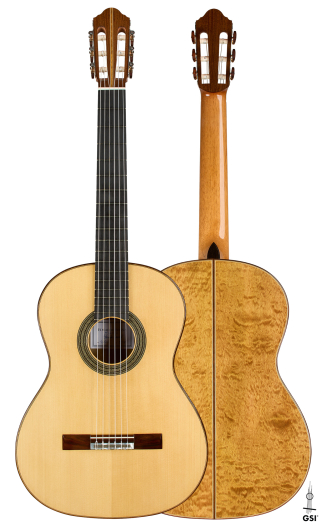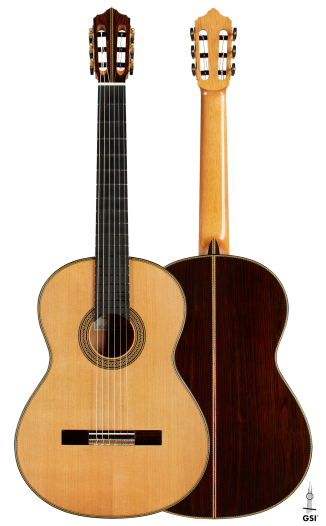




2024 Hironori Fukuda SP/AR
| Year | 2024 |
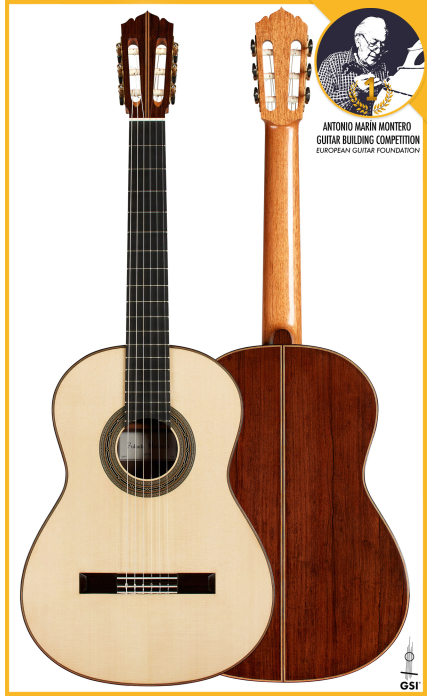
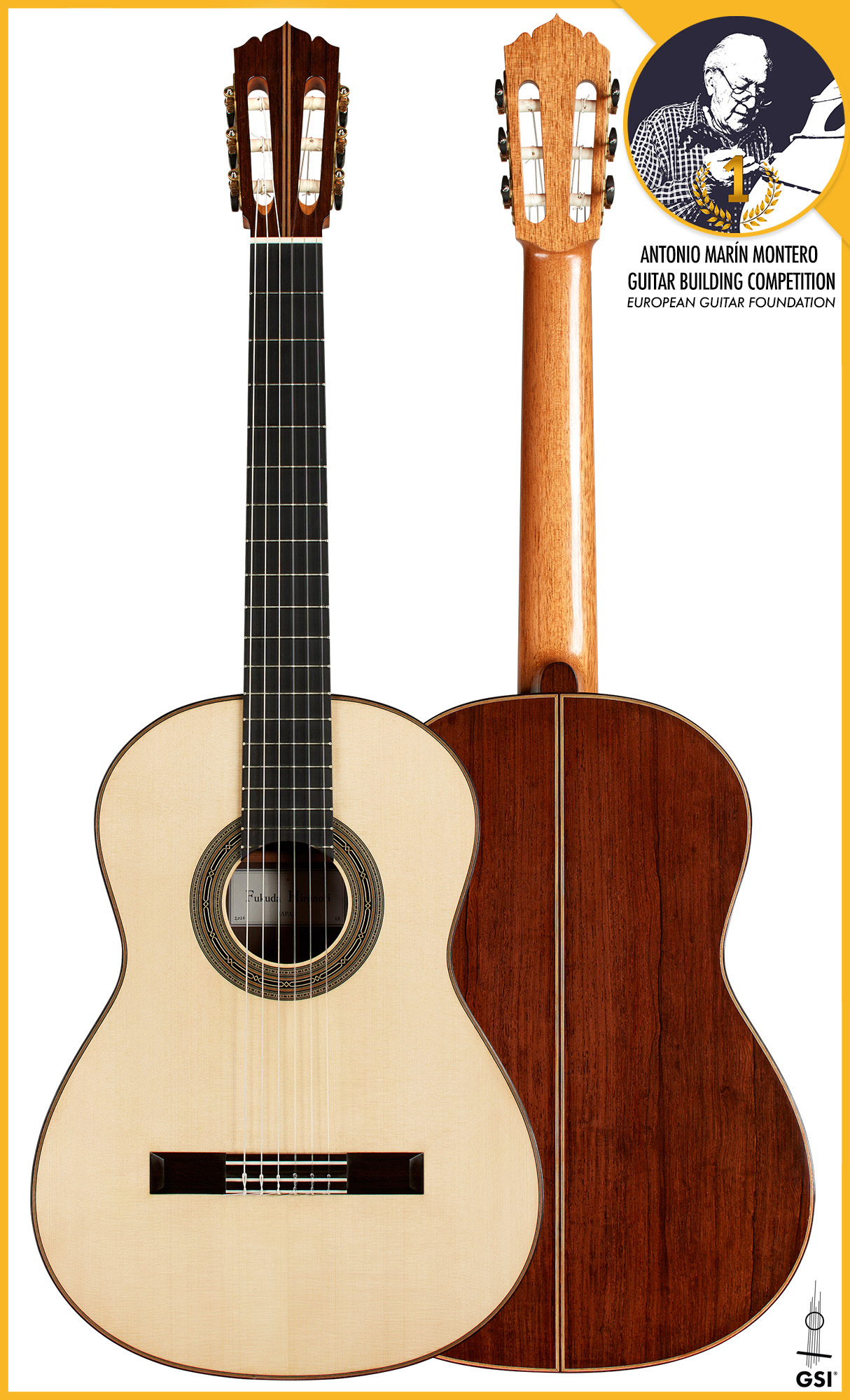
| Top | Spruce |
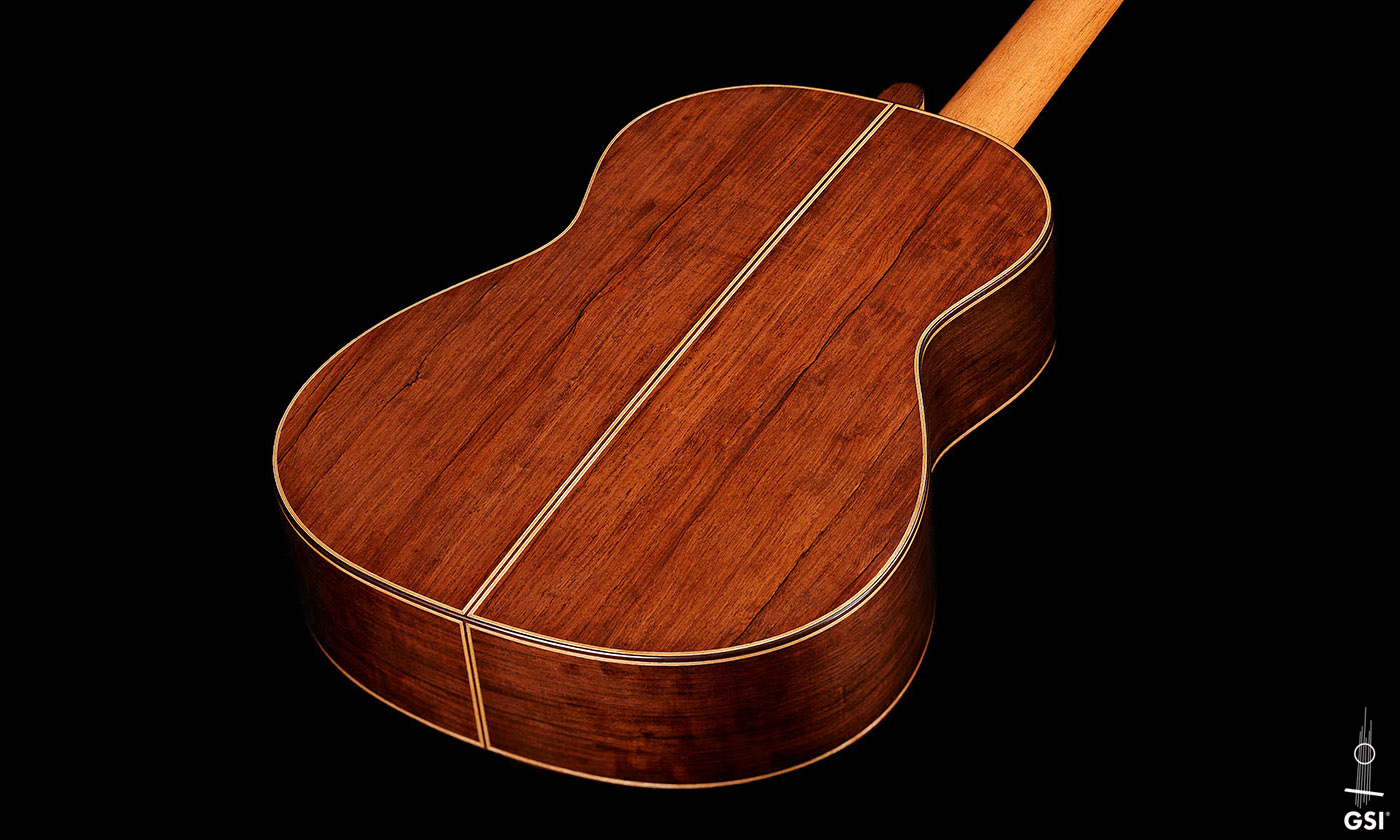
| Back & Sides | African Rosewood |
| Scale Length | 650 mm |
| Nut width | 52 mm |
| Finish | French Polish |
| Top Construction | Traditional |
| Bracing | Seven fans, open harmonic bar, thin under-bridge brace |
| Body resonance | G |
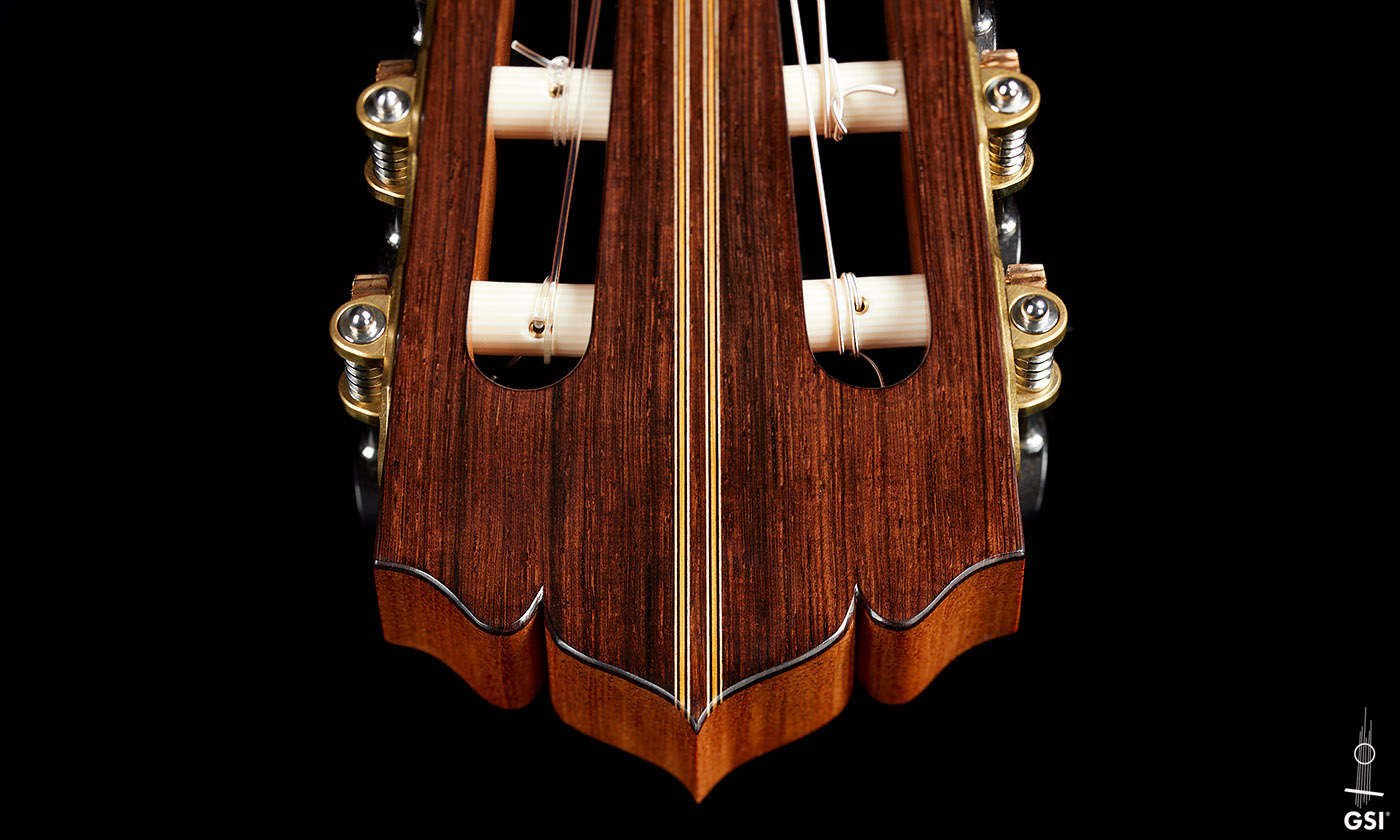
| Tuners | Pagos |
| Weight | 3.35 lbs/1,520 grams |
| Condition | Excellent |
| Country | Japan |
| Case | Brown leatherette wooden hardshell |
| Exchange | ExchangePlus |
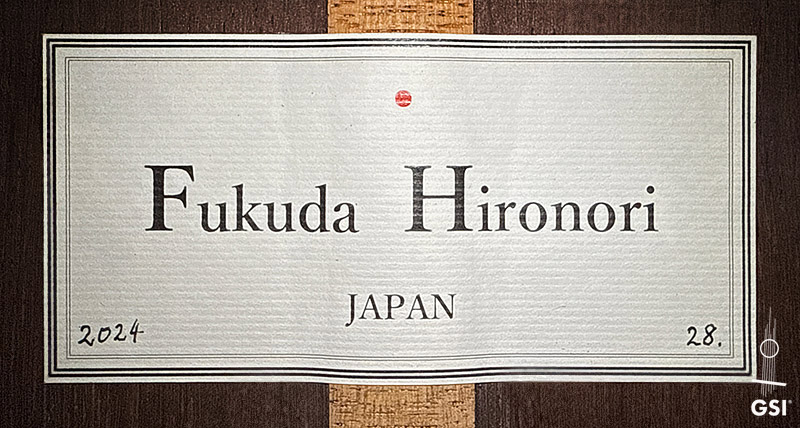
| Luthier | Hironori Fukuda |
$8,000.00
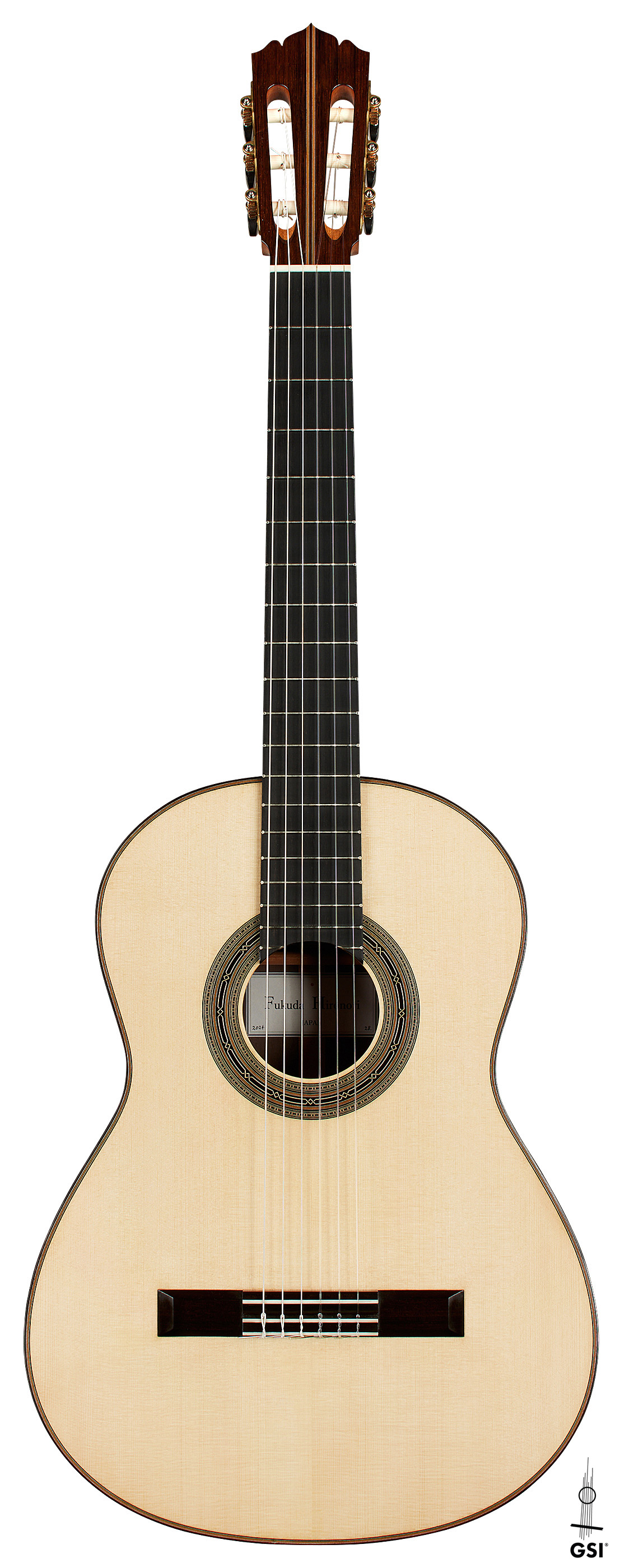

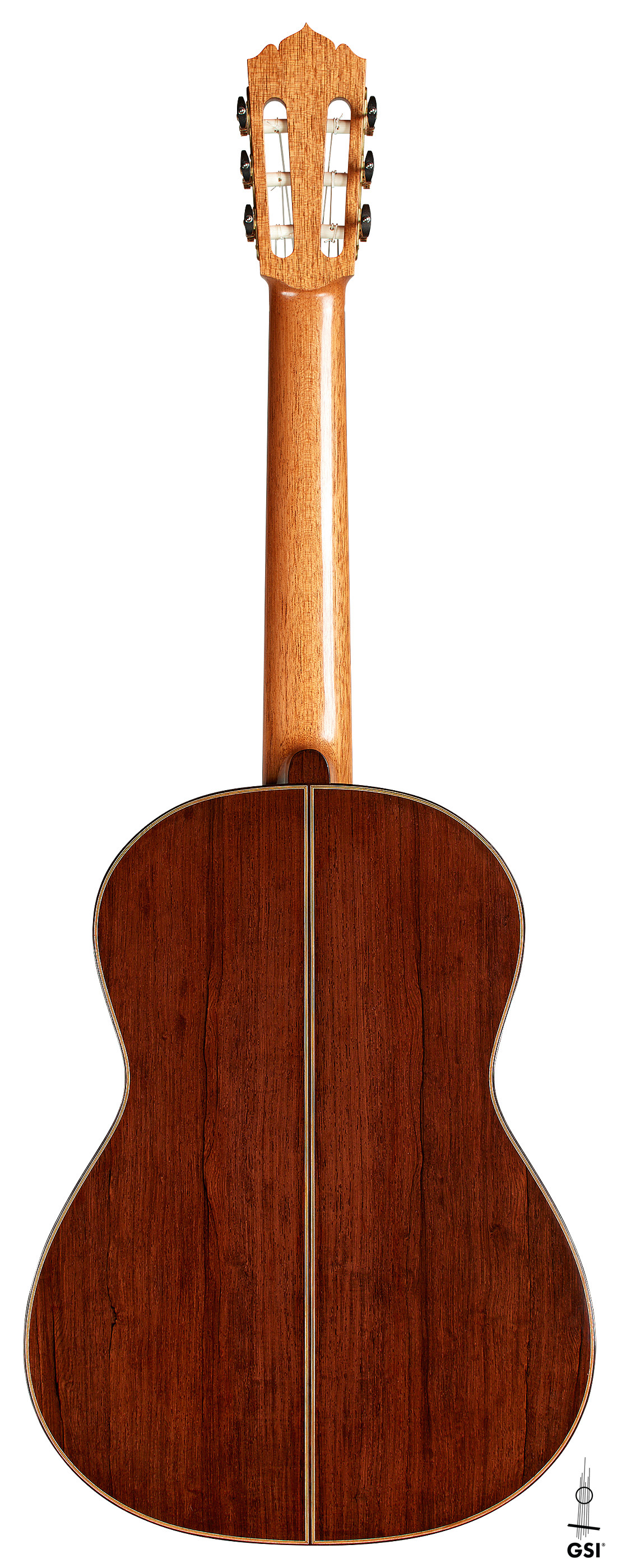
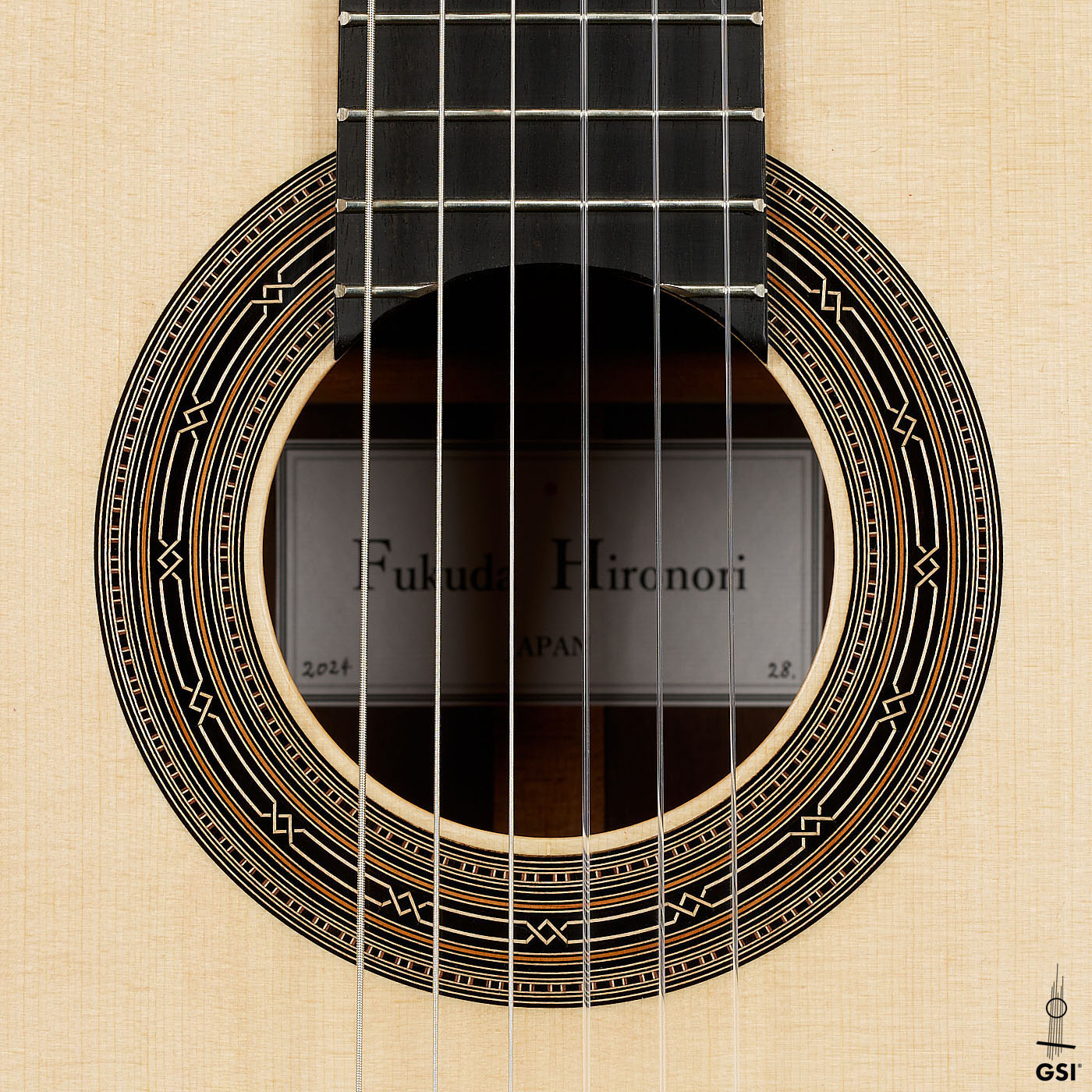
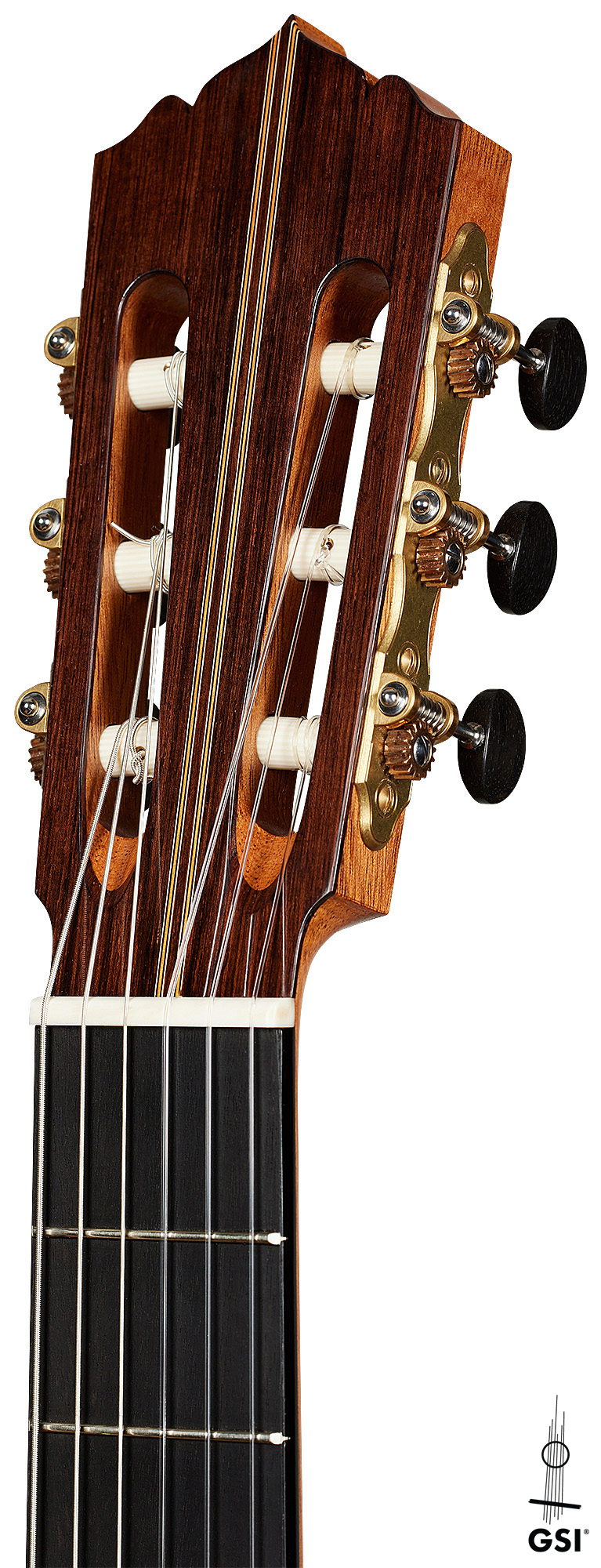
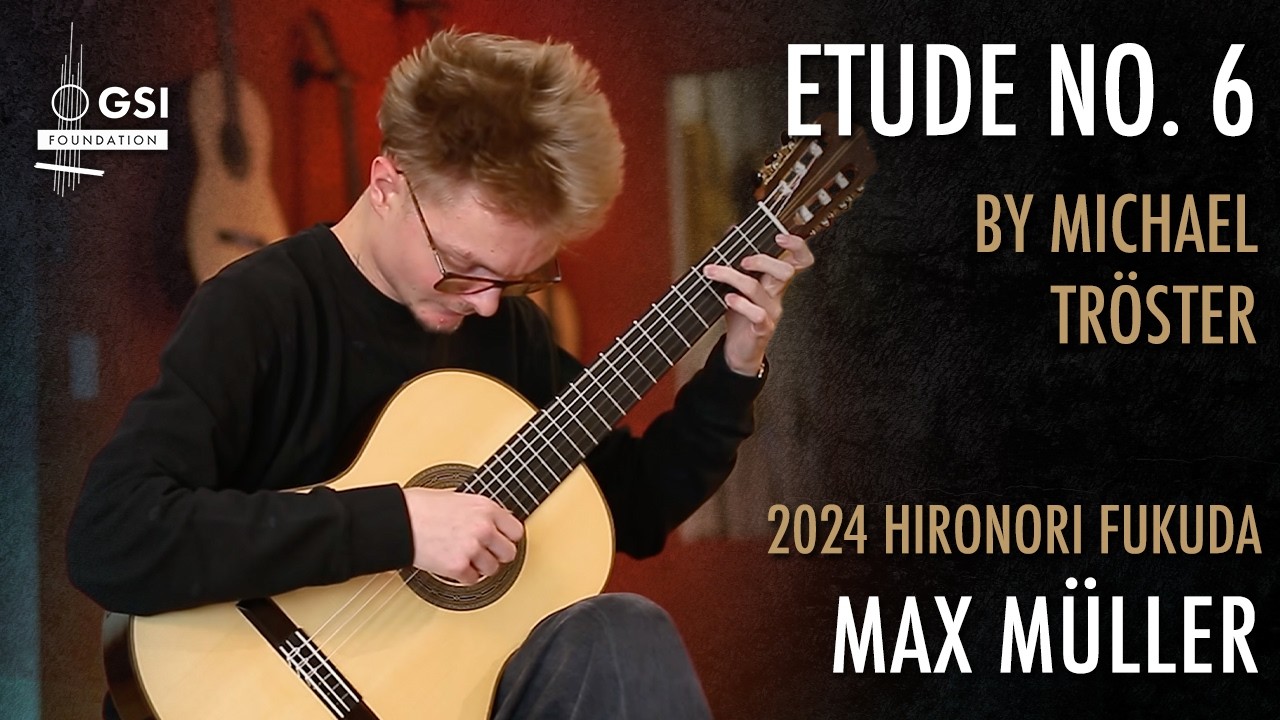
Max Müller performs 'Etude No. 6' by Michael Tröster on a 2024 Hironori Fukuda classical guitar
Description
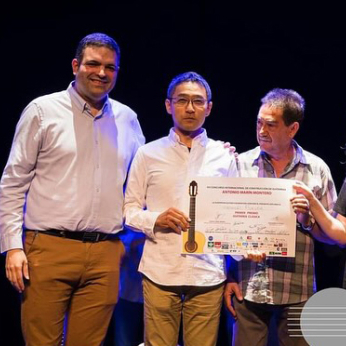
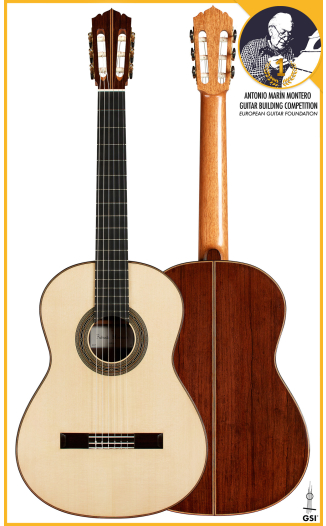
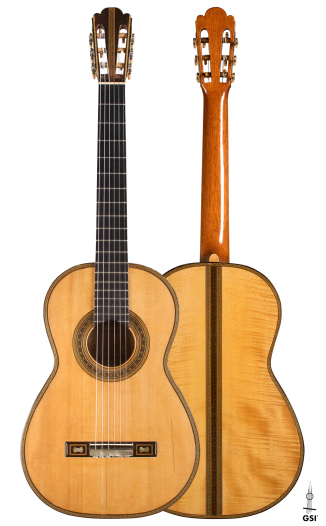
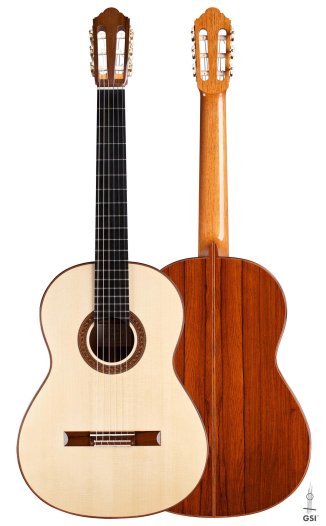
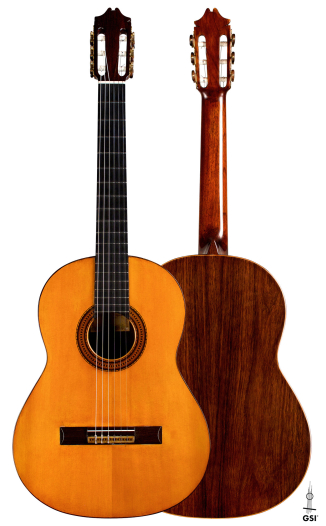
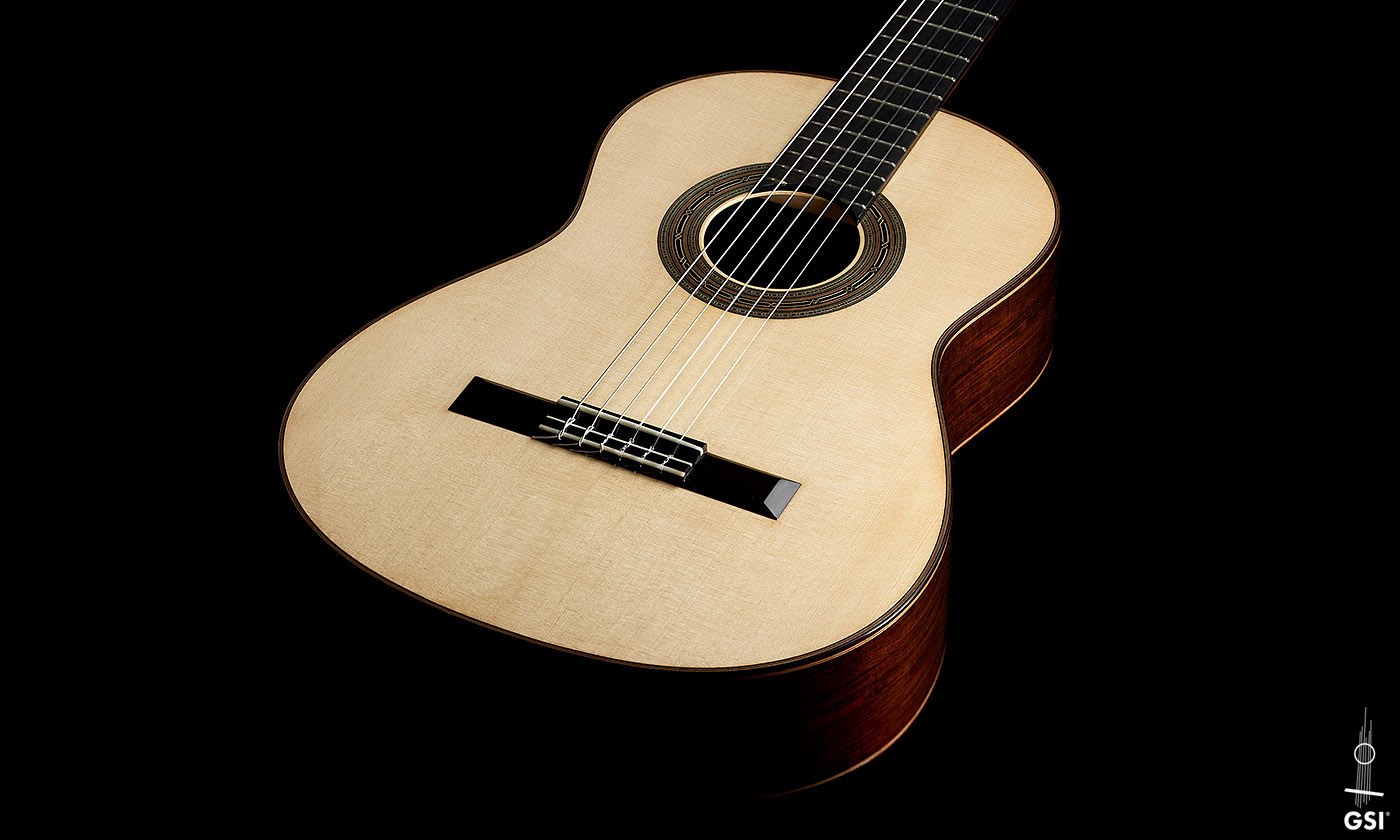
This 2024 Hironori Fukuda is a spruce and African rosewood classical guitar from Osaka, Japan, and the actual guitar that won First Prize at the 2024 Antonio Marín Montero International Guitar Making Competition in Granada.
Hironori and GSI
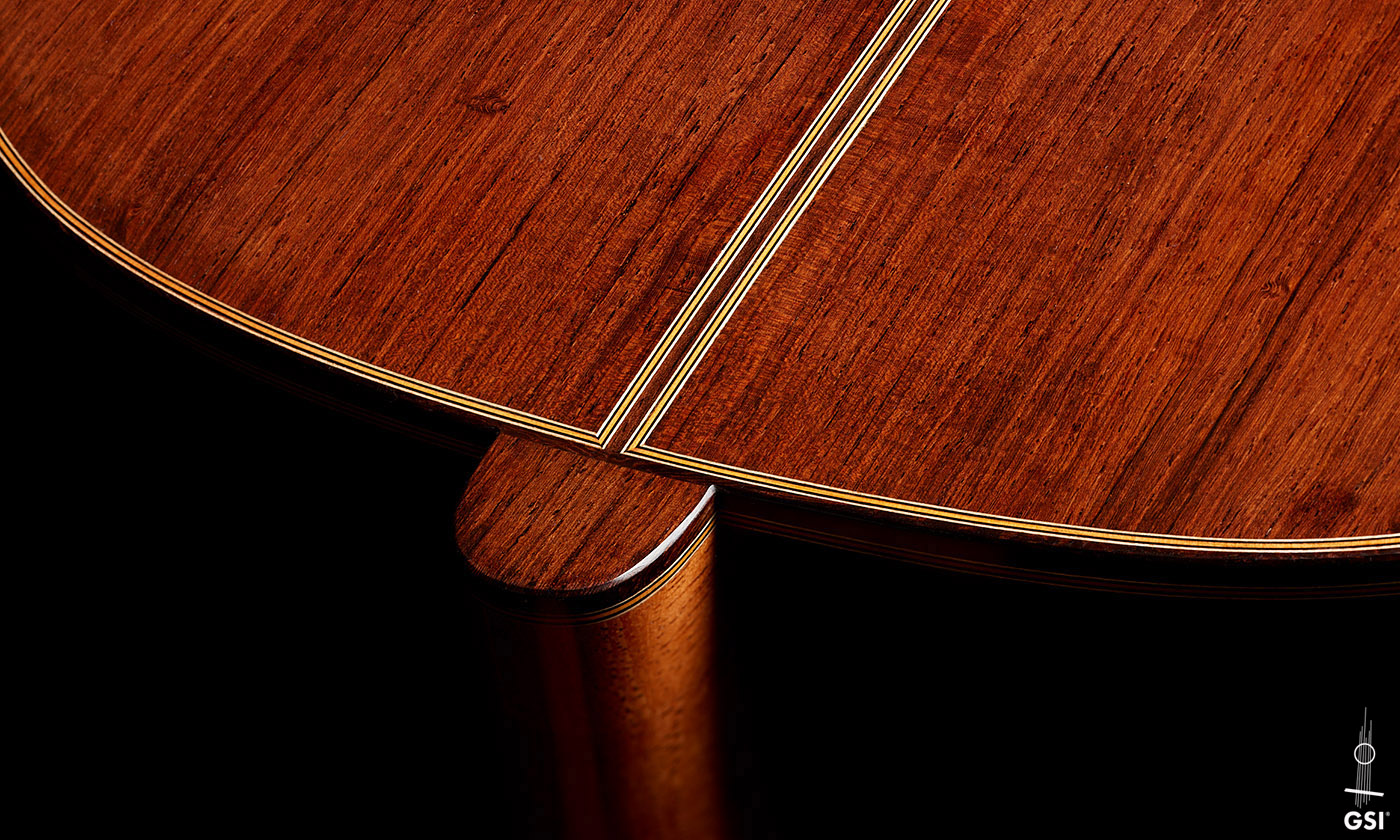
GSI first met Hironori at the 3rd International "Antonio Marín Montero" Guitar Building Competition in Granada in 2019, where he took third prize, and we have followed his work closely ever since. For this guitar he chose a particularly lovely set of African rosewood for the back and sides.
Traditional Spanish Construction
Hironori builds his guitars using purely traditional Spanish methods, and nearly all of the work is done by hand with very few power tools. He is very careful about the quality and selection of his materials. He uses only air-dried European spruce for his soundboards, and because he wants his guitars to bring out the natural sound of the wood as fully as possible, he avoids heat processing and synthetic reinforcements. He assembles with hide glue, fills the pores with shellac and pumice powder, and finishes with a traditional French polish applied by pad.
Fan Bracing with a Transverse Bridge Brace
The top uses traditional fan bracing, with the middle five fans passing through a thin transverse brace placed just in front of the bridge. This maximizes the flexibility of the vibrating area around the bridge while also adding structural stability. The sides are thinner than usual and supported by a series of thin spruce braces, again in the service of a build that is lightweight yet structurally sound.
Understated Elegance
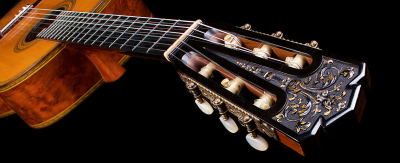
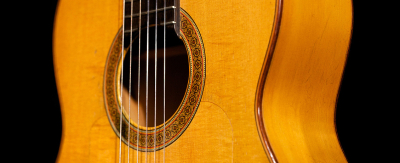
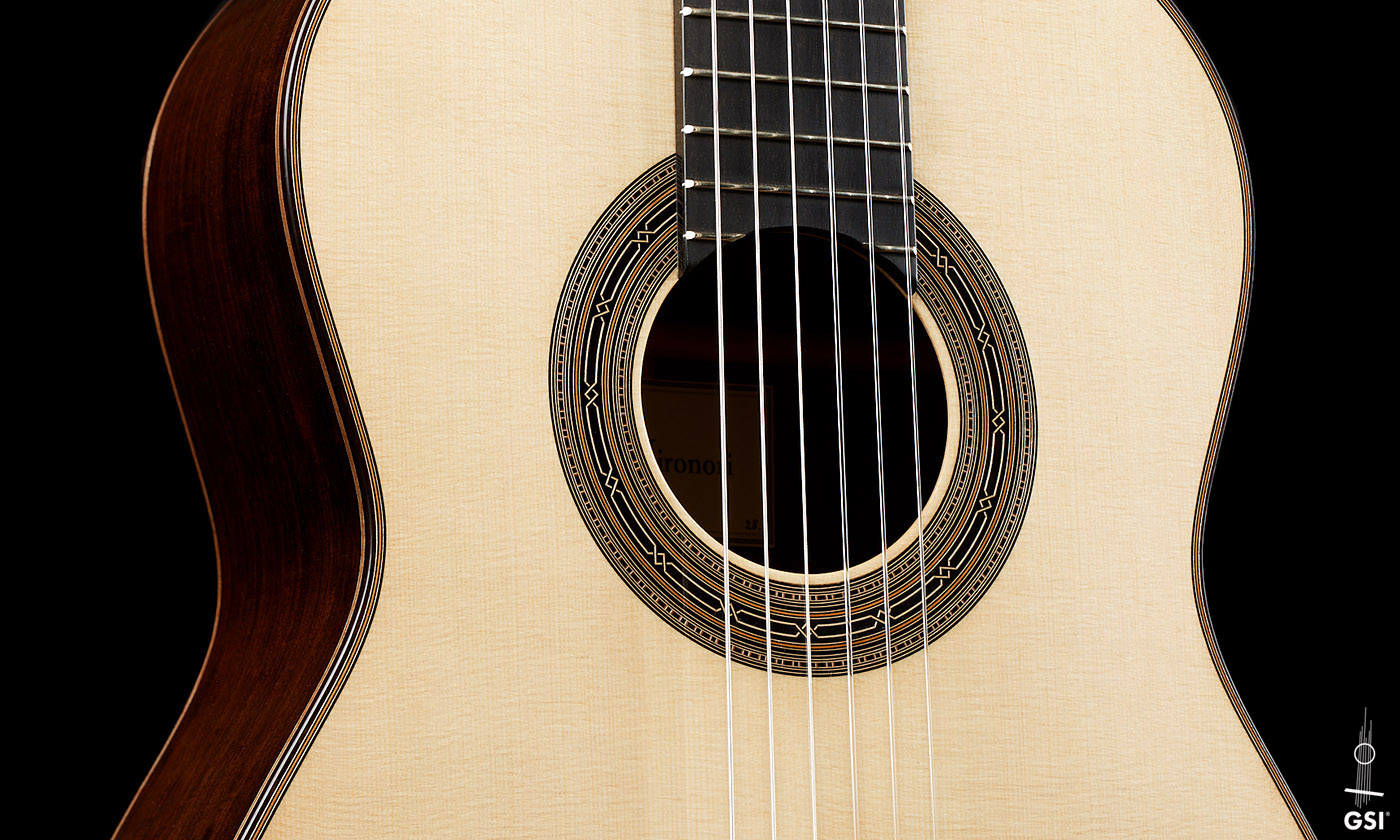
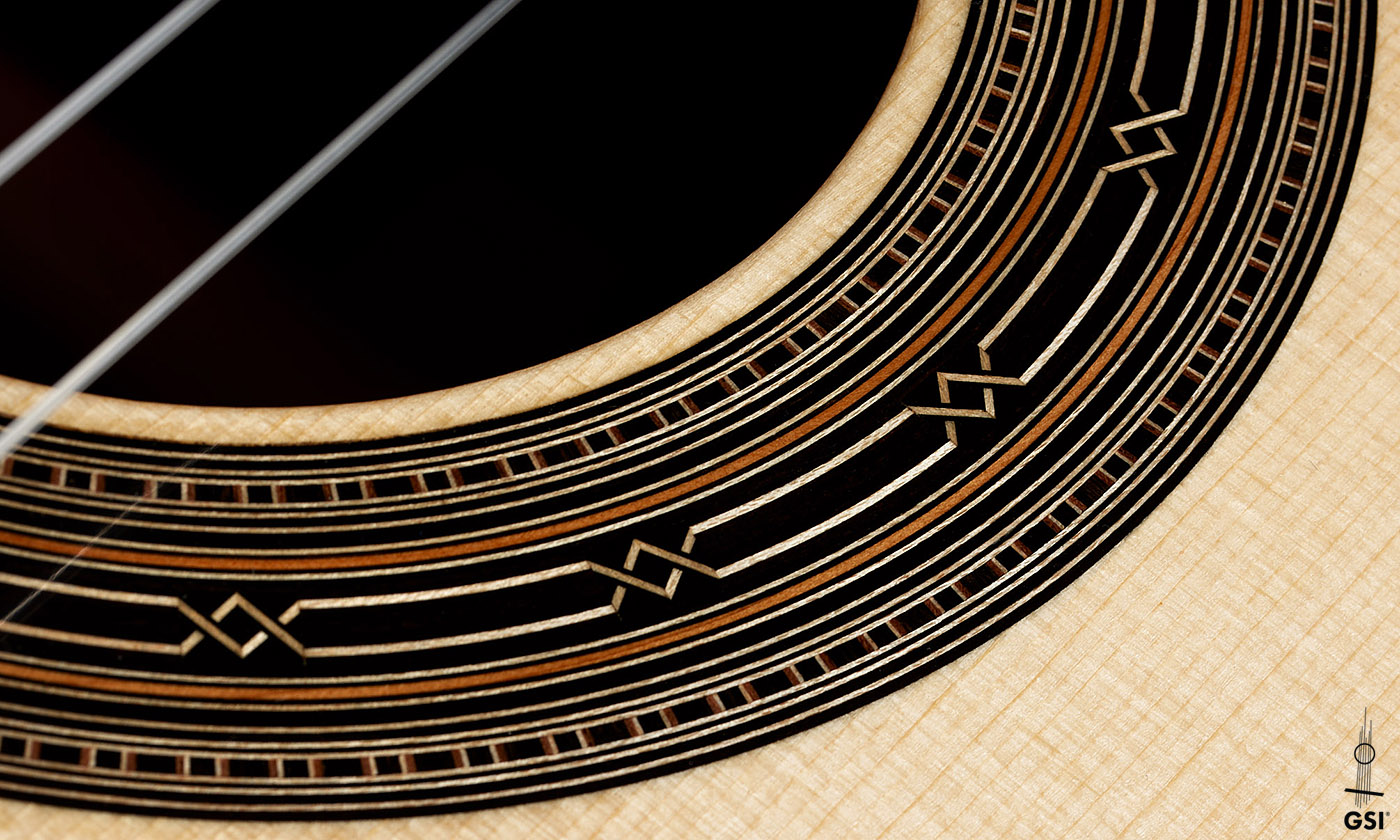
Hironori's aesthetic is elegant and subtle. He makes his rosettes and inlays only from woods in their natural, undyed colors, and the rosette and inlay work throughout show refined, tasteful detailing. The bridge has squared ramps that give it a bold, almost architectural look.
A Lyrical, Old-Spanish Sound
This guitar has a plump, juicy sound with a wonderfully bouncy response, much like the great old Spanish guitars. That liveliness likely comes in part from the "see-saw" effect of the transverse brace in front of the bridge. The voice is sweet and very lyrical, with great sustain and a fine dynamic range, and it already offers a rich variety of tonal colors, which is remarkable for such a new instrument. Although it is second-hand, it is in excellent condition, with only minor cosmetic playing wear in the finish. It's a superb instrument in every way, and we look forward to many more guitars from Hironori in the future.