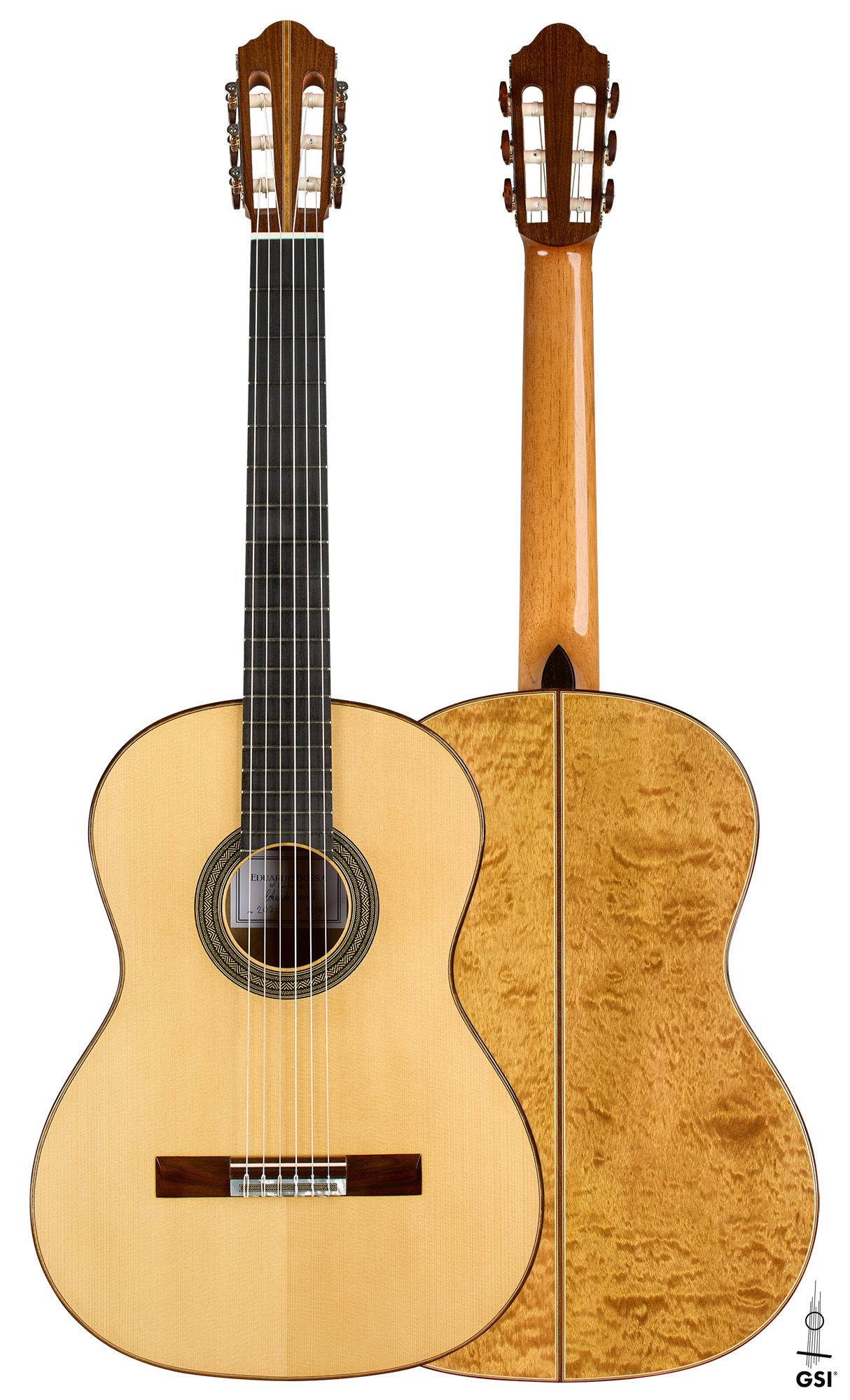
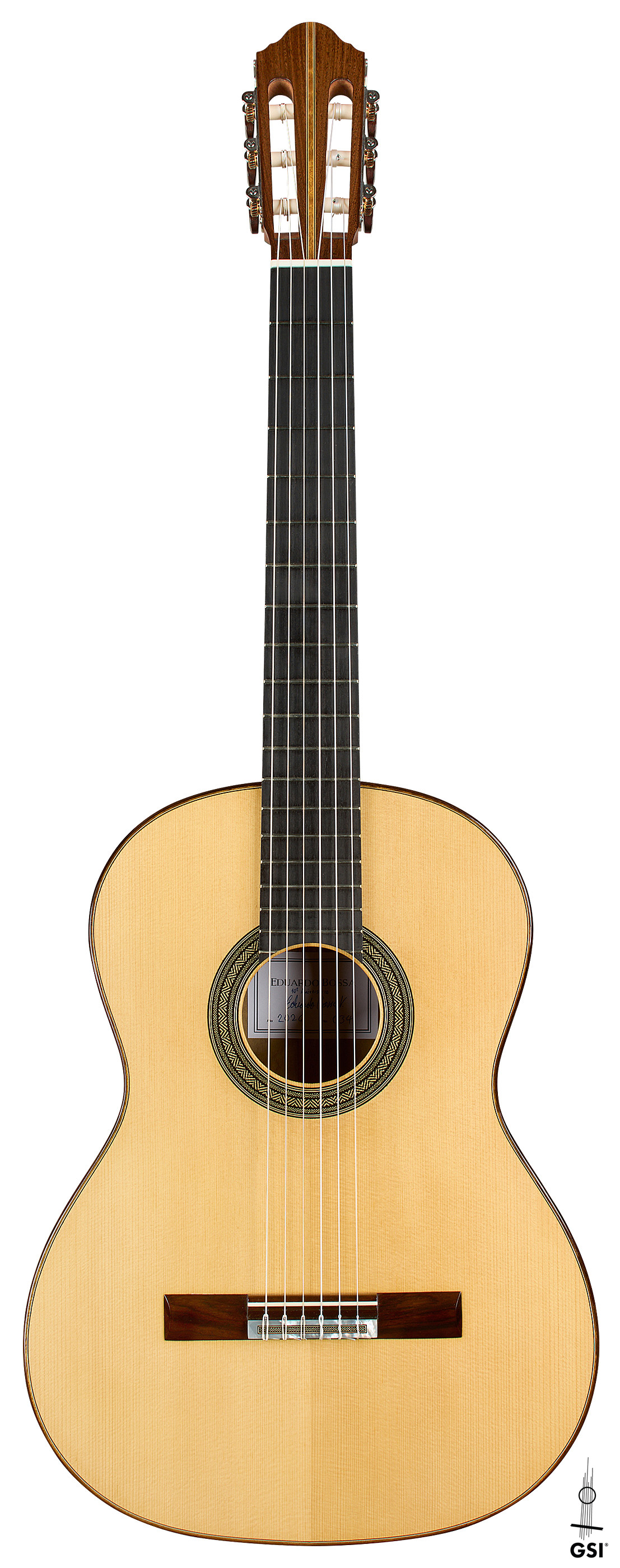
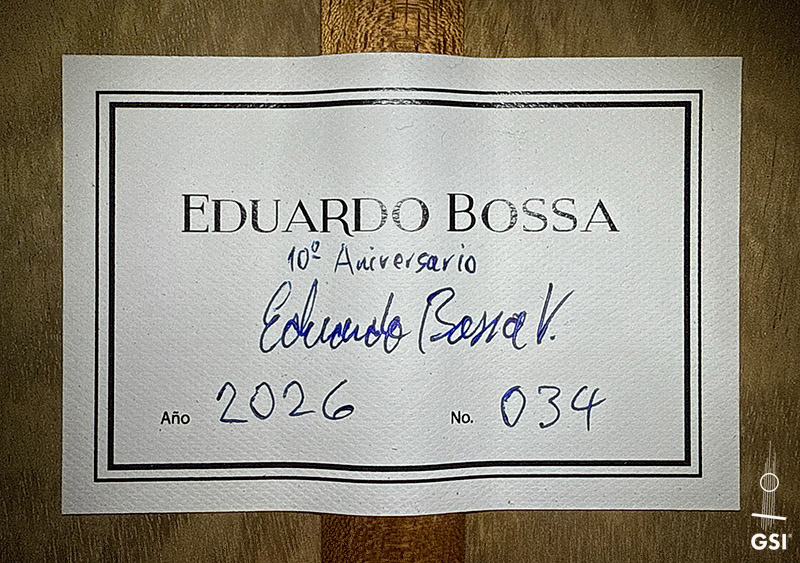
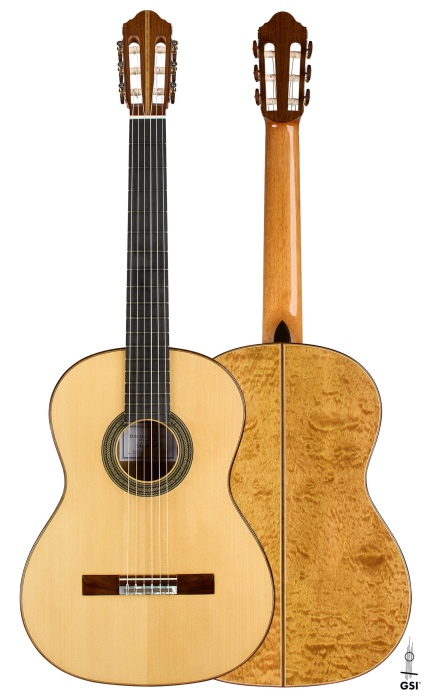
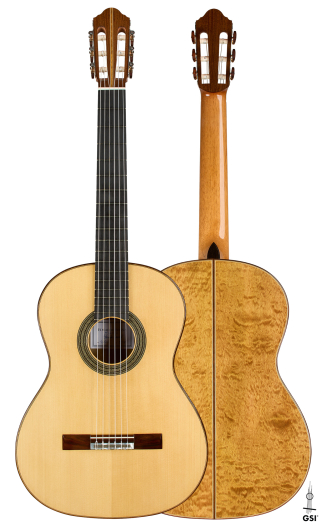
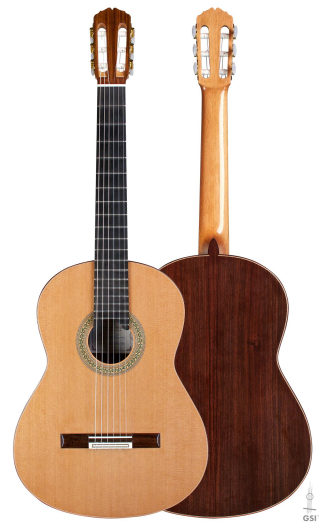
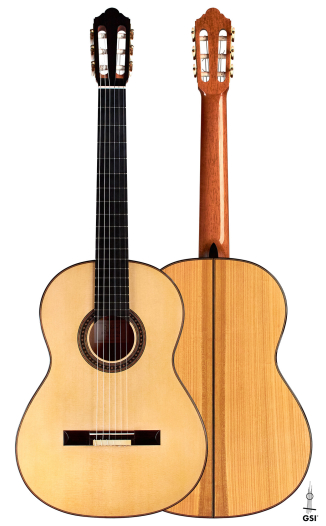
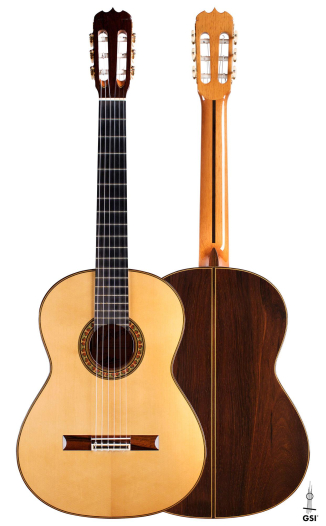
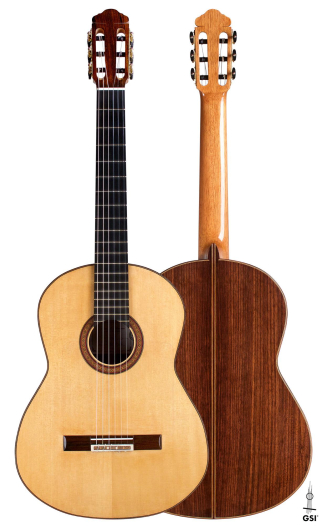
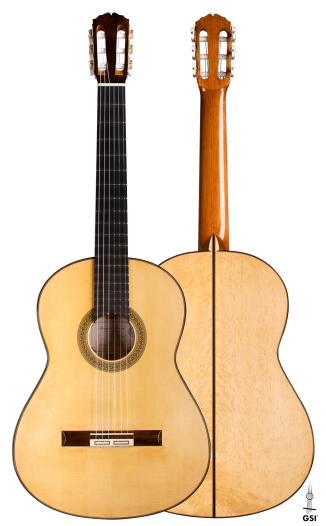
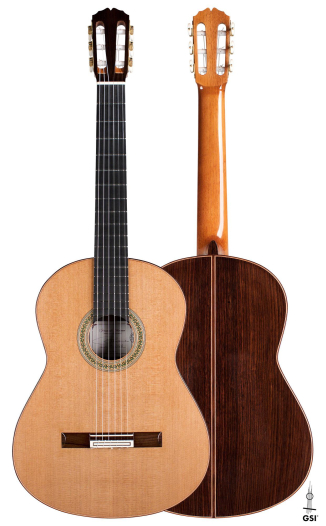
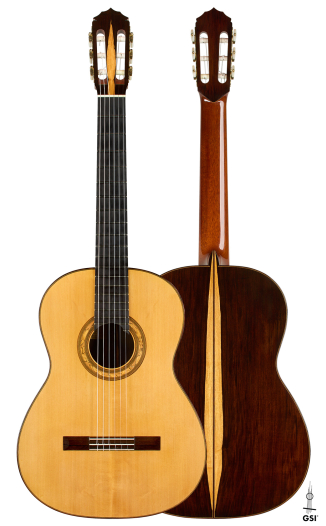
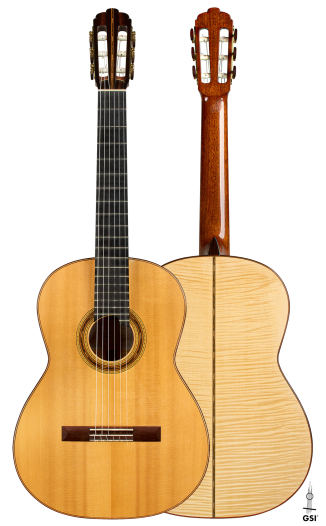
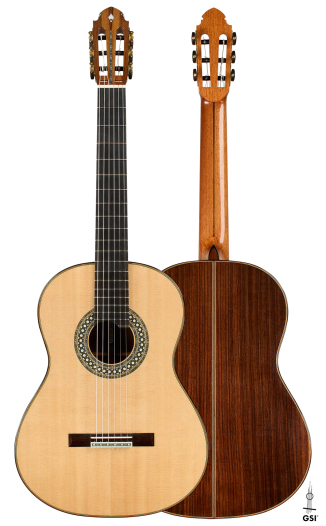
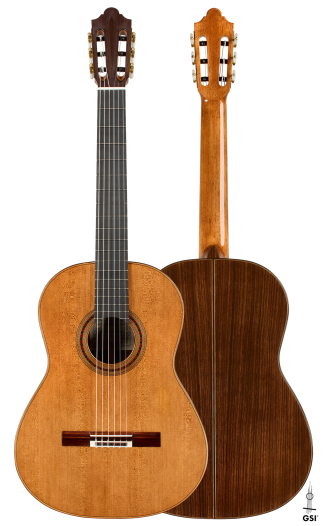
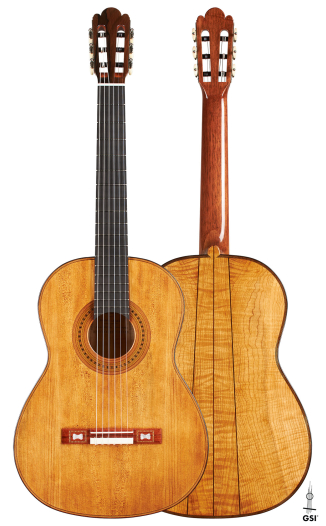
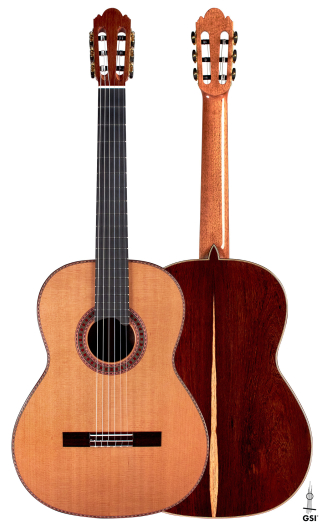
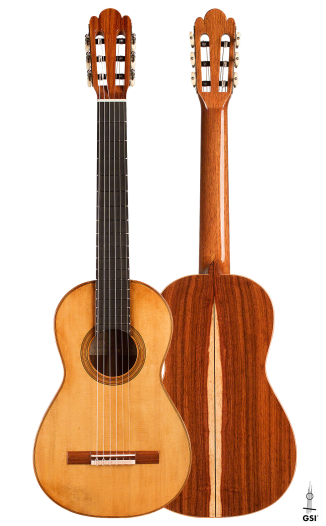
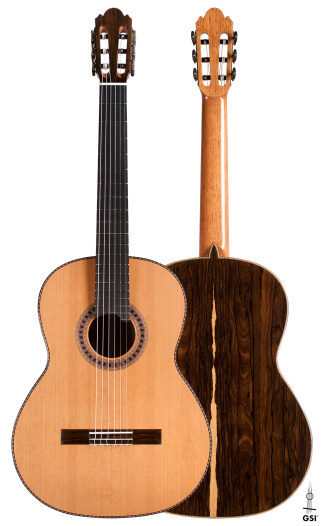
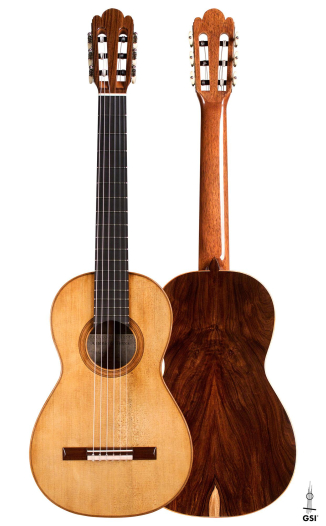
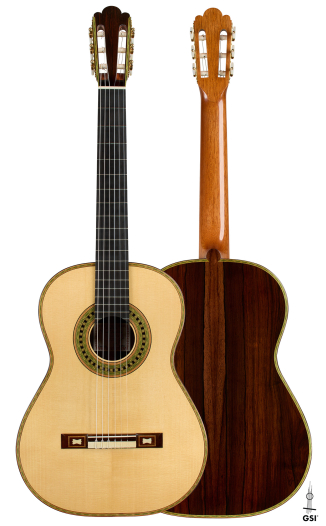
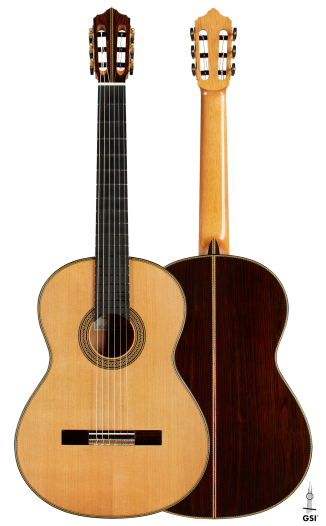
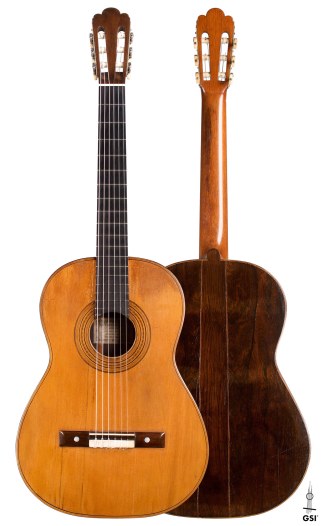
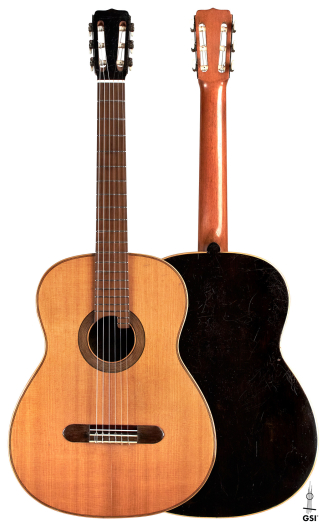
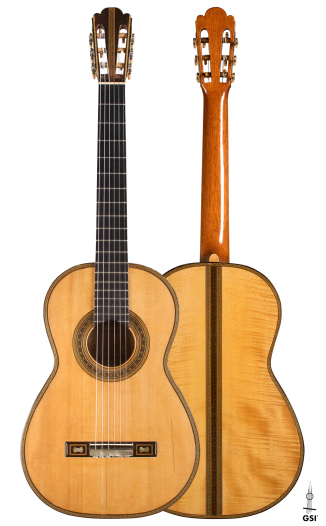
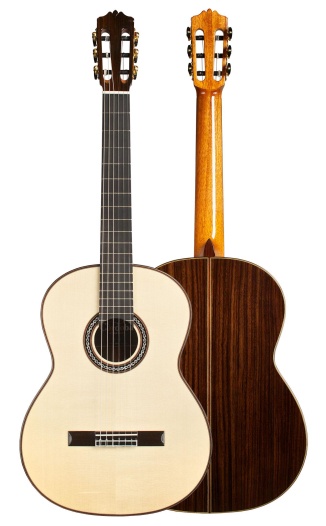
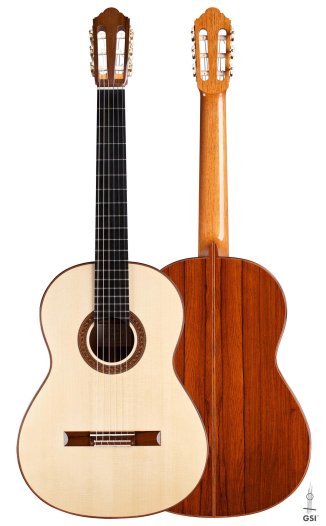
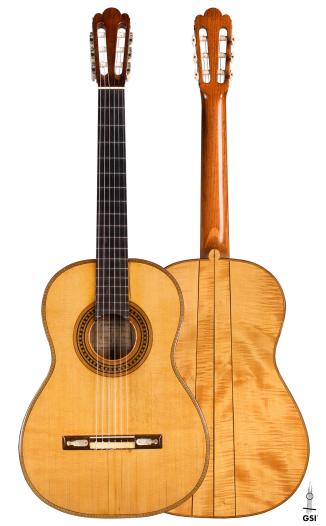
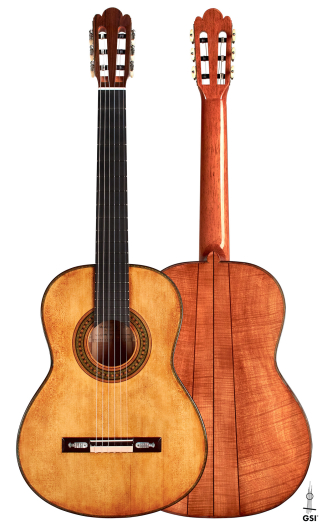
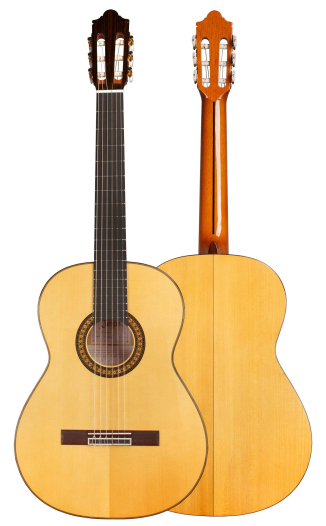
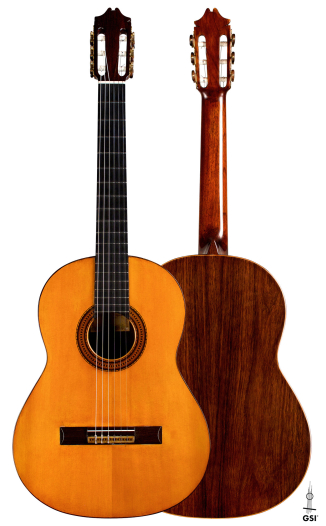
This 2026 Eduardo Bossa 10th Anniversary model is a spruce and comino crespo classical guitar handmade in Cartagena, Colombia, with a powerful, piano-like concert voice.
The Eduardo Bossa 10th Anniversary Model
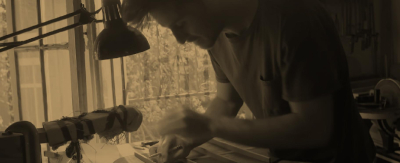
This guitar introduces Eduardo Bossa's new 10th anniversary model. It isn't a limited edition. Eduardo designed it as a permanent alternative to his standard concert guitar. The two share virtually the same plantilla and soundbox, but the anniversary model uses a different construction system that gives it its own feel and tonal palette. After a period of experimenting with some new design ideas, Eduardo became absolutely convinced with the results and so decided to include it in his offerings. He sees it as neither better nor worse than his standard concert model, but as a complement to it.
Double Sides and Redesigned Bracing
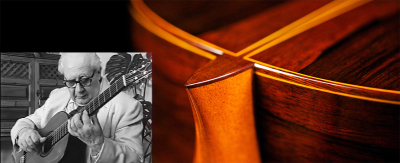
The anniversary model differs from Eduardo's concert guitar mainly in how it's built. The spruce top keeps a traditional fan layout, but the bracing and top thicknessing are very different from those of his standard model. In the body, he uses laminated double sides. This gives the body extra rigidity, so less energy is lost through the sides and more is sent through the soundboard, which adds focus and projection.
Comino Crespo: A Rare Colombian Tonewood
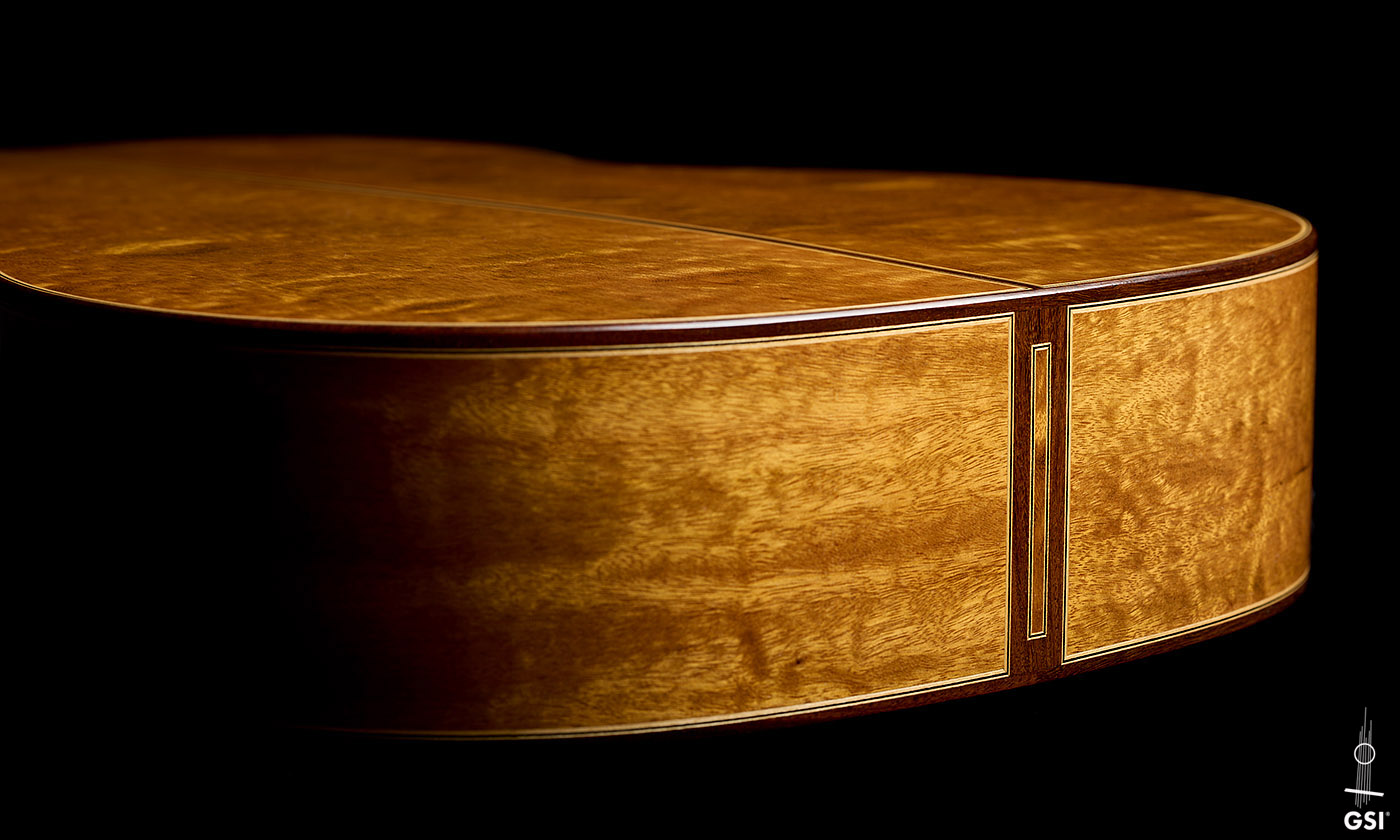
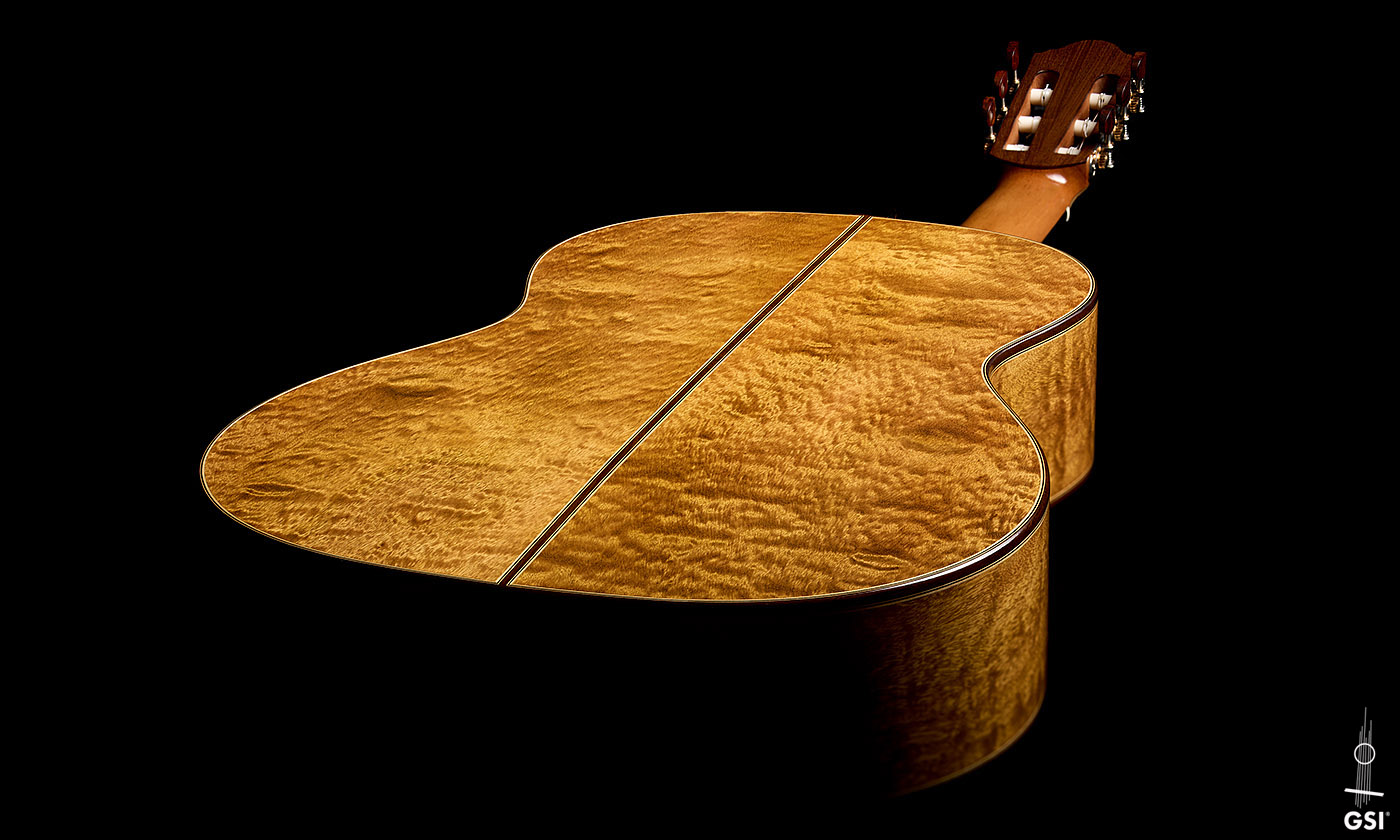
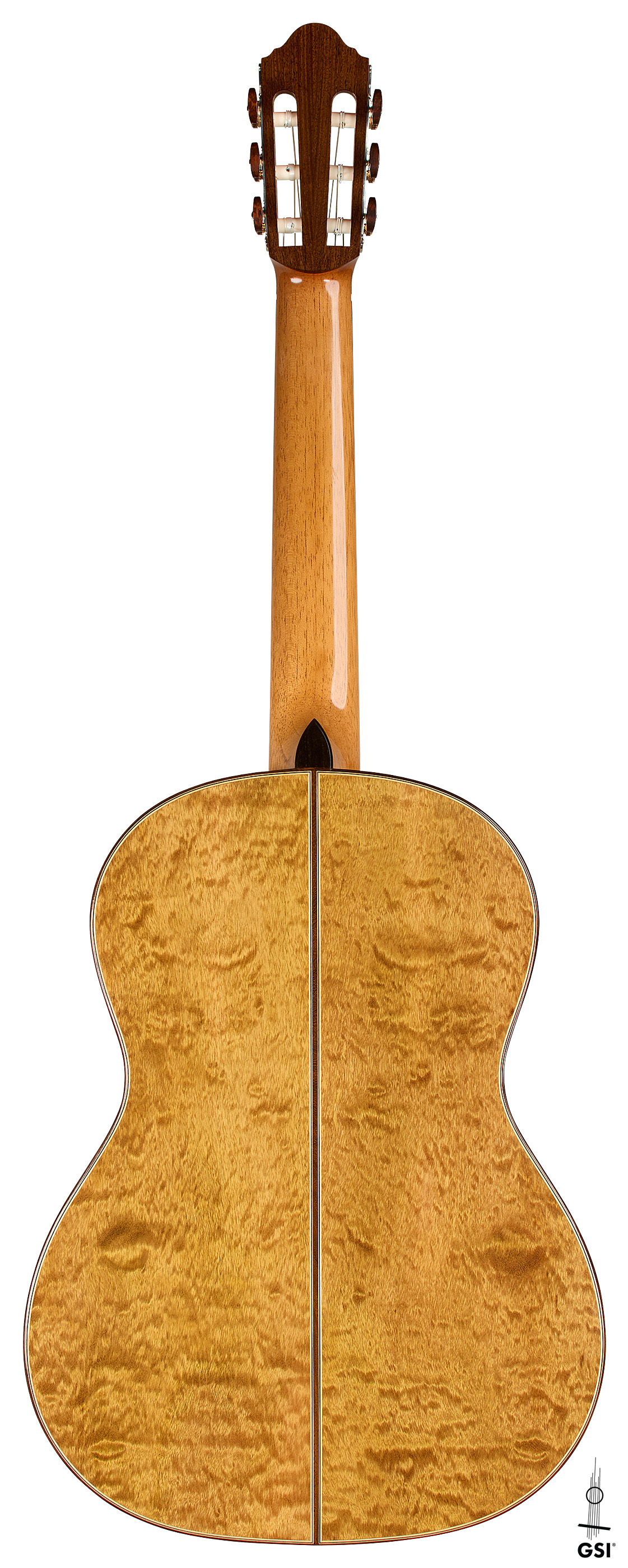
For the back and sides, Eduardo chose comino crespo (Aniba perutilis), a tree found only in Colombia and almost unknown in the guitar world. It is a rare and costly wood that Eduardo considers truly exceptional. He offered it to GSI especially for this guitar. He values it for its excellent tonal properties and for having just the right density and hardness for guitar making. Its beauty is just as striking. The golden color is entirely natural, with no tints or dyes. True to its name (crespo means "curly" in Spanish), the wood is known for its lively curly grain, and this set has an especially deep, three-dimensional figure that ripples across the back and shimmers as the guitar moves in the light. Eduardo paired it with a spruce soundboard. He notes that it would work just as well with cedar acoustically, but he prefers the visual harmony of a pale top with light-colored back and sides. The fingerboard is Colombian ebony, which rounds out a guitar that celebrates the woods of Eduardo's homeland.
Details and Appointments
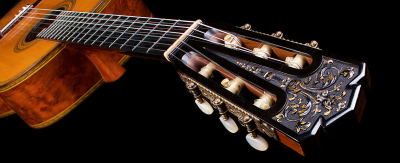
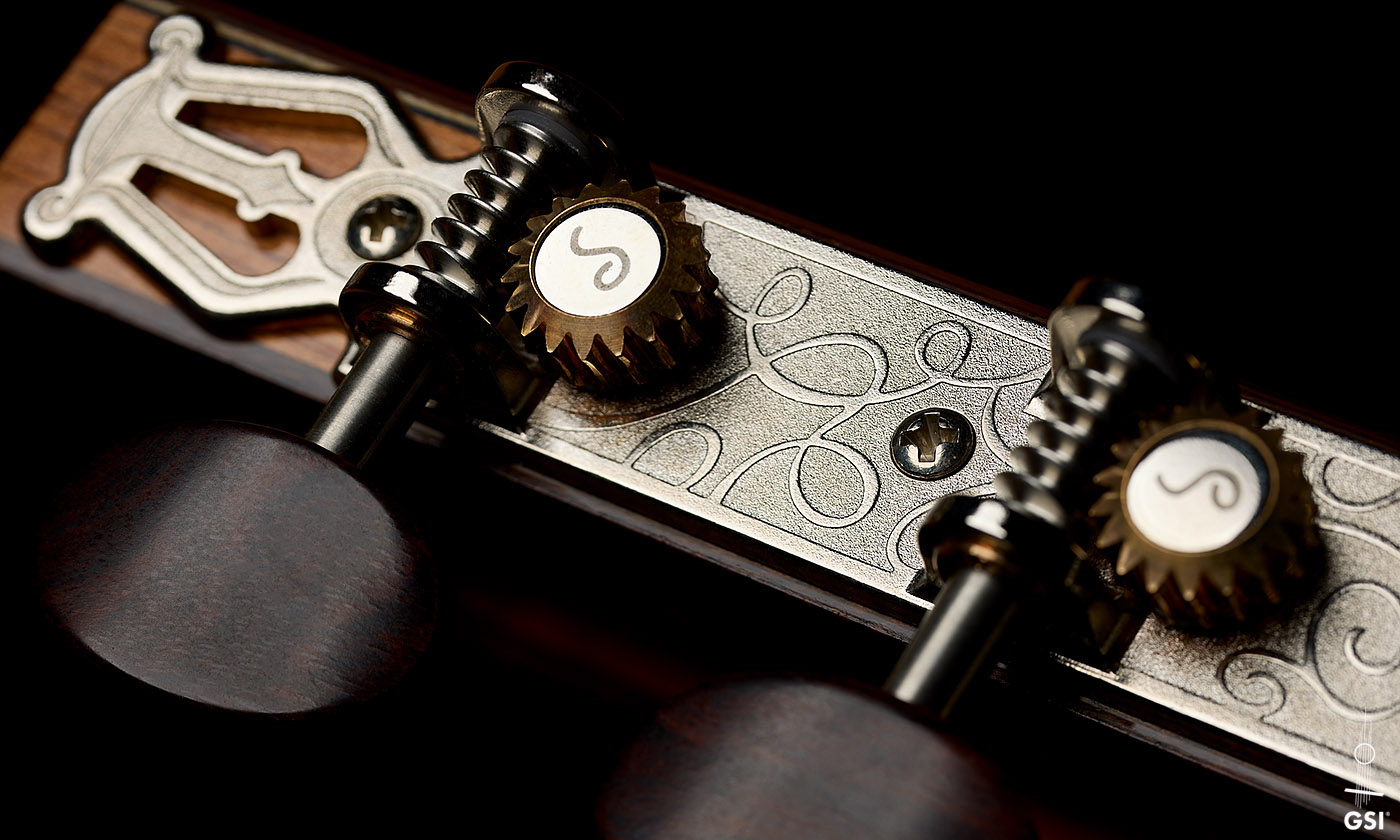
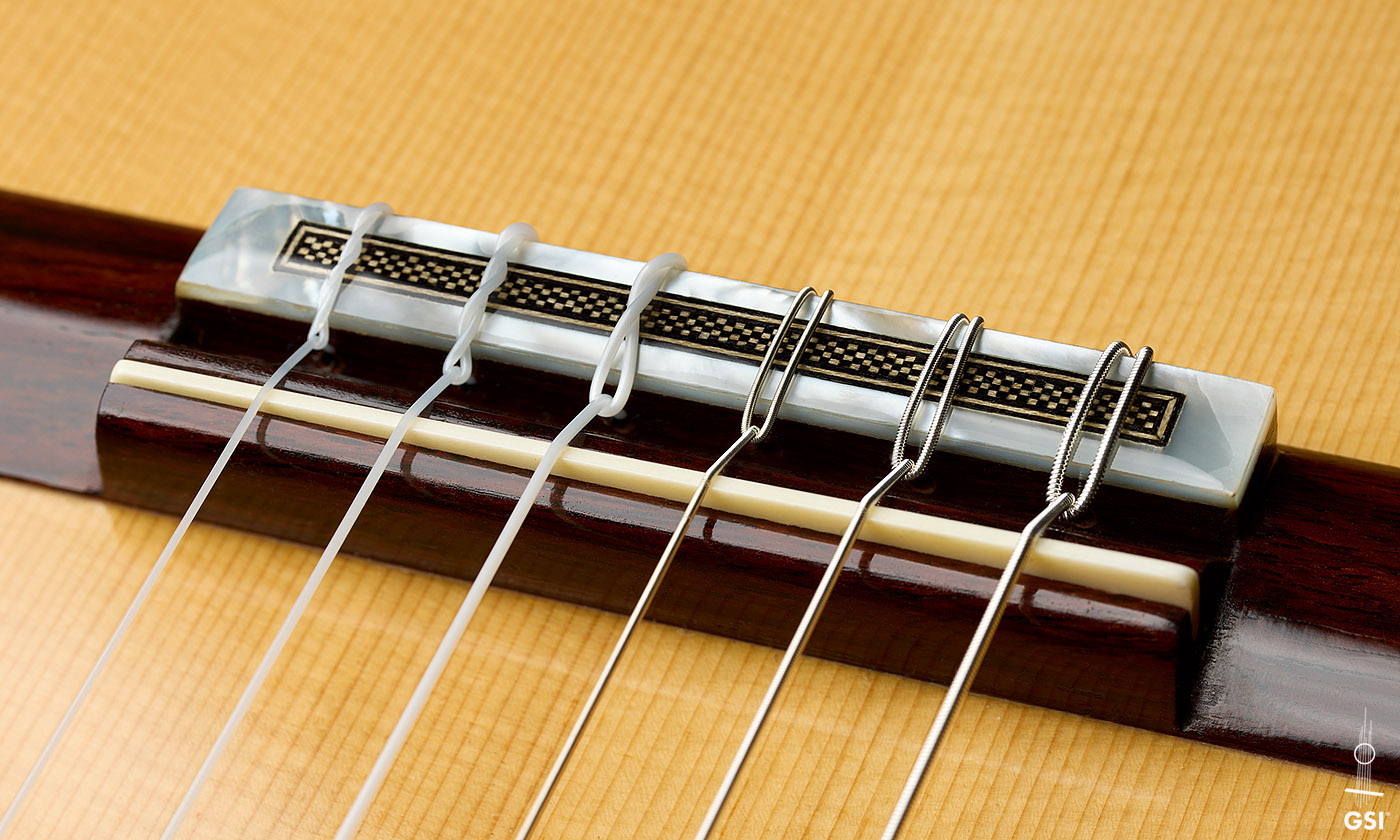
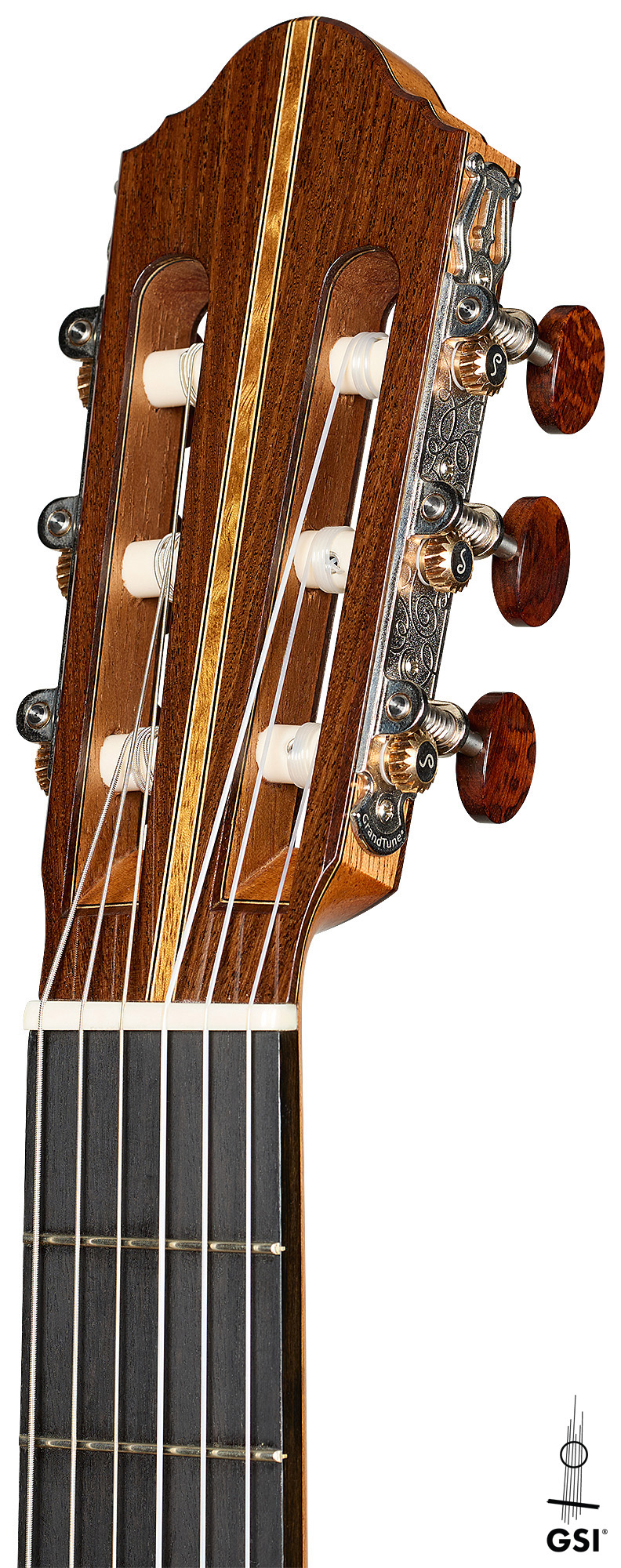
The trim is refined and carefully matched. Dark bindings and fine purflings outline the top, back, and sides. The sides are framed in their own purfled borders, and a slender center strip divides the bookmatched back. At the tail, an inlaid end graft with a delicate rectangular purfling echoes the lines of the body. The scalloped headstock has a central stripe of figured golden wood between fine lines. The bridge has a mother-of-pearl tie block inset with a fine checkerboard mosaic.
The Zenú Rosette
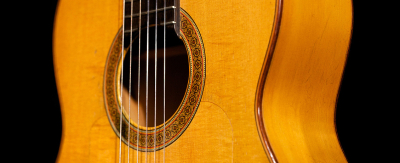
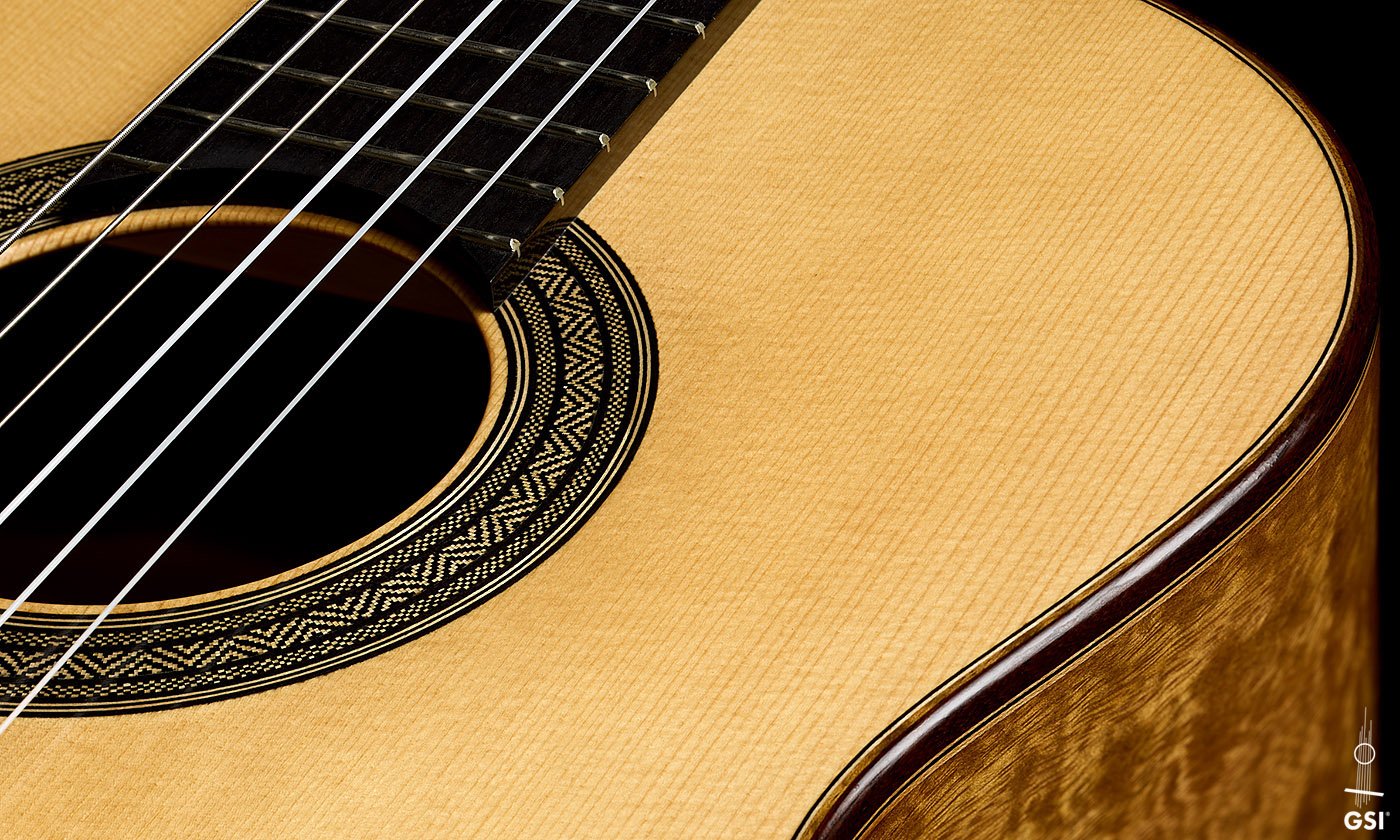
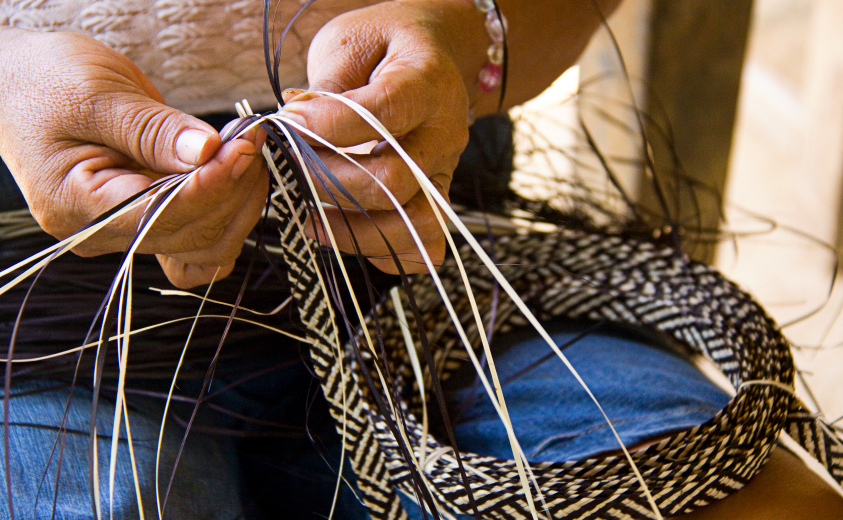
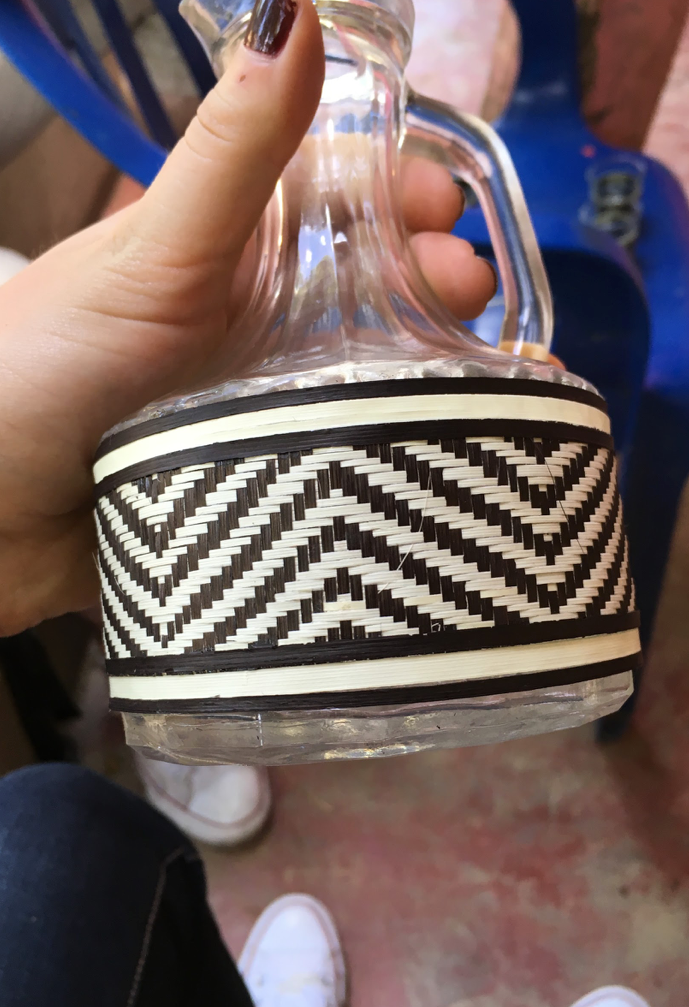
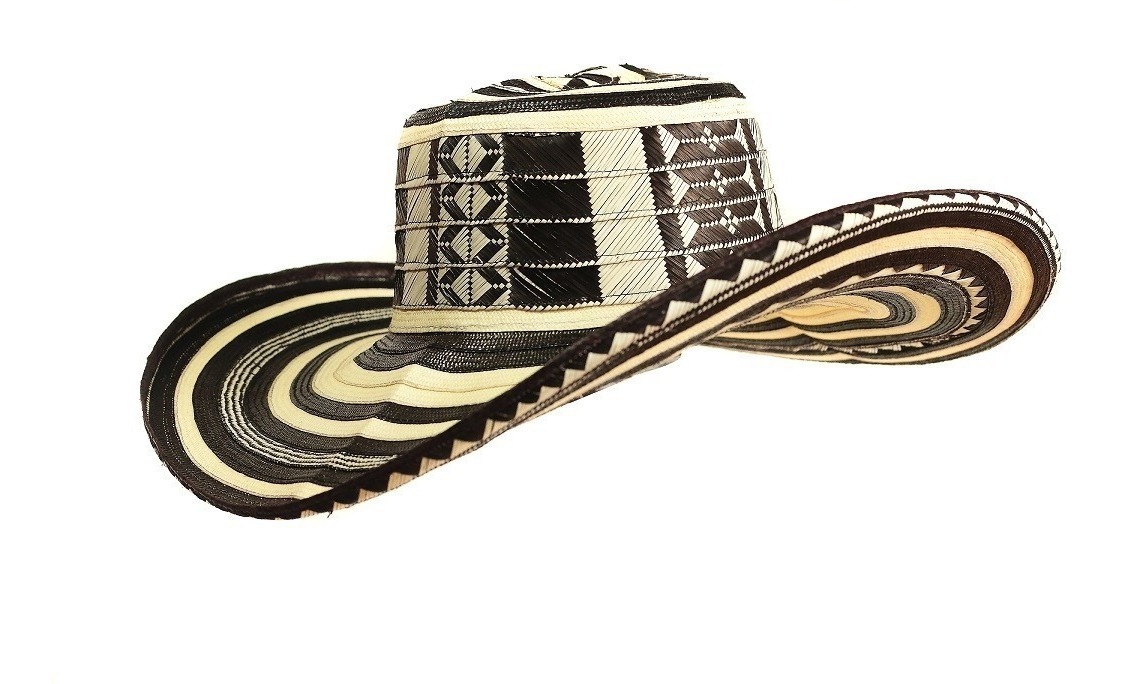
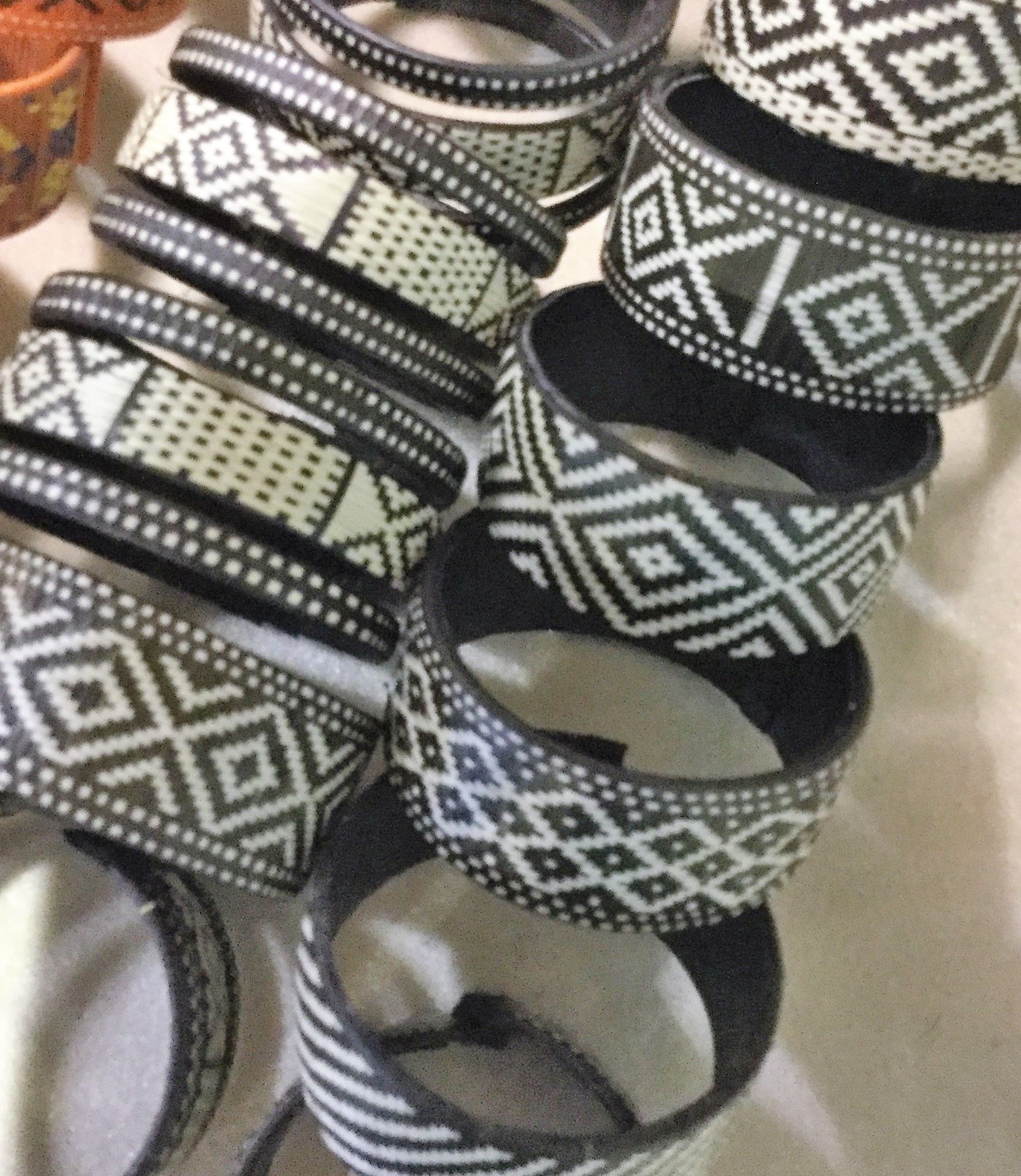
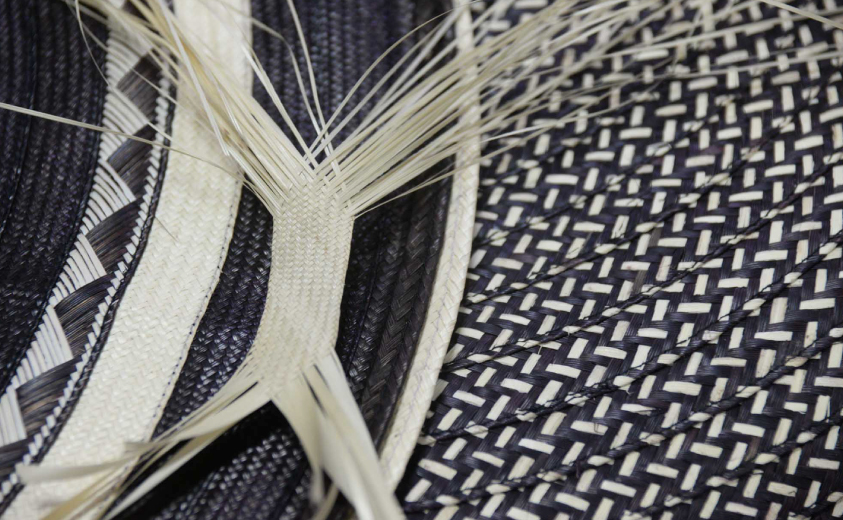
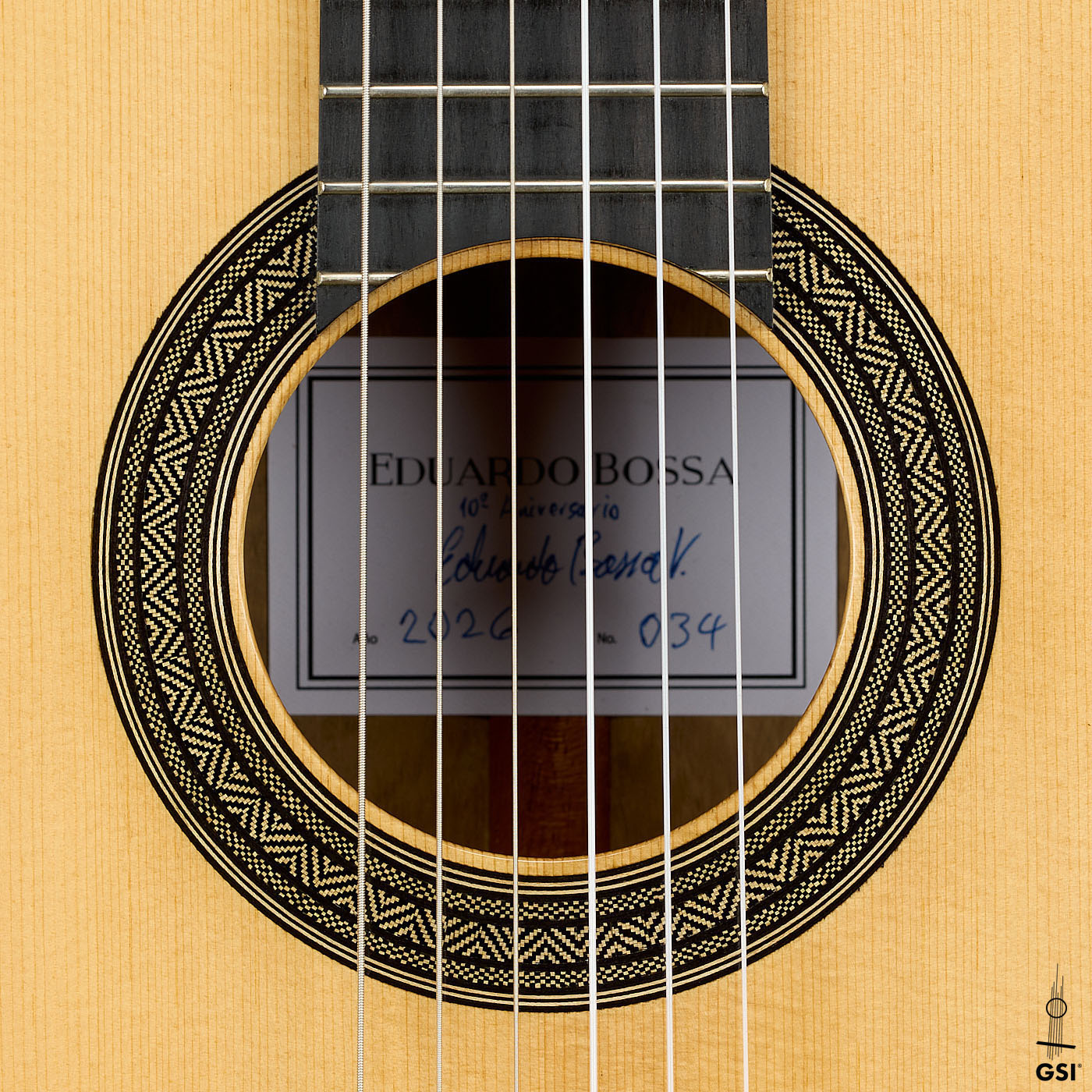
To set the anniversary model apart visually, Eduardo made subtle changes to the purfling, binding, and bridge tie block. He also dedicated a distinct rosette layout to the model, while his standard concert guitars keep his earlier designs. The rosette pays homage to the woven crafts of the Zenú people of the Colombian Caribbean. It is made by skilled local artisans from black and white straw fibers, woven into concentric bands of zigzag and chevron patterns. The motifs recall the pre-Columbian designs that are still part of the region's traditional weaving.
A Piano-Like Concert Sound
With this model, Eduardo set out to create a more piano-like voice, and he has succeeded. The sound is solid and deeply anchored, and the notes are dense and weighty, like those of a fine piano. The guitar is loud and highly directional, with excellent projection and a slightly stronger bass than Eduardo's concert model. Most striking of all is its consistency: the voice is alarmingly even from the lowest bass notes to the top of the treble, with every note carrying the same character and weight. Add the comfortable, player-friendly feel found in all of Eduardo's guitars, and the result is a powerful, distinctive concert instrument and a compelling alternative to his standard model.