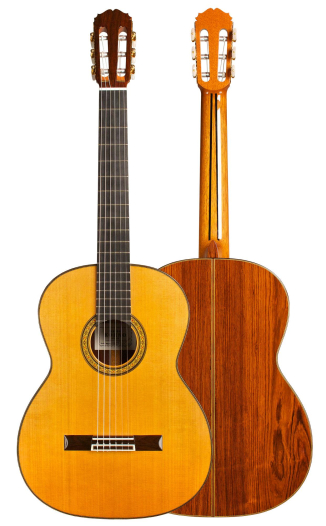
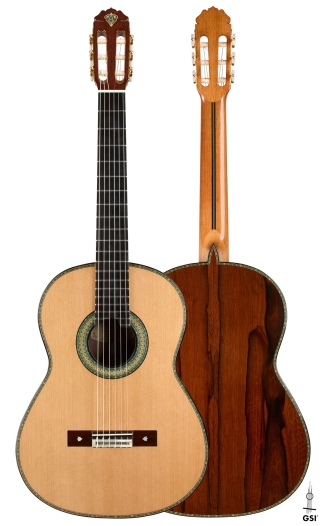
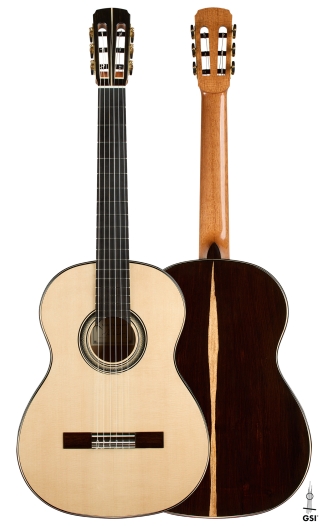
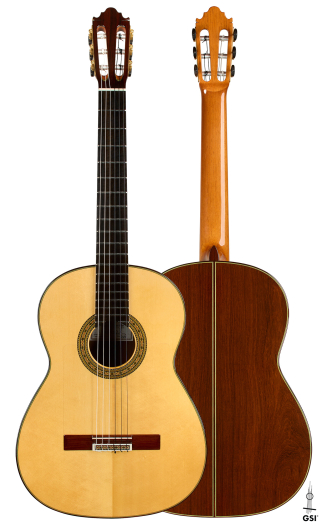
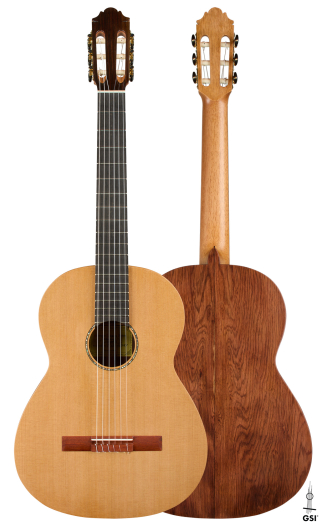
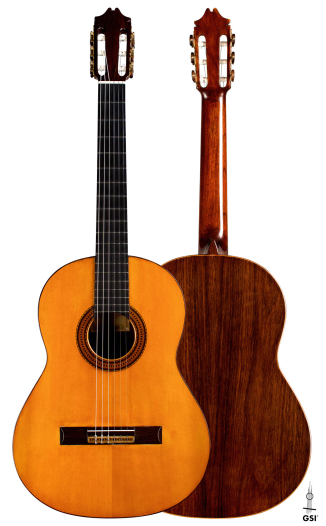
2005 Marcelino López "Blanca" SP/CY
| Year | 2005 |
| Top | Spruce |
| Back & Sides | Cypress |
| Scale Length | 650 mm |
| Nut width | 51 mm |
| Finish | French Polish |
| Country | Spain |
| Luthier | Marcelino López Nieto |
This guitar is no longer available in our inventory. If it interests you, click the ”notify me when available” button to be notified in the event that we re-acquire this guitar for re-sale.


Rubén Fuentes' "La Bikina" performed by Rafa Soto on a 2005 Marcelino Lopez “Blanca”
Description
 This 2005 Marcelino López Nieto "Blanca" is a spruce and cypress flamenco guitar made in Madrid, Spain, with old-school maple tap plates and gold frets.
A Compact Flamenco Blanca
This guitar, made in 2005, is a great example of the style he championed – a flamenco blanca with a more compact body shape, old-school maple tap plates, gold frets and a lovely, thick maple strip in the back.
Condition
Condition is excellent for a guitar of this age. Apart from the tiniest bit of playing wear in the finish, the guitar has no damage or repairs, and it is concert-ready for any performance situation.
Read more: Orfeo Magazine No. 3 – interview with Marcelino López Nieto · Orfeo No. 3 on our blog · our 2008 interview with Marcelino