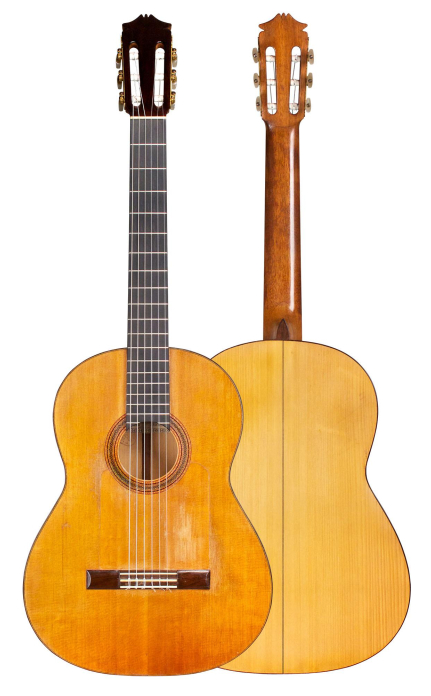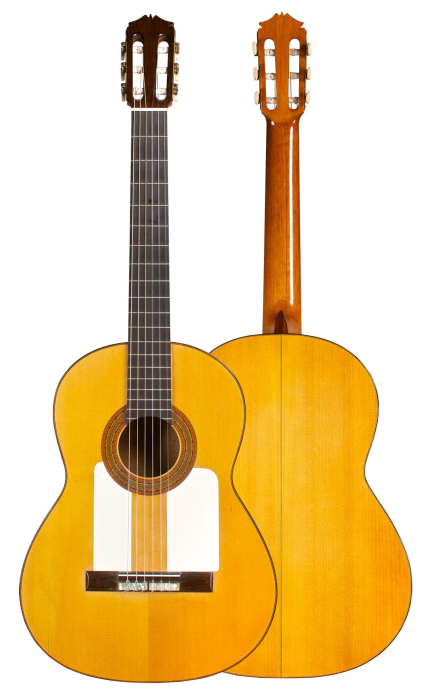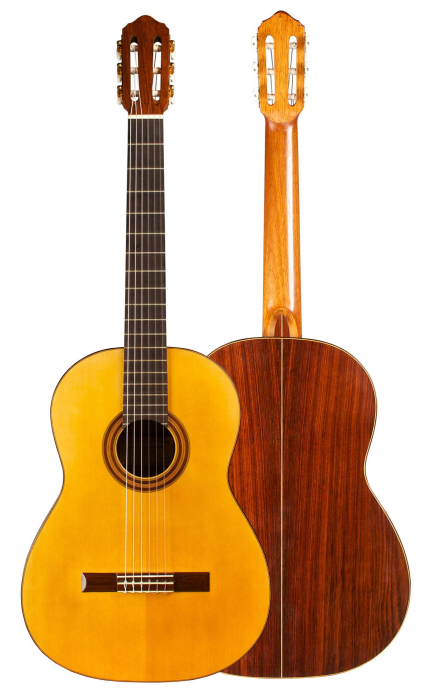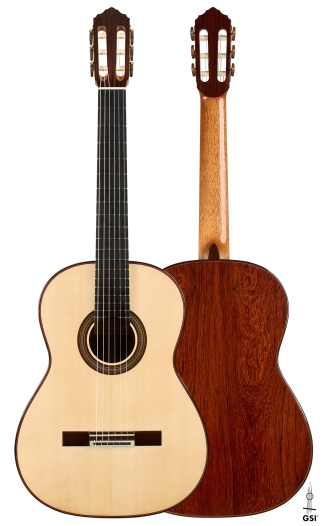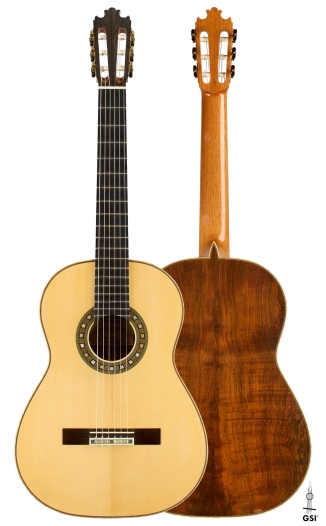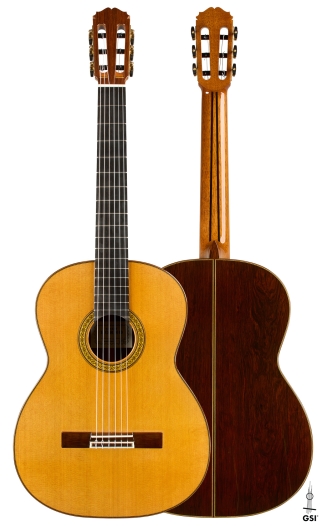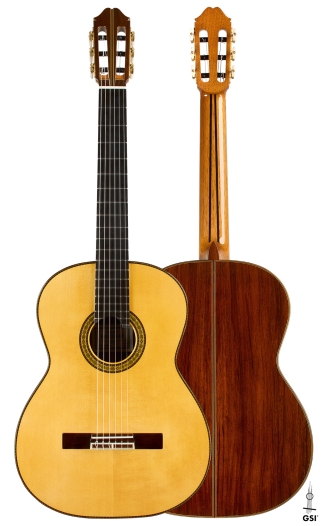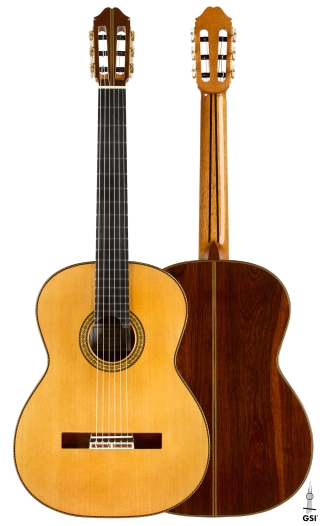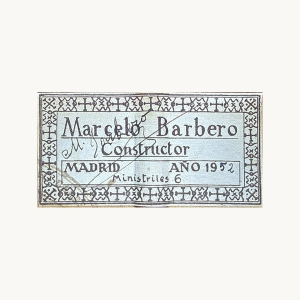
Marcelo Barbero (c. 1904–1956) was a Madrid guitar maker, trained in the workshops of José Ramírez I and José Ramírez II, who finished the last guitars of Santos Hernández and went on to create what is still regarded as the archetypal flamenco guitar. His only real pupil and successor was Arcángel Fernández, who later trained Barbero's son, Marcelo Barbero Hijo.
At a Glance
- Born: c. 1904, Madrid, Spain
- Died: March 6, 1956, Madrid
- Trained: In the shops of José Ramírez I and José Ramírez II
- Workshop: Lavapiés quarter, Madrid
- Known for: The archetypal mid-century flamenco guitar: light, fast and powerful, with a plump, "juicy" tone
- Famous guitar: The 1951 Barbero made for Carlos Montoya and recorded by Sabicas
- Pupil and successor: Arcángel Fernández
- Son: Marcelo Barbero Hijo, trained by Arcángel Fernández
From the Ramírez Workshop to His Own Label
Marcelo Barbero was born around 1904 into a poor Madrid family and lost his parents as a boy. He learned guitar making in the shop of José Ramírez I and kept working under José Ramírez II, where besides guitars he also made bandurrias and laúdes, the Spanish instruments of the street serenaders. Life outside the shop was just as colorful: he boxed professionally, raced bicycles and sang flamenco in the tablaos to make ends meet. Curiously, he never played the guitar – what he knew came from his training, his own experience and the feedback of the best players of his day.
His first guitars under his own name date from the early 1930s, probably made in his spare time while he was still working for Ramírez; the earliest labels carry no address. A 1934 rosewood guitar that passed through our hands shows just how close these early instruments were to the Ramírez II guitars of the time. During the Spanish Civil War he was called up and saw heavy fighting around the University City of Madrid, one of the few men of his company to survive.
Finishing the Last Guitars of Santos Hernández
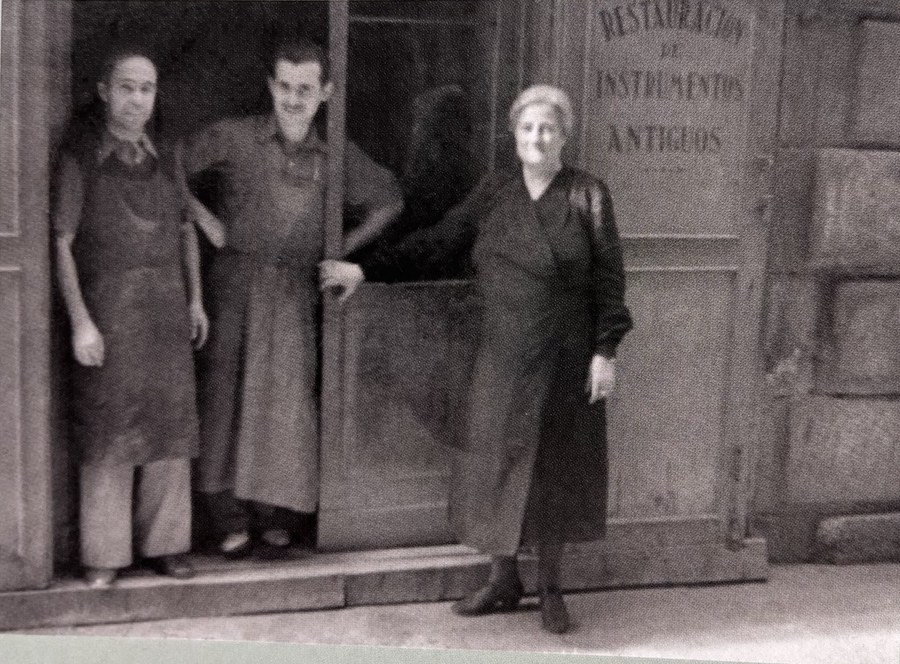
Santos Hernández died on March 8, 1943, leaving a number of guitars unfinished – many of them just completed, signed tops, along with some signed labels. His widow, Matilde Ruiz López, kept the workshop at Aduana 23 going and called on Barbero to finish them. For about three years he made the missing parts and assembled and varnished the guitars with Santos's own materials and tools, and some of them were sold with the "Viuda de Santos Hernández" label. No other maker ever had such a close look at the methods of the great master.
Barbero kept building his own guitars in these years too, from his shop in the old Lavapiés quarter, close to the tablaos where he sang and where many of his customers worked. Santos's influence is plain in his guitars of the 1940s – the head shape is nearly identical, and some rosettes seem to have been made from inlay left over in the Santos shop.
The Barbero Flamenco Guitar
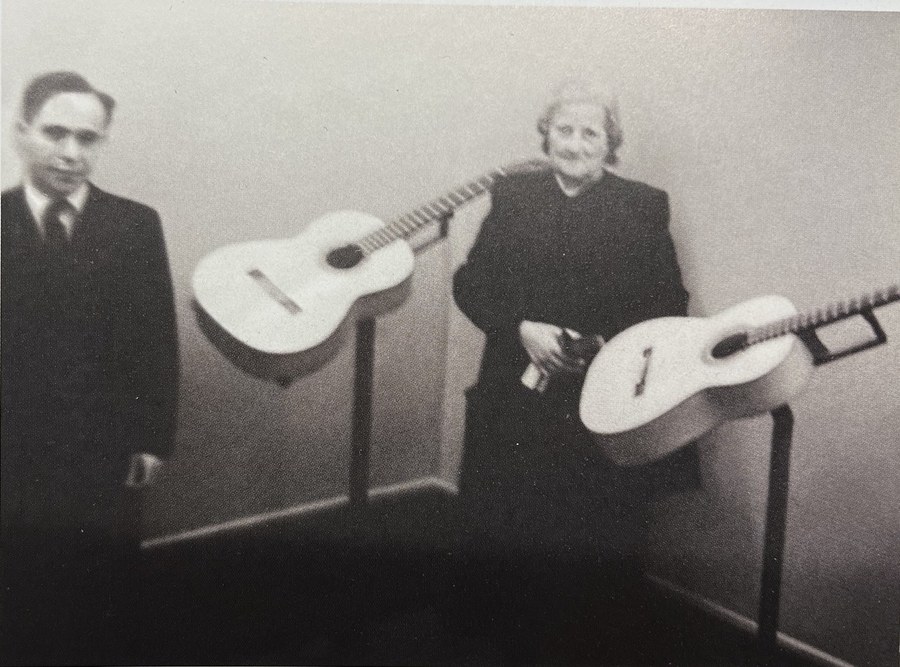
From around the end of 1948 Barbero moved away from the Santos pattern and developed a model of his own, with a new outline, head and rosette, and his own ideas about bracing and the bridge. Flamenco guitarists were playing more and more as soloists, and they wanted a more melodic, lyrical instrument. In the 1950s he gave his cypress flamencos a fuller, more austere and almost classical voice, using slightly thicker woods and a thin bar across the grain of the top under the bridge to steady the sound and even out the sustain – yet nobody would mistake a Barbero for a classical guitar, and the most hard-driving players loved them.
He made very few rosewood guitars, and they are highly prized today; inside, they are braced exactly like his cypress flamencos. All his guitars were made to order – a cypress flamenco with a brilliant tone, a rosewood classical "in the tradition of Santos", and a finer version of the classical with specially chosen woods – for clients in Spain, England, France, Germany, Italy, South America and even Japan. He also gave advice to other makers, among them Manuel Reyes of Córdoba, who spent a day in his shop.
The 1951 Barbero of Carlos Montoya and Sabicas
Barbero's most famous guitar is the 1951 flamenco he made for Carlos Montoya, who passed it on to Sabicas. Sabicas recorded with it in the early 1950s, and some of the best of those recordings came out as "Flamenco Puro", an album that changed the way players everywhere thought about the flamenco guitar. Its sound is still the goal of many makers today – among the copies of it that have passed through GSI are guitars by German Vázquez Rubio (his "1951 Barbero, ex Sabicas" model) and David Schramm, and Robert Ruck made a bench copy of his own Barbero.
The Stradivari of Lavapiés
Marcelo Barbero died on March 6, 1956, only in his early fifties, and the Madrid press mourned him as the "Stradivari of Lavapiés". Arcángel Fernández, who had joined him as his assistant in 1954, finished the guitars in the shop and for about a year built for Barbero's widow before opening his own workshop a couple of blocks away. There he took in Barbero's young son, Marcelo Barbero Hijo, and taught him everything he had learned from the father. Beware of the Japanese-made guitars labeled "Marcelino Barbero, Madrid" that were sold in the US in the late 1960s and early 1970s – they have nothing to do with Barbero or his son.
Marcelo Barbero Guitars at GSI
Many Marcelo Barbero guitars have passed through our doors over the years, including the 1950 "Viuda de Santos Hernández" guitar that Manolo Sanlúcar played at the start of his career. You'll find guitars currently in stock by clicking the "Guitars In Stock" button in the header of this page as well as earlier examples in our Museum by clicking the "Guitars In Museum" button. For the guitars of his son, see Marcelo Barbero Hijo.
Frequently Asked Questions
Who was Marcelo Barbero?
A Madrid guitar maker (c. 1904–1956), trained in the José Ramírez workshop, who finished the last guitars of Santos Hernández and became the most celebrated flamenco guitar maker of the mid-20th century.
Who played Marcelo Barbero guitars?
Sabicas recorded on the famous 1951 Barbero made for Carlos Montoya, and Manolo Sanlúcar began his professional career on a 1950 Barbero-built "Viuda de Santos Hernández" guitar.
Who was Marcelo Barbero's pupil?
Arcángel Fernández, his assistant from 1954 and his successor after his death in 1956. Arcángel later trained Barbero's son, Marcelo Barbero Hijo.
Did Marcelo Barbero make classical guitars?
Yes, though far fewer than flamencos. His rare rosewood classicals are braced like his cypress flamencos and are highly sought after today.