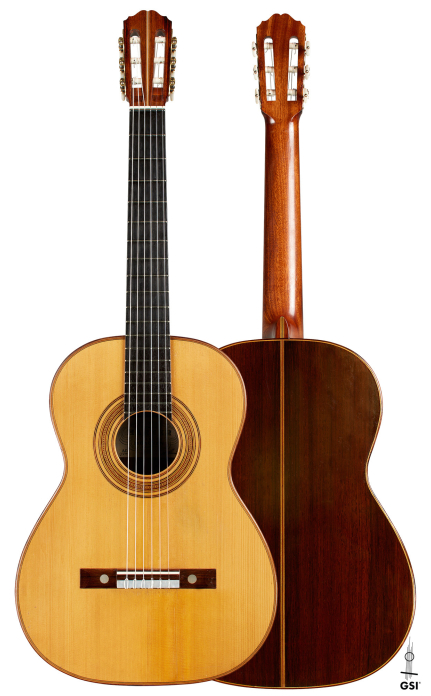
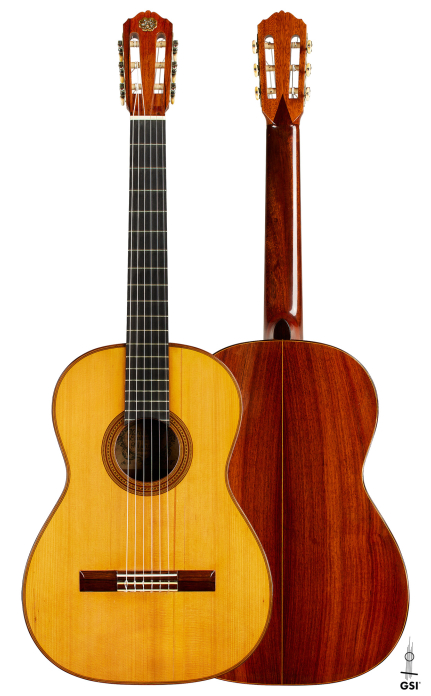
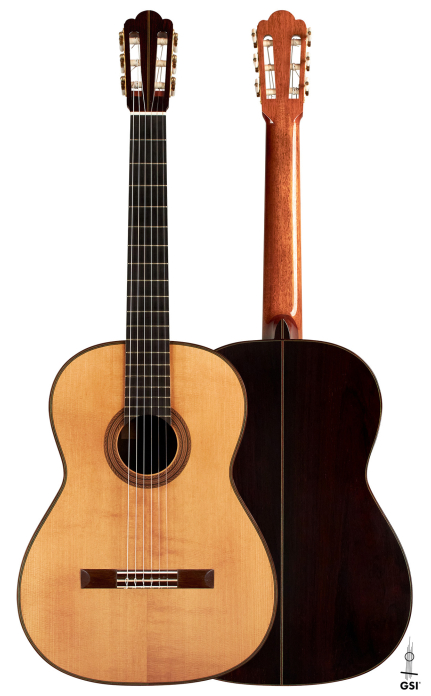
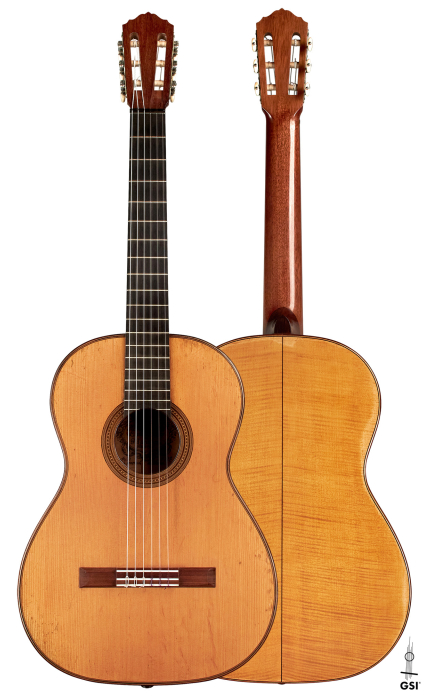
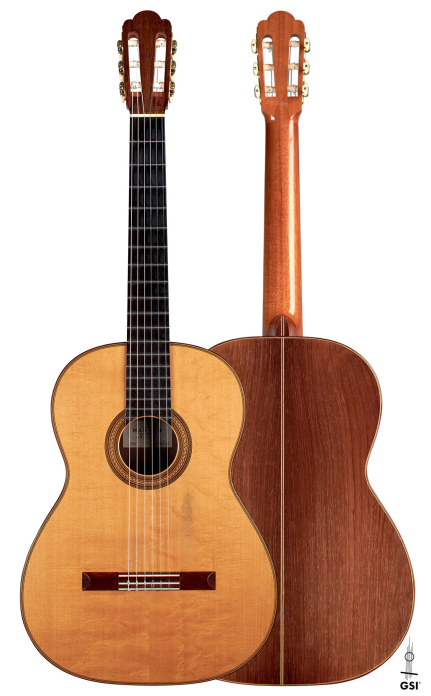
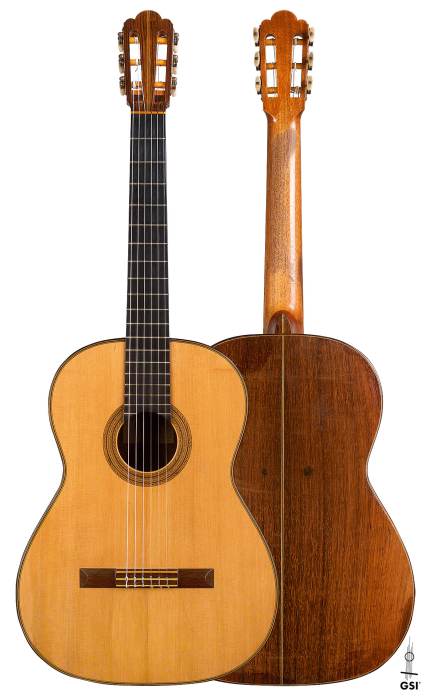
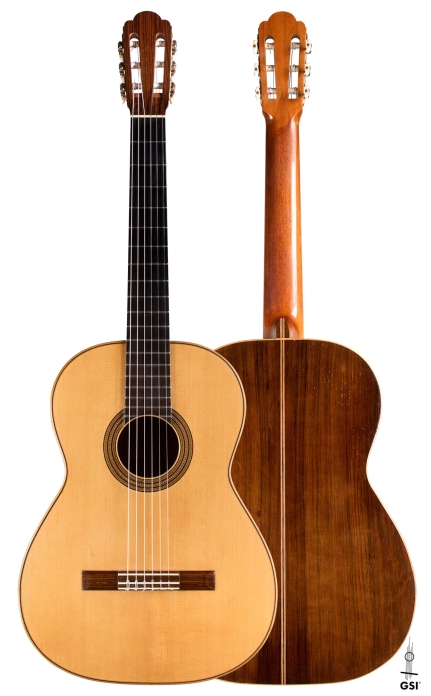
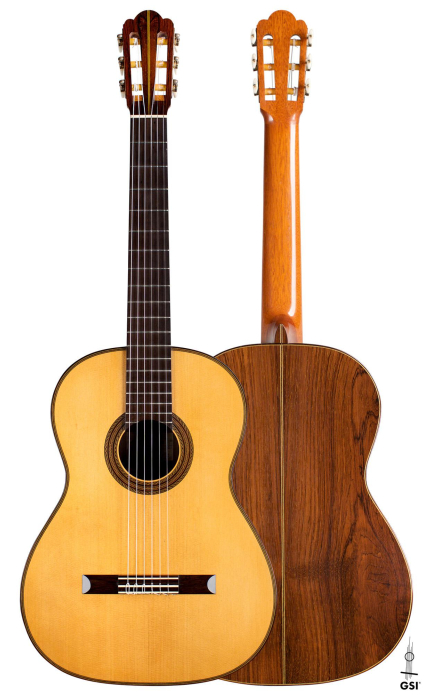
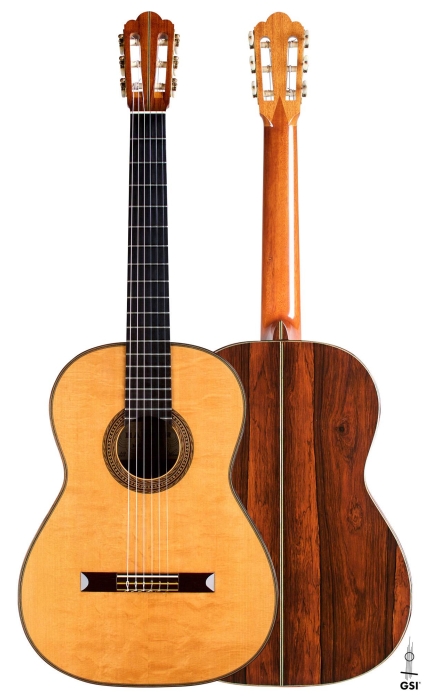
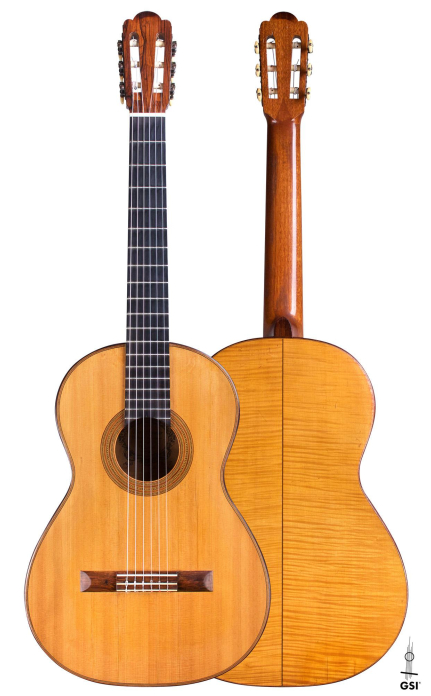
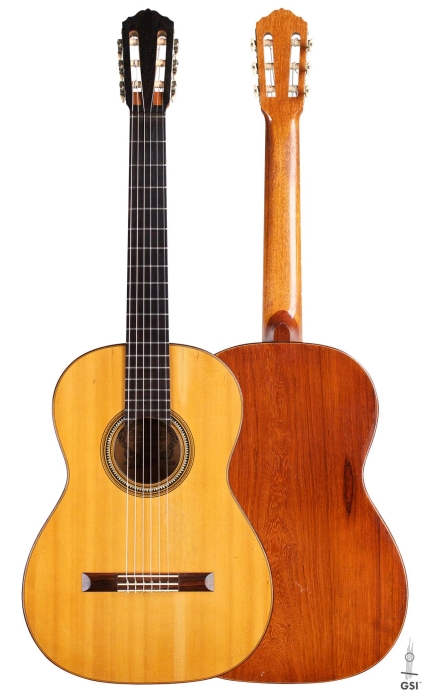
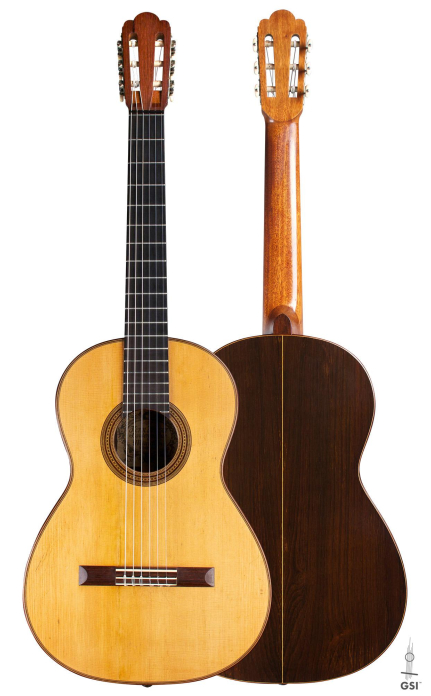
1910 Hermann Hauser I "Vienna" SP/MP
| Year | 1910 |
| Top | Spruce |
| Back & Sides | Maple |
| Scale Length | 600 mm |
| Nut width | 46 mm |
| Finish | French Polish |
| Country | Germany |
| Luthier | Hermann Hauser I |
This guitar is no longer available in our inventory. If it interests you, click the ”notify me when available” button to be notified in the event that we re-acquire this guitar for re-sale.
Videos
Description
Built in Munich in 1910, this Hermann Hauser I "Vienna" is a spruce and maple guitar in the Viennese style – a rare early Hauser from more than a decade before his turn to the Spanish guitar.

Hermann Hauser I Before the Spanish Guitar
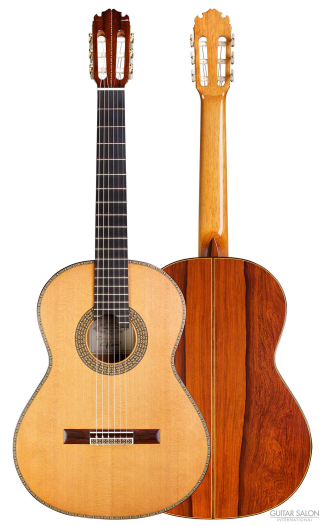
Hermann Hauser Sr. (1882–1952) is regarded by players, aficionados and collectors as one of the elite handful of builders in the history of the instrument. Before discovering and gradually converting to the Spanish-style guitar in the mid-1920s, Hauser built in the popular styles of his day, everything from zithers to lutes to guitars. One of the more favored styles of guitar in turn-of-the-century Munich was the "Vienna" style, and this guitar is a great example.
A Vintage Voice for 19th-Century Music
Sound-wise it is extremely charming, with a vintage style of sound perfect for playing 19th-century music, particularly works by Giuliani, Mertz and even Sor. It has a crisp, clear character in all registers, precise balance and a wide color palette (bright and brassy ponticello, milky and luminous sul tasto, and every shade in between), and every note has a clearly defined, "anchored" fundamental with very controlled, transparent overtones.
Condition
It has only 2 repaired cracks on top and very little wear for its age – remarkable for condition, sound and playability in an instrument over 100 years old.
Background
Hermann Hauser I: Master Guitar Maker of Munich
Hermann Hauser Sr. (1882–1952) is best remembered for the remarkable instruments he built in the Spanish style after 1924. In that year, both Andrés Segovia and Miguel Llobet visited Hauser. Segovia was impressed by the quality of Hauser's work and wrote his impressions, noting that he "immediately saw the potential of this great artisan if only his mastery might be turned to the construction of the guitar in the Spanish pattern, as immutably fixed by Torres and Ramirez as the violin had been fixed by Stradivarius and Guarnerius" (Segovia in Guitar Review, 1954).
Segovia, Llobet and the Spanish Model
Segovia encouraged Hauser to build instruments based on his 1912 Manuel Ramírez guitar (built by Santos Hernández) after he examined and made measurements of this instrument. At this time Hauser also had the opportunity to examine Miguel Llobet's famous 1859 Torres, which would also become a decisive influence on the maturing "Hauser" style.