Guitar Salon International
+1 (310) 586.1100 | +1 (877) 771.4321
Museum
Classical Guitars
Classical Guitars
Flamenco Guitars
Flamenco Guitars
Cleveland Collection
Luthiers
Luthiers
Your Cart

Your shopping cart is empty!

Sub-Total: $0.00
Total: $0.00
Edit cart
Checkout
Museum

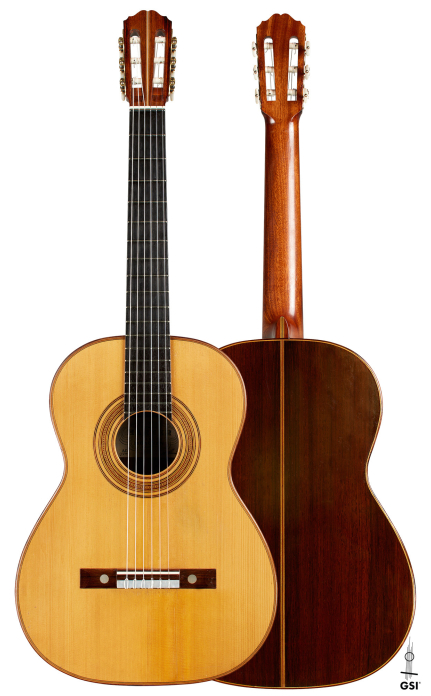
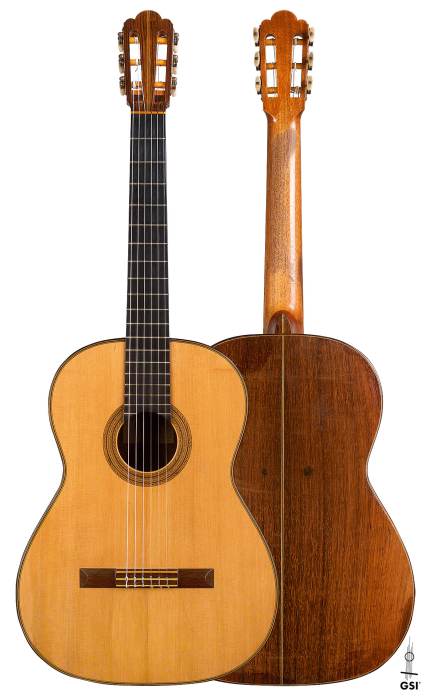
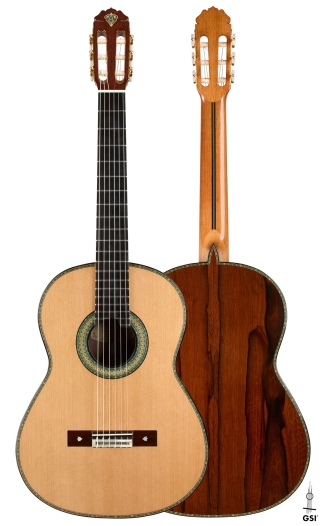
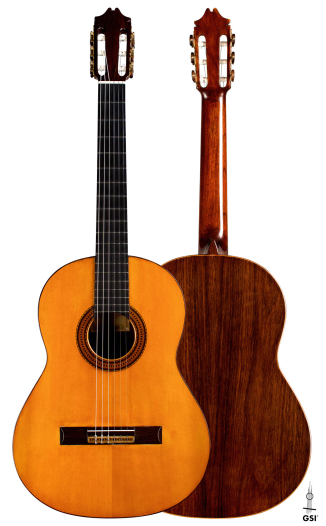
1926 Hermann Hauser I SP/CSAR (ex Angel Romero)

Year 1926
Top Spruce
Back & Sides CSA Rosewood
Scale Length 650 mm
Nut width 52 mm
Finish French Polish
Country Germany
Luthier Hermann Hauser I

This guitar is no longer available in our inventory. If it interests you, click the ”notify me when available” button to be notified in the event that we re-acquire this guitar for re-sale.

Inquire
See more from Hermann Hauser I

Videos

1926 Hermann Hauser I SP/CSAR (ex Angel Romero)

Angel Romero Tells the Story of his 1926 Hermann Hauser I

1926 Hermann Hauser I SP/CSAR (ex Angel Romero)

"Djudjino Oro" by Vojislav Ivanovic played by Iakovos Kolanian and Larry Hammett on Hauser I guitars
Description

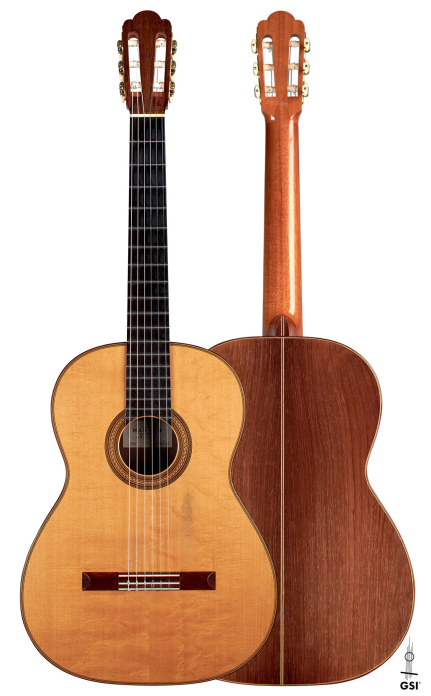
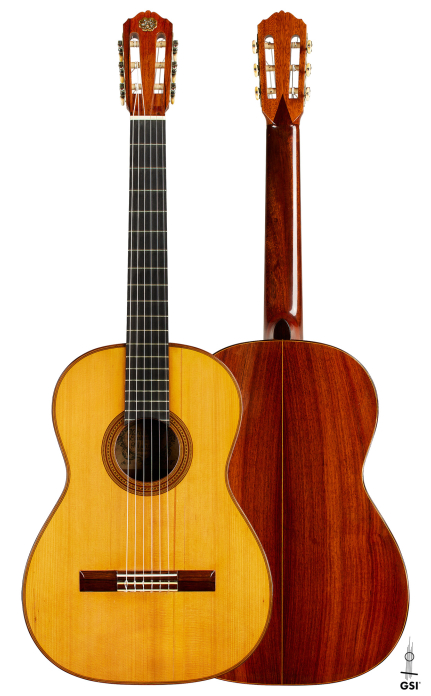
Angel Romero toured the world for years with this 1926 Hermann Hauser I, a Munich classical guitar in spruce and CSA rosewood with a one-piece back and a "zero fret".

Virginia Majewski, Segovia and Angel Romero

This guitar has a great history – it has been played and admired by many great artists over the decades. Its most recent owner, Angel Romero, first encountered it when he befriended the great violist Virginia Majewski (who played for the legendary violinist Jascha Heifetz and cellist Gregor Piatigorsky). Virginia had been a longtime friend of Andrés Segovia, who encouraged her to have a bow made by the Fleta workshop in Barcelona. She did, but after the introduction she was smitten by the charm of the classical guitar and eventually, with Segovia's assistance, obtained both a Fleta guitar and this 1926 Hauser I. Angel's enthusiasm for this Hauser led Virginia to loan it to him for many years (she herself was only a hobbyist on the guitar), and upon her death she willed it to him permanently. Over these years Angel toured extensively with this instrument, performing in top venues all around the world, and even loaned it to members of his family on occasion – his father Celedonio Romero was so taken with the guitar that they shared it for a number of years.

Torres, Manuel Ramírez and Hauser's Zither Roots

In 1926 Hauser already knew the work of Antonio de Torres intimately: he had studied Miguel Llobet's 1859 Torres (FE 09), drawing a plan of it in 1922, and that same year he acquired an 1860 Torres (FE 13) from Llobet – two instruments with a lasting impact on his style. Two years earlier he had met Segovia and examined his 1912 Manuel Ramírez (built by Santos Hernández); its "Manuel Ramírez" head would remain a Hauser favorite for over a decade and appears on many of his guitars, this 1926 among them. Another interesting detail is the one-piece back of CSA rosewood, veneered internally with a layer of spruce – quite common in zither construction of the time, showing how Hauser was incorporating elements of his own Germanic base into the Spanish designs he was discovering in Torres and Manuel Ramírez.

Sound: a Phenomenal Player's Instrument

Sound is absolutely sublime – this is a phenomenal player's instrument all around, with a rich, deep texture that gives it a unique lyricism and great beauty of tone. Like all great Hausers it is also perfectly balanced, with great clarity between voices – a true joy to play and listen to. It is fitted with a "zero fret", which makes the open strings sound like the fretted notes, as all notes vibrate between a fret and the saddle, maximizing consistency of sound.

Condition

Condition is excellent for such an old instrument – apart from two well-repaired cracks in the upper bout and one in the lower bout of the soundboard, the guitar is completely original, with normal wear given the amount of performing done on it. It is performance-ready for the concert stage or recording studio. Truly a remarkable and rare instrument with a great backstory, from one of history's most important luthiers.

Background

Hermann Hauser I: Master Guitar Maker of Munich

Hermann Hauser Sr. (1882–1952) is best remembered for the remarkable instruments he built in the Spanish style after 1924. In that year, both Andrés Segovia and Miguel Llobet visited Hauser. Segovia was impressed by the quality of Hauser's work and wrote his impressions, noting that he "immediately saw the potential of this great artisan if only his mastery might be turned to the construction of the guitar in the Spanish pattern, as immutably fixed by Torres and Ramirez as the violin had been fixed by Stradivarius and Guarnerius" (Segovia in Guitar Review, 1954).

Segovia, Llobet and the Spanish Model

Segovia encouraged Hauser to build instruments based on his 1912 Manuel Ramírez guitar (built by Santos Hernández) after he examined and made measurements of this instrument. At this time Hauser also had the opportunity to examine Miguel Llobet's famous 1859 Torres, which would also become a decisive influence on the maturing "Hauser" style.

Guitars by Hermann Hauser I