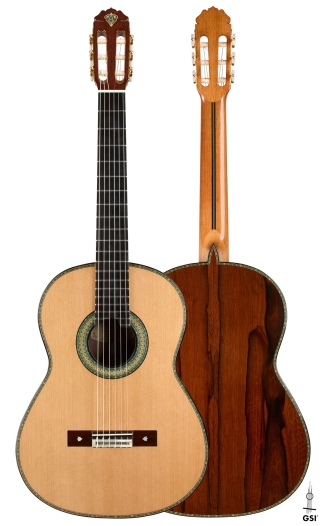
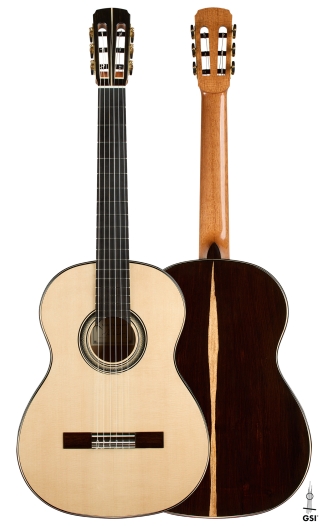
1910 José Ramírez I SP/MH
| Year | 1910 |
| Top | Spruce |
| Back & Sides | Mahogany |
| Scale Length | 640 mm |
| Nut width | 52 mm |
| Finish | French Polish |
| Country | Spain |
| Luthier | José Ramírez I |
This guitar is no longer available in our inventory. If it interests you, click the ”notify me when available” button to be notified in the event that we re-acquire this guitar for re-sale.


Stephanie Jones performs João Pernambuco's "Graúna" on a 1910 José Ramirez I classical guitar

This Guitar is Older Than Your Grandma! Guitar: 1910 Jose Ramirez

Francisco Tárrega's "Endecha" performed by Xeno Müller II on a 1910 Jose Ramirez I

Mela Guitar Quartet performs "Moto Perpetuo" by Frank Bridge on four Jose Ramirez guitars
Background
José Ramírez I: Founder of the Ramírez Workshop
José Ramírez I (1858–1923) founded the José Ramírez workshop in Madrid around 1882 – the family business that has dominated Spanish guitar making ever since. He joined Francisco González, the leading Madrid maker of the day, as an apprentice at the age of 12, and once he had established a style based on González's guitars he stuck to it throughout his life. In 1890 he took his famous premises at Concepción Jerónima No. 2.
Concepción Jerónima No. 2 and Its Apprentices
There he trained a remarkable series of makers: his brother Manuel Ramírez, Enrique García, Julián Gómez Ramírez (who later settled in Paris and befriended Robert Bouchet) and his own son José Ramírez II. Flamenco players came to him for more projection, and he created the Ramírez tablao guitar for them – a large but shallow cypress body with a domed soundboard.
José Ramírez in "34 Classical Guitars in Life Size"
A 1905 José Ramírez is among the historic guitars shown in Orfeo's book of life-size guitar portraits: