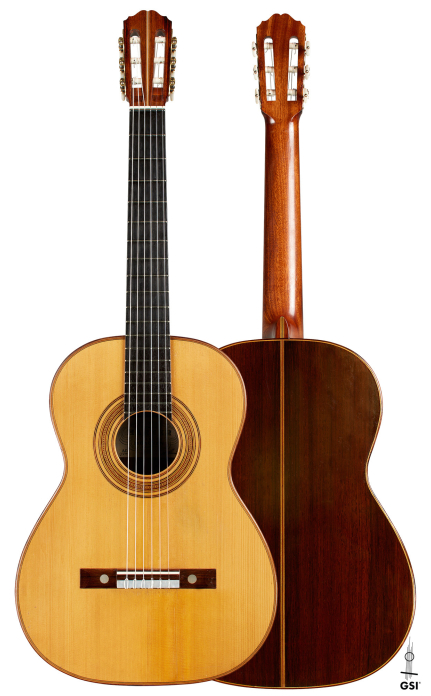
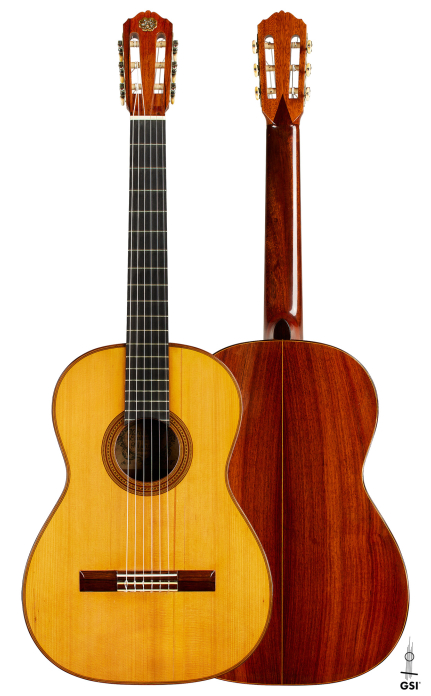
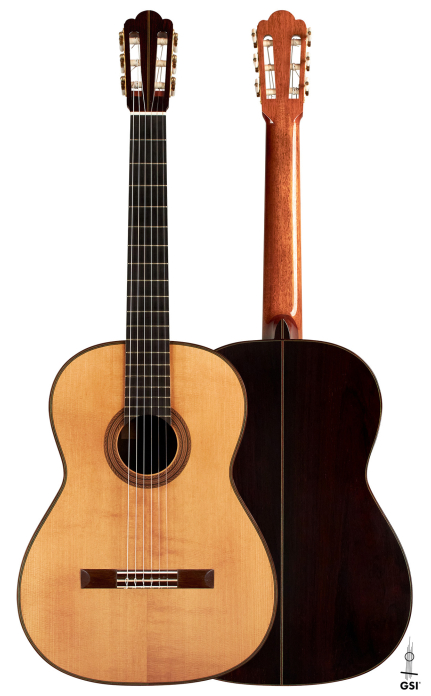
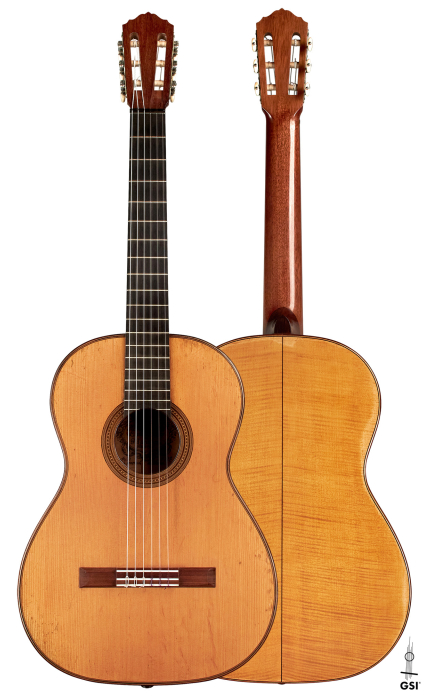
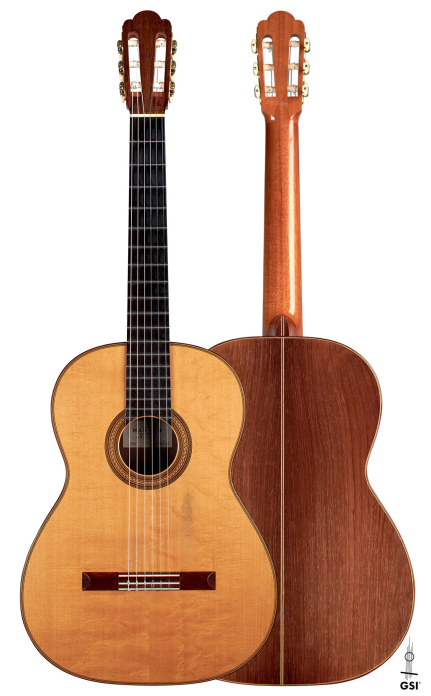
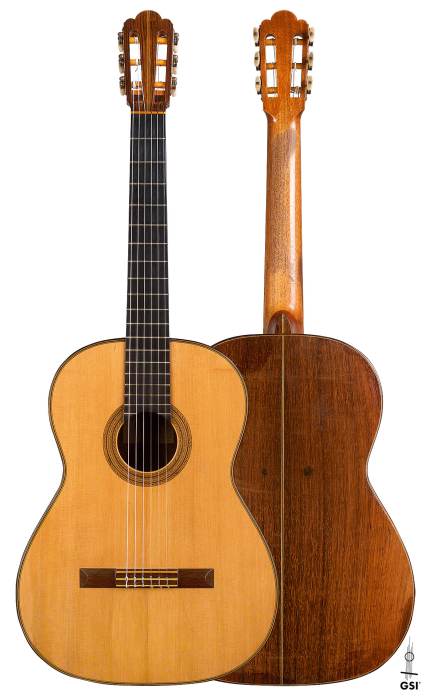
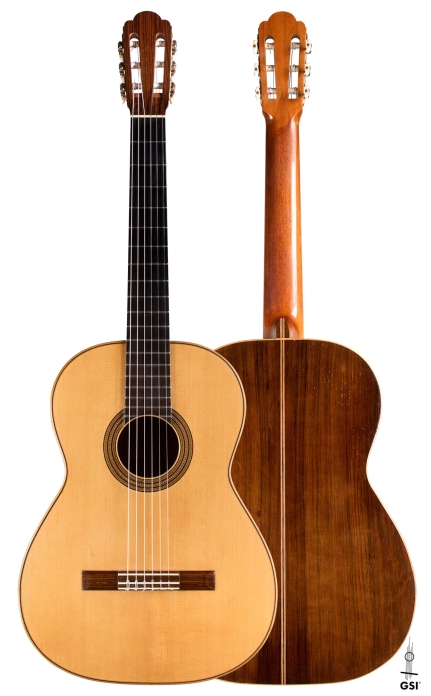
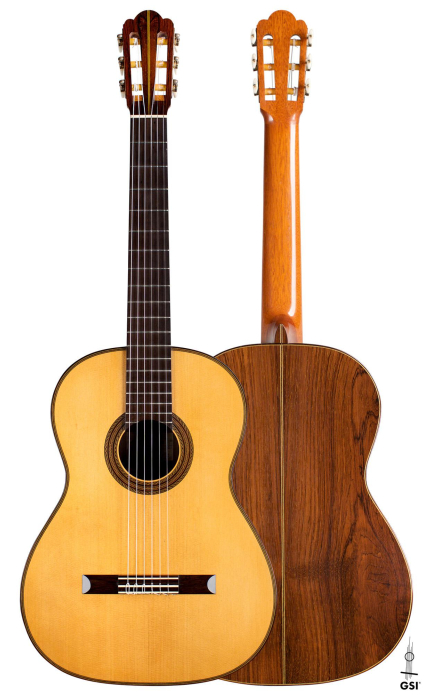
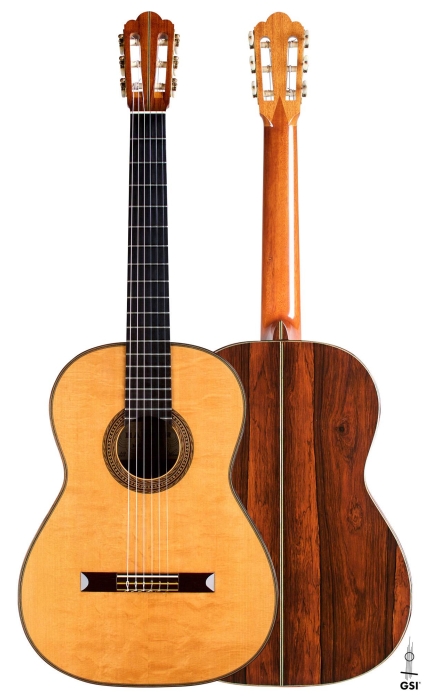
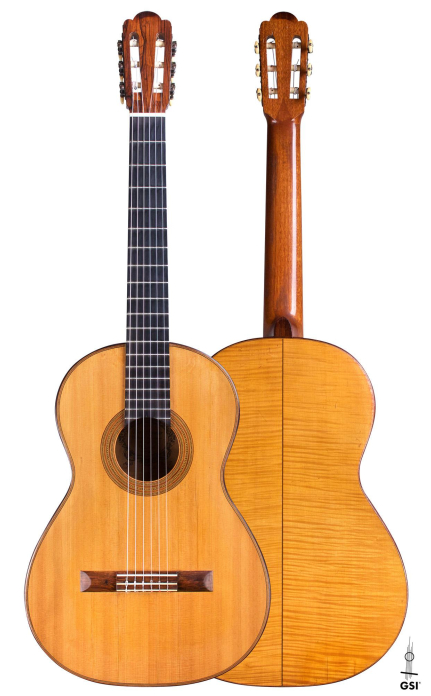
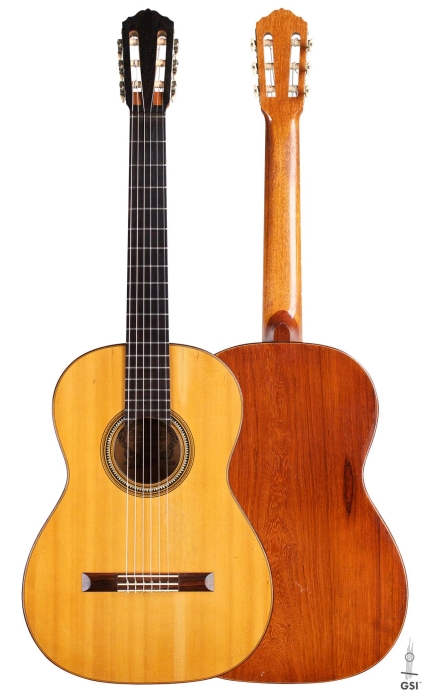
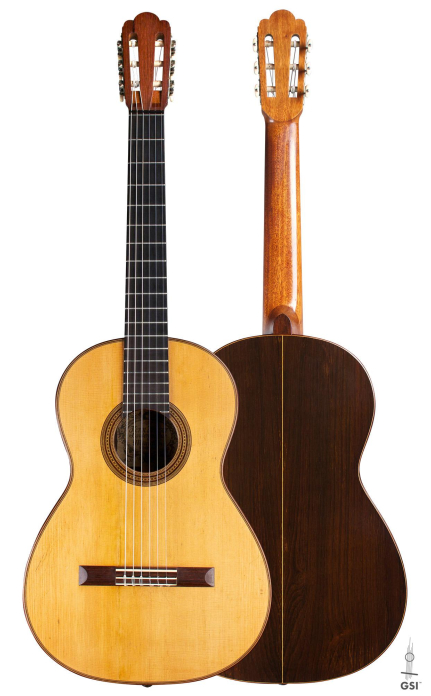
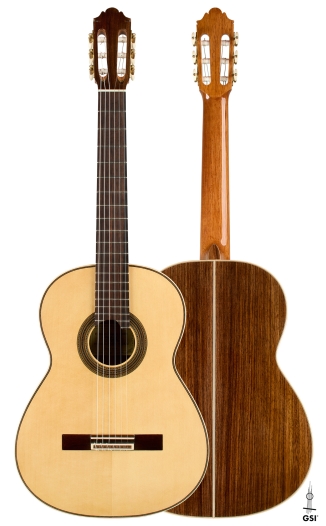
1929 Hermann Hauser I SP/CSAR
| Year | 1929 |
| Top | Spruce |
| Back & Sides | CSA Rosewood |
| Scale Length | 644 mm |
| Nut width | 50.5 mm |
| Finish | French Polish |
| Country | Germany |
| Luthier | Hermann Hauser I |
This guitar is no longer available in our inventory. If it interests you, click the ”notify me when available” button to be notified in the event that we re-acquire this guitar for re-sale.
Videos
Description
This 1929 Hermann Hauser I is a Munich classical guitar in spruce and CSA rosewood with a "zero fret" and a tornavoz – one of the most "Spanish"-sounding Hausers we have had.
Spanish and German Styles Perfectly Synthesized
This particular guitar is an exquisite example of Hauser's fulfillment of the integration of the Spanish style into his own Germanic base. The meeting of the Spanish and German techniques and styles is perfectly synthesized in this instrument, and it stands out as an example of one of the most iconic styles in history. Along with Torres, his guitars are the most studied, revered and desired of the great historical makers.

The Zero Fret and the Tornavoz
Sound is perfectly balanced, with great clarity between voices, and a rich, deep texture that gives it a unique lyricism and great beauty of tone. It is fitted with a "zero fret", which makes the open strings sound like the fretted notes, maximizing consistency of sound. Installed is a tornavoz (a conical tube placed inside the soundhole), which enhances the bass frequencies and adds greater depth and volume to the overall sound, creating a sort of "sonic boom", particularly in the bottom end; the trebles also benefit, with added harmonic richness and depth. Hauser appears to have been fond of the tornavoz, as he used it in several other guitars throughout his career. Of the many Hauser I guitars we have sold over the years, this one seems to have an exceptionally strong "Spanish" character – warm, dark and very romantic.
Condition
It has had two cracks repaired on the back. Apart from this, the guitar is in excellent condition, ready for the concert stage or recording studio. Playability is a dream for both right and left hands. Truly a remarkable and rare instrument from one of history's most important luthiers.
Background
Hermann Hauser I: Master Guitar Maker of Munich
Hermann Hauser Sr. (1882–1952) is best remembered for the remarkable instruments he built in the Spanish style after 1924. In that year, both Andrés Segovia and Miguel Llobet visited Hauser. Segovia was impressed by the quality of Hauser's work and wrote his impressions, noting that he "immediately saw the potential of this great artisan if only his mastery might be turned to the construction of the guitar in the Spanish pattern, as immutably fixed by Torres and Ramirez as the violin had been fixed by Stradivarius and Guarnerius" (Segovia in Guitar Review, 1954).
Segovia, Llobet and the Spanish Model
Segovia encouraged Hauser to build instruments based on his 1912 Manuel Ramírez guitar (built by Santos Hernández) after he examined and made measurements of this instrument. At this time Hauser also had the opportunity to examine Miguel Llobet's famous 1859 Torres, which would also become a decisive influence on the maturing "Hauser" style.