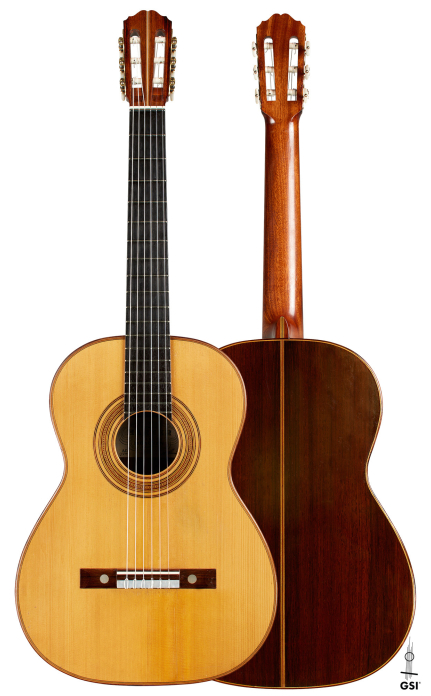
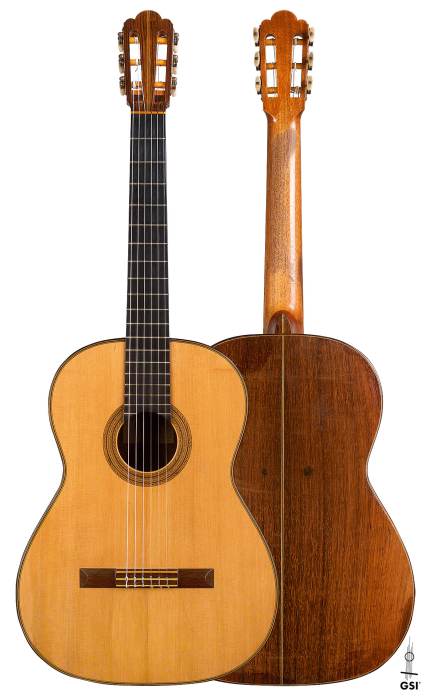
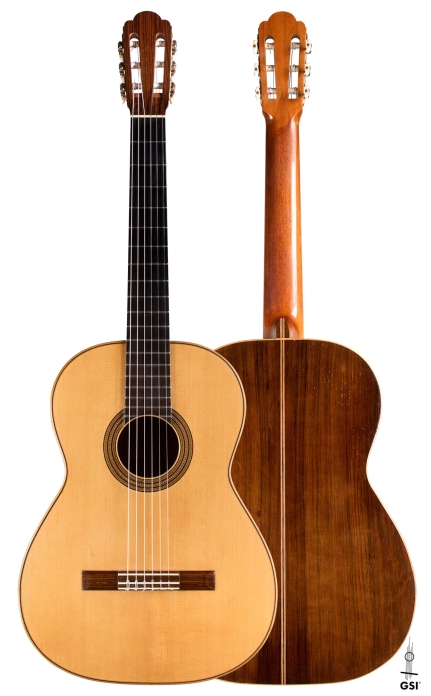
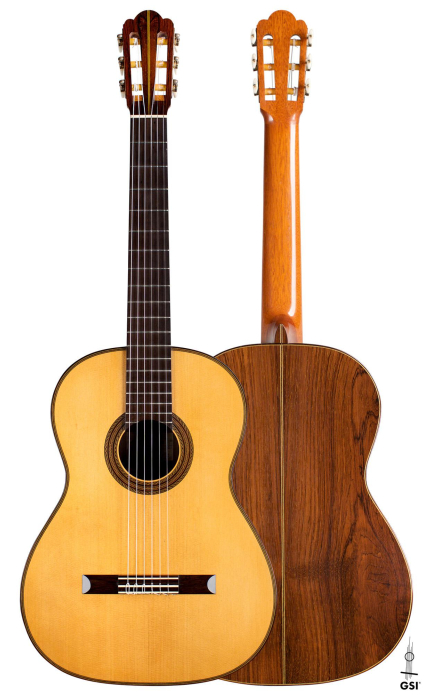
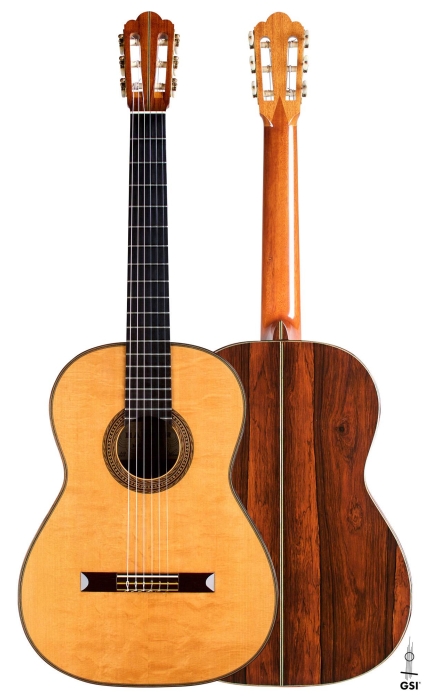
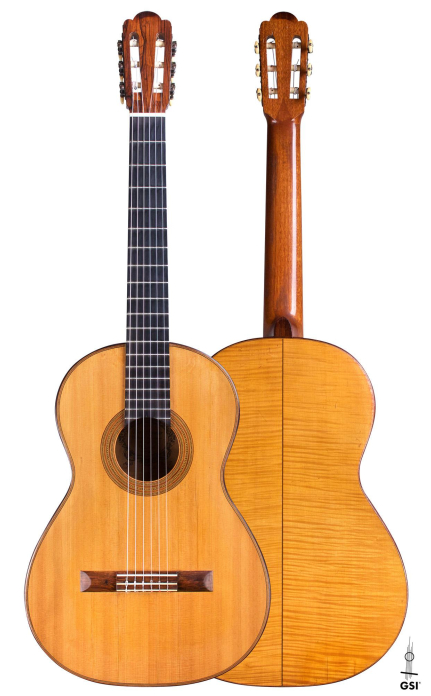
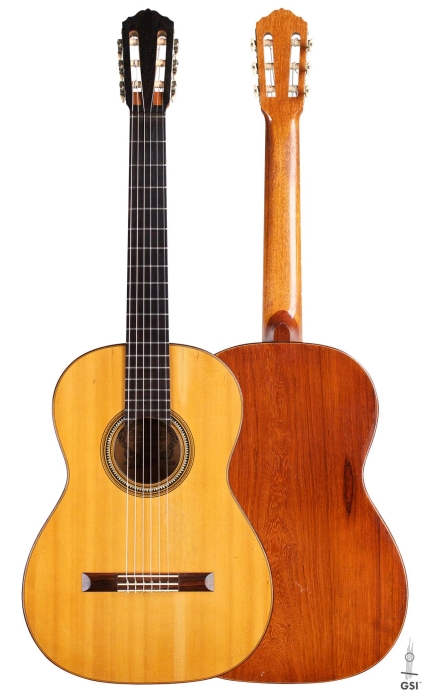
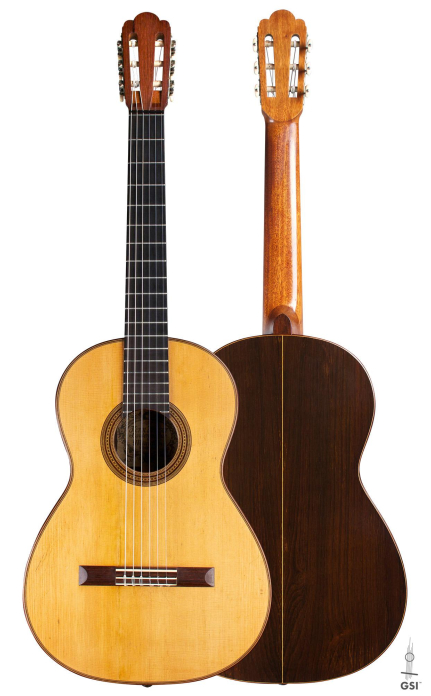
1952 Hermann Hauser I SP/CSAR (ex Sérgio Abreu)
| Year | 1952 |
| Top | Spruce |
| Back & Sides | CSA Rosewood |
| Scale Length | 650 mm |
| Nut width | 52 mm |
| Finish | French Polish |
| Country | Germany |
| Luthier | Hermann Hauser I |
This guitar is no longer available in our inventory. If it interests you, click the ”notify me when available” button to be notified in the event that we re-acquire this guitar for re-sale.
Videos
Description
This 1952 Hermann Hauser I classical guitar in spruce and CSA rosewood was the main concert instrument of the Brazilian guitarist Sérgio Abreu – a Munich-made Hauser from the last year of the maker's life.
From the Final Year of Hauser I's Life
Built the final year of Hermann Hauser I's life, this instrument contains all of the most refined qualities of the great style that Hauser pioneered over the course of his long career. It has an absolutely beautiful sound, quite complex and extremely expressive. On one hand it possesses a piano-like clarity, with precise balance and a strong fundamental with very controlled overtones. At the same time it has a rich, deep, loose and relaxed quality across all registers. Simply a marvel to hear and play.
Sérgio Abreu's Concert Guitar
This instrument was famously owned by the late Sérgio Abreu, who concertized on it as his main instrument during the "soloist" phase of his career. He also recorded the "Grand Sonata em Lá Maior" by Niccolò Paganini on his solo album "Sérgio Abreu interpreta Paganini e Sor".
In our opinion, this is a marvel from the output of Hauser, likely the most powerful we've ever seen, yet retaining the exquisite and refined qualities he was famous for producing. This is a standout instrument for every reason – iconic in its austere appearance, majesty of sound, and amazing provenance.
Background
Hermann Hauser I: Master Guitar Maker of Munich
Hermann Hauser Sr. (1882–1952) is best remembered for the remarkable instruments he built in the Spanish style after 1924. In that year, both Andrés Segovia and Miguel Llobet visited Hauser. Segovia was impressed by the quality of Hauser's work and wrote his impressions, noting that he "immediately saw the potential of this great artisan if only his mastery might be turned to the construction of the guitar in the Spanish pattern, as immutably fixed by Torres and Ramirez as the violin had been fixed by Stradivarius and Guarnerius" (Segovia in Guitar Review, 1954).
Segovia, Llobet and the Spanish Model
Segovia encouraged Hauser to build instruments based on his 1912 Manuel Ramírez guitar (built by Santos Hernández) after he examined and made measurements of this instrument. At this time Hauser also had the opportunity to examine Miguel Llobet's famous 1859 Torres, which would also become a decisive influence on the maturing "Hauser" style.