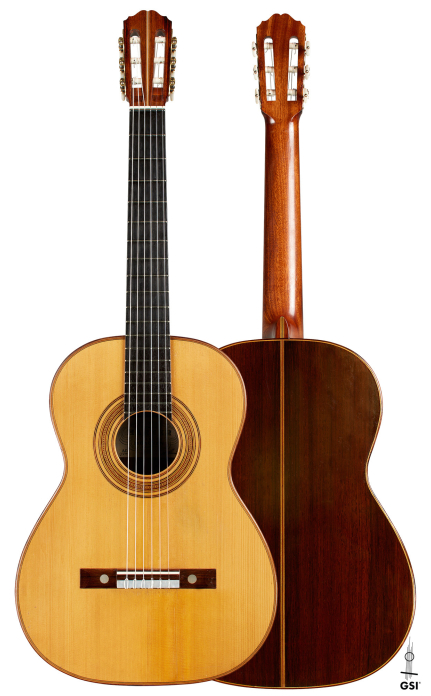
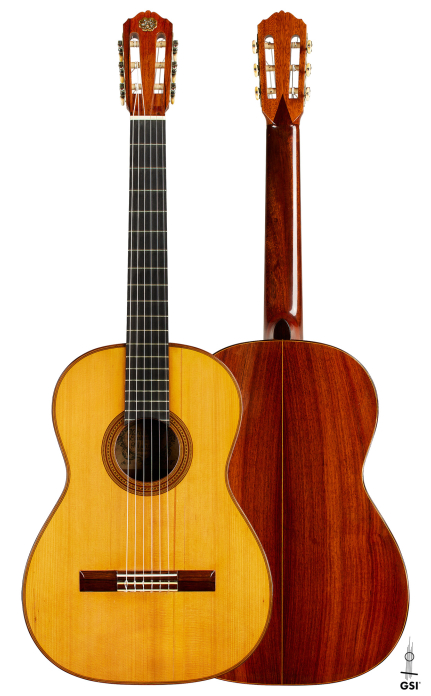
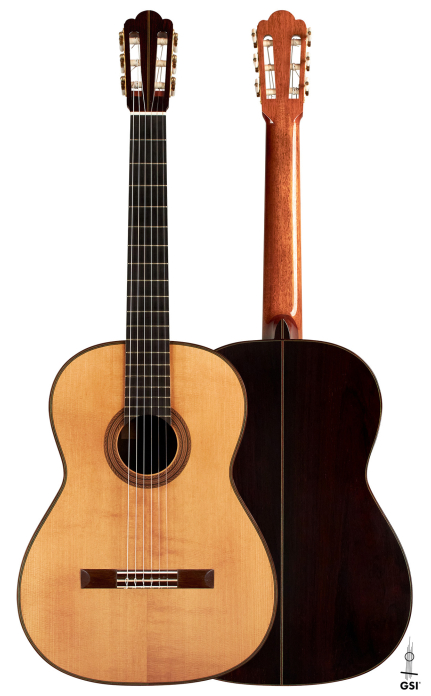
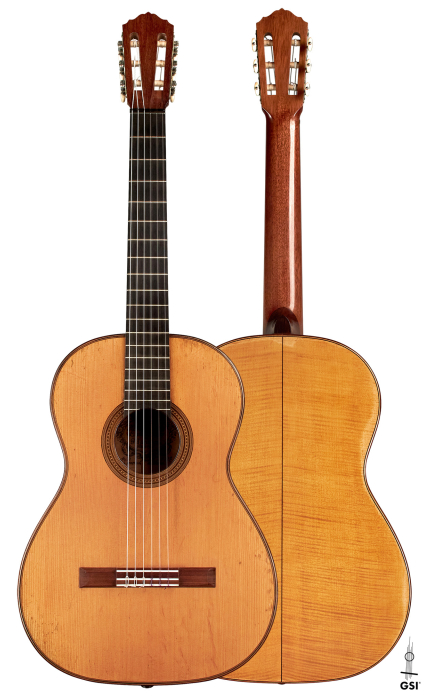
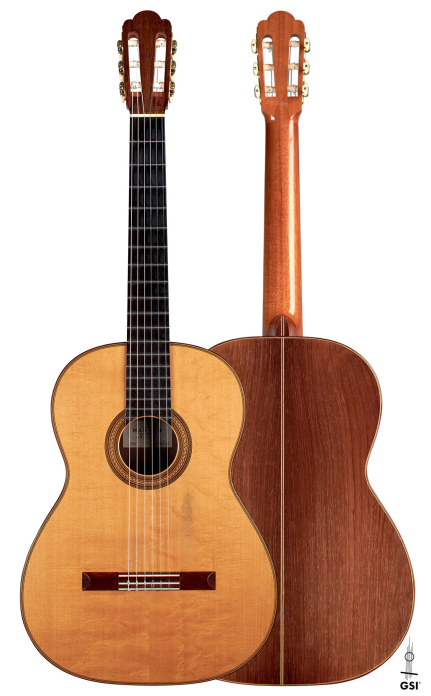
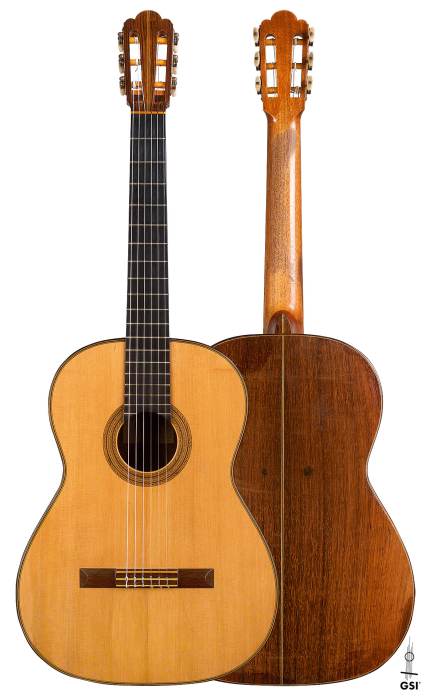
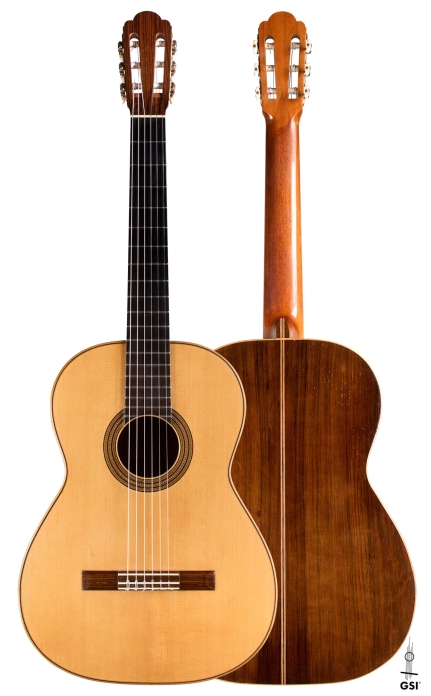
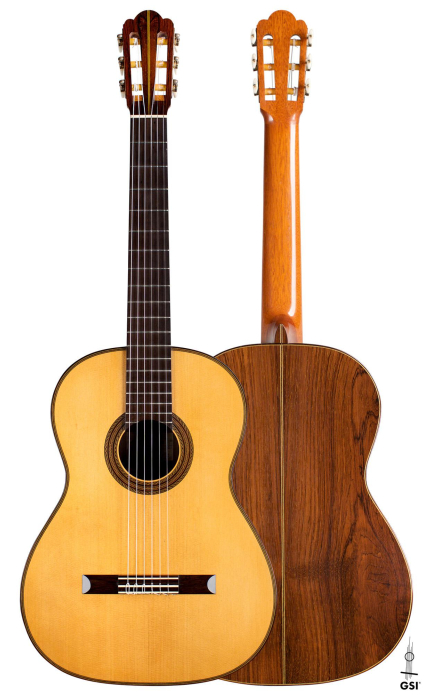
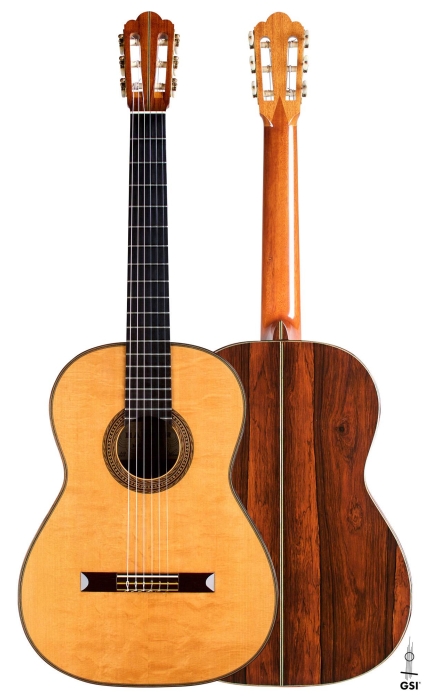
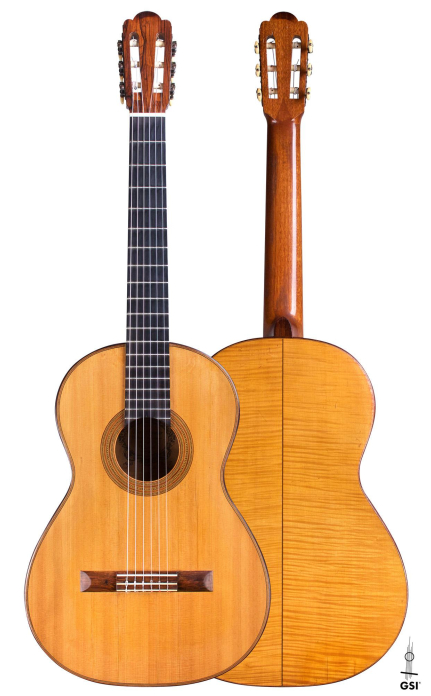
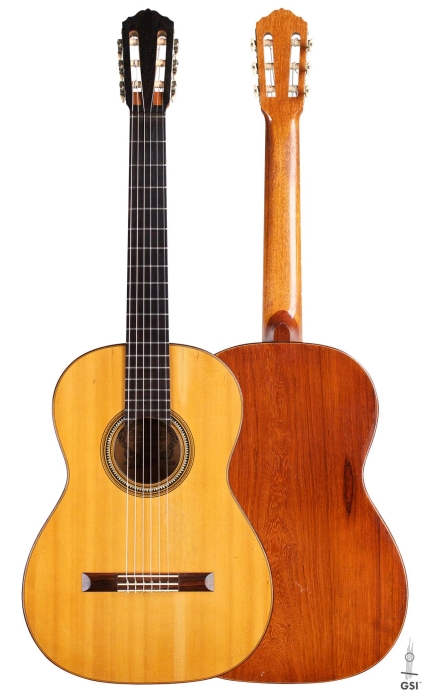
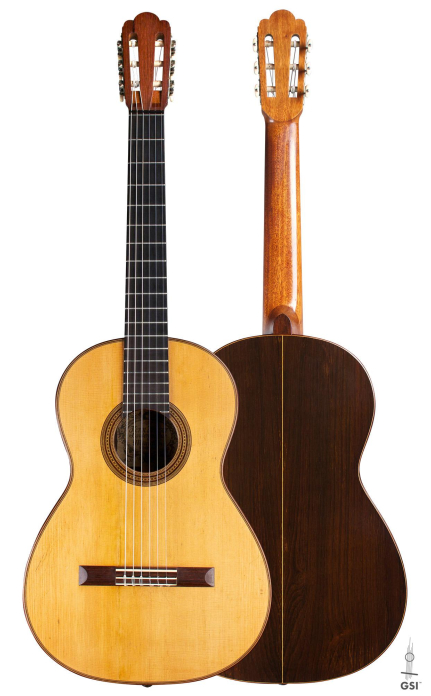
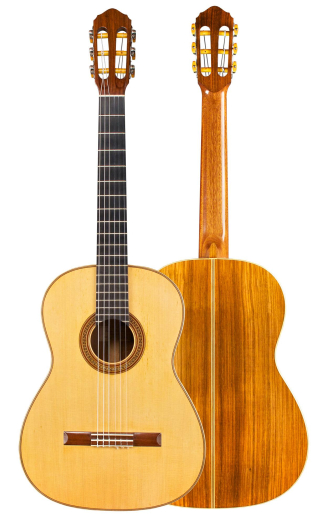
1952 Hermann Hauser I SP/CSAR
| Year | 1952 |
| Top | Spruce |
| Back & Sides | CSA Rosewood |
| Scale Length | 650 mm |
| Nut width | 52 mm |
| Finish | French Polish |
| Country | Germany |
| Luthier | Hermann Hauser I |
This guitar is no longer available in our inventory. If it interests you, click the ”notify me when available” button to be notified in the event that we re-acquire this guitar for re-sale.
Videos
Description
Quite possibly the very last guitar (or one of the last) by Hermann Hauser I, this 1952 classical guitar in bearclaw spruce and CSA rosewood was completed only days before his passing, and comes with his letters to its first owner.
The Last Guitars of Hermann Hauser I
This instrument represents the culmination of a lifetime of experience and insight, distilled into a single guitar. It has an absolutely beautiful sound, a bit melancholy and introspective, yet possessing all the familiar qualities of a great Hauser I – piano-like clarity, precise balance, a strong fundamental with very controlled overtones. The trebles are lyrical and voice-like, and the basses firm and deep-rooted.


Bearclaw Top and Hauser I's Signature
The guitar features first-rate materials, including a stunning top covered with bearclaw (the underside of the top has Hauser I's signature). It is in original condition, and with age the top has taken on a darkened, amber-colored patina that is striking.
Letters from Hauser I and Hauser II
Included with the guitar is a series of letters between Hauser I and the first owner (a friend of Rey de la Torre), which is very revealing of the life of this great luthier in his last months. The fourth and final letter was written by Hauser II, who mentions the passing of Hauser I within a week of shipping this very instrument to its first owner. A very historical, well-documented instrument that plays and sounds remarkably.
Background
Hermann Hauser I: Master Guitar Maker of Munich
Hermann Hauser Sr. (1882–1952) is best remembered for the remarkable instruments he built in the Spanish style after 1924. In that year, both Andrés Segovia and Miguel Llobet visited Hauser. Segovia was impressed by the quality of Hauser's work and wrote his impressions, noting that he "immediately saw the potential of this great artisan if only his mastery might be turned to the construction of the guitar in the Spanish pattern, as immutably fixed by Torres and Ramirez as the violin had been fixed by Stradivarius and Guarnerius" (Segovia in Guitar Review, 1954).
Segovia, Llobet and the Spanish Model
Segovia encouraged Hauser to build instruments based on his 1912 Manuel Ramírez guitar (built by Santos Hernández) after he examined and made measurements of this instrument. At this time Hauser also had the opportunity to examine Miguel Llobet's famous 1859 Torres, which would also become a decisive influence on the maturing "Hauser" style.