Guitar Salon International
+1 (310) 586.1100 | +1 (877) 771.4321
Museum
Classical Guitars
Classical Guitars
Flamenco Guitars
Flamenco Guitars
Cleveland Collection
Luthiers
Luthiers
Your Cart

Your shopping cart is empty!

Sub-Total: $0.00
Total: $0.00
Edit cart
Checkout
Museum

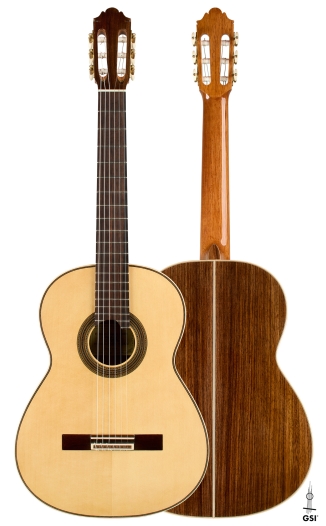
1973 Hermann Hauser II No. 934 RW/CSAR

Year 1973
Top Redwood
Back & Sides CSA Rosewood
Scale Length 655 mm
Nut width 52 mm
Finish French Polish
Country Germany
Luthier Hermann Hauser II

This guitar is no longer available in our inventory. If it interests you, click the ”notify me when available” button to be notified in the event that we re-acquire this guitar for re-sale.

Inquire
See more from Hermann Hauser II

Videos

1973 Hermann Hauser II No. 934 RW/CSAR

Llobet 'El Testament d'Amelia' played by Bryan Fasola

Description

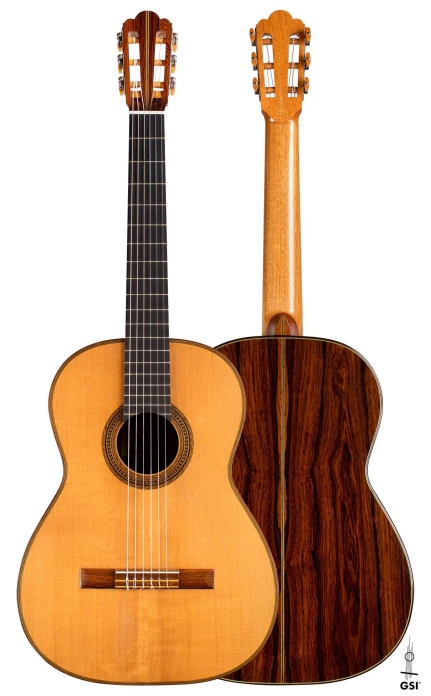
This 1973 Hermann Hauser II No. 934 is a rare redwood and CSA rosewood classical guitar from Reisbach – a breathtaking, noticeably powerful Hauser II with no cracks, damage or repairs.

A Rare Redwood Top

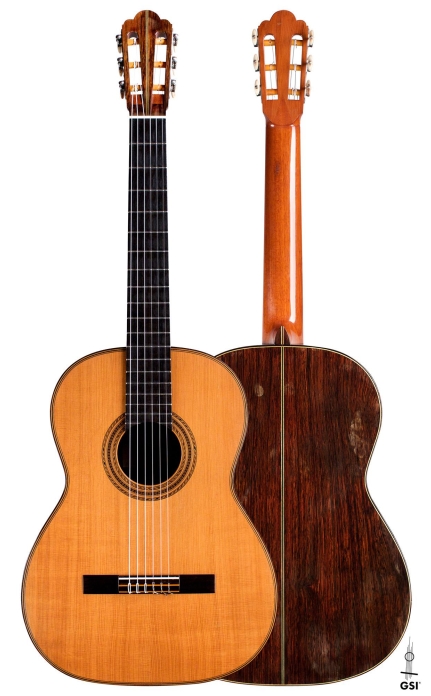
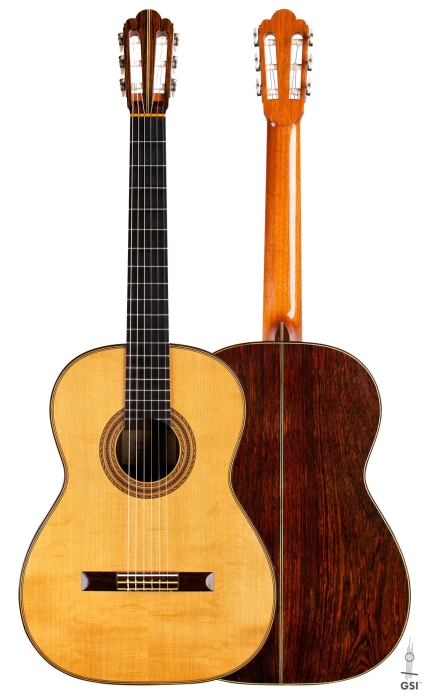
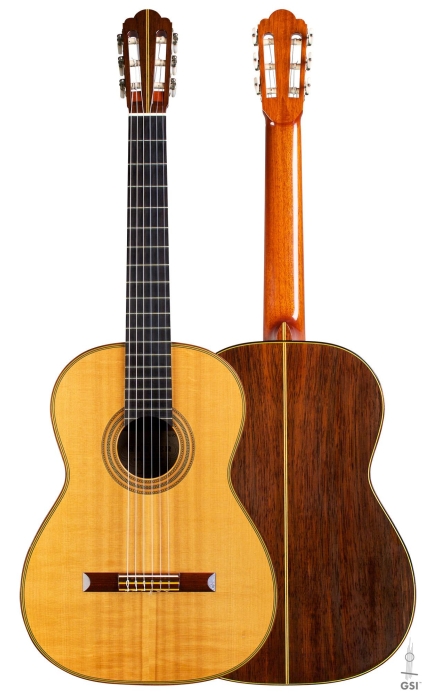
The first thing one notices with this instrument is the appearance, which is nothing short of breathtaking – it features a remarkable piece of redwood for the top, dark red-brown in color with a three-dimensional shimmer as it reflects light. The use of light green and yellow tinted maple for most of the rosette and purflings contrasts beautifully with the deep, rich and dark patina of the redwood. The CSA rosewood for the back and sides is of the highest grade, quarter-sawn with hints of blue, aqua and purple shades in the central sections. Overall a majestic instrument to the eye.

Sound and Condition

And for the sound? It is a noticeably powerful Hauser II, with excellent projection. Although there is a richness in the redwood that is reminiscent of cedar, the fundamental tones are very clear and bell-like with almost perfect separation – qualities typically found in great spruce instruments. Basses are very strong, steady and precise, trebles lyrical and singing with a copious amount of sustain up to the highest registers. Overall, the instrument is like a loud and balanced piano, but infused with the charm and sweetness of a warm and loose Hauser I.

Condition is excellent – no cracks, damage or repairs at all. For a guitar of this age it's in almost perfect, original condition, with only a few slight blemishes in the finish from minor playing wear. A very unique, great sounding, looking and playing Hauser II, and a dream for either collector or performer.

One Redwood Top, Three Generations

When he built this guitar in 1973, Hauser II also joined a second top from the same redwood and inlaid its rosette. Decades later his granddaughter Kathrin built a guitar with that very top – her 2019 Kathrin Hauser RW/CSAR – and her father Hermann Hauser III has also built an instrument with this wood, so as far as we know there are only three such instruments, one from each of the last three generations of the Hauser workshop.

Background

Hermann Hauser II: Third Generation of the Hauser Dynasty

Hermann Hauser II (1911–1988) – Hermann Hauser Jr. – is considered to be one of the greatest makers of the twentieth century. Grandson of the luthier Josef Hauser and son of Hermann Hauser I, he learned his craft working alongside his father, and after his father's death in 1952 he carried the family's Torres-based "teutonic" style into the second half of the century from the Hauser workshop in Reisbach, Bavaria. His son Hermann Hauser III (the fourth generation) and granddaughter Kathrin (the fifth) still work there today – see Hermann Hauser III & Kathrin Hauser – with many of the same tools and even woods stocked by the earlier generations.

The Hauser dynasty, now spanning five generations, has produced instruments played by countless concert artists including Andrés Segovia, Julian Bream, the Romeros and many others.

The Hauser II Sound

The sound has the attributes of a great Hauser that have attracted great players from Bream to Segovia to the Romeros and beyond – crystal-clear fundamental tones with almost perfect separation, basses that are steady and precise, and at the same time a lyrical charm and sweetness, particularly in the trebles. At its best, a Hauser II is like a loud and balanced piano, with the warmth of a great Hauser I. Playability is easy, thanks to his slender and very comfortable neck shape.

Books on Hermann Hauser II

Orfeo Magazine No. 4 is devoted to the Hauser dynasty, and a 1960 Hauser II is among the guitars shown in Orfeo's "34 Classical Guitars in Life Size":

Guitars by Hermann Hauser II