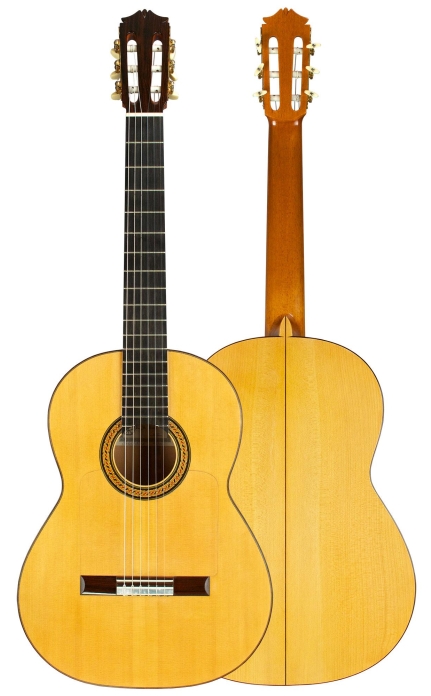
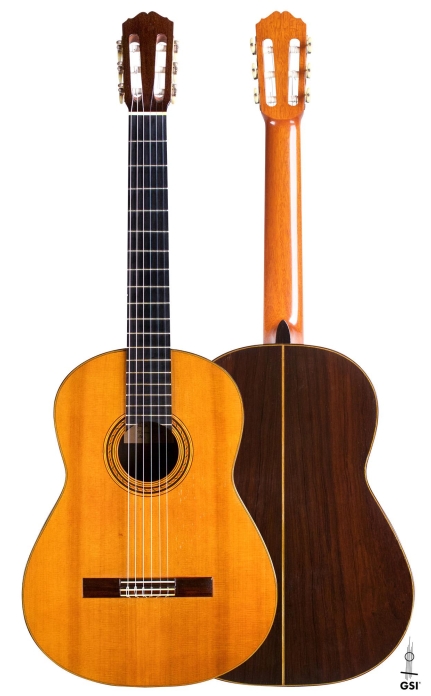
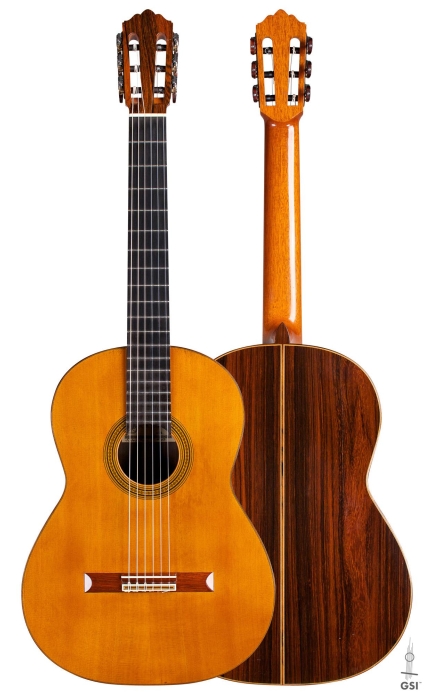
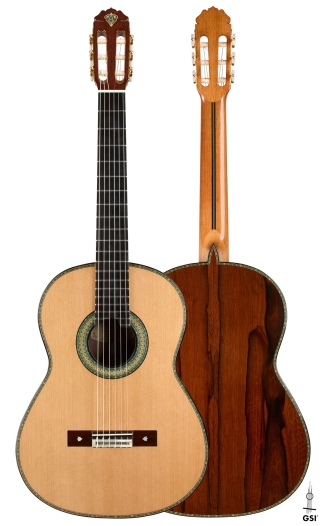
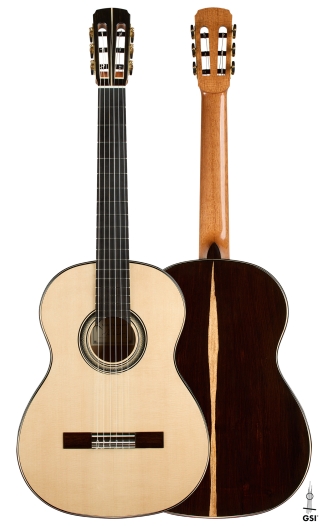
2014 Robert Ruck No. 1056 SP/IN
| Year | 2014 |
| Top | Spruce |
| Back & Sides | Indian Rosewood |
| Scale Length | 650 mm |
| Nut width | 53 mm |
| Finish | French Polish |
| Country | USA |
| Luthier | Robert Ruck |
This guitar is no longer available in our inventory. If it interests you, click the ”notify me when available” button to be notified in the event that we re-acquire this guitar for re-sale.


Background
Robert Ruck: An American Original
Robert Ruck (1945–2018) was one of the most respected classical guitar makers in the United States, with a career of some five decades and well over a thousand instruments. He began as a flamenco guitarist in Miami – studying classical guitar with Juan Mercadal and flamenco singing with Elena Marbella – built his first guitars in the 1960s and later worked in Wisconsin and in the Pacific Northwest. In 2016 he was inducted into the Guitar Foundation of America’s Hall of Fame.
Barrueco and the Ruck Sound
The most famous Ruck of all is No. 58, the 1970s guitar on which Manuel Barrueco recorded many of his albums. Ruck guitars are known for a very firm, solid tone, deeply anchored to the fundamental of each note, with the hum of the higher partials adding texture, for surprising volume and for comfortable, easy necks. Many of his later guitars have soundports in the upper sides. His players included Sharon Isbin, Carlos Barbosa-Lima, Berta Rojas, Leo Brouwer, Gerardo Núñez and Paulo Bellinati.
Books on Robert Ruck
A 1978 Ruck from the Russell Cleveland collection, No. 162, appears in “The Classical Guitar – A Complete History”: