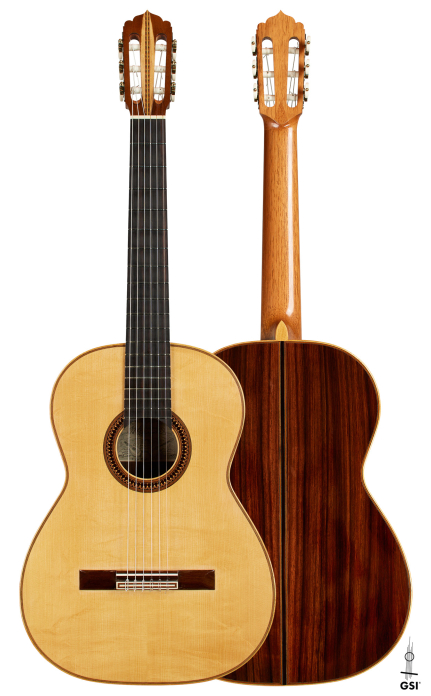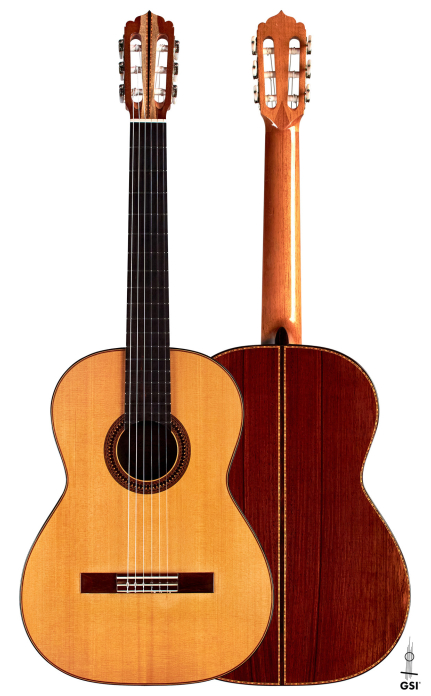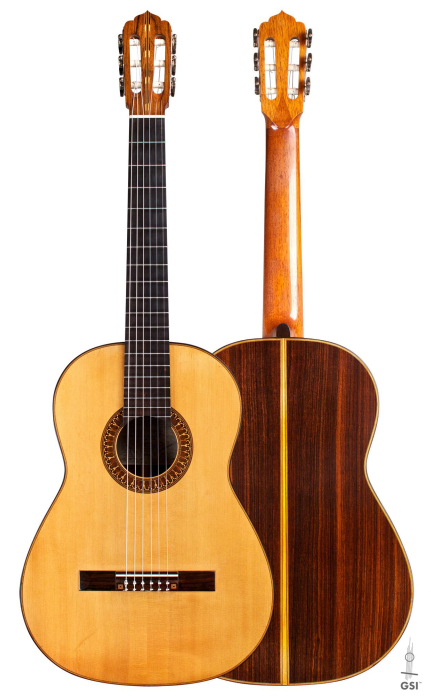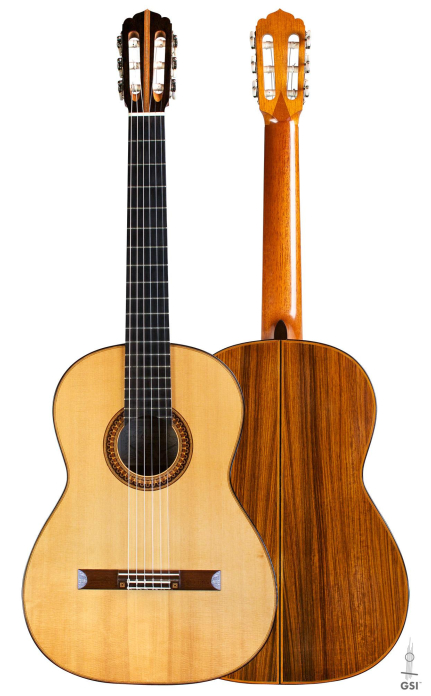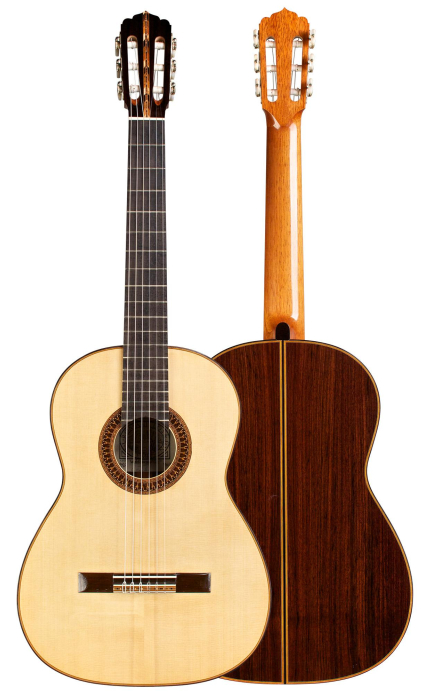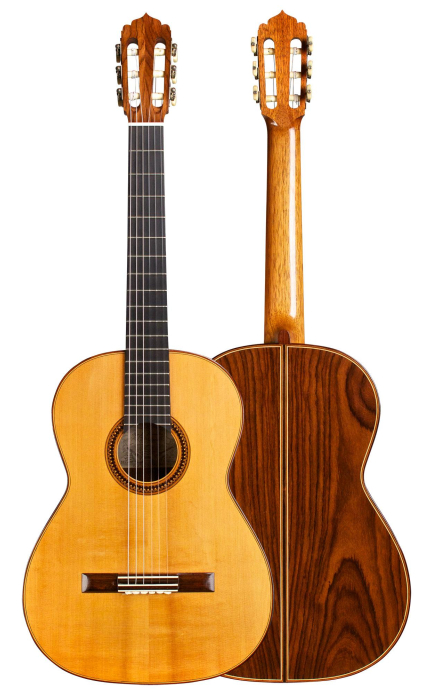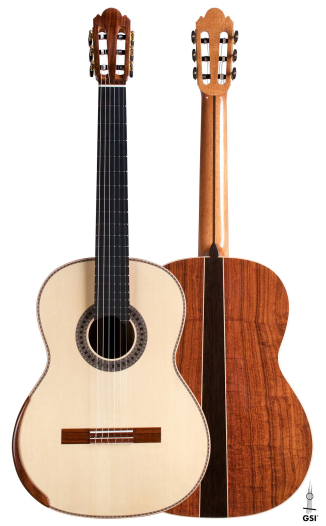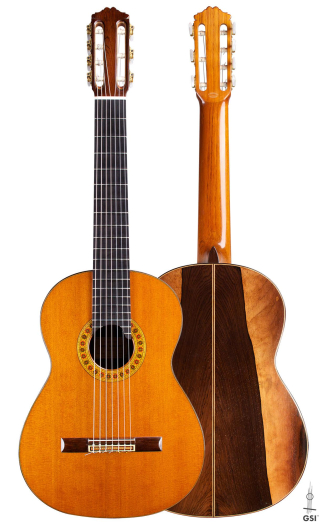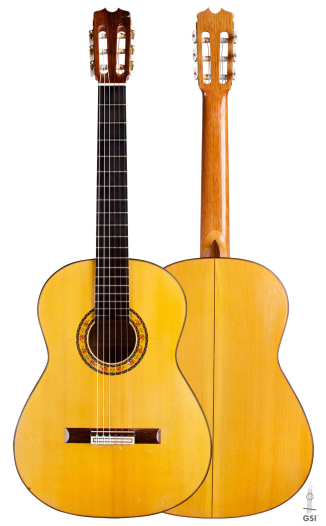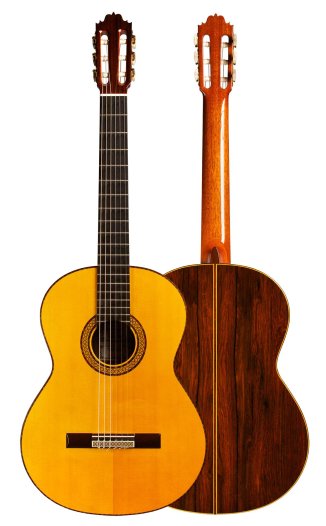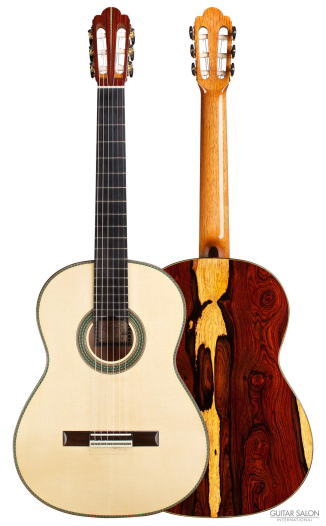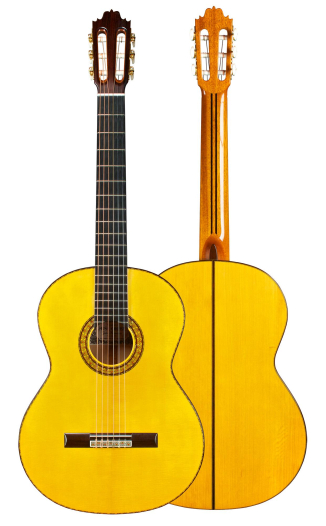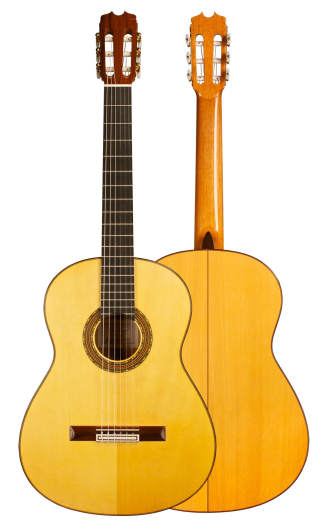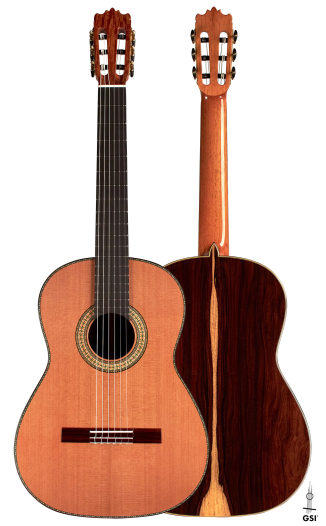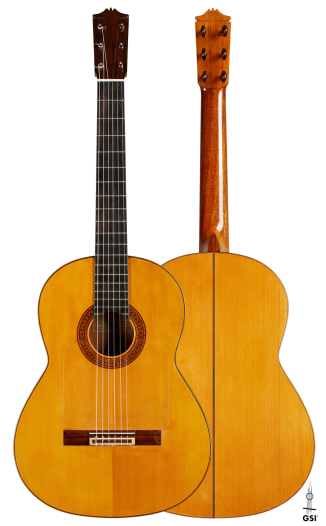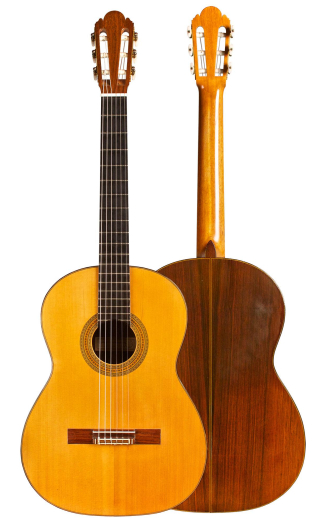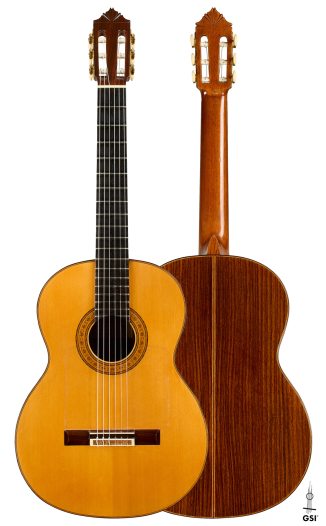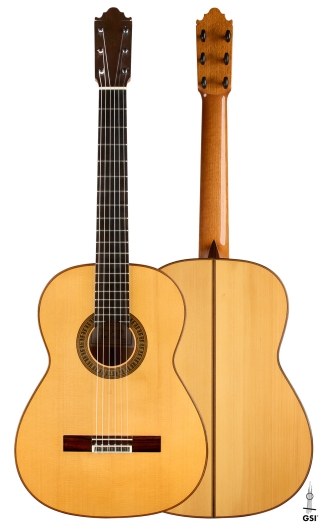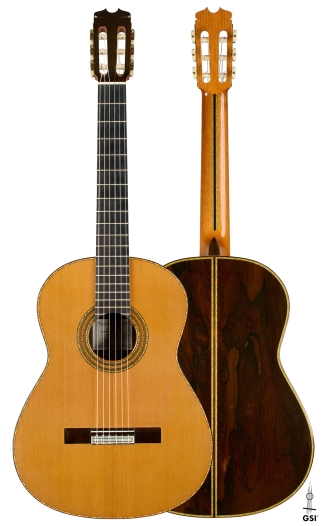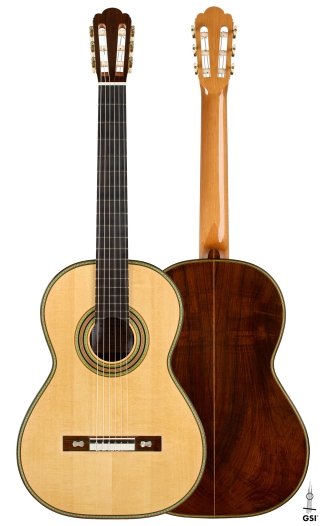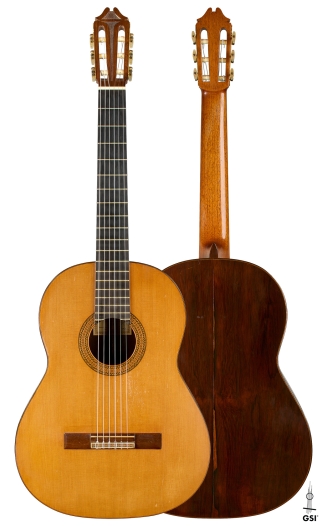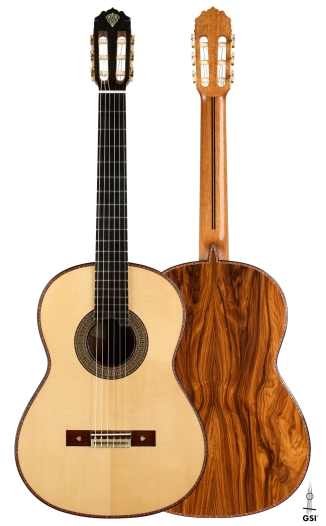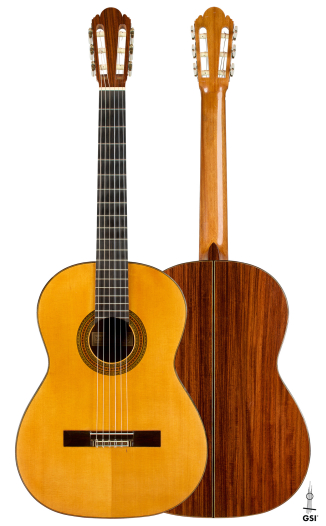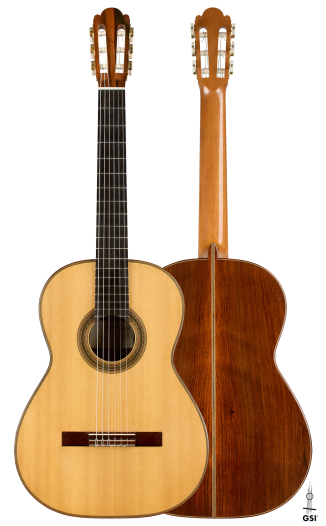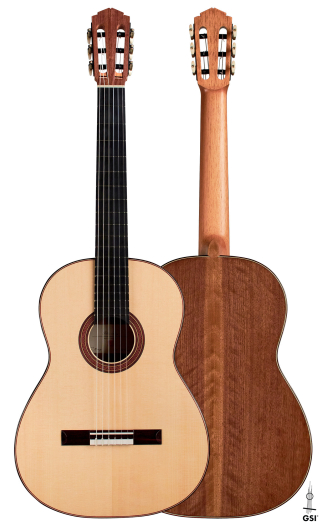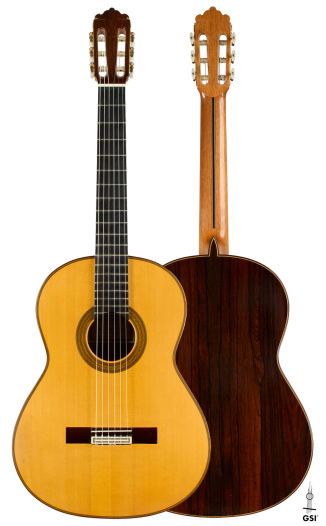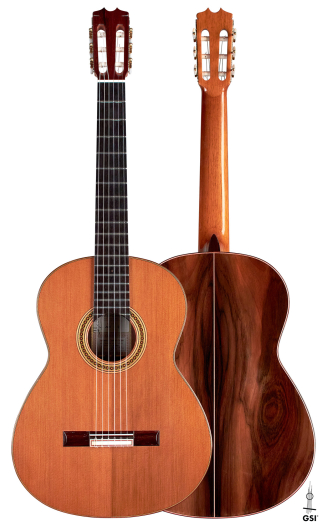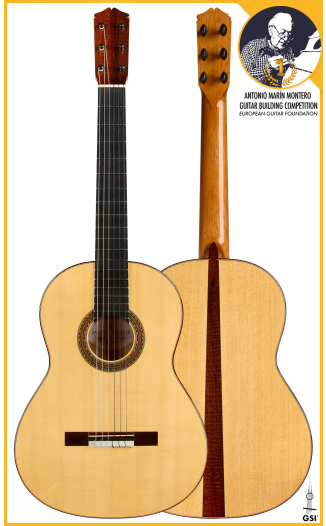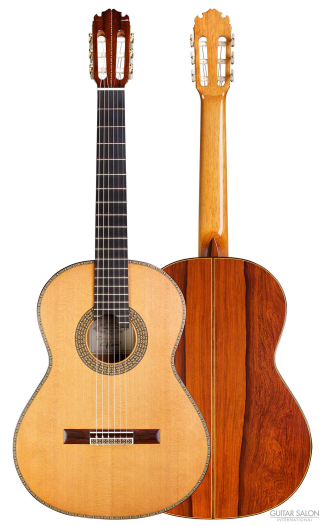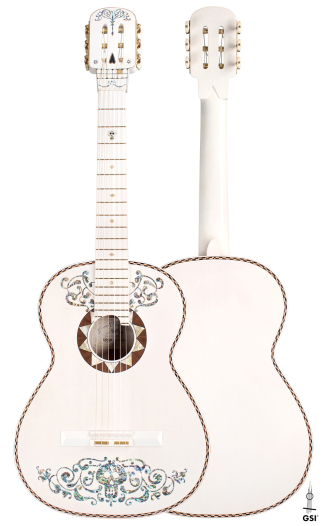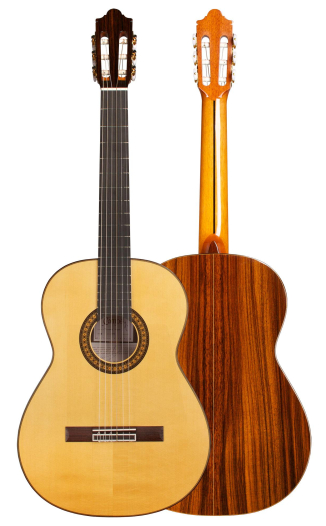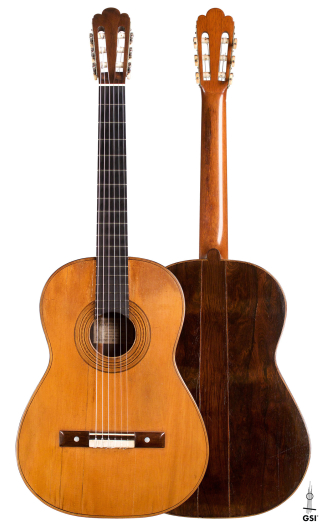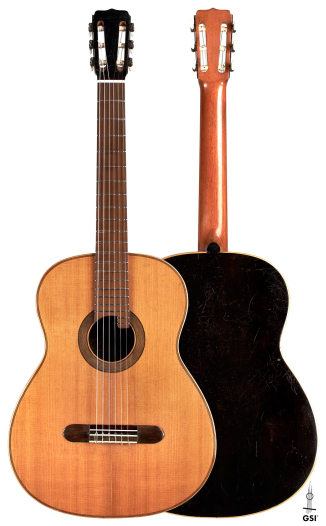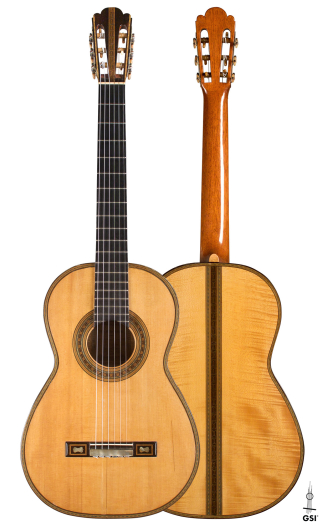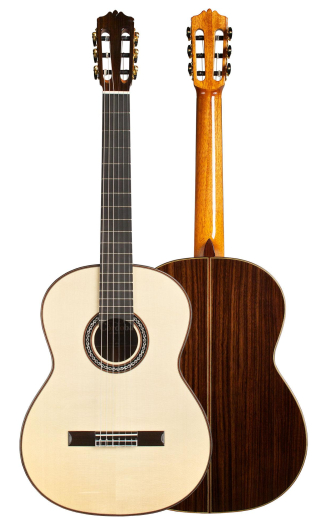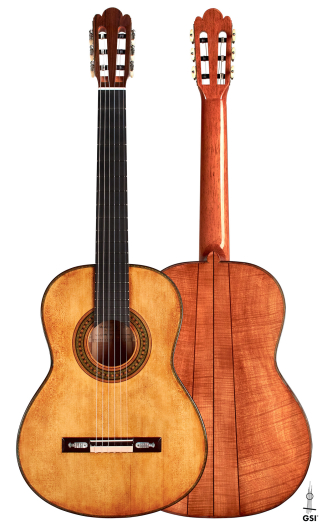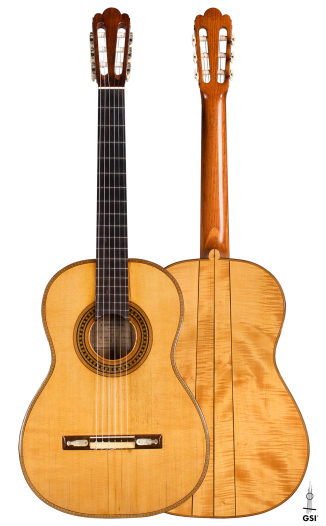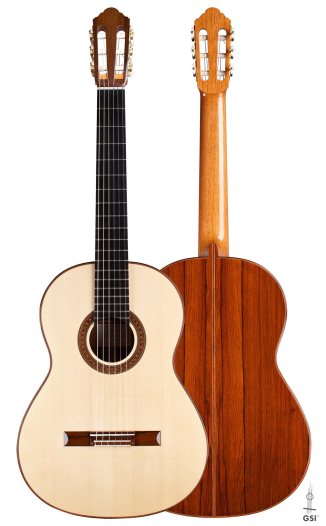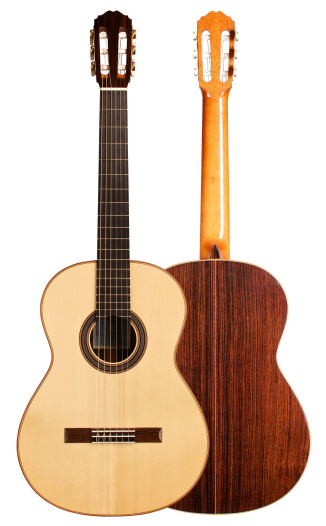




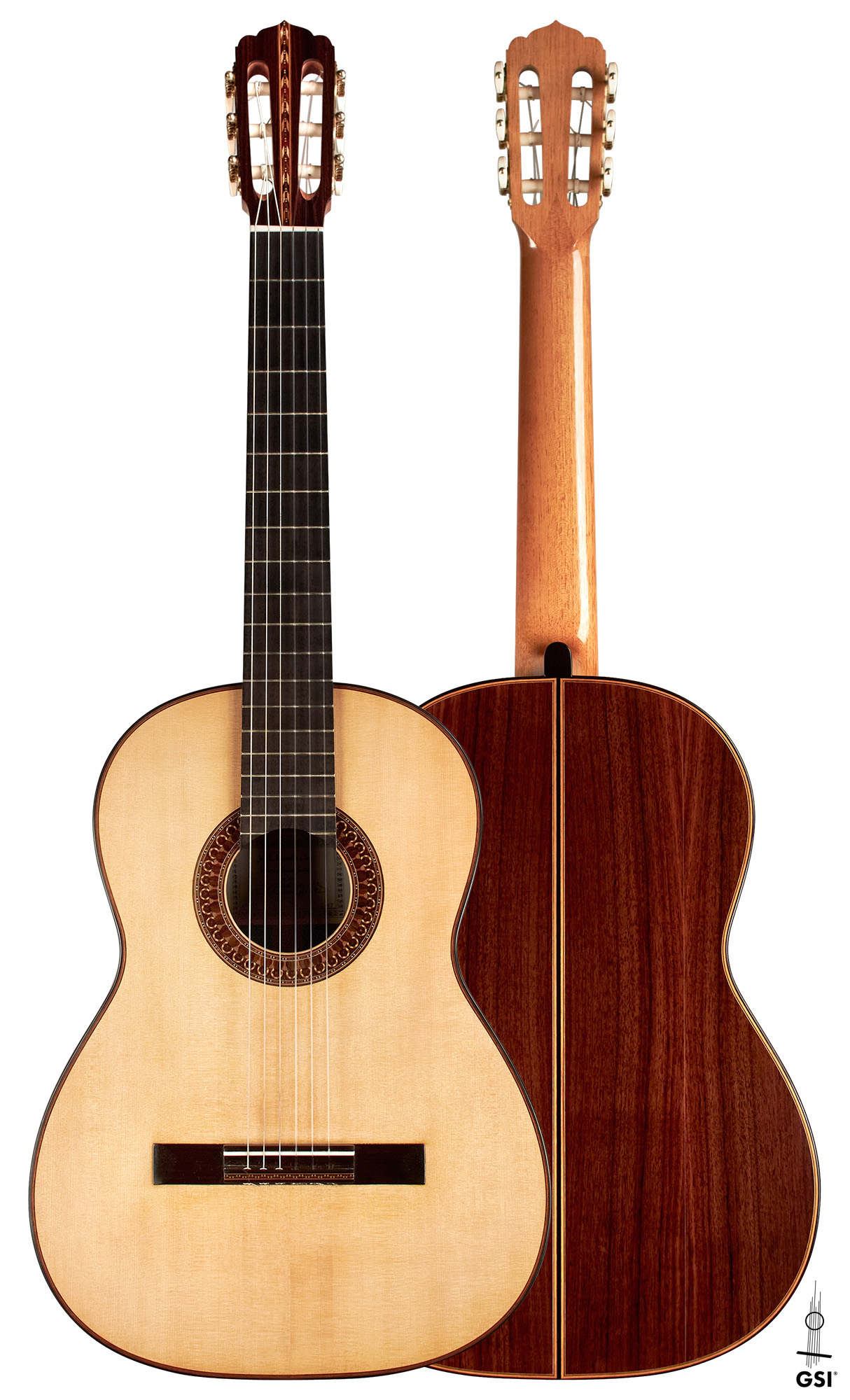

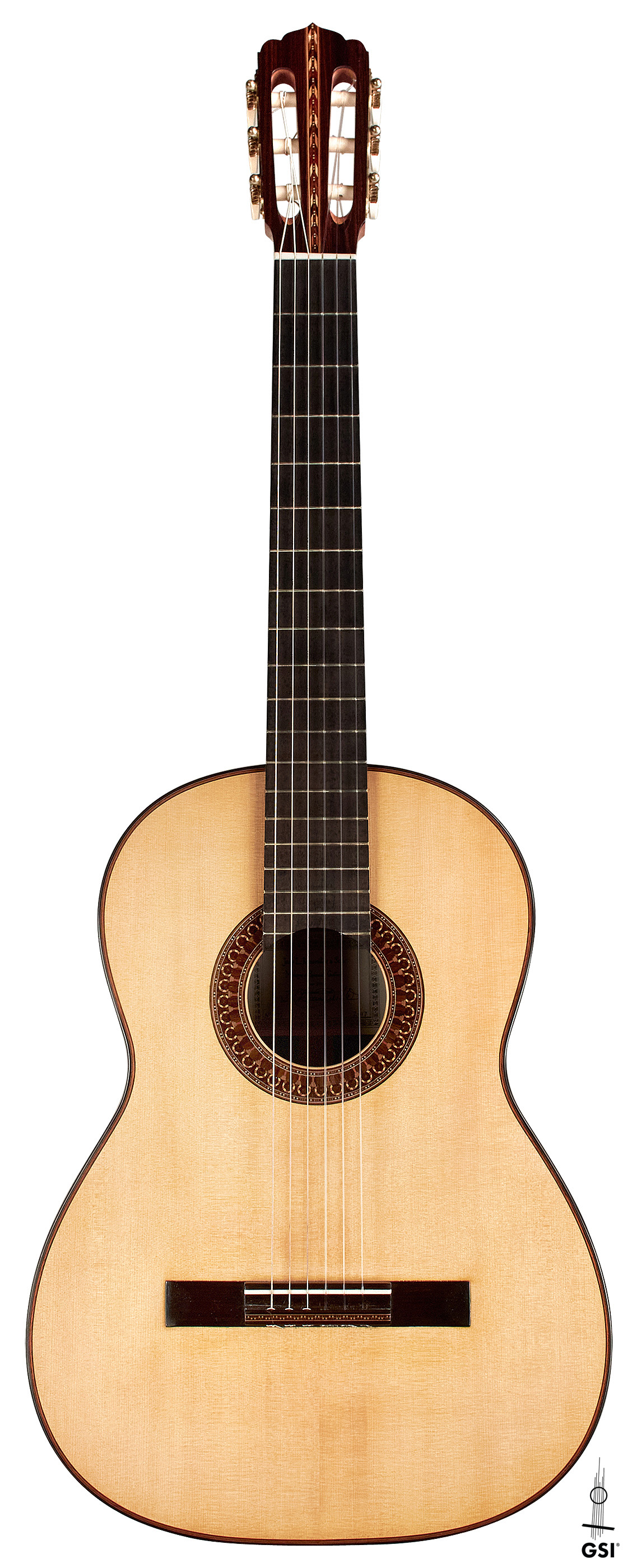
2017 José L. Romanillos & Son "La Campanula Azul" SP/IN
| Year | 2017 |
| Top | Spruce |
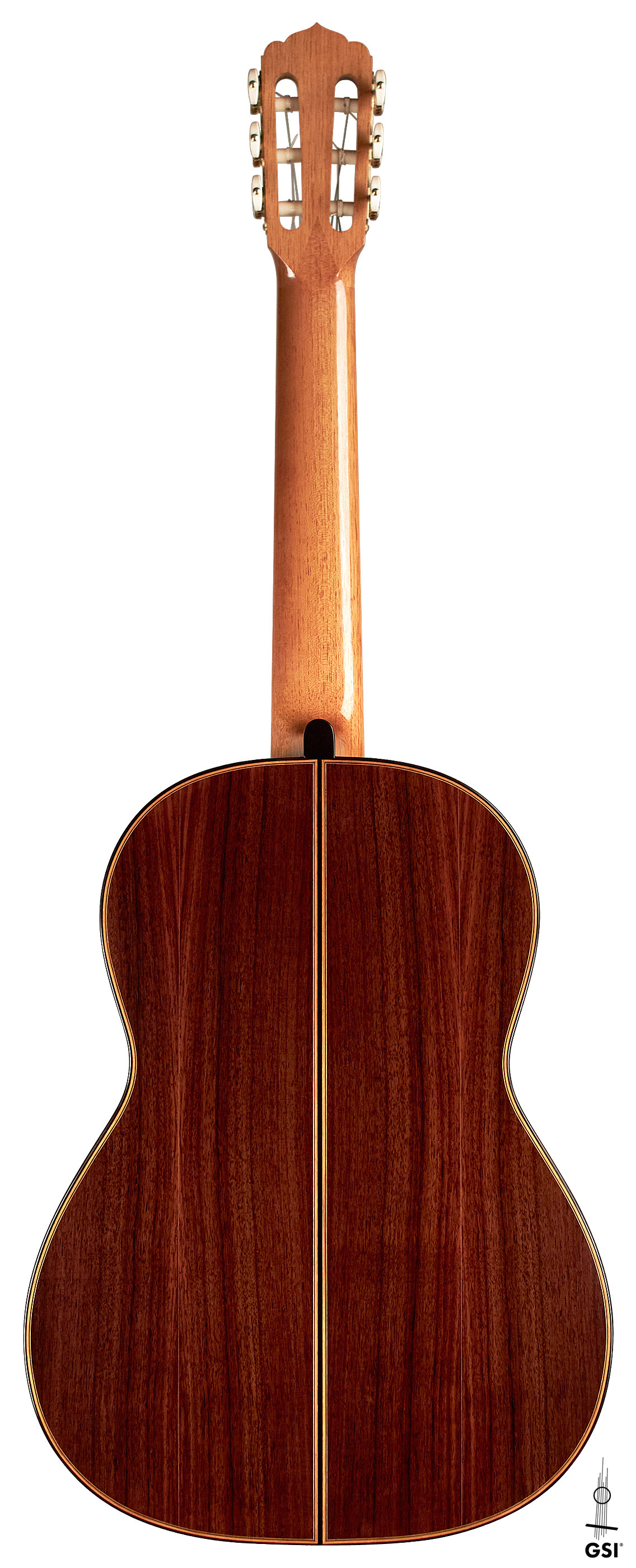
| Back & Sides | Indian Rosewood |
| Scale Length | 650 mm |
| Nut width | 52 mm |
| Finish | French Polish |
| Country | England |
| Luthier | José Luis Romanillos |
This guitar is no longer available in our inventory. If it interests you, click the ”notify me when available” button to be notified in the event that we re-acquire this guitar for re-sale.


A. Barrios Mangoré's "Vals Op. 8, No. 4" played by George Sakellariou on a 2017 José L. Romanillos
Description
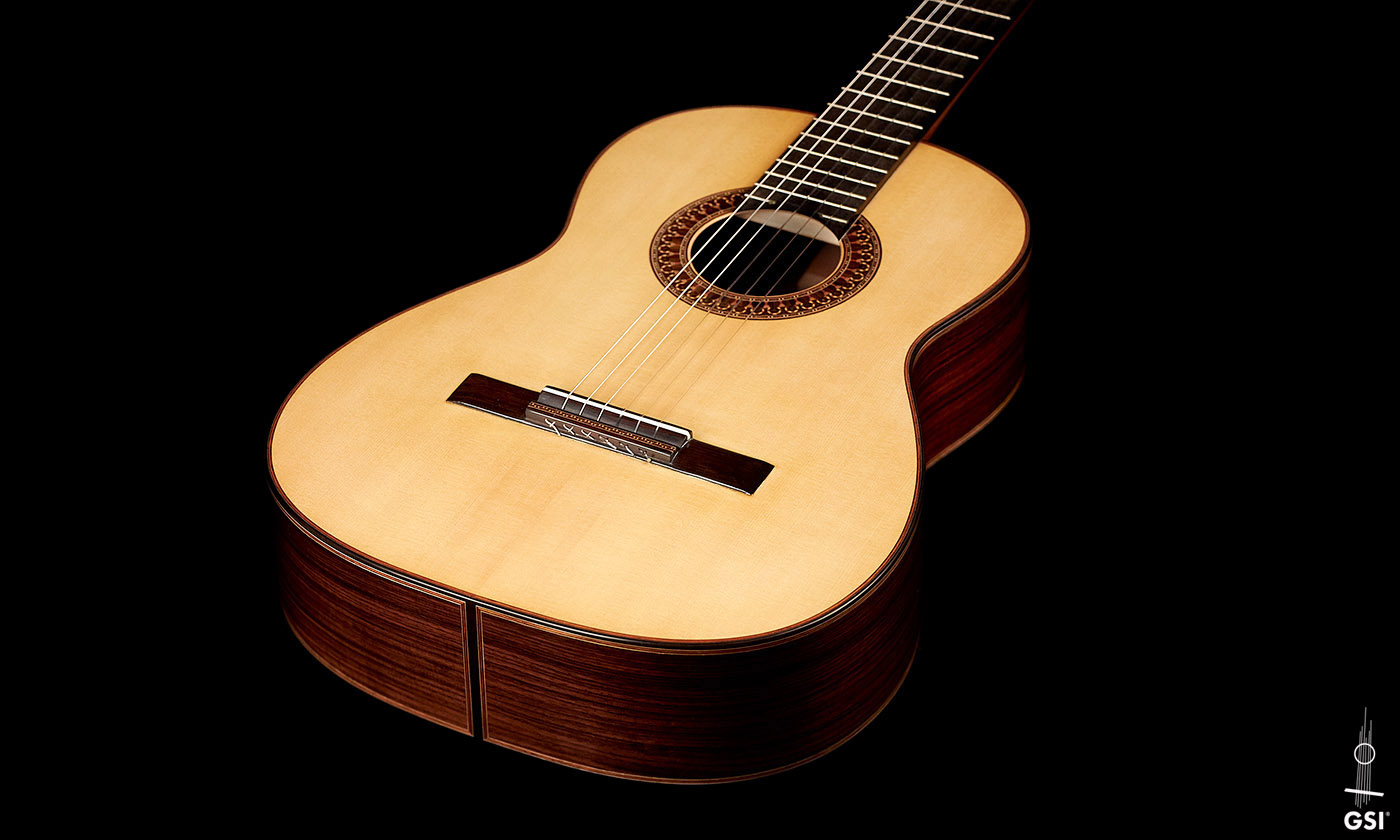
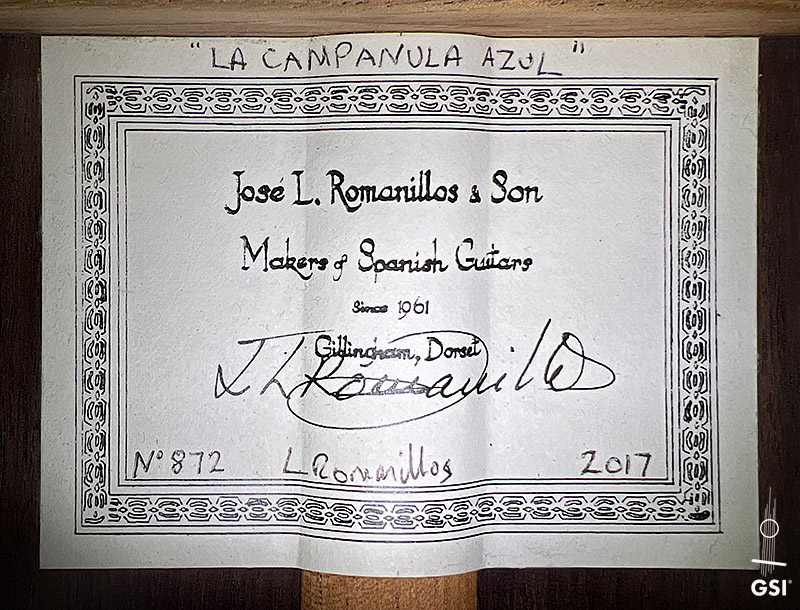
 This 2017 "La Campanula Azul" No. 872 is a José L. Romanillos & Son classical guitar in spruce and Indian rosewood, built in Gillingham, Dorset, England, by Liam Romanillos with his father José Romanillos taking part from Spain – signed by both, in near-mint condition.
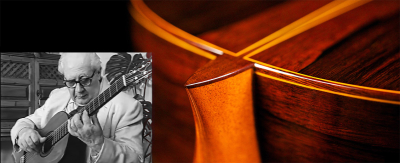
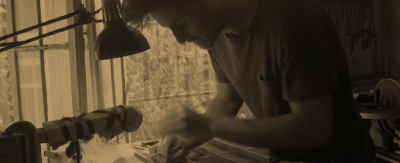
José Romanillos and His Son Liam
The late José Romanillos became established as one of the greatest luthiers of the twentieth century. His instruments found their way into the hands of many leading players, but the best-known champion of these guitars is Julian Bream, who performed on them almost exclusively for much of his career.
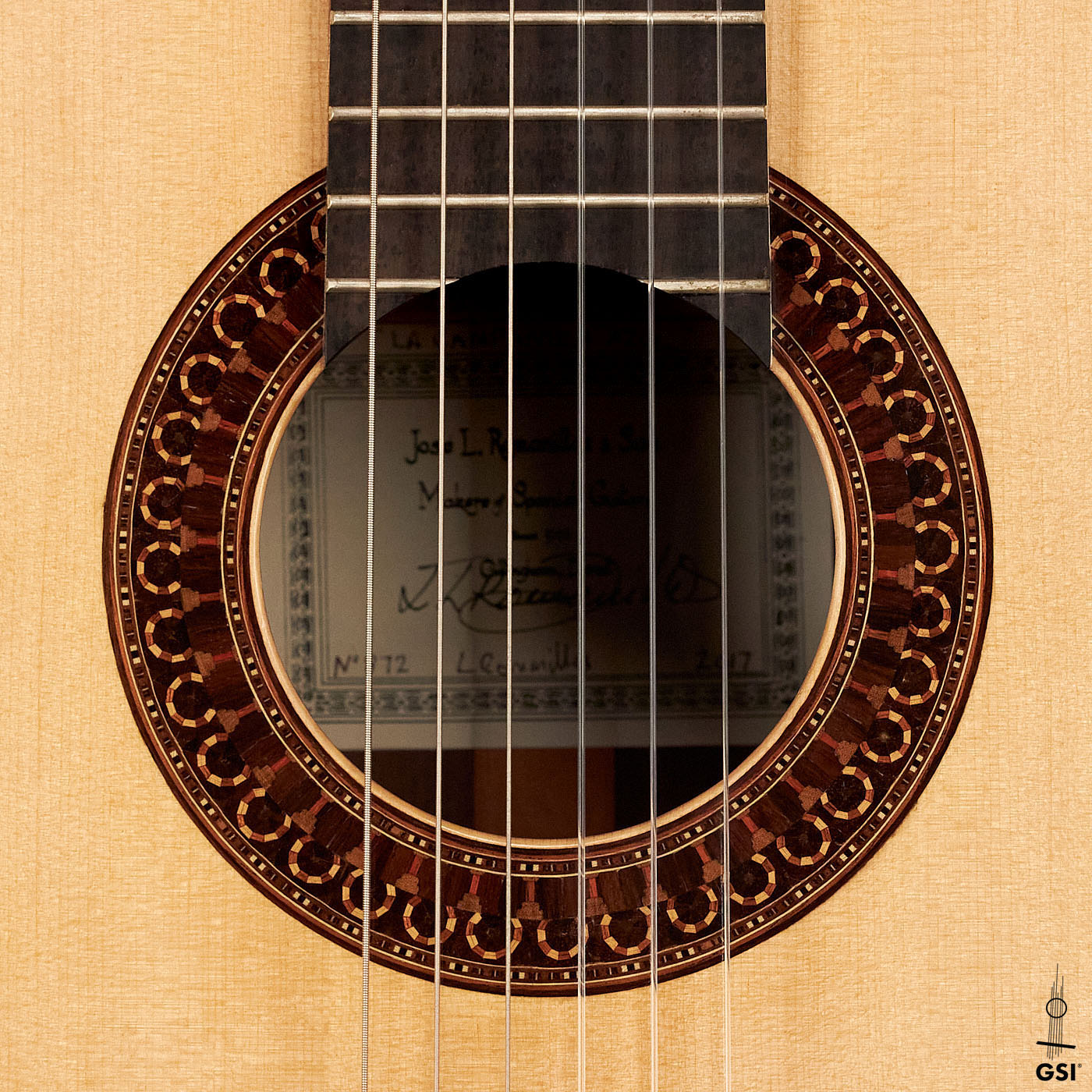
The label on this guitar bears José's signature as well as that of his son Liam, who had been partnered in the business since 1991 (both signatures appear under the top as well). After José moved back to his native Spain in the mid-1990s, Liam took over the lion's share of the work in England, though José would often participate in some of the construction details and supply materials to Liam.
Sound
This instrument has all the qualities of an exceptional guitar: a sweet and lyrical tone with excellent separation. Its volume is excellent, and yet it's almost "noiseless" – string and nail noise are absorbed rather than amplified, so the notes themselves sound unhindered.
Inlays, Moorish Arches and a "Torres" Body
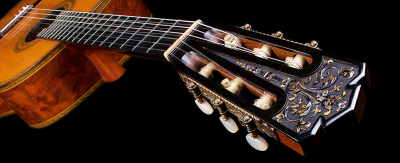
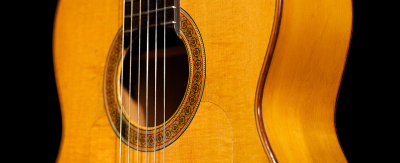
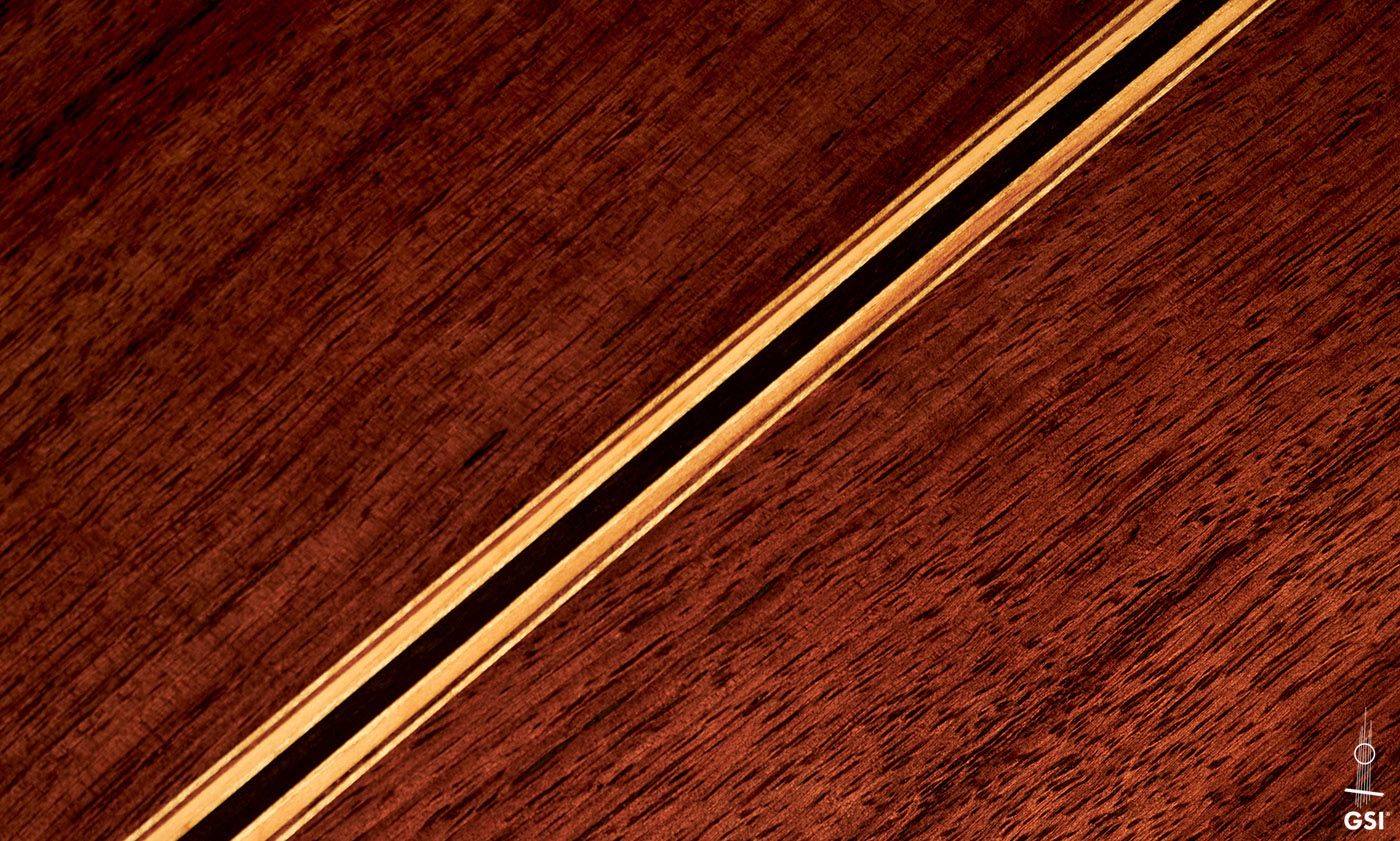
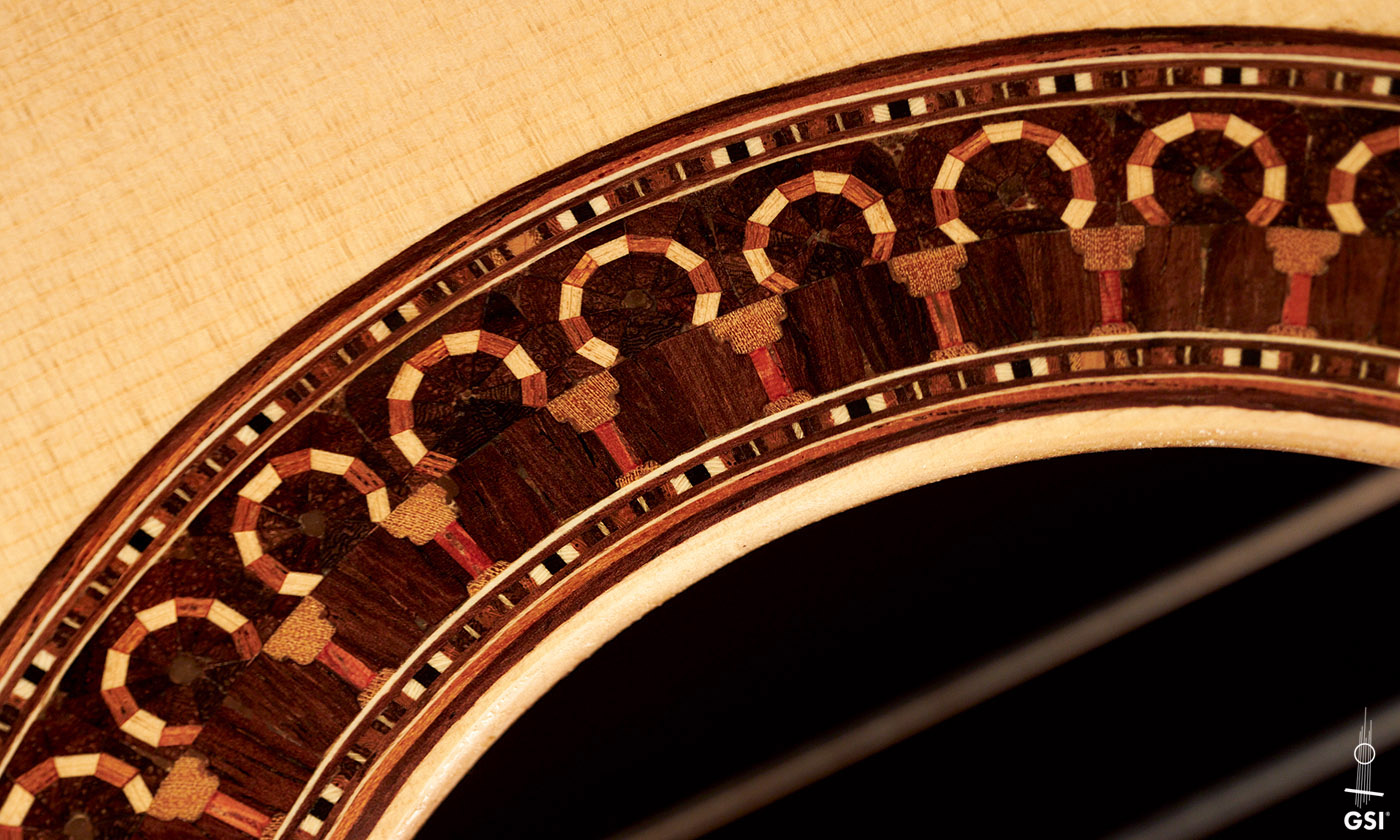
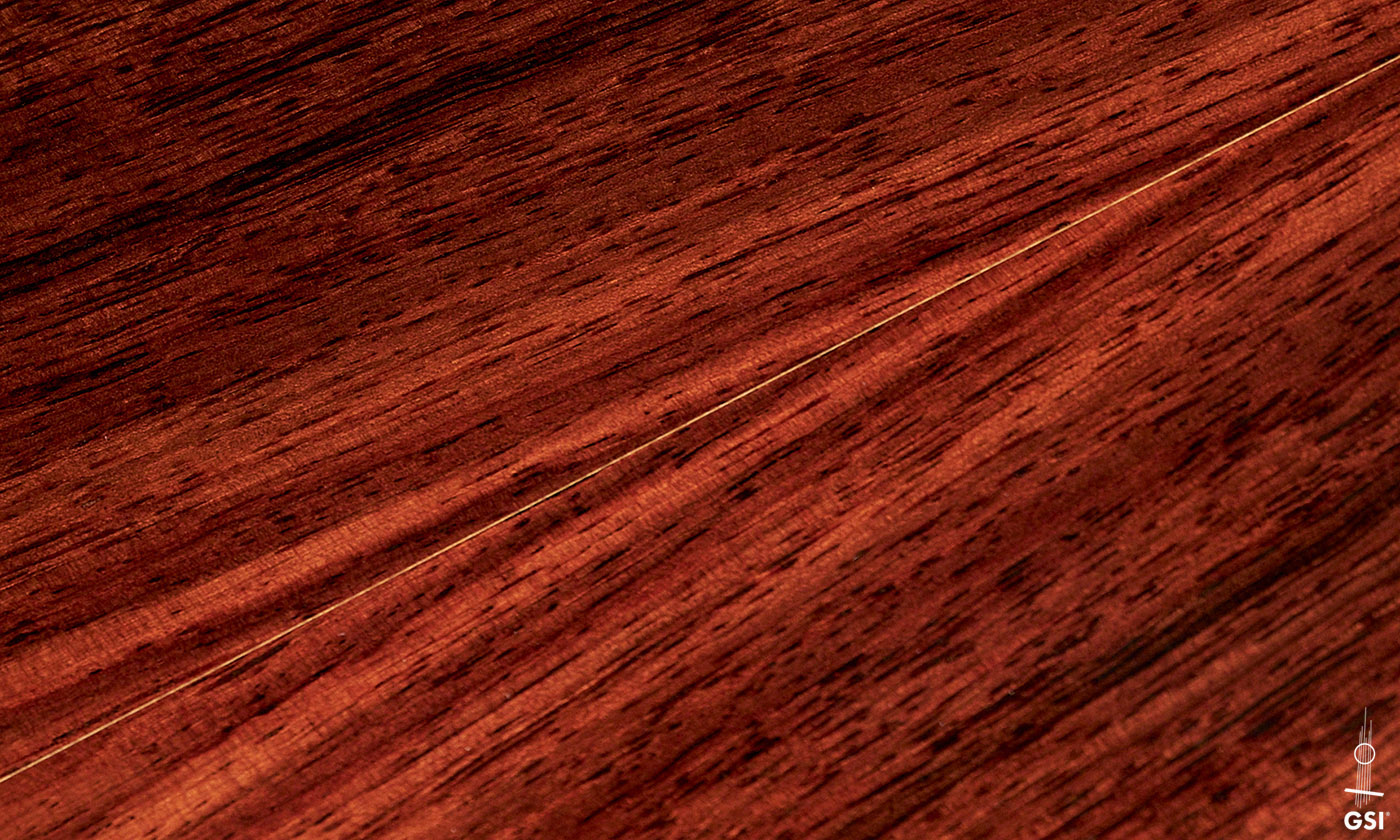
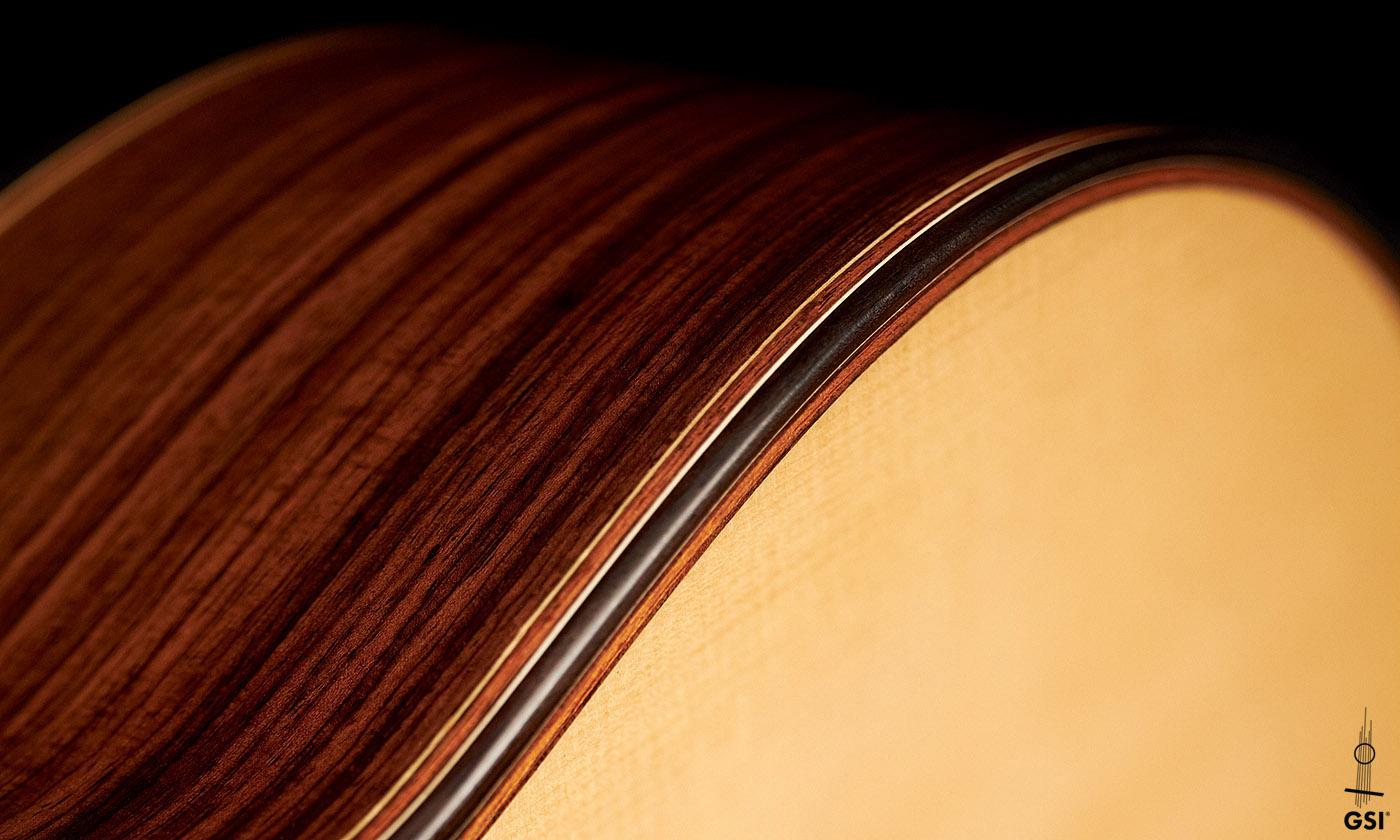
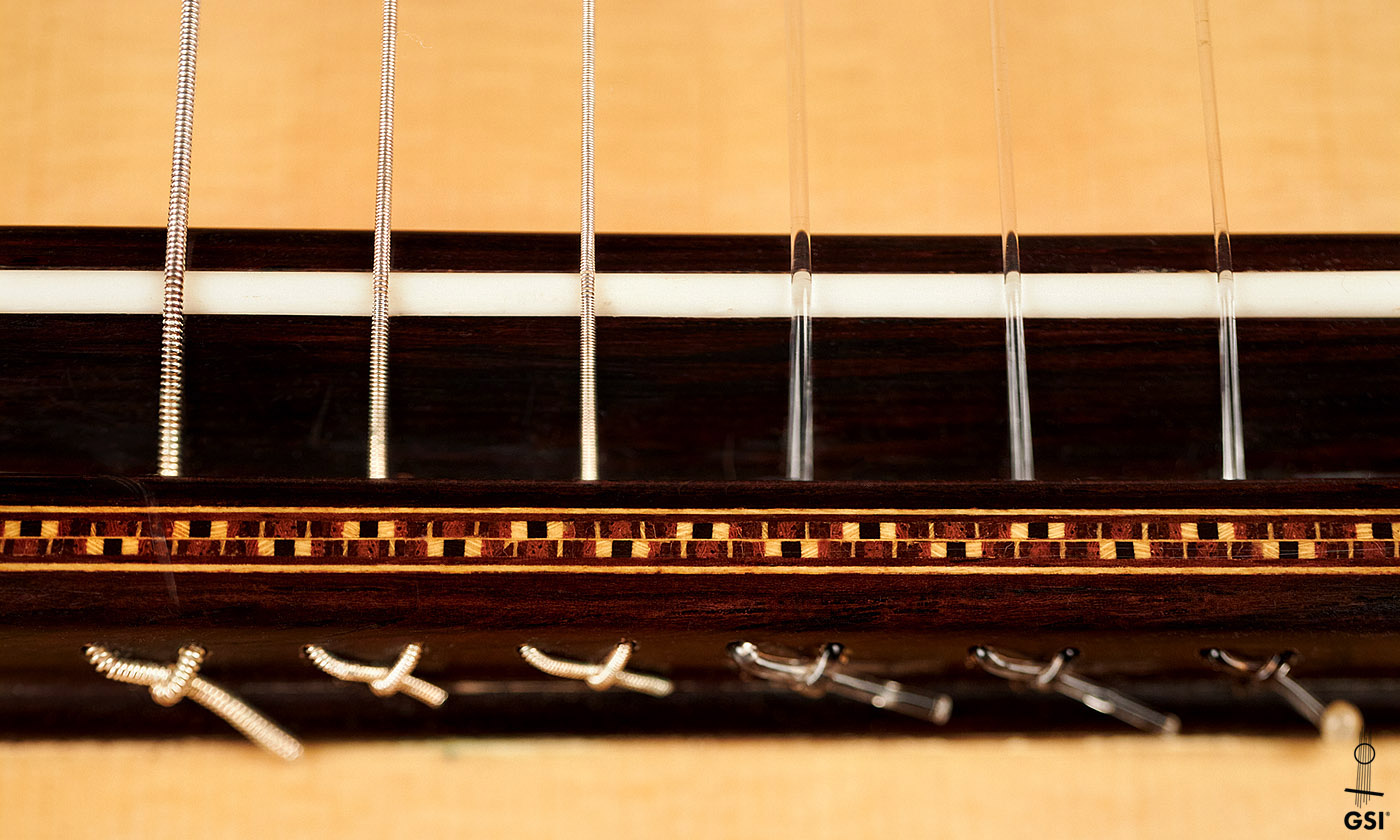
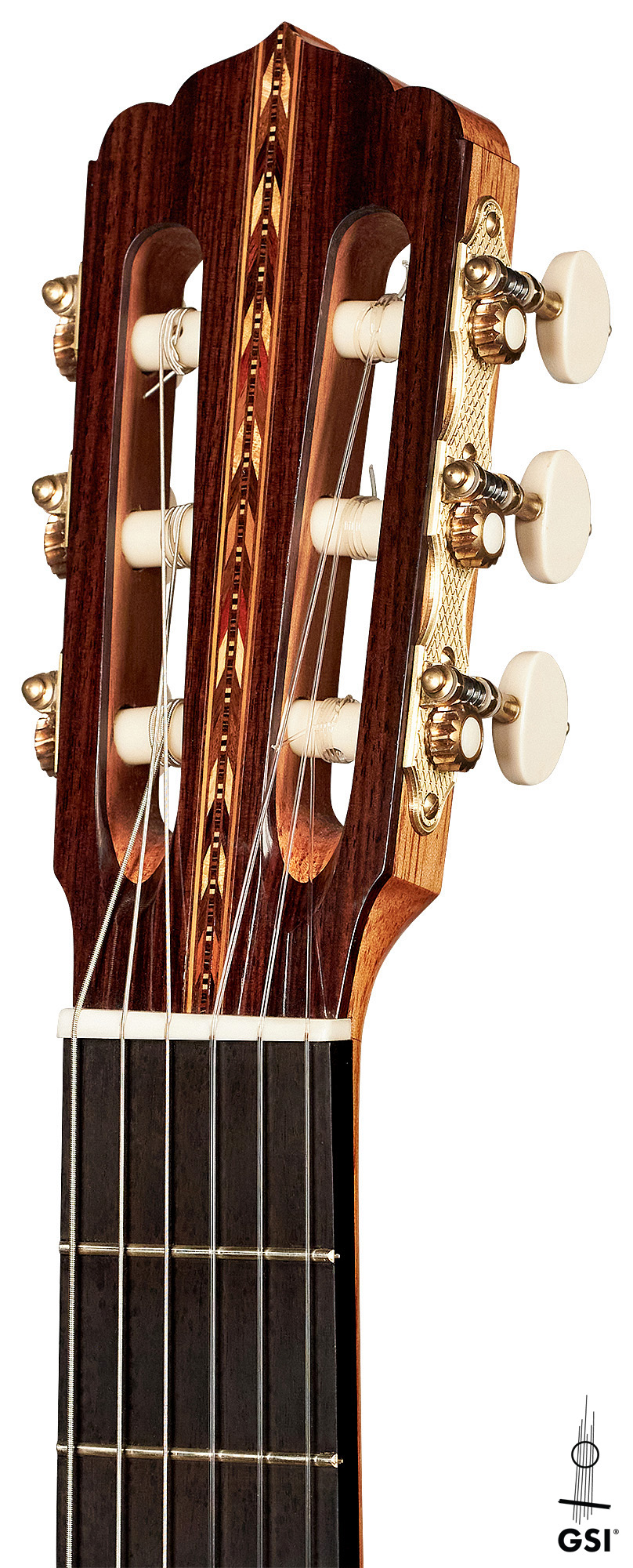
The detailing on this guitar is stunning, particularly in the tie block, headstock and rosette, which all feature elaborate inlays, including the famous "Moorish arch" shape in the head and in the mosaic of the rosette. The 4-piece back also shows very fine, super-thin purflings between the outer pieces, which is subtle but lovely. The instrument is a bit on the smaller side, very reminiscent of the classic "Torres" style, of which Romanillos is perhaps the greatest exponent.
Condition
Condition is near-mint, with barely any wear in the finish. The guitar is fitted in a Visesnut "Active Series" case. All in, this is a remarkable and breathtaking instrument.