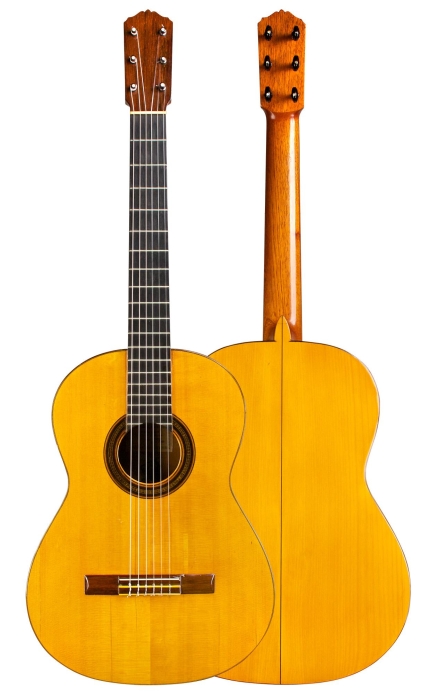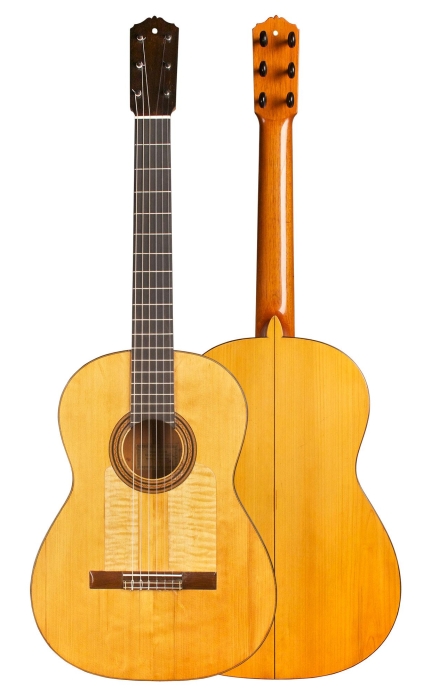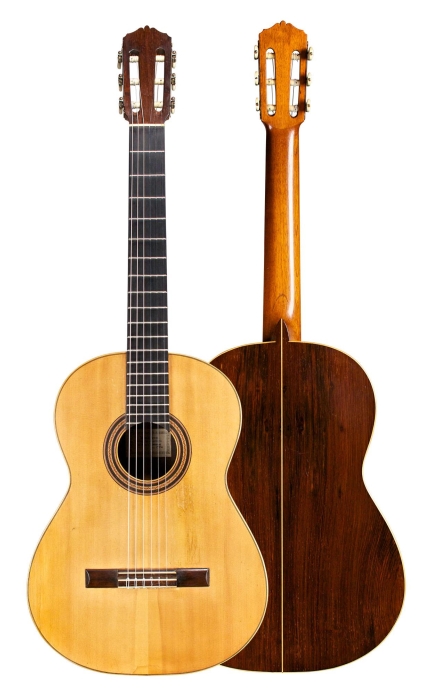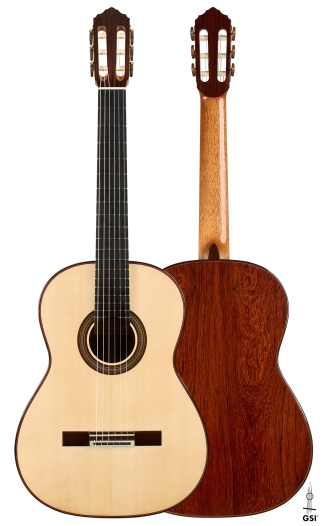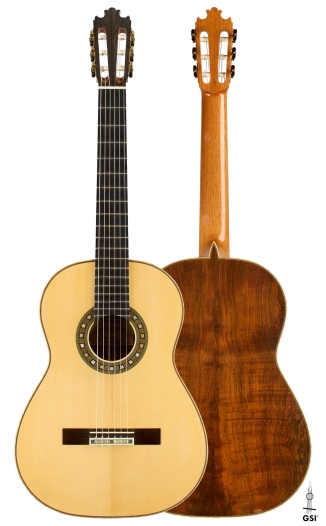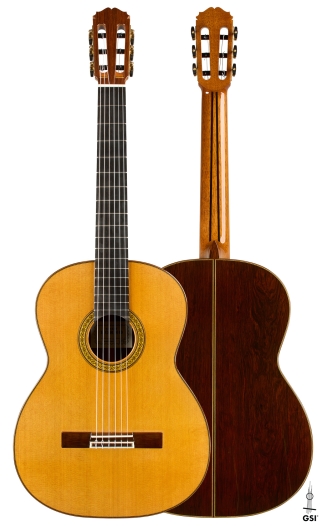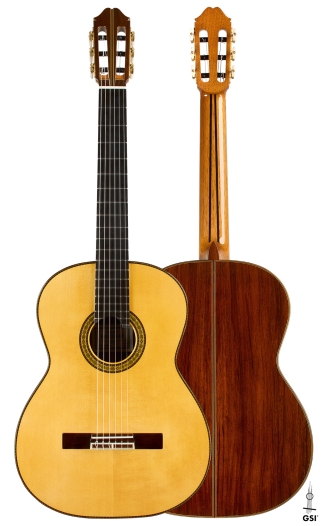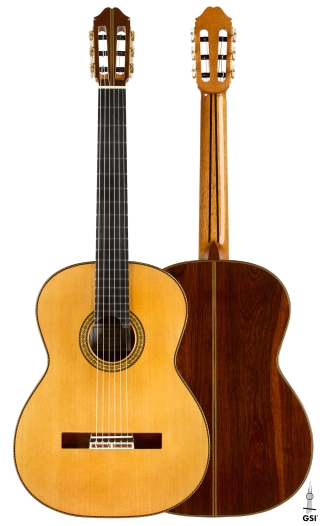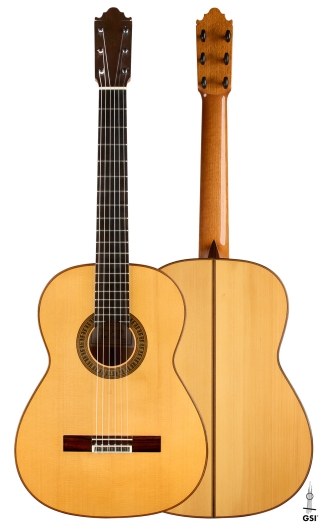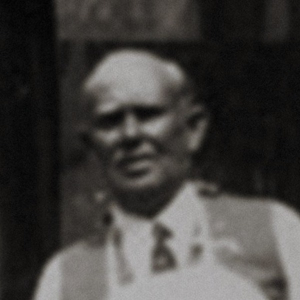
Domingo Esteso (1882–1937) was a Madrid guitar maker who trained in the workshop of Manuel Ramírez alongside Santos Hernández and then founded his own workshop at Gravina 7 – the shop his nephews carried on as the Conde Hermanos. His classical and flamenco guitars are among the most admired of the early Madrid school.
At a Glance
- Born: May 12, 1882, San Clemente (Cuenca), Spain
- Died: 1937, Madrid
- Trained: In the workshop of Manuel Ramírez, with Santos Hernández, Modesto Borreguero and Enrique García
- Workshop: Calle Gravina 7, Madrid, from around 1919
- Known for: Elegant classical guitars with a clear, woody voice, and powerful early flamencos
- Played by: Ramón Montoya, Niño Ricardo
- Successors: His nephews Faustino, Mariano and Julio Conde – Viuda y Sobrinos de Esteso, then Conde Hermanos
Apprenticeship with Manuel Ramírez
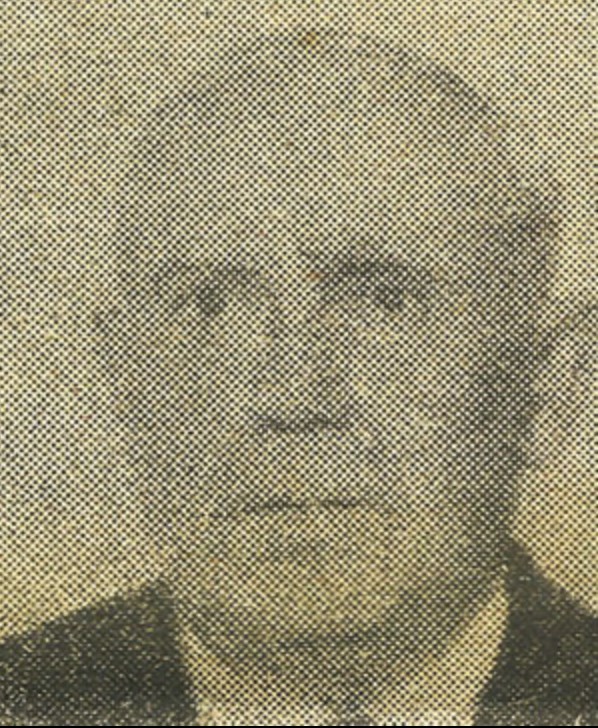
Domingo Esteso López was born on May 12, 1882, in San Clemente, a town in the province of Cuenca. As a young man he went to Madrid and served his apprenticeship in the workshop of Manuel Ramírez – the most important guitar shop of the years after Antonio de Torres – where he worked alongside Santos Hernández, Modesto Borreguero and Enrique García. Esteso, Santos and García became the standouts of the Ramírez workshop, whose guitars still have a special quality, both in workmanship and in sound.
When Manuel Ramírez died in 1916, Esteso kept building for his widow, though already with his own name on the labels. Around 1919 he set up his own workshop at Calle Gravina 7 in Madrid, together with his wife, Nicolasa Salamanca, who varnished the guitars.
Gravina 7 and the Guitars for Buenos Aires
The Gravina 7 years were Esteso's most prolific. He built three classes of guitar, and in his finer instruments there is an elegance and simplicity that made his name. Many of his best guitars were sold abroad, above all to Argentina – then one of the richest countries in the world – under a special label for his sole agents in Buenos Aires, Romero y Fernández, some of them branded "Guitarras Iberia". His premium guitars can have intricate rosettes inlaid with mother-of-pearl, colorful half-herringbone purfling and even bone binding.
His classical guitars are loved for a clean, clear and pure sound, with a strong fundamental and a natural, "woody" character; his flamencos, played by Ramón Montoya and Niño Ricardo, combine huge volume with that old-world bark. Many of them work beautifully for both styles.
The Conde Brothers: Esteso's Nephews and Successors
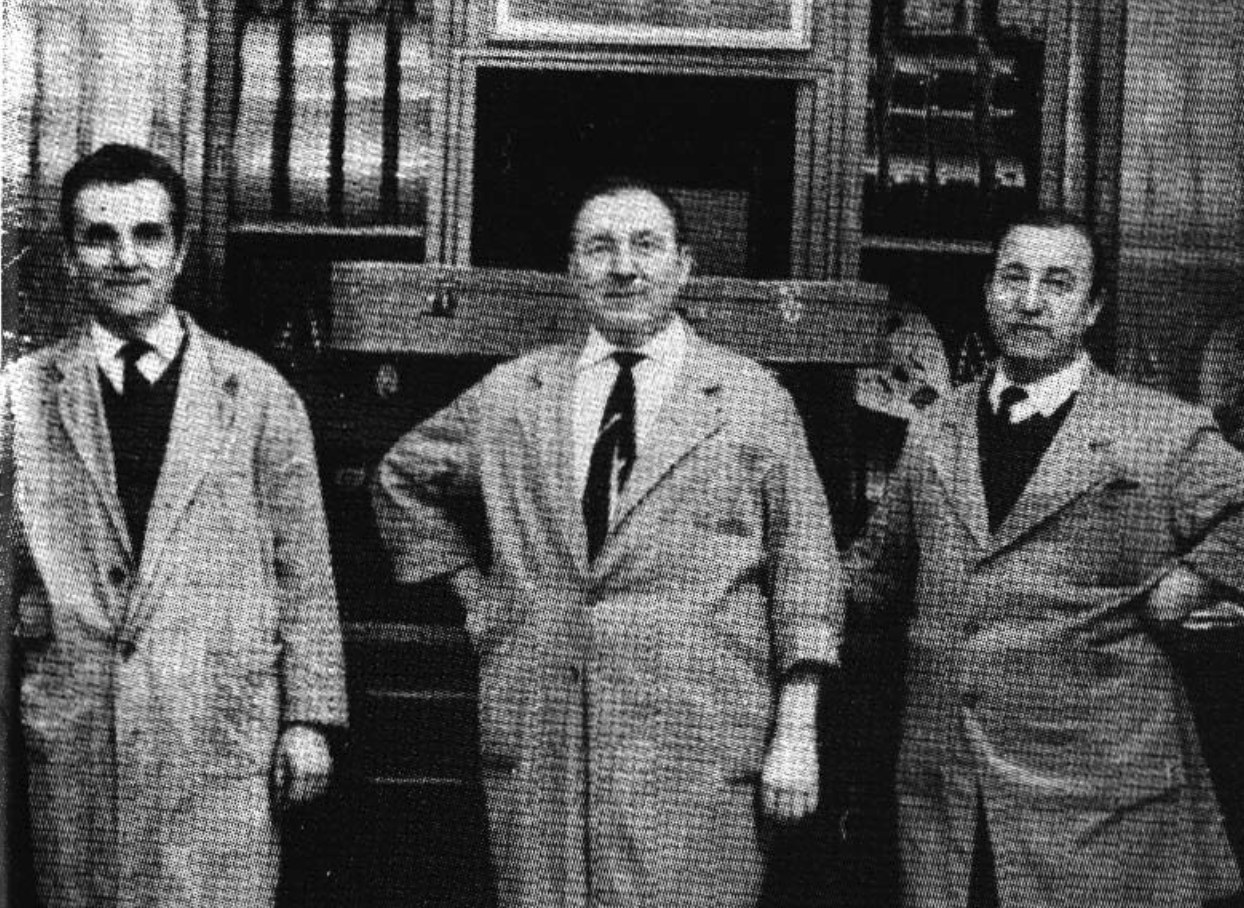
In 1926 Esteso's nephew Faustino Conde joined the workshop, followed by his brother Mariano in 1929 and later by Julio. They learned the craft and their love of it from their uncle and stayed with him until his death in 1937, in the middle of the Spanish Civil War – he died of a respiratory infection that might have been cured but for the lack of penicillin.
Out of respect for their aunt, the brothers kept the label "Viuda y Sobrinos de Esteso" (Esteso's widow and nephews) until Nicolasa Salamanca died at the end of 1959; then the guitars became "Sobrinos de Domingo Esteso" and Conde Hermanos, some of the most famous flamenco guitars in the world. The family still keeps some of Esteso's moulds and tools, and Felipe Conde builds a Domingo Esteso re-edition in exactly his way; Felipe's children, Felipe Conde Crespo and María Conde, are the fourth generation of the line that Esteso began.
Domingo Esteso in Orfeo Magazine

Orfeo Magazine No. 25 – Flamenco: Origins of the Flamenco Guitar
The Spring 2025 issue tells the history of the Conde guitars, from Domingo Esteso at Gravina 7 to Felipe Conde and his son today.
Domingo Esteso Guitars at GSI
Many Domingo Esteso guitars have passed through our doors over the years, including several from the Russell Cleveland collection. You'll find guitars currently in stock by clicking the "Guitars In Stock" button in the header of this page as well as earlier examples in our Museum by clicking the "Guitars In Museum" button.
Frequently Asked Questions
Who was Domingo Esteso?
A Madrid guitar maker (1882–1937), born in San Clemente (Cuenca), trained in the workshop of Manuel Ramírez alongside Santos Hernández, who opened his own workshop at Calle Gravina 7.
How is Domingo Esteso related to the Conde family?
The Conde brothers – Faustino, Mariano and Julio – were his nephews. They joined his workshop in the 1920s and carried it on after his death as Viuda y Sobrinos de Esteso and then Conde Hermanos.
Why do some Esteso labels mention Buenos Aires?
Esteso made many guitars for his sole agents in Argentina, Romero y Fernández of Buenos Aires, with a special label – some branded "Guitarras Iberia".
Did Domingo Esteso make flamenco or classical guitars?
Both. His classical guitars are prized for their clear, woody voice, and his flamencos were played by Ramón Montoya and Niño Ricardo.