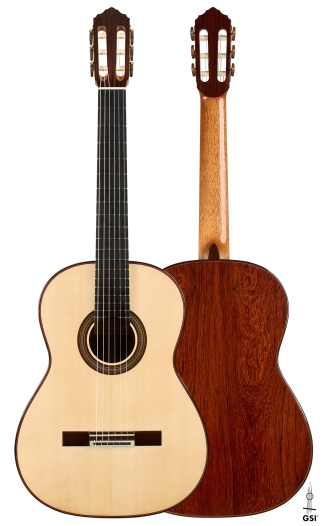
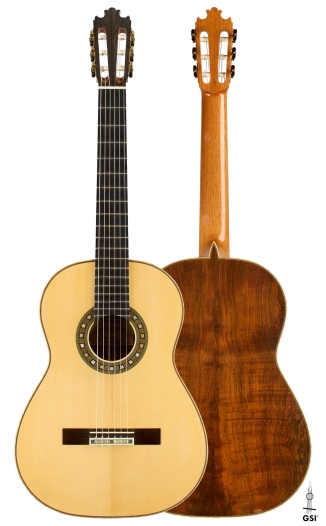
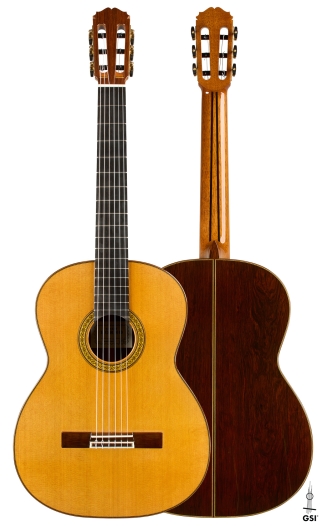
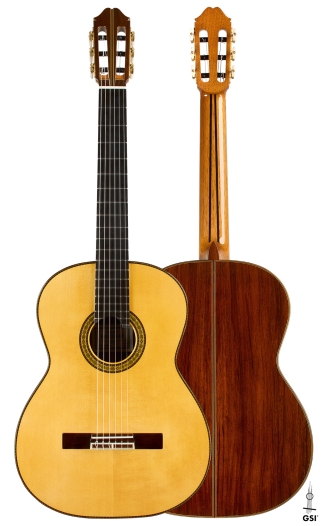
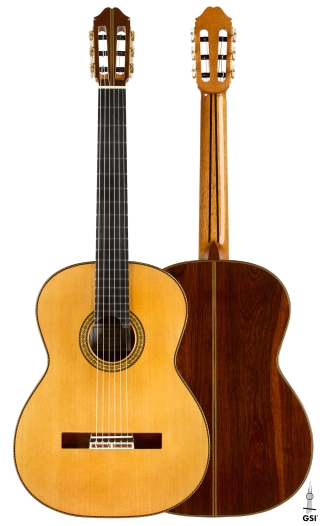
Eric Sahlin is a self-taught American classical guitar maker who has worked in the Spokane area of Washington State since building his first guitar in 1975. With a waiting list of over a decade and buyers across the US, Europe and Japan, he is one of the few American luthiers to reach world-class status, and his guitars have been played by Scott Tennant, Andrew York, Ottmar Liebert and Carsten Pedersen.
At a Glance
- Workshop: Valleyford, Washington, near Spokane
- Hometown: Born and raised in Spokane, Washington
- Training: Self-taught
- First guitar: 1975, as a student at UC Santa Barbara
- Full-time maker: Since 1978/79
- Also built: 7-, 8- and 10-string guitars and Renaissance lutes
- Known for: His "twisted" neck profile and minimal mother-of-pearl trim
- Waiting list: Over a decade
- Players: Scott Tennant, Andrew York, Ottmar Liebert, Carsten Pedersen
Early Years in Spokane and Santa Barbara
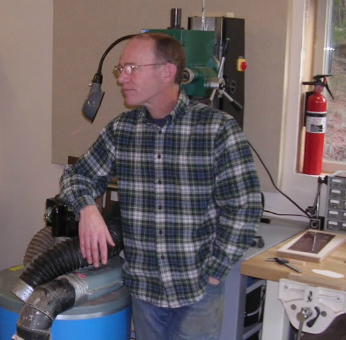
Eric Sahlin was born and raised in Spokane, Washington, not far from where he lives and works today. His first exposure to the classical guitar came in his teens, when his brother took an interest in the instrument and began playing; Eric also had the good fortune of listening to the great guitar recordings on his brother's Musical Heritage Society LPs. Years later he attended UC Santa Barbara, which offers a strong classical guitar program, and enjoyed several school-sponsored student recitals and concerts there.
It was in 1975, during his first year at university, that he decided to build his first guitar. He had had a strong interest in handwork – and woodworking in particular – from a very early age, and this, combined with an interest in acoustical physics, made guitar building seem like a wonderful adventure. In preparation Eric collected and studied books on the subject and bought his first guitar woods that spring, completing his first guitar that summer.
Multi-String Guitars and the Dauphin Company
Another guitar soon followed, and by the time the second one was finished, Eric's career choice was decided. He set up shop building custom furniture and built guitars on the side, honing his skills. By 1978/79 he was building guitars full-time, thanks in part to a chance connection with George Dauphinais of the Dauphin Company, a guitar mail-order business, which began marketing Eric's 7-, 8- and 10-string guitars as a less expensive alternative to the other multi-string instruments on offer at the time.
Renaissance Lutes
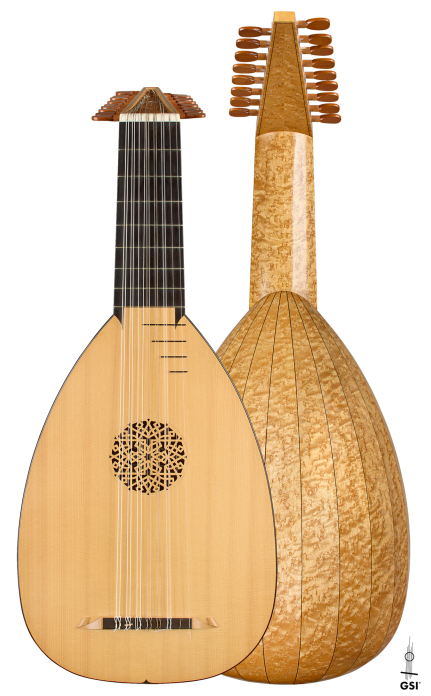
In the early 1980s, a good lutenist friend of Eric's suggested he build him a lute. Eric thoroughly enjoyed the project, so he studied these instruments in greater depth and built various models of lutes in addition to guitars. Two of them, a 9-course lute from 1988 and an 8-course lute from 1989, both made for a professional guitarist who wanted to play Elizabethan music, have passed through our Museum.
An American Classical Guitar Maker of World-Class Status
By the end of the 1980s the guitar market was strengthening, and as Eric had by then established a strong reputation in the guitar community, he redirected his efforts exclusively to his first love: the art of classical guitar building, which remains his focus to this day. He now has a waiting list of over a decade and has proven to be one of the great American luthiers to achieve world-class status.
Eric Sahlin's Guitars: the Twisted Neck and Other Details
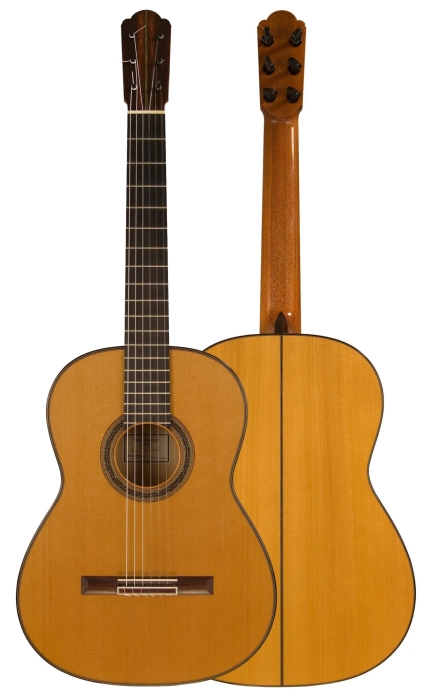
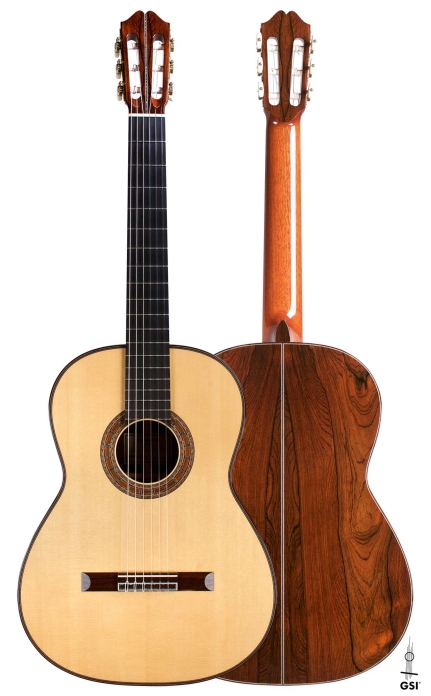
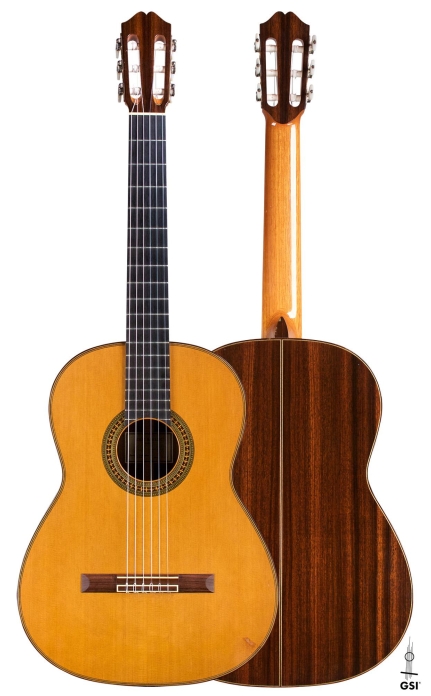
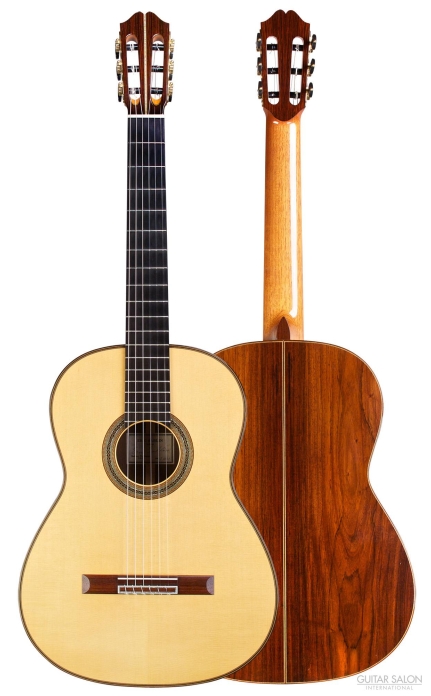
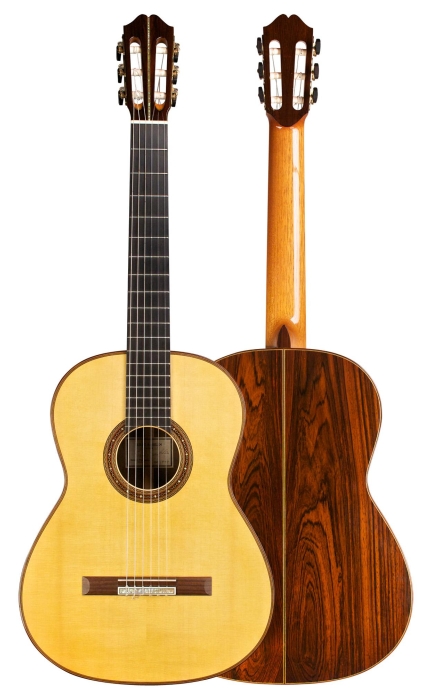
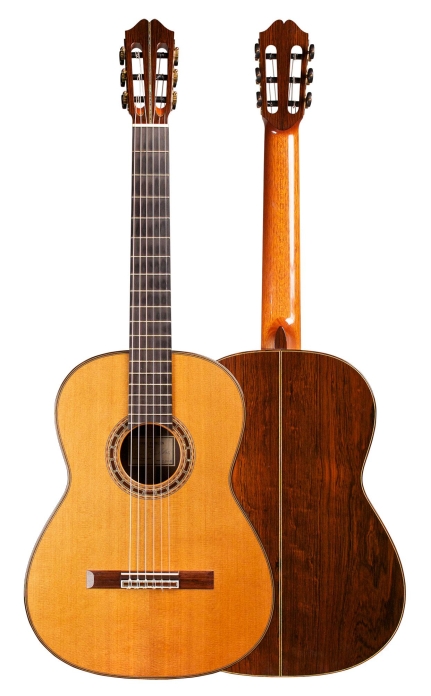
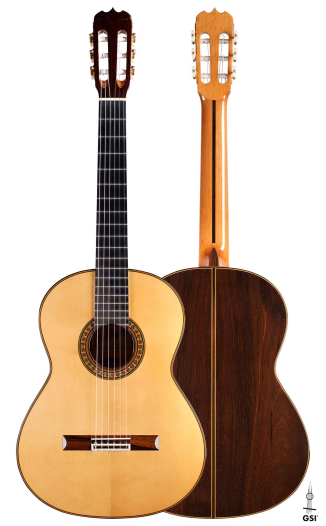
Sahlin guitars are instantly recognizable by their workmanship – so precise that it almost takes a microscope to appreciate – and by the elegant, minimal use of mother-of-pearl in the headstock, rosette and tie-block. Eric's best-known innovation is a slight "twist" in the neck profile, which eases the stress on the left-hand wrist in the lower positions and lets the player keep a straighter wrist, even when barring. In the early 1990s he used a pin-bridge system in the style of John Gilbert, and on cedar-topped guitars he has long combined a French-polished top with lacquered back and sides. He builds with both cedar and spruce, mostly over CSA or Indian rosewood, and occasionally makes a flamenco guitar – Ottmar Liebert plays one of his cypress models.
Eric Sahlin in Orfeo Magazine

Orfeo Magazine No. 10 – West Coast Luthiers
Orfeo's West Coast road trip ends in Spokane with Eric Sahlin, who talks about being self-taught, the woods he prefers and his "twisted" fingerboards. Read the full issue in English.
Eric Sahlin Guitars at GSI
Many Eric Sahlin guitars have passed through our doors over the years. You'll find guitars currently in stock by clicking the "Guitars In Stock" button in the header of this page as well as earlier examples in our Museum by clicking the "Guitars In Museum" button.
Frequently Asked Questions
Where does Eric Sahlin build his guitars?
In Valleyford, Washington, just outside Spokane, where he was born and raised.
When did Eric Sahlin start building guitars?
He built his first guitar in 1975, during his first year at UC Santa Barbara, and has been building full-time since 1978/79.
Who taught Eric Sahlin?
No one – he is self-taught, having started from books on guitar making and his own background in woodworking.
What is the Sahlin "twisted" neck?
A slight twist in the neck profile that eases stress on the left-hand wrist in the lower positions, so the player can keep a straighter wrist even when barring.
Which guitarists have played Eric Sahlin guitars?
Scott Tennant, Andrew York, Ottmar Liebert (flamenco) and Carsten Pedersen, among other top players worldwide.
How long is Eric Sahlin's waiting list?
Over a decade.