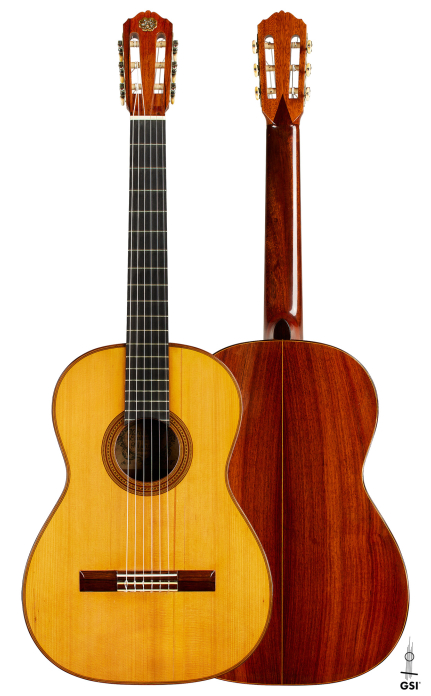
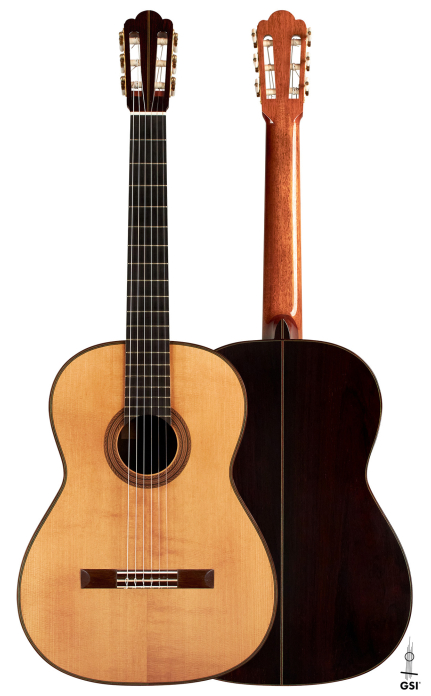
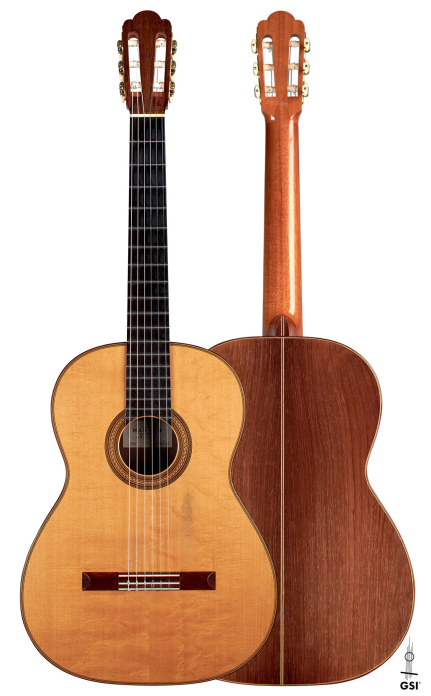
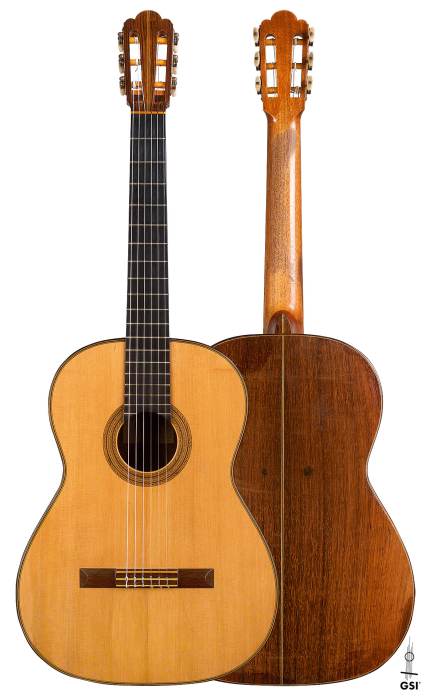
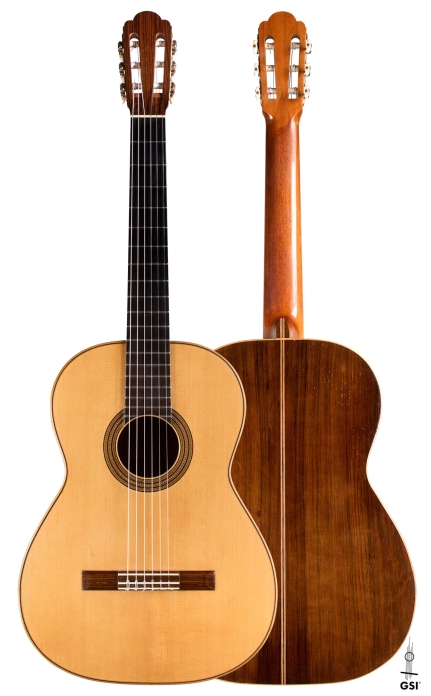
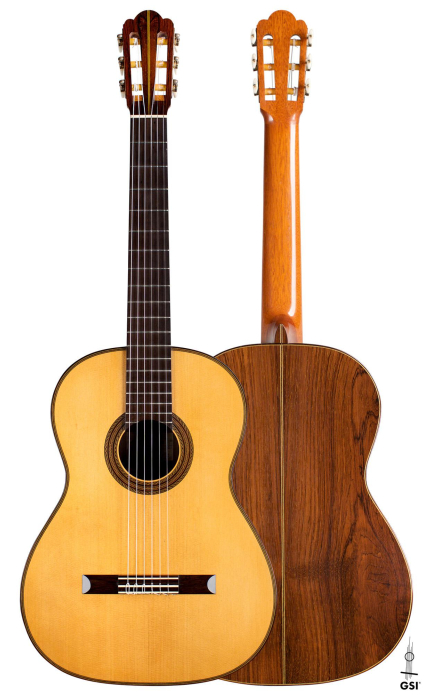
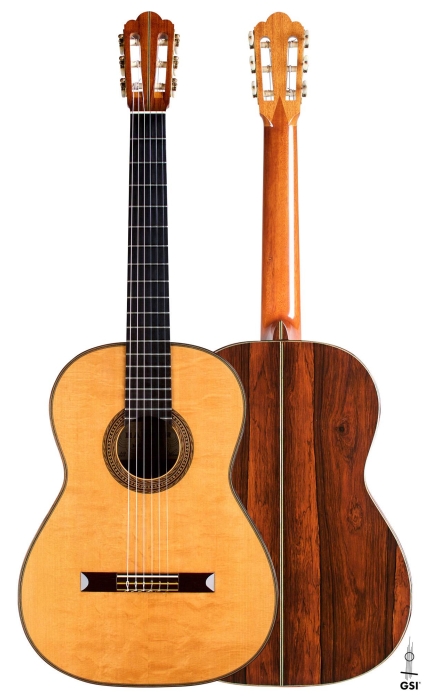
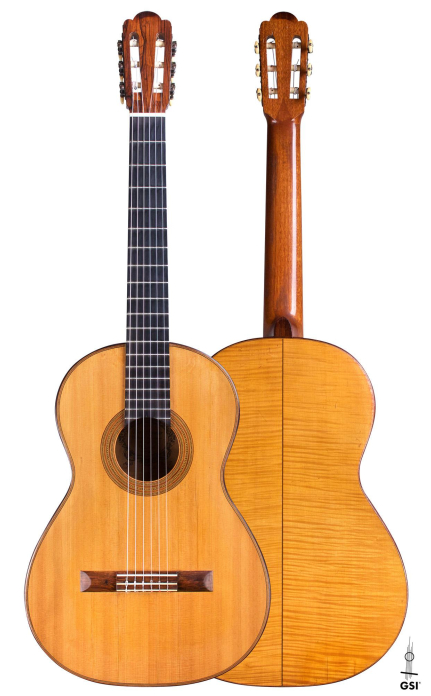
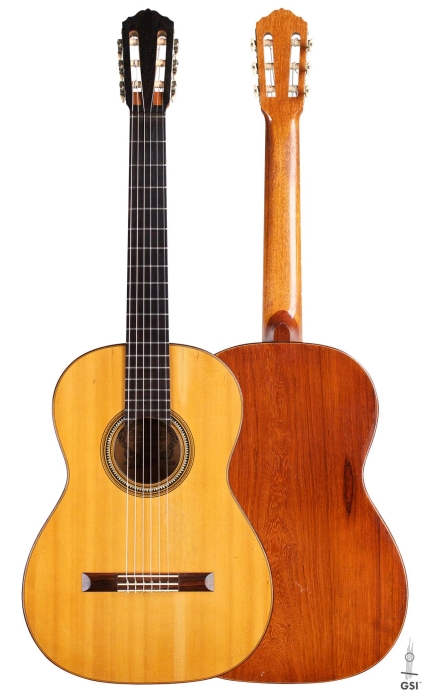
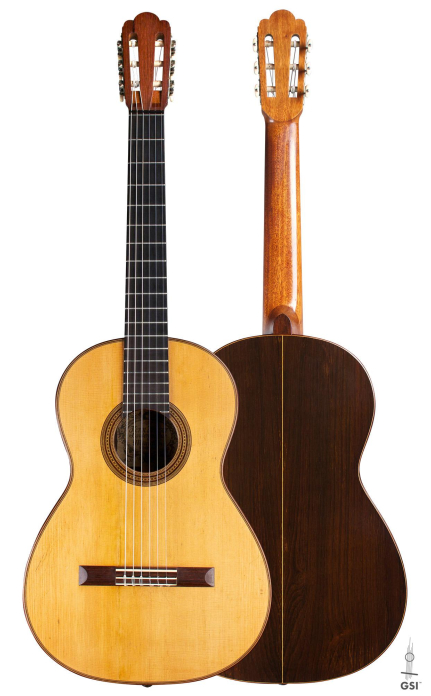
1927 Hermann Hauser I SP/MP
| Year | 1927 |
| Top | Spruce |
| Back & Sides | Maple |
| Scale Length | 650 mm |
| Nut width | 51 mm |
| Finish | French Polish |
| Country | Germany |
| Luthier | Hermann Hauser I |
This guitar is no longer available in our inventory. If it interests you, click the ”notify me when available” button to be notified in the event that we re-acquire this guitar for re-sale.
Videos
Description
This is a 1927 Hermann Hauser I classical guitar with a spruce top and rare maple back and sides – a full-sized, Spanish-model Hauser made in Munich, labeled "manu propria" in Hauser's own hand.
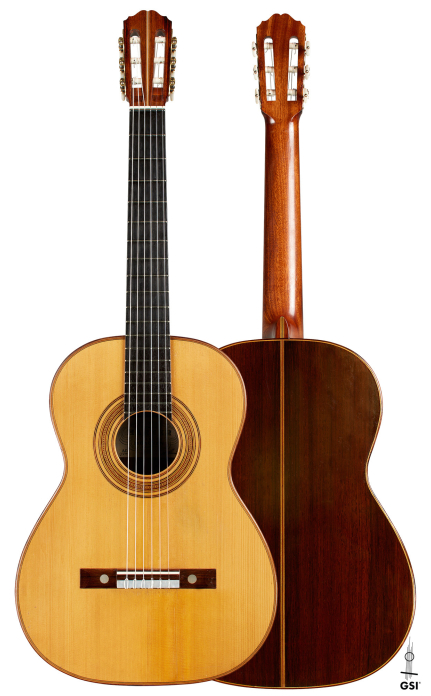
Early Hauser I: Torres, Llobet and Segovia's Manuel Ramírez
When this instrument was built in 1927, Hauser already knew the work of Antonio de Torres well. He had seen and studied Miguel Llobet's 1859 Torres (FE 09) – he even drew a plan of it in 1922 – and in 1926 he acquired an 1860 Torres (FE 13) from Llobet; both guitars left a permanent mark on his style. In 1924 he also met Andrés Segovia and examined his 1912 Manuel Ramírez (built by Santos Hernández), another instrument with a profound effect on his own work. Most famously, the "Manuel Ramírez" head of Segovia's guitar stayed a Hauser favorite for over a decade and appears on many of his guitars – this 1927 included.

A Maple Hauser with the Later "Teutonic" Voice
Its sound is remarkably ahead of its time. Hauser's guitars from the 1920s, when he was exploring various Spanish styles, tend to have a more "Spanishy" sound, as one would expect. Yet this 1927 maple guitar already fully expresses the style Hauser is most famous for developing – what Julian Bream called the "teutonic sound" (improved balance, clarity, brilliance in the trebles, evenness of sound, sturdy/firm basses), which only becomes commonplace in his instruments from the mid-1930s on. It is fitted with a "zero fret", which makes the open strings sound like the fretted notes – all notes vibrate between a fret and the saddle, which maximizes consistency and evenness of tonal character. It is also incredibly powerful, even by modern standards – easily in the top percentile of Hauser I guitars we've seen for volume.

"Manu Propria": Built by Hauser I Himself
This guitar also has "manu propria" handwritten on the label. Over the years Hauser I was known to have employed various assistants/apprentices (including his son), who would assist in various aspects of the build process. Guitars with the designation "manu propria" on the label indicate that everything was done by Hermann I completely by himself. These attributions appear rarely in Hauser guitars and are considered by collectors to add indisputable evidence as to the authenticity and authorship of the guitar.

Condition
Condition is excellent for such an old instrument – it appears the back was removed and re-attached, likely to gain easier access to the single repaired small crack in the upper bout of the soundboard, and some overpolishing has been done as well. Otherwise, the guitar is in excellent condition with normal wear given the amount of performing that has been done on it. It is in performance-ready condition, either for the concert stage or recording studio. Truly a remarkable and rare instrument built by one of history's most important luthiers.

Background
Hermann Hauser I: Master Guitar Maker of Munich

Hermann Hauser Sr. (1882–1952) is best remembered for the remarkable instruments he built in the Spanish style after 1924. In that year, both Andrés Segovia and Miguel Llobet visited Hauser. Segovia was impressed by the quality of Hauser's work and wrote his impressions, noting that he "immediately saw the potential of this great artisan if only his mastery might be turned to the construction of the guitar in the Spanish pattern, as immutably fixed by Torres and Ramirez as the violin had been fixed by Stradivarius and Guarnerius" (Segovia in Guitar Review, 1954).


Segovia, Llobet and the Spanish Model
Segovia encouraged Hauser to build instruments based on his 1912 Manuel Ramírez guitar (built by Santos Hernández) after he examined and made measurements of this instrument. At this time Hauser also had the opportunity to examine Miguel Llobet's famous 1859 Torres, which would also become a decisive influence on the maturing "Hauser" style.