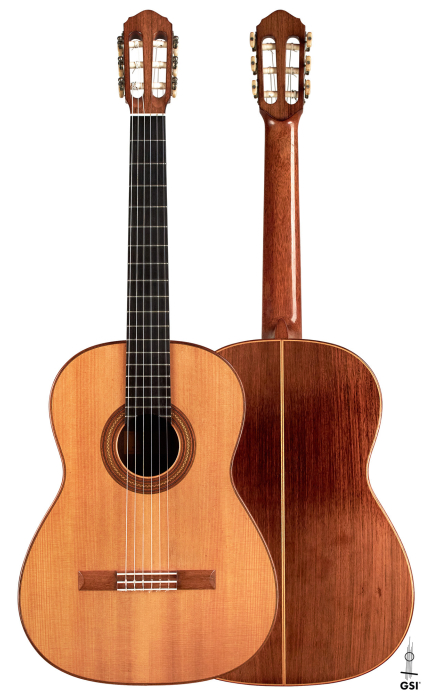
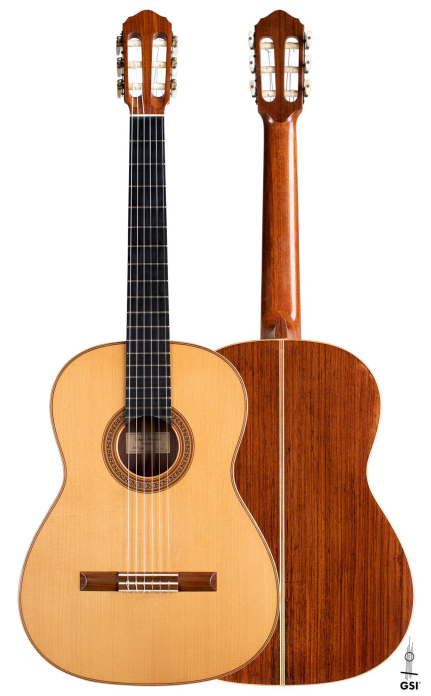
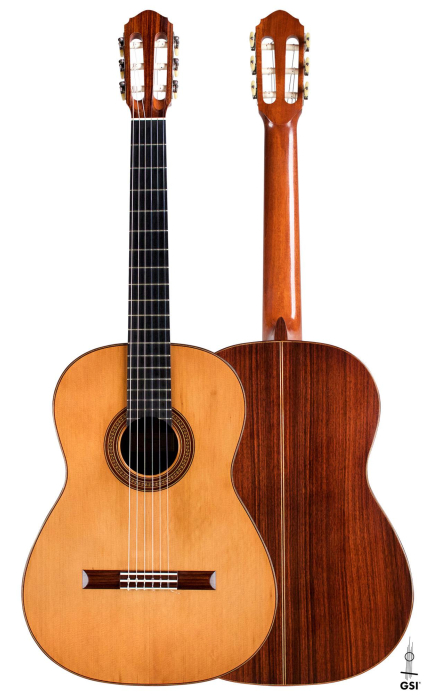
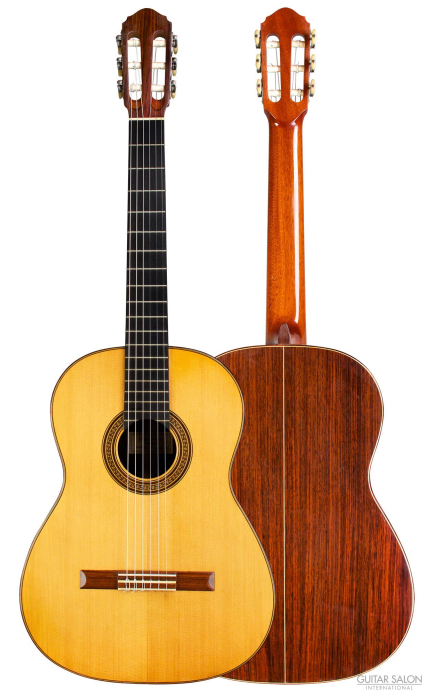
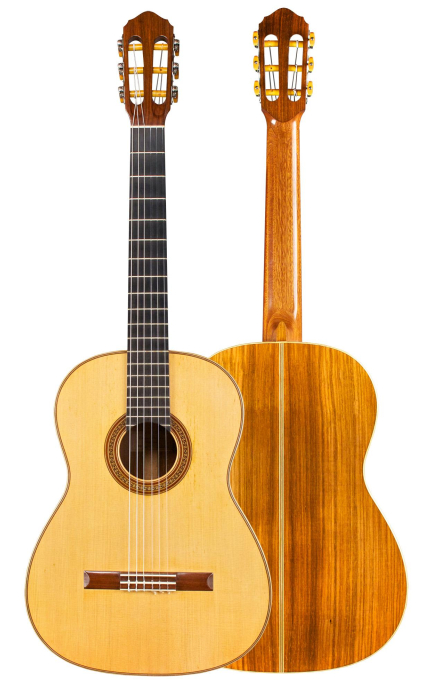
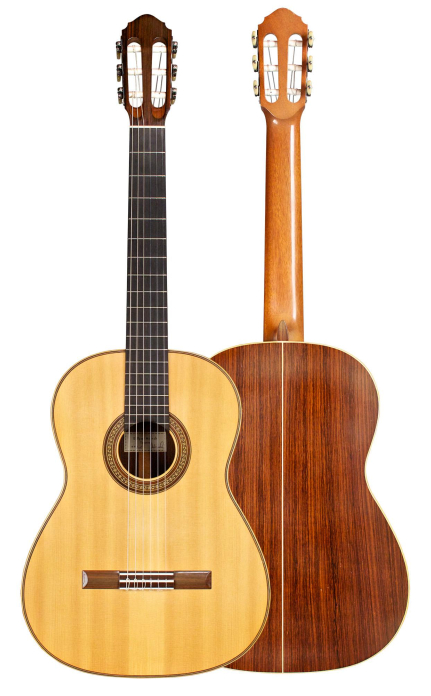
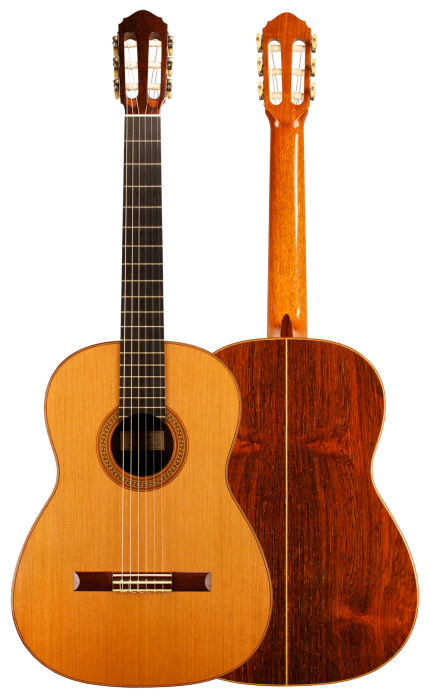
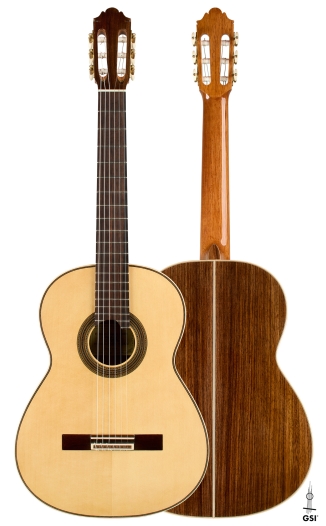
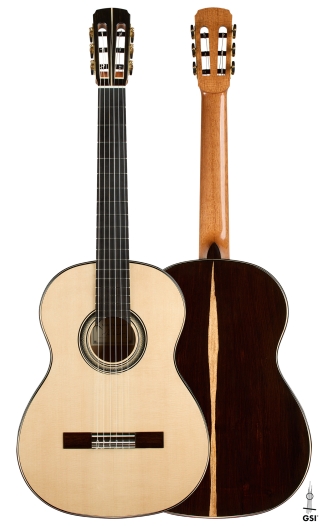
1951 Edgar Mönch SP/IN
| Year | 1951 |
| Top | Spruce |
| Back & Sides | Indian Rosewood |
| Scale Length | 650 mm |
| Nut width | 50 mm |
| Finish | French Polish |
| Top Construction | Traditional |
| Bracing | Seven fans |
| Body resonance | E/F |
| Condition | Excellent |
| Country | Germany |
| Exchange | ExchangePlus |
| Luthier | Edgar Mönch |
$10.000,00
Applicable sales tax and shipping charges will be added at checkout.
Details


Background
Edgar Mönch: Engineer, Violinist, Guitar Maker
Edgar Mönch (1907–1977) was born in Leipzig and trained first as an engineer, in Danzig, and as a violinist, in Prague. He came to guitar making only during World War II: as a prisoner of war in England from 1944 to 1947, he found his way into a camp workshop run by the Y.M.C.A. Back in Germany he began building in Munich in 1948, in little more than a rented room, putting well over a hundred hours of handwork into every guitar. In 1952 he traveled to Madrid and spent time in the workshop of Marcelo Barbero, studying his rosettes and his bracing.
Munich, Toronto and Freiburg
His Munich years, until the mid-1960s, produced some of the most important work of his career. In 1965 he moved to Toronto, where he built until 1971 and helped shape a new generation of Canadian makers, among them Jean-Claude Larrivée and his nephew Kolya Panhuyzen. He then returned to Germany and settled in Freiburg, where he worked until his death in 1977 – about 350 guitars in all, along with a handful of lutes. His labels name the city where each guitar was built.
Played by Segovia, Bream and John Williams
Lightweight, with a charming, woody, old-world voice, his guitars are often compared to those of Hermann Hauser I. Andrés Segovia kept a Mönch for his daily practice, John Williams played one as a boy and early in his career, and Julian Bream recorded his second album for RCA on a 1959 Mönch. Celedonio Romero and Vicente Gómez played his guitars too.
Books on Edgar Mönch
A 1954 Edgar Mönch is one of the guitars in Alberto Martínez's "34 Classical Guitars in Life Size", reproduced in photographs and full-size drawings: