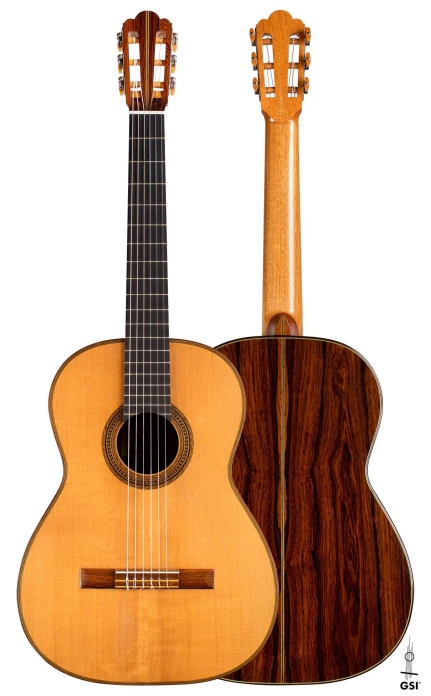
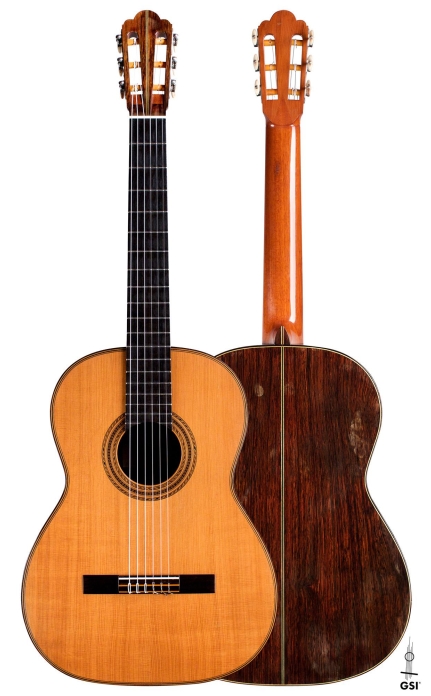
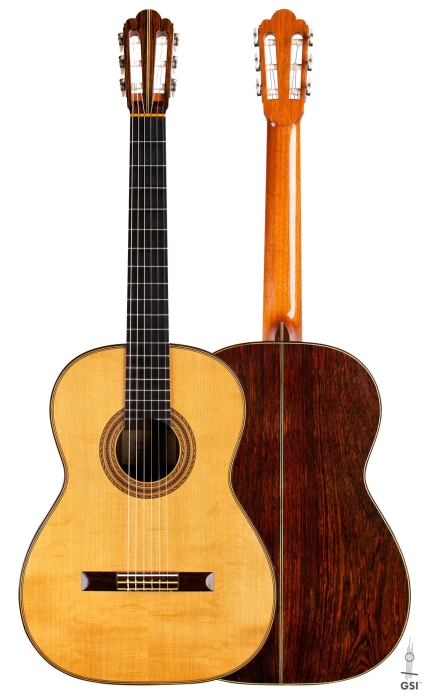
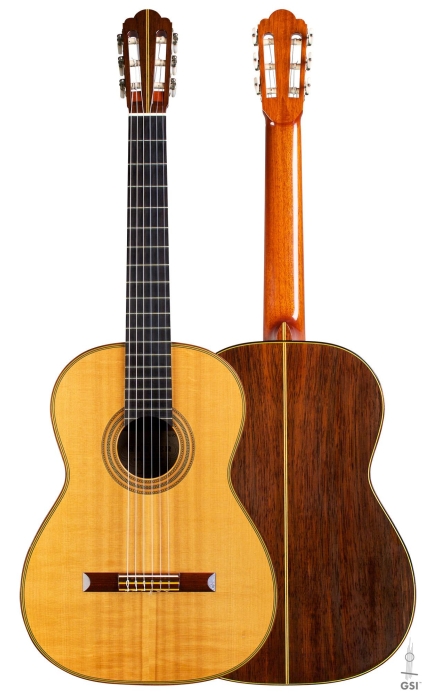
1969 Hermann Hauser II "Llobet" No. 856 SP/CSAR
| Year | 1969 |
| Top | Spruce |
| Back & Sides | CSA Rosewood |
| Scale Length | 640 mm |
| Nut width | 51 mm |
| Finish | Lacquer |
| Country | Germany |
| Luthier | Hermann Hauser II |
This guitar is no longer available in our inventory. If it interests you, click the ”notify me when available” button to be notified in the event that we re-acquire this guitar for re-sale.


Background
Hermann Hauser II: Third Generation of the Hauser Dynasty
Hermann Hauser II (1911–1988) – Hermann Hauser Jr. – is considered to be one of the greatest makers of the twentieth century. Grandson of the luthier Josef Hauser and son of Hermann Hauser I, he learned his craft working alongside his father, and after his father's death in 1952 he carried the family's Torres-based "teutonic" style into the second half of the century from the Hauser workshop in Reisbach, Bavaria. His son Hermann Hauser III (the fourth generation) and granddaughter Kathrin (the fifth) still work there today – see Hermann Hauser III & Kathrin Hauser – with many of the same tools and even woods stocked by the earlier generations.
The Hauser dynasty, now spanning five generations, has produced instruments played by countless concert artists including Andrés Segovia, Julian Bream, the Romeros and many others.
The Hauser II Sound
The sound has the attributes of a great Hauser that have attracted great players from Bream to Segovia to the Romeros and beyond – crystal-clear fundamental tones with almost perfect separation, basses that are steady and precise, and at the same time a lyrical charm and sweetness, particularly in the trebles. At its best, a Hauser II is like a loud and balanced piano, with the warmth of a great Hauser I. Playability is easy, thanks to his slender and very comfortable neck shape.
Books on Hermann Hauser II
Orfeo Magazine No. 4 is devoted to the Hauser dynasty, and a 1960 Hauser II is among the guitars shown in Orfeo's "34 Classical Guitars in Life Size":