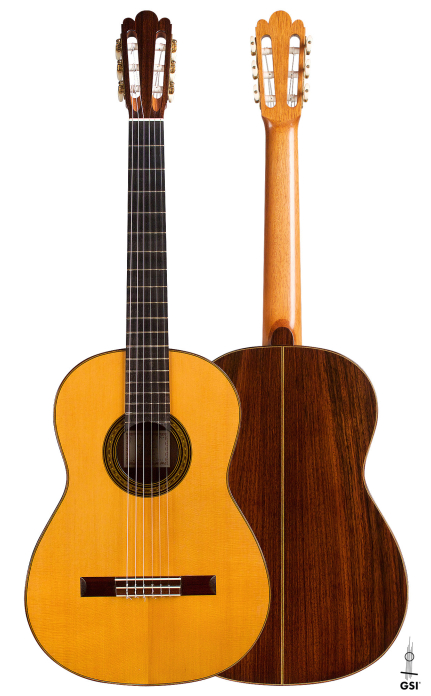
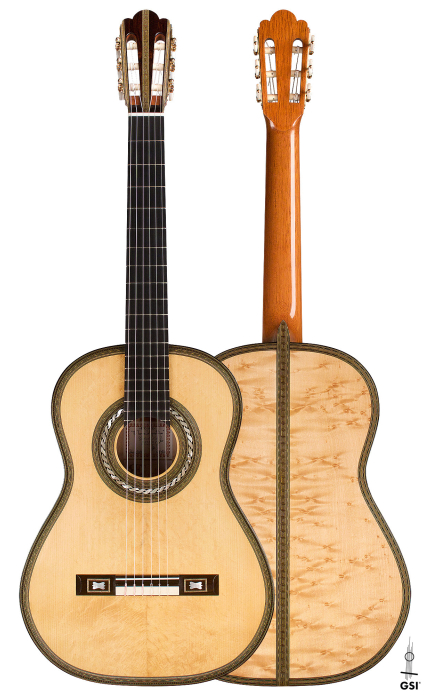
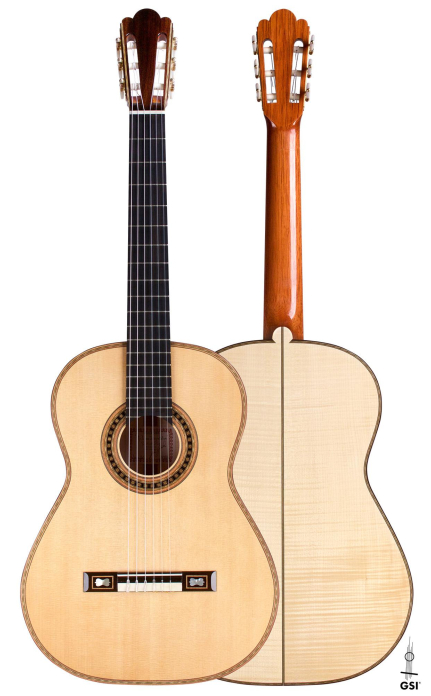
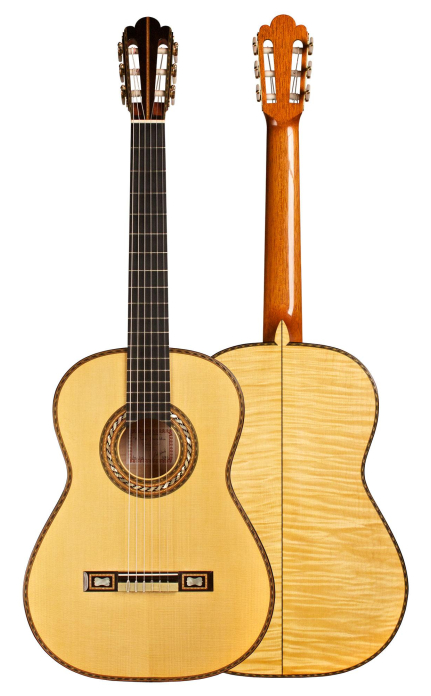
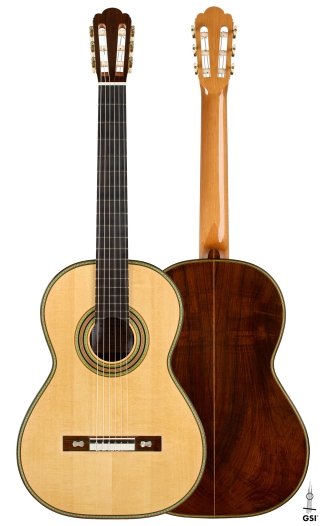
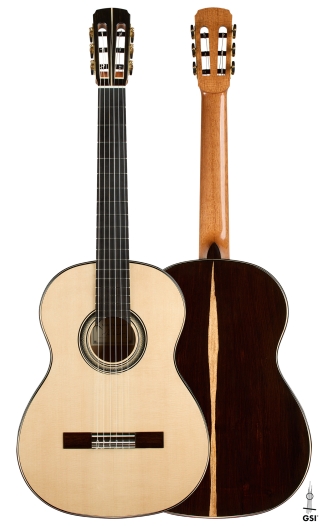
2015 Gabriele Lodi "Contemporary" SP/CSAR
| Year | 2015 |
| Top | Spruce |
| Back & Sides | CSA Rosewood |
| Scale Length | 650 mm |
| Nut width | 52 mm |
| Finish | French Polish |
| Country | Italy |
| Luthier | Gabriele Lodi |
This guitar is no longer available in our inventory. If it interests you, click the ”notify me when available” button to be notified in the event that we re-acquire this guitar for re-sale.


Description
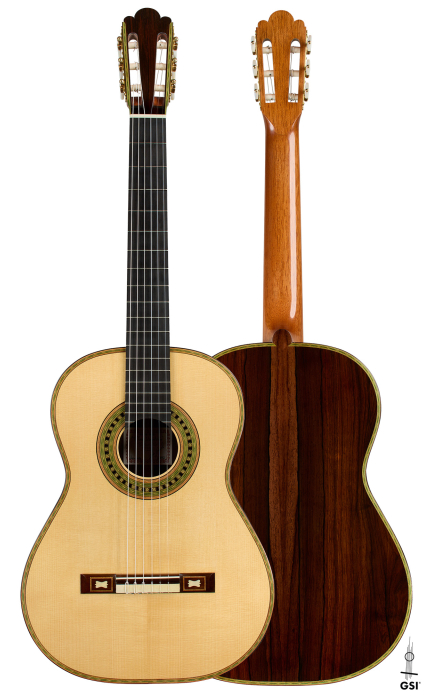
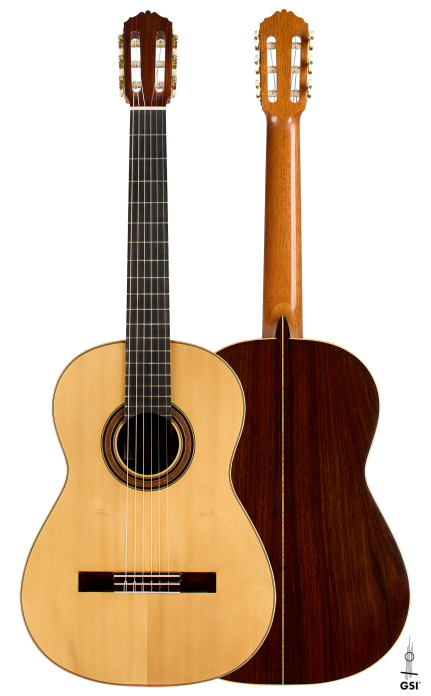
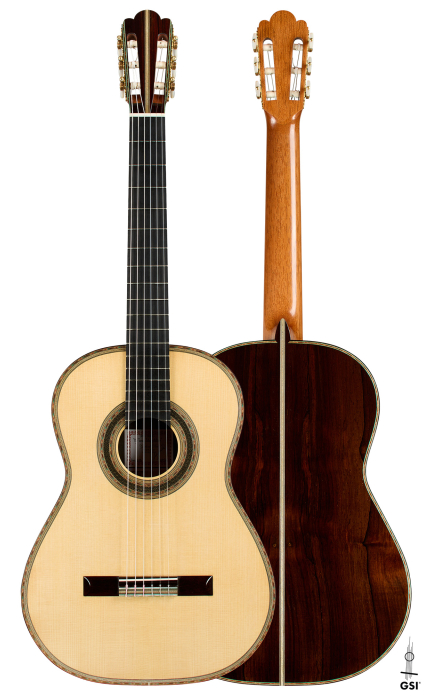
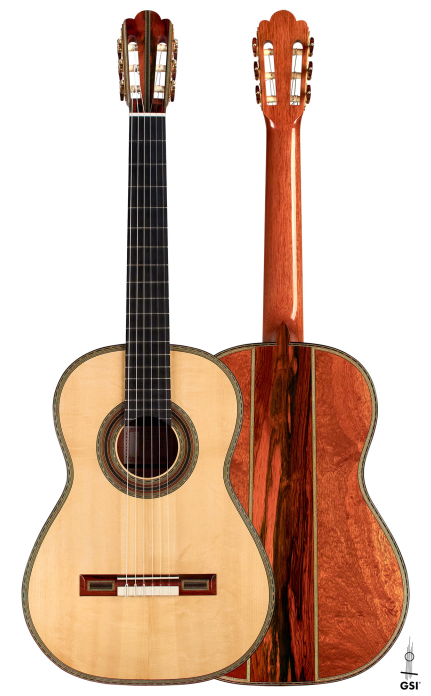
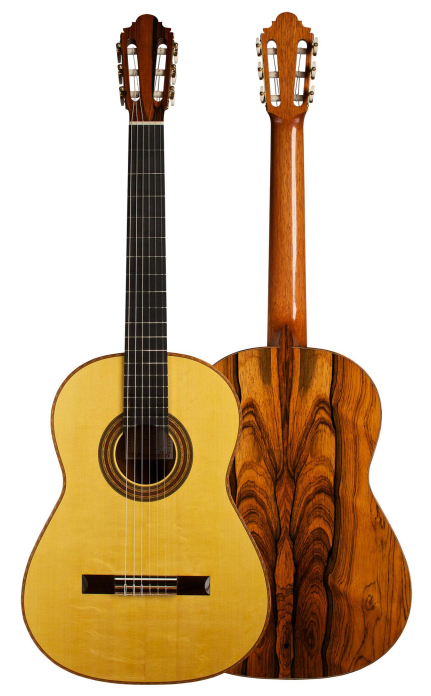
 This 2015 Gabriele Lodi "Contemporary" is a classical guitar from Carpi, Italy, with a 35-year-old Italian spruce top and CSA rosewood back and sides, combining Spanish fan bracing with a French-style transverse bar at the bridge.
The "Contemporary" Model
This is what Gabriele calls his "Contemporary Model" – a tribute to the modern era of guitar design, which began around the middle of the 20th century (with such makers as Hauser and Bouchet) with the introduction of nylon strings (replacing gut strings), which allowed for a new and more aggressive style of playing. This innovation gave players the extra strength of sound needed to be heard at acceptable volume levels in larger halls and theaters where the guitar had previously not been. These guitars also had a more solid build with greater mass and a more stable top, sometimes with a transverse bar across the bridge. Body resonance from this period was usually around F# or G, and there is a noticeably bigger sound from the trebles. To read more of the historical background to this approach, please read this very informative article written by Gabriele.
Spanish Fans Meet a French Transverse Bar
For this particular guitar, Gabriele combined the Spanish 5-fan system with a transverse bar in the bridge position, in line with the saddle, to support the pressure of the strings. This is similar to Bouchet's placement, but the shape and dimensions of the bar are quite different (for the shape of this brace, Gabriele borrowed heavily from an instrument by the Parisian master of the early 19th century, René Lacote). The result is very balanced trebles with consistent sustain, and the avoidance of any dull notes. This blend of Spanish and French traditions (fan bracing mixed with the added transverse bar) will suit the multiple needs of today's concert players – from Renaissance, Baroque and Romantic music, which was mostly played originally on instruments with transverse bars under the top, to the music of later periods, written for fan-strutted instruments. Easy action and comfortable playability round out this exceptional, world-class guitar.
Materials and a Graduated Rosette
The materials selected are striking, as is usual for this maker: some beautiful 35-year-old Italian spruce for the top and the best CSA rosewood possible for the back and sides. He makes his rosettes and purflings the old-fashioned way, using the same mosaic design for both. The center ring of the rosette is strongly inspired by Santos Hernández's famous design, with a custom element that appeals to Gabriele – the design is smaller on the treble side than on the bass side (notice how the "bandwidth" gradually increases as you follow the pattern clockwise), in accordance with the size of the frequencies of those strings! A very unique and striking feature of this instrument. The tuners are handmade by Alessi.
Although Gabriele is a seasoned veteran of guitar making, he started using his own label (instead of the standard family label) in 2013, and this is the tenth guitar in that series. We at GSI are thrilled to be representing this great maker.
Photos of this guitar during construction and some background information on the model