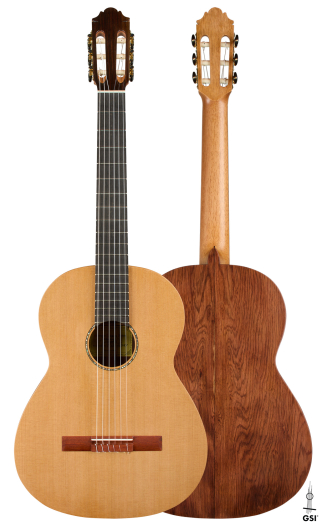
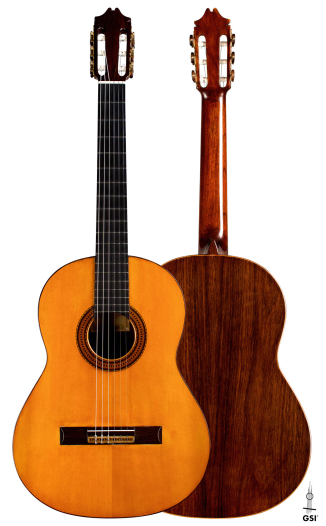
1864 Antonio de Torres "FE 21B" SP/CSAR
| Year | 1864 |
| Top | Spruce |
| Back & Sides | CSA Rosewood |
| Scale Length | 650 mm |
| Nut width | 52 mm |
| Finish | French Polish |
| Country | Spain |
| Luthier | Antonio de Torres |
This guitar is no longer available in our inventory. If it interests you, click the ”notify me when available” button to be notified in the event that we re-acquire this guitar for re-sale.


Frederic Hand's "Chorale" played by the LAGQ on 4 Antonio de Torres (including all 3 ex. Tárrega)

Kenny Hill performs his composition "Wedding Song (Dad's Gonna Cry)" on a 1864 Antonio de Torres

Federico Moreno Torroba's "Sonatina III. Allegro" by Eric Henderson on an 1864 Antonio de Torres

Georges Bizet's "Habanera" played by the LAGQ on 4 Antonio de Torres (including all 3 ex. Tárrega)

Lawrence Long's "Serenade for Guitar" by George Sakellariou on an 1864 Antonio de Torres

Federico Moreno Torroba's "Sonatina II. Andante" by Eric Henderson on an 1864 Antonio de Torres

Manuel de Falla's "Canción del Fuego Fatuo" by LAGQ on 4 Antonio de Torres (incl. all 3 ex. Tárrega)
Description

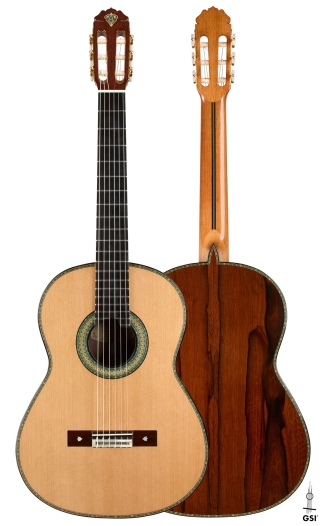
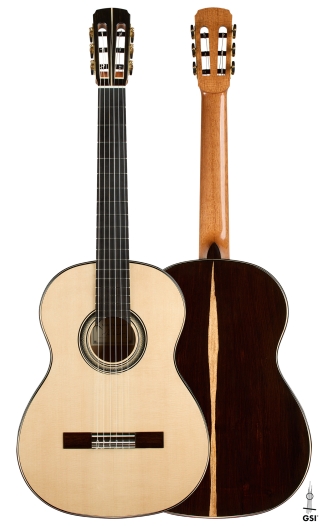
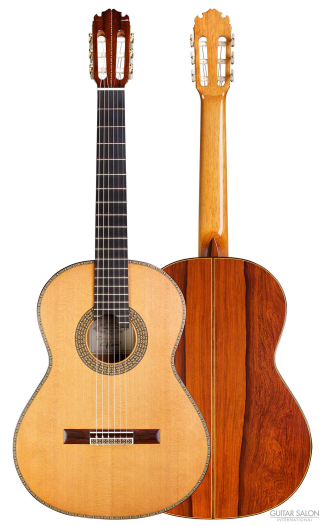
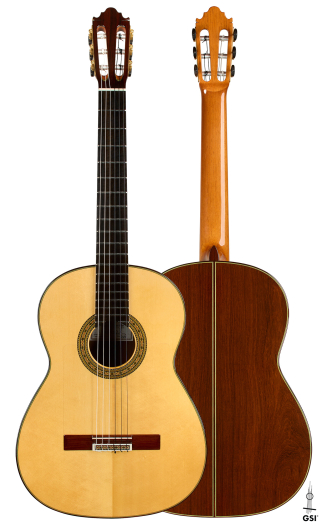
This 1864 Antonio de Torres is a spruce and CSA rosewood classical guitar from Seville, FE 21B in the Romanillos catalog – the first-epoch Torres that Kenneth Brögger studied at GSI and the model for his "1864" Torres.
In the videos above, Kenny Hill plays his "Wedding Song (Dad's Gonna Cry)", Eric Henderson plays the Andante and Allegro from Federico Moreno Torroba's "Sonatina" and George Sakellariou plays Lawrence Long's "Serenade for Guitar" on this guitar. The LAGQ also plays it, alongside Tárrega's three Torres, in three quartets.
FE 21B: A First-Epoch Torres from Seville
1864 was a remarkable year in the workshop on Calle de la Cerrajería, número 32 – the address printed on this guitar's label, where Torres completed the date, 1864, by hand. It is the year of Tárrega's beloved FE 17, and of this guitar's sister, FE 21A. José Romanillos catalogued this one as FE 21B. It is a full-sized Torres of the classic Seville style, and like so many of his first-epoch guitars it is, in its measurements and proportions, practically a "modern" classical guitar – the blueprint that guitar makers have followed ever since.
Rosewood, Mother-of-Pearl and Engraved Tuners
Torres' eye for design is everywhere you look. The two-piece back of CSA rosewood is joined with a fine center strip and framed by light-colored purfling lines, and the rosette is a classic Torres design of concentric rings – dark bands alternating with fine mosaic lines. The rosewood bridge has mother-of-pearl inlays in both wings, the three-lobed headstock has a dark veneer, and the tuners have beautifully engraved plates and carved buttons. Elegant, restrained – and absolutely "Torres".
The Model for Kenneth Brögger's "1864" Torres
Many years ago the great Danish luthier Kenneth Brögger visited GSI and spent time studying this guitar – measuring, examining and, of course, playing it. It became the model behind his "1864" Torres, one of the faithful replicas for which he is known today. It's a wonderful example of how Torres' guitars continue to teach the best makers of our own time, more than 150 years after they were built.
Sound
As the videos show, this is a Torres that speaks in every style – from Kenny Hill's tender "Wedding Song" to Moreno Torroba and the quartets of the LAGQ. The sound is deep and velvety, with that rich, harmonious blend of notes and concentrated overtones that is the very definition of the "Torres sound", and yet every note keeps its clarity and separation. And there is that unique sensation of the guitar vibrating against the player's body, which only a Torres can give.
More on Antonio de Torres
For more on the life of Antonio de Torres, be sure to read his biography and this excerpt about the Torres sound from José Luis Romanillos's book "Antonio de Torres". We also have an interview between Pepe Romero and Kenny Hill about the master luthier. Also see Orfeo Magazine #9 – The 200th Anniversary of Antonio de Torres.