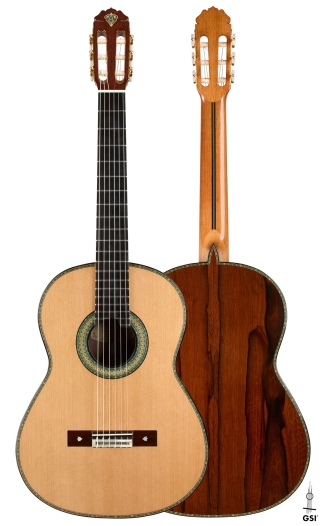
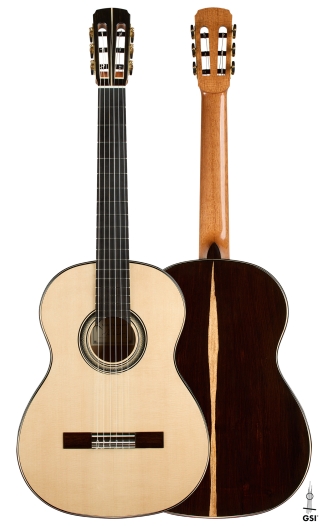
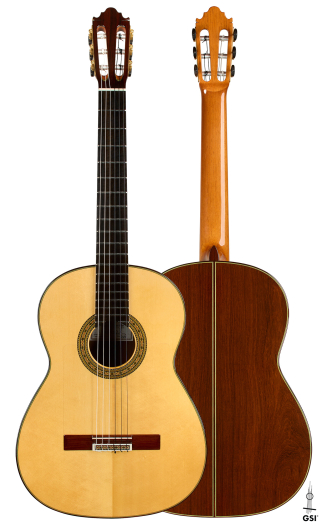
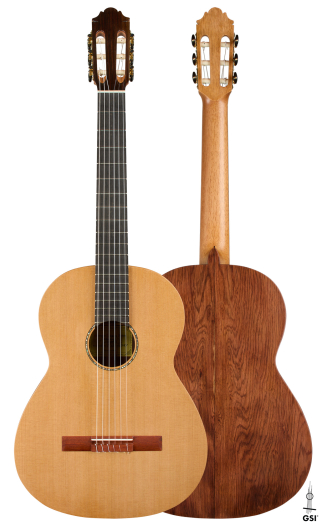
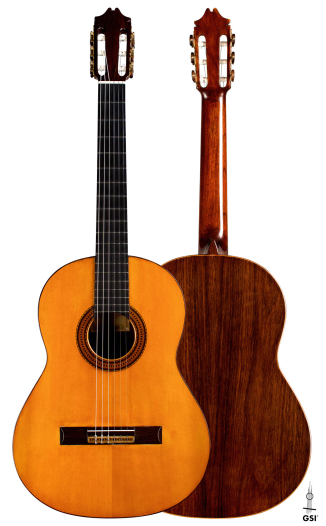
1886 Antonio de Torres "SE 99" SP/CY (Romero collection)
| Year | 1886 |
| Top | Spruce |
| Back & Sides | Cypress |
| Scale Length | 650 mm |
| Nut width | 52 mm |
| Finish | French Polish |
| Country | Spain |
| Luthier | Antonio de Torres |
This guitar is no longer available in our inventory. If it interests you, click the ”notify me when available” button to be notified in the event that we re-acquire this guitar for re-sale.


Pepe Romero performs Tango "Maria" by Francisco Tarrega on a 1886 Antonio de Torres guitar
Description

This 1886 Antonio de Torres is a spruce and cypress classical guitar from Almería, numbered SE 99, from the personal collection of Pepe Romero.
In the video above, Pepe Romero plays Francisco Tárrega's "Tango María" on this guitar.
From Pepe Romero's Collection
This instrument was one of six guitars from Pepe Romero's personal collection that were featured in a memorable event in the GSI showroom on June 1, 2013. These 6 instruments were chosen in particular since they are the key guitars that have most influenced his son, luthier Pepe Romero Jr., over the course of his life, both before and during his activity as a luthier.
Presented by Pepe Jr., Played by Scott Tennant
The guitars were presented by Pepe Jr. and played by none other than maestro Scott Tennant. This was about as personal a connection with these absolutely historic guitars as one could get, with background stories and information provided by Pepe Jr., who has studied these guitars intimately (and literally lived with them). And to have them played by Scott Tennant in a great-sounding intimate space made this a once-in-a-lifetime concert. Click here to see photos of the event.
SE 99 and More on Antonio de Torres
Its label is the Almería label of the second epoch, with "Segunda Época, nº 99" written in by Torres. Torres' life is told in our short biography, and José Luis Romanillos's book "Antonio de Torres" explains his sound in this excerpt. Pepe Romero shares his own experience of these guitars in an interview with Kenny Hill. Also see Orfeo Magazine #9 – The 200th Anniversary of Antonio de Torres.