1923 Francisco Simplicio No. 11 SP/CSAR
| Year | 1923 |
| Top | Spruce |
| Back & Sides | CSA Rosewood |
| Scale Length | 650 mm |
| Nut width | 50 mm |
| Finish | French Polish |
| Country | Spain |
| Luthier | Francisco Simplicio |
This guitar is no longer available in our inventory. If it interests you, click the ”notify me when available” button to be notified in the event that we re-acquire this guitar for re-sale.


Description

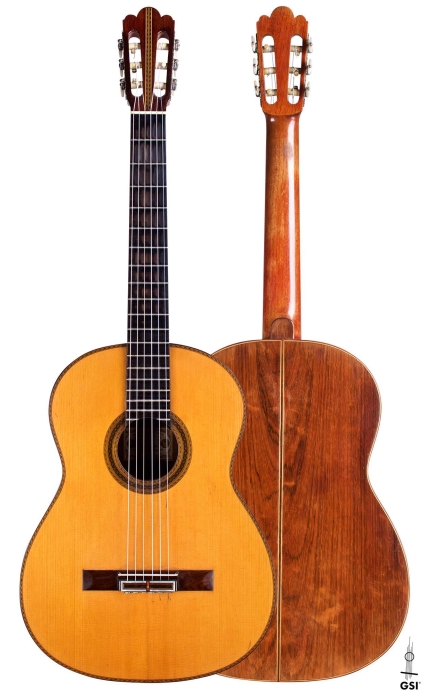
This 1923 Francisco Simplicio is a spruce and CSA rosewood classical guitar made in Barcelona, No. 11 – one of his very first guitars, built the year after Enrique García's death and labeled on García's own printed label.
No. 11 on an Enrique García Label
Fun fact about this guitar: Simplicio started working with Enrique García in 1918, and together they built "García" guitars for several years. When García died in 1922, Simplicio continued building similar models but now signed the labels with his "Francisco Simplicio" signature and started numbering them, starting with #1, #2, etc. For some reason he didn't get around to having his own labels designed and printed until 1925, so he built his first 49 guitars (numbered and signed) with the old García labels – and this guitar from 1923 is his #11. Along the edge of the label he wrote "Fco Simplicio, sucesor y único discípulo de" in front of García's printed name, and at the bottom "Guitarra No. 11".
One of Simplicio's More Ornate Models
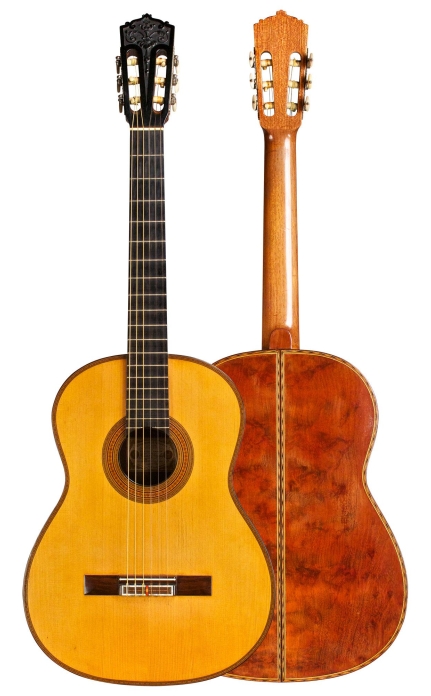
This is one of his more ornate models with extra detailing, including mosaics in the top purfling, inner and outer rosette purflings and tie-block inlay. There are also half-herringbone inlays in the purflings for the top, sides and back. In addition to the carved floral pattern in the headstock, the slots are surrounded with both square and rectangular-shaped mosaic inlays, with mother-of-pearl for every 4th occurrence. This is truly a piece of art in every way, and not just for its appearance.
Sound and Condition
The sound is magical – there is great depth and rich overtone content in every note from the lowest bass note to the highest treble, with a deep bottom-end, lyrical and singing trebles, and ample volume to fill any hall. Being over 100 years old, it is in remarkably excellent condition – apart from a crack on the side of the fingerboard and 2 hairline cracks in one of the sides, it is pretty much pristine, with all original elements intact including finish and tuning machines. Overall, a highly desirable guitar from this famous builder.
Orfeo article on Simplicio – the French guitar magazine Orfeo devoted a feature to Francisco and Miguel Simplicio in its first issue.