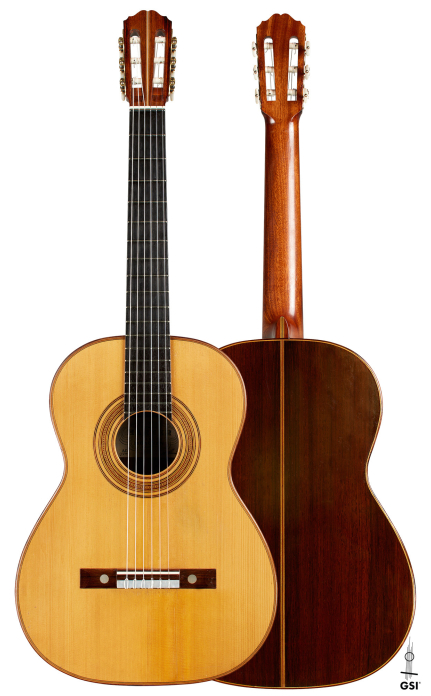
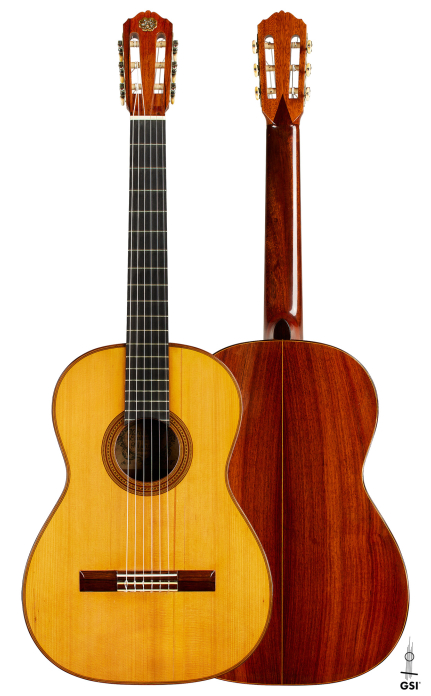
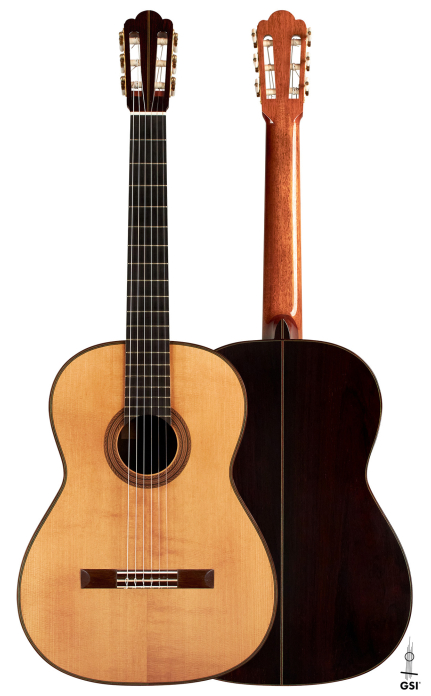
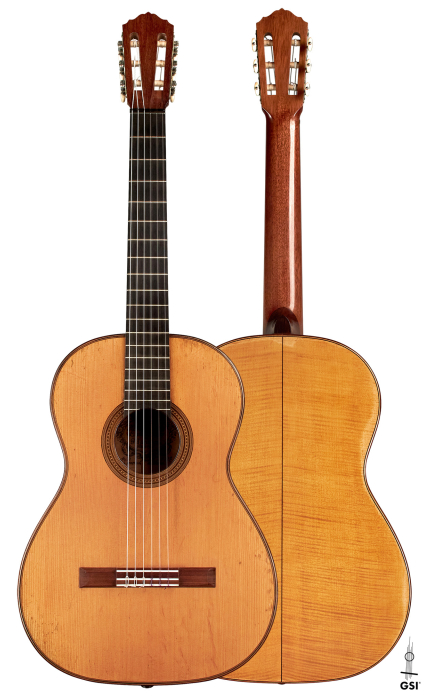
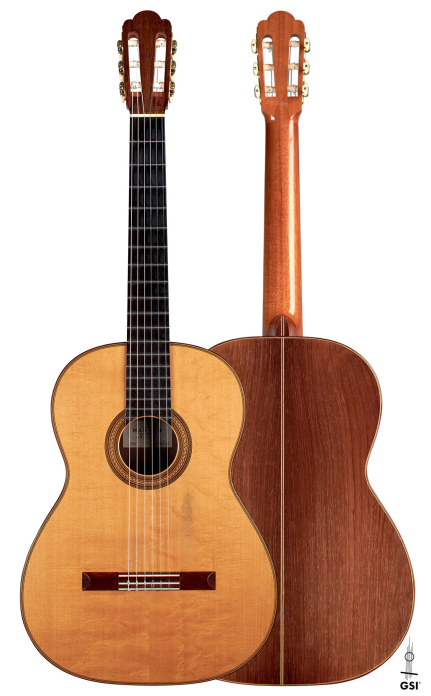
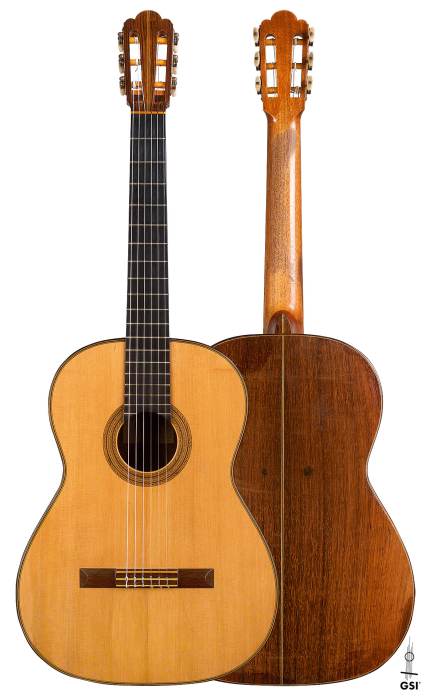
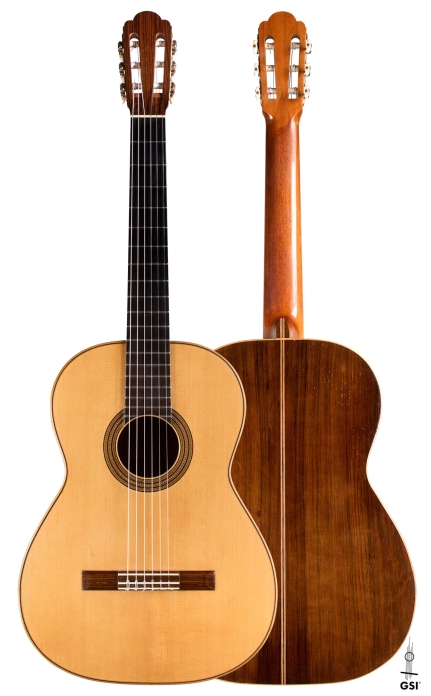
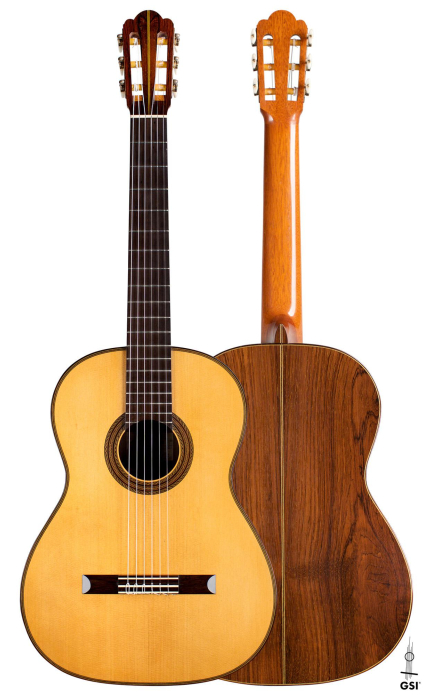
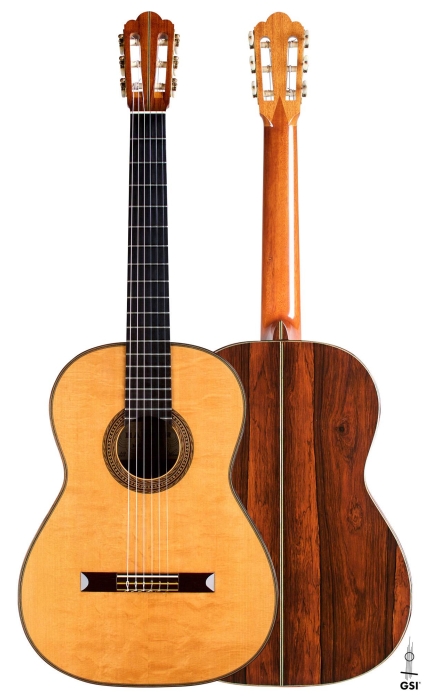
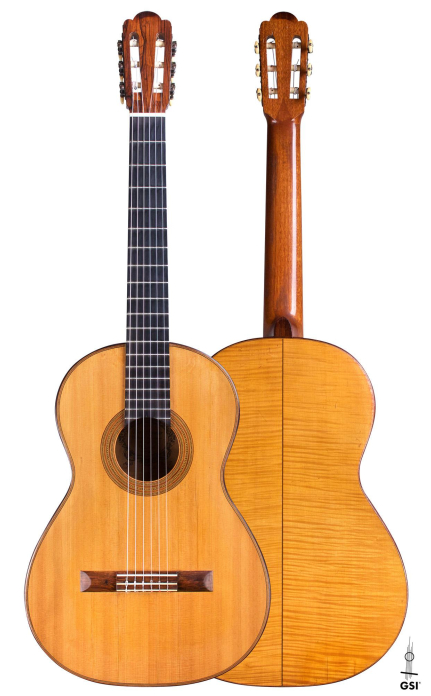
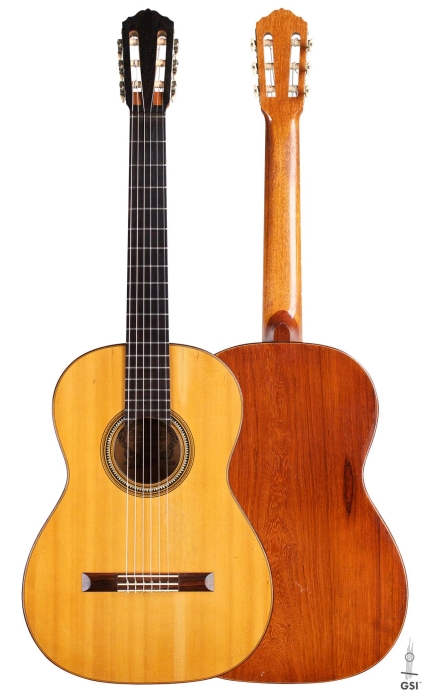
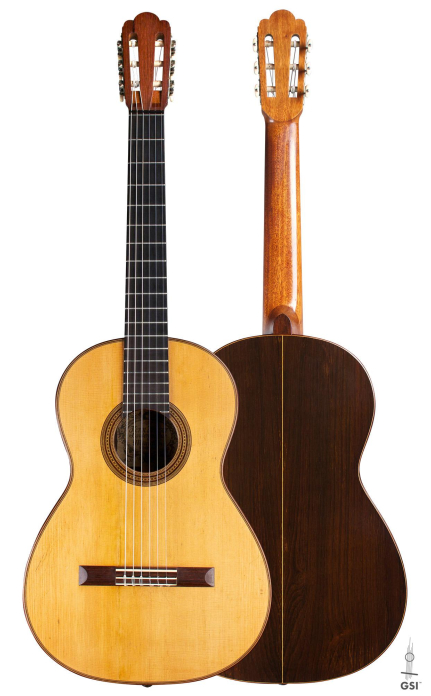
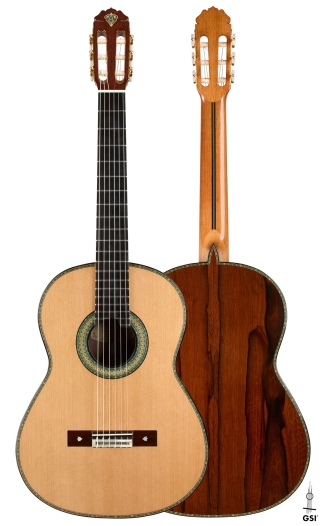
1937 Hermann Hauser I SP/CSAR
| Year | 1937 |
| Top | Spruce |
| Back & Sides | CSA Rosewood |
| Scale Length | 650 mm |
| Nut width | 52 mm |
| Finish | French Polish |
| Country | Germany |
| Luthier | Hermann Hauser I |
This guitar is no longer available in our inventory. If it interests you, click the ”notify me when available” button to be notified in the event that we re-acquire this guitar for re-sale.


Prelude from Bach's Lute Suite #2 played by Vladimir Gorbach

Gigue from Bach's Lute Suite #2 played by Vladimir Gorbach

Double from Bach's Lute Suite #2 played by Vladimir Gorbach
Description
This 1937 Hermann Hauser I classical guitar in spruce and CSA rosewood dates from the same year as the great Hauser of Segovia, and is fitted with a bronze tornavoz – one of the guitars heard on Marc Teicholz's CD "Valseana".
1937, the Year of Segovia's Hauser
This masterpiece was built in the same year as the great Hauser of Segovia, which he described as "the greatest guitar of our epoch". Segovia's guitar is now displayed in the Metropolitan Museum of Art in New York City.
Sound and the Tornavoz
The sound of this instrument is out of this world – it has the very qualities that Julian Bream described as "teutonic": clarity, precision, balance and charm (listen to the videos above). The guitar is fitted with a "tornavoz" – a bronze conical tube attached to the soundhole, which adds a sonic boom to the bottom end and gives the trebles a brilliant clarity.
Heard on "Valseana" by Marc Teicholz
This is one of the instruments chosen for Valseana, the CD by Marc Teicholz – with its tornavoz it is the guitar of Prokofiev's Pushkin Waltz No. 2 (track 8). Beautiful and extremely rare, this is one of the most collectible guitars in the world.