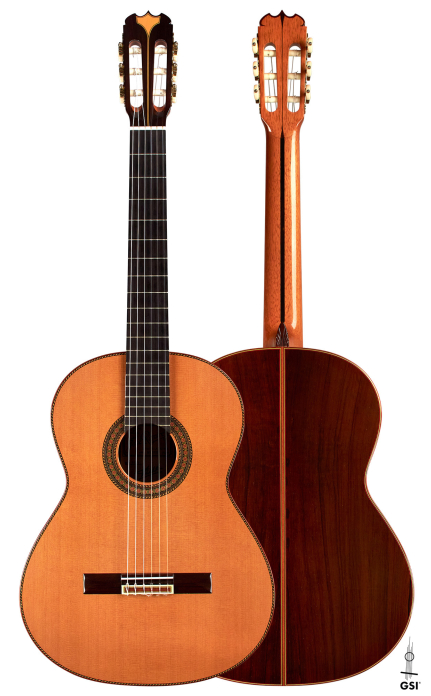
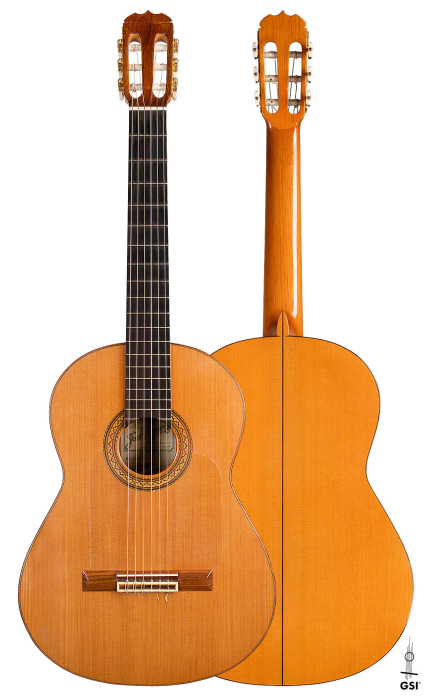
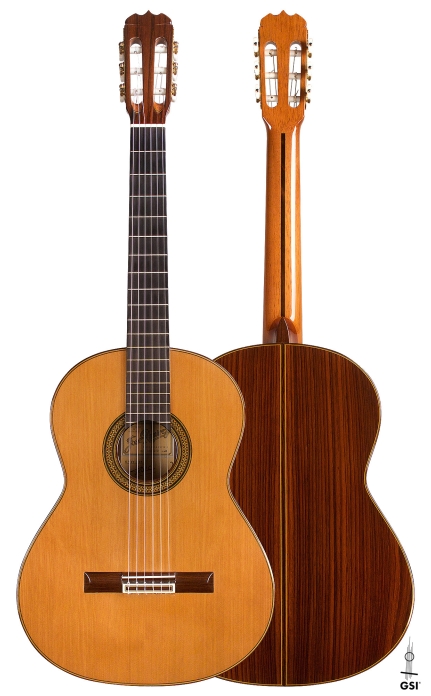
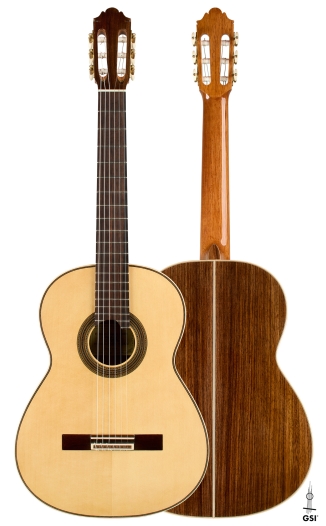
This 2013 José Ramírez "Auditorio C650-P" No. X0-053 is a classical guitar with a cedar top and CSA rosewood back and sides – the double-top model in CSA rosewood; Adam Holzman plays Turina in the video above.
A 2013 Ramírez from Calle de la Paz
The Ramírez workshop, where this guitar was made, has supplied countless professionals over more than half a century: Andrés Segovia and Sabicas, Christopher Parkening and Chet Atkins, Lee Ritenour and even Sting. This guitar comes from the Calle de la Paz workshop that Amalia Ramírez has directed since 2000, with a new generation of the family now working beside her.
The Ramírez "Auditorio" Model
At heart the Auditorio is a "1a"; what changes is the soundboard, a modern double top (a "Nomex sandwich") that gives tremendous power, projection and response in every register while the tone stays classic Ramírez. The fingerboard is slightly elevated, with a 20th fret, and the headstock has its own design – explosive and fun to play, a perfect compromise between tradition and modernity.
Playability and Condition
It is very easy to play, with a lovely neck and easy action. The tone is thick yet clear, with that essential warm, mysterious and moody quality that made Ramírez famous. In the video above Adam Holzman plays the first movement of Turina's Sonata. On the label: Amalia Ramírez's star signature, the year 2013 and No. X0-053, and the model code "Auditorio C650-P" is written by hand beside the class.
The Auditorio, by Amalia Ramírez
The Auditorio guitar was born, as a project, in 2006, when we made the first prototypes. I was making my experiments with the called double top using nomex, and I knew that the first luthier who ever started using this material was Gernot Wagner. For this reason I contacted him, and he was very kind helping me since the very beginning to let me know how to work with it. He even came to my workshop to make a top with us. After this, my guitar makers and me have been making some changes to adapt this system to our own criteria, techniques and design, until we got what we were looking for.
The double top helps get a better projection and sustain. However, it does not improve the quality. If the guitar has a good sound, then it will give it more power, but if the sound of the guitar is not good, then it will be more powerful but with a poor sound.
My intention was to keep the personality of Ramírez guitars, and we have really done it, so we have the sweetness, depth and richness, as well as the balanced sound that is characteristic of Ramírez, adding more power, wideness and sustain. The best things of our guitars are even more noticeable with this new technique. It takes much more work, because building a double top is very delicate and takes a long time, but it is well worth the effort.
– Amalia Ramírez
Curious about the family? Our blog has The Ramírez Family: Masters of the Guitar, the whole line from Amalia Ramírez back to José I, and a little fact-checking on the myths and facts about this legendary workshop.