2026 Hironori Fukuda SP/MP
| Year | 2026 |
| Top | Spruce |
| Back & Sides | Maple |
| Scale Length | 650 mm |
| Nut width | 52 mm |
| Finish | French Polish |
| Condition | New |
| Country | Japan |
| Exchange | ExchangePlus |
| Luthier | Hironori Fukuda |
$8,500.00
Applicable sales tax and shipping charges will be added at checkout.
Details


Brand New 2026 Hironori Fukuda SP/MP AVAILABLE NOW at guitarsalon.com
Description
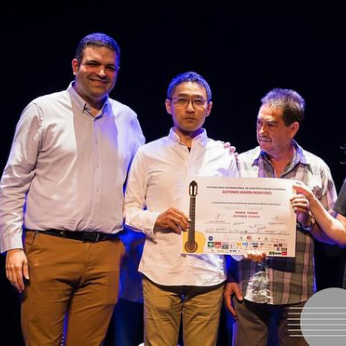
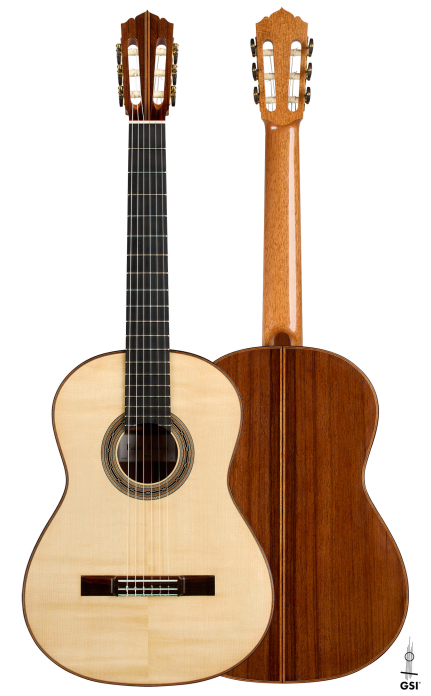
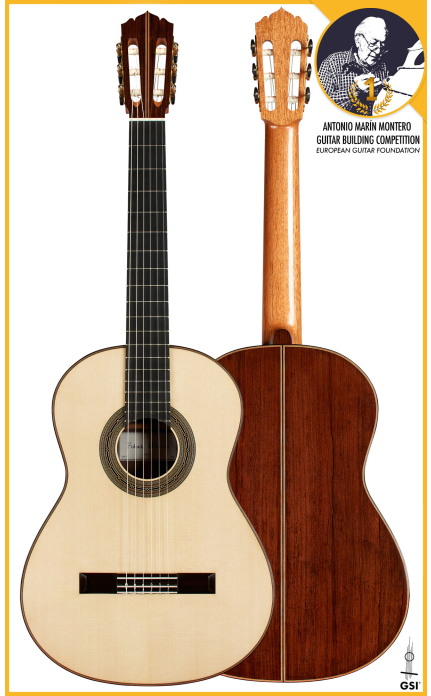
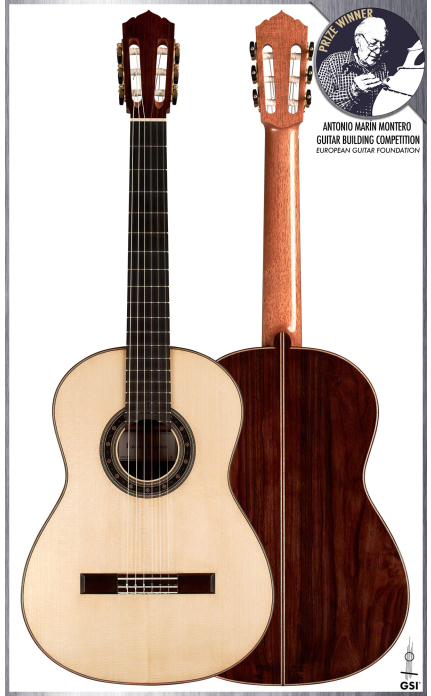
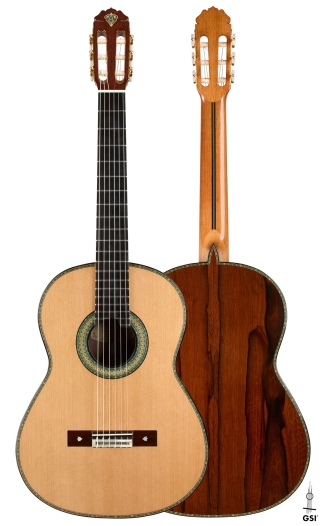
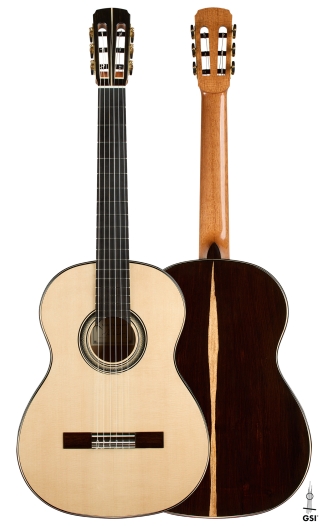
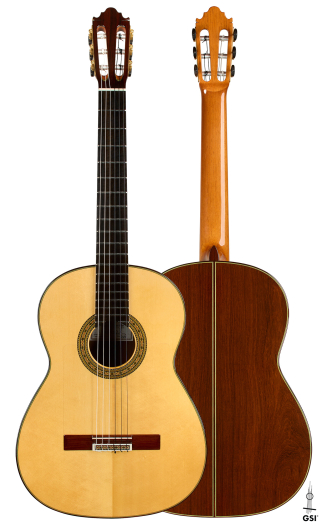
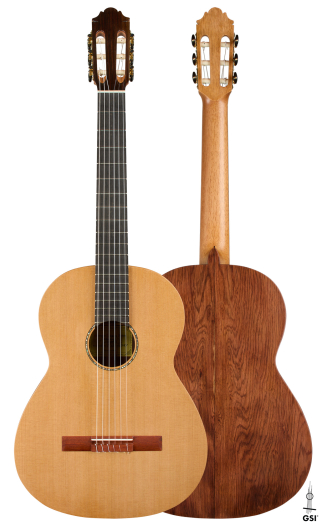
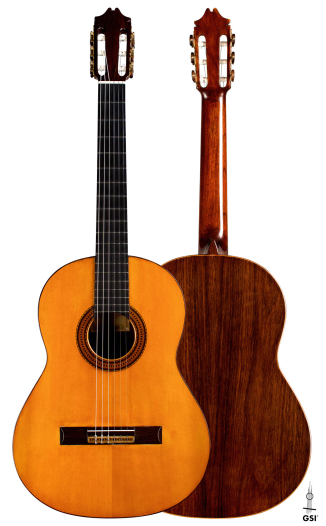
This 2026 Hironori Fukuda is a new classical guitar from Osaka, Japan, with a European spruce top and flamed maple back and sides, built to the same design as the guitar that won him First Prize at the 2024 Antonio Marín Montero competition in Granada.
A First for GSI: Hironori Fukuda in Flamed Maple
We first met Japanese guitar builder Hironori in Granada in 2018, when he was a finalist in the competition. He came back the following year and took third prize at the 3rd International "Antonio Marín Montero" Guitar Building Competition in 2019 – and five years later he was back once again, with the guitar that would win it all.
The guitar we present here is virtually the same build as his winning 2024 guitar, but features slightly different materials – instead of rosewood back and sides, this one features a dramatic set of flamed maple. It's an absolutely gorgeous set with a dark honey/amber patina and a 3D "lava-lamp-like" texture in the grain, and it's the first guitar we've had from Hironori in maple.
Traditional Spanish Methods, Natural Materials
Hironori builds his guitars using purely traditional Spanish methods and is very careful about the quality and selection of his materials. He only works with air-dried European spruce for his soundboards, and since he wants his guitars to maximize the natural sound of the wood, he doesn't use heat processing or synthetic materials for reinforcement. He works with hide glue and polishes using shellac, with pumice powder to fill the pores, followed by French polishing with a pad. He also makes his rosettes and inlay materials using only natural-colored (not dyed) woods, doing almost all the work by hand, with very few power tools.
Seven-Fan Bracing and a Lightweight Build
The top has a traditional 7-fan bracing system, with the middle 5 bars passing through a transverse brace placed just in front of the bridge, which maximizes the flexibility of the vibrating area in the region of the bridge while at the same time adding structural stability. The thinner sides are supported with a series of thin spruce braces – again in the service of a lightweight but structurally sound build.
Elegant, Architectural Details
Hironori's aesthetic is very elegant and subtle, with refined detailing in the rosette and tasteful inlay work throughout. Instead of a mosaic, the center of the rosette has a modern, almost architectural structure, and it complements the shape of the bridge, whose squared ramps give it a bold "architectural" look of its own.
The Sound of a Maple Fukuda: Sweet, Silky and Lyrical
The maple gives the quality of Hironori's guitar a different flavor when it comes to the sound. It's very sweet. Compared with one of his rosewood guitars, which has a more reflective, bright quality, maple tends to mellow it out a little bit and gives the sound a little bit of a golden glow – it makes it silky and really beautiful. It has a rich variety of tonal colors, even for a new guitar, which is remarkable. This is a very melodic-sounding guitar, one of those guitars that's really hard to put down – it's just so sweet sounding. It's also very lightweight, which we really like, and very much in the spirit of the old Spanish guitars. Watch our short video below to hear it and see it up close.
Overall, a beautifully executed, understated but gorgeous guitar with a really sweet, lyrical sound – a superb instrument in every way. We look forward to many more of this maker's guitars in the future!