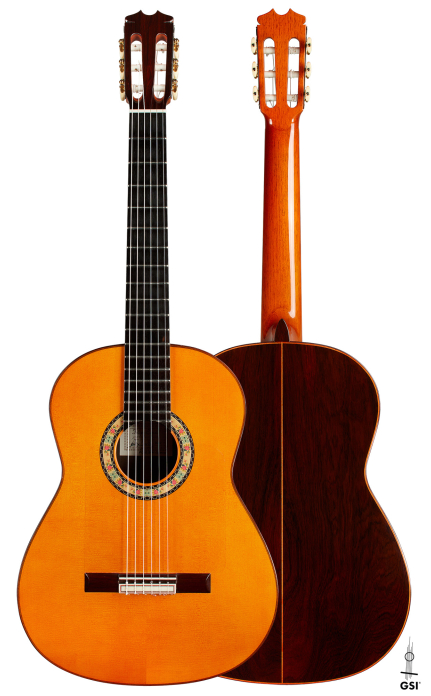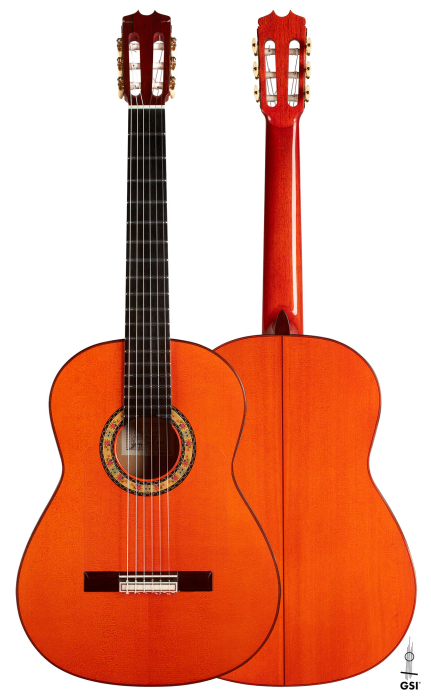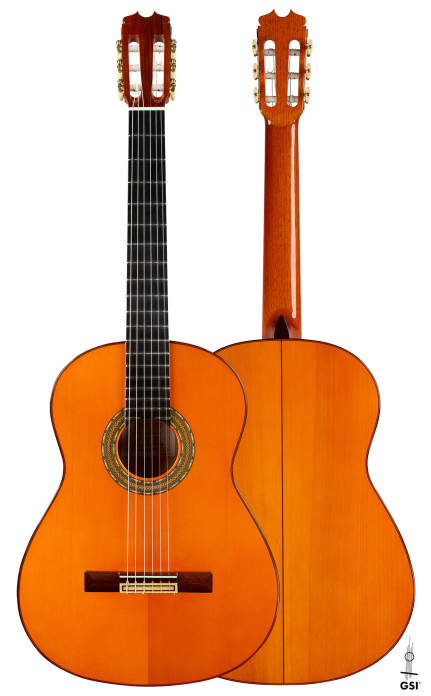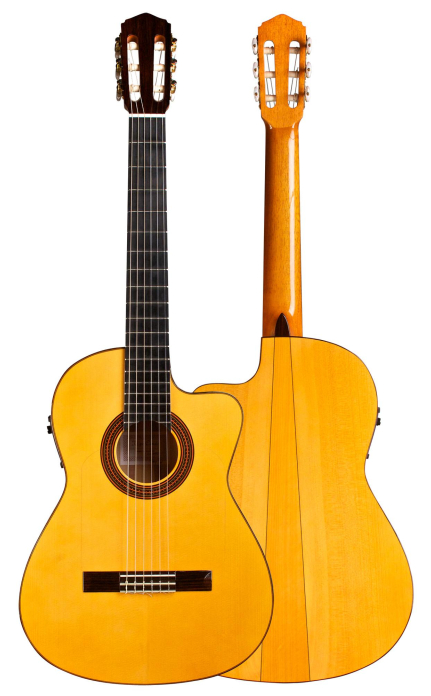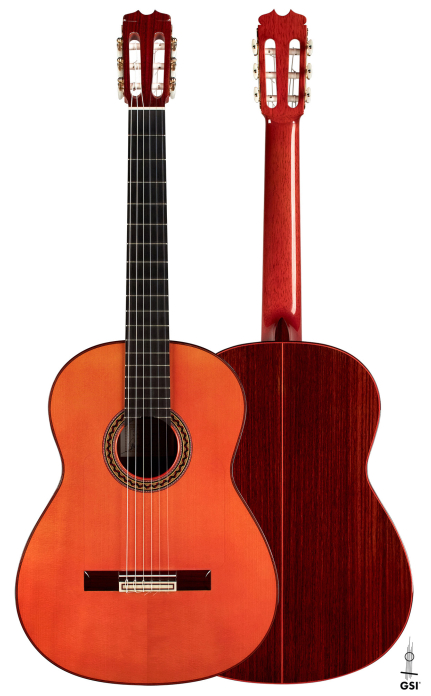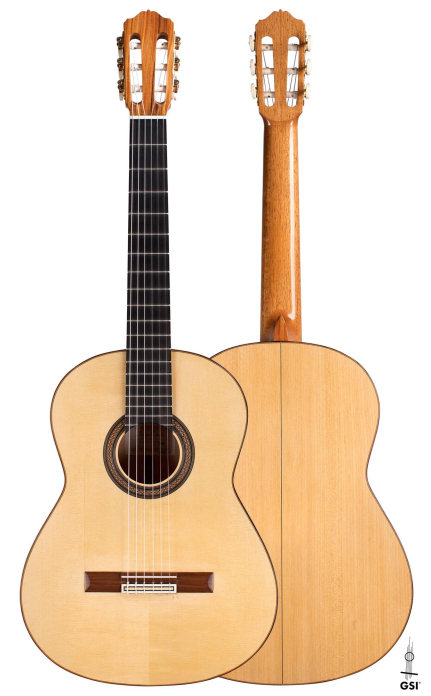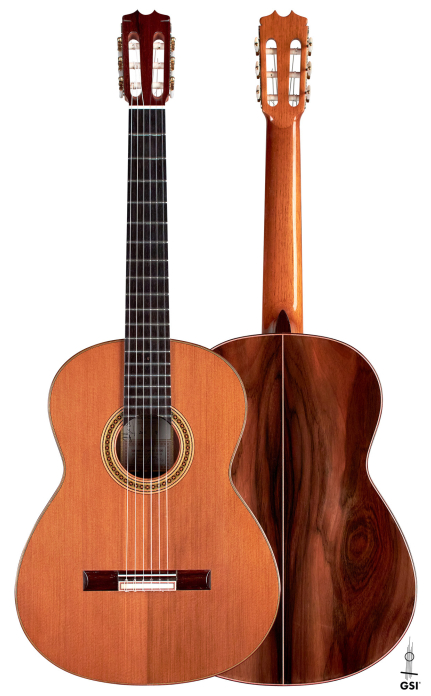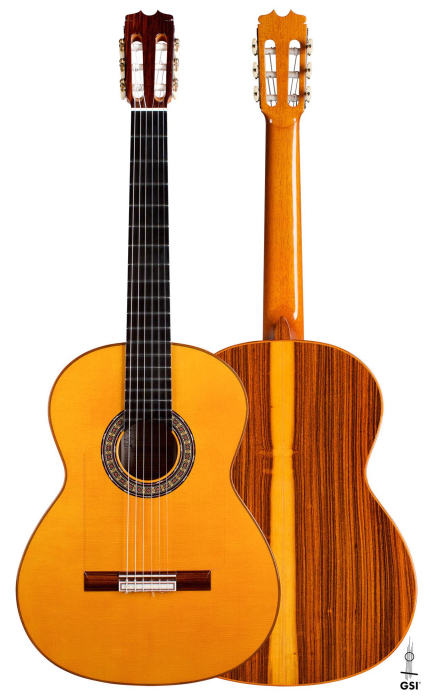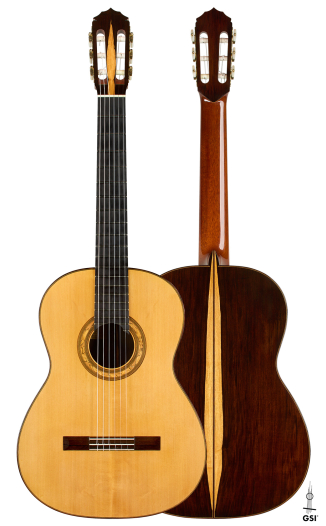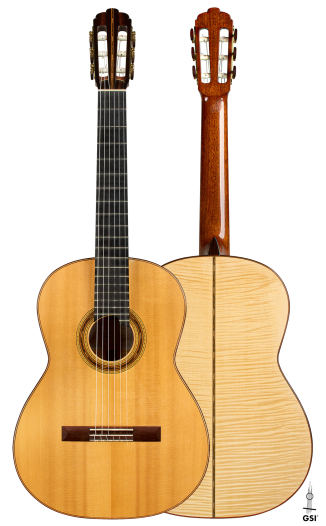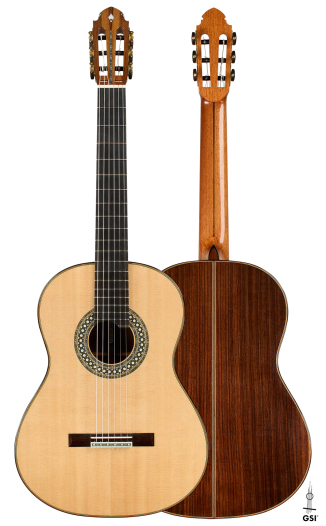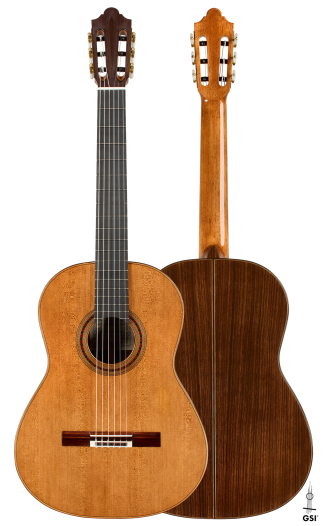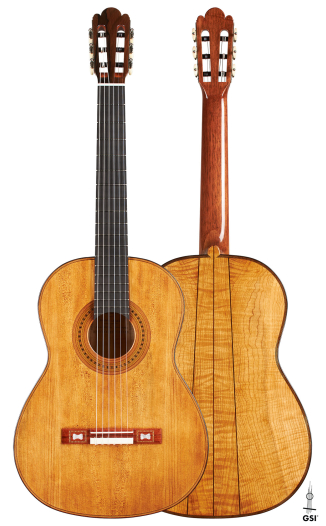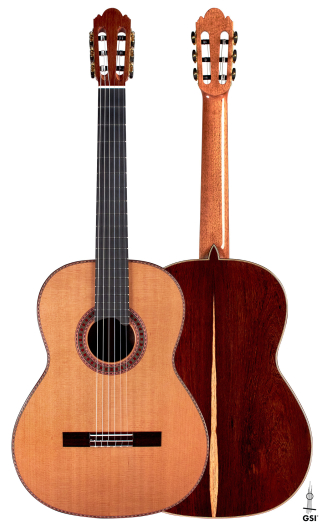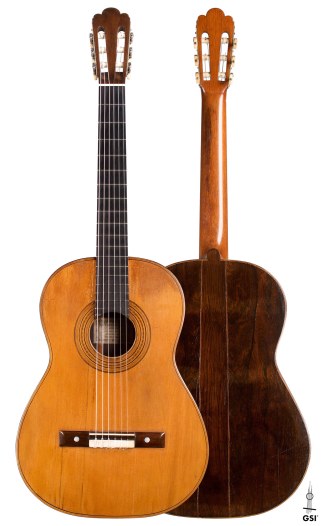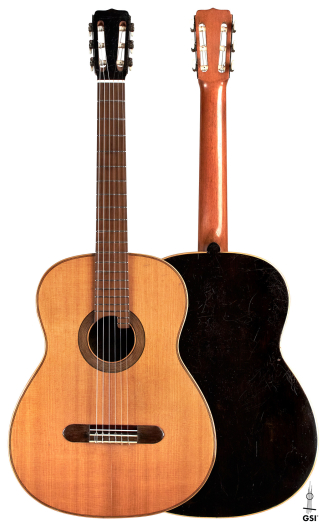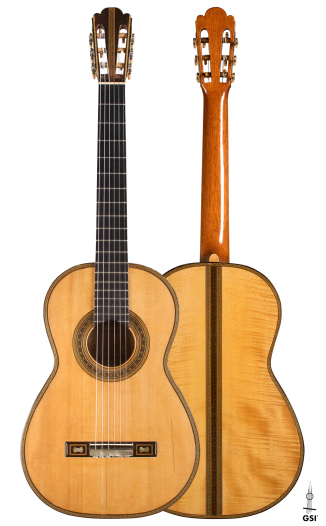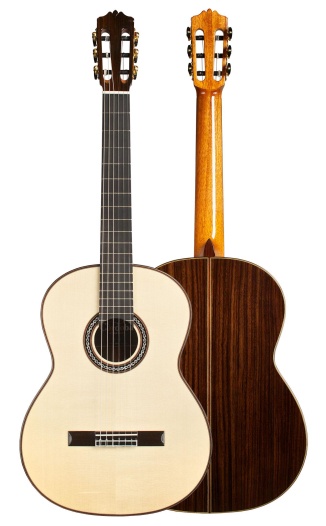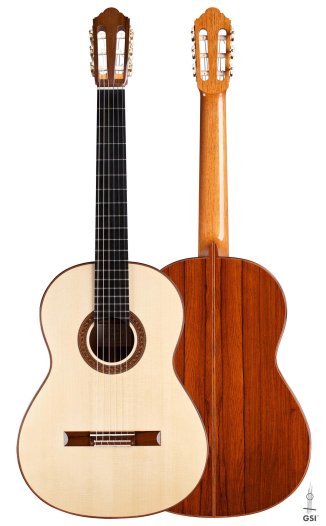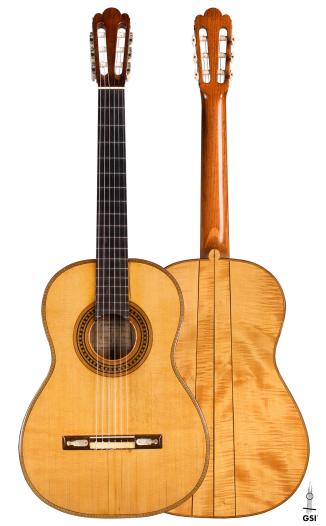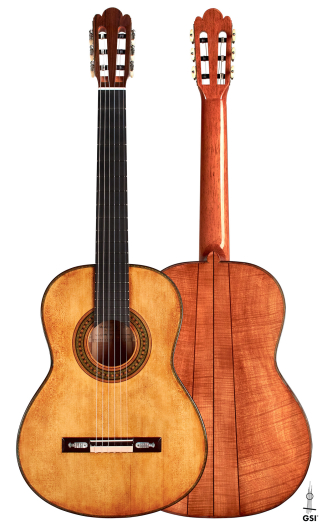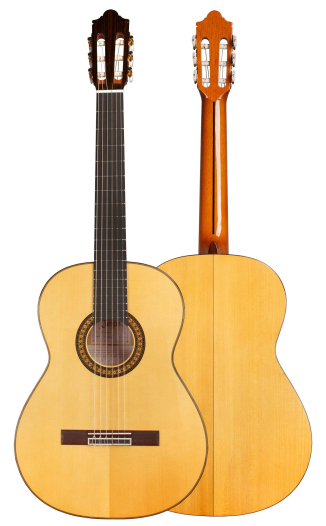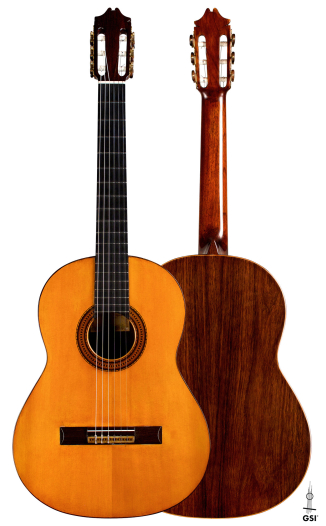



Felipe Conde is a Madrid flamenco and classical guitar maker, the third generation of the Conde family line that began in the workshop of Domingo Esteso, whose guitars have been played by Paco de Lucía, Sabicas and Tomatito, and who now builds with his children, María and Felipe Jr.
At a Glance
- Born: August 24, 1957
- Workshop: Calle Arrieta 4, Madrid, Spain (since 2010)
- Family line: Domingo Esteso → Viuda y Sobrinos de Esteso → Conde Hermanos → Felipe Conde Guitarrero
- Trained: from age 14 (1971) at Gravina 7, with his father Mariano Conde and his uncle Faustino Conde
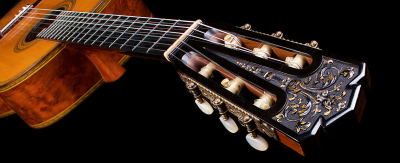
- Signature: the "Media Luna" (half-moon) headstock
- Models: the Felipe V model, the Domingo Esteso re-edition and the Viuda y Sobrinos de Esteso 1953 re-edition
- Played by: Paco de Lucía, Sabicas, Tomatito, Niño Ricardo, Gerardo Núñez, Al Di Meola, John McLaughlin, Lenny Kravitz and many more
- Next generation: his children María and Felipe Jr.
A History of Esteso and Conde Guitars, as Told by Felipe Conde
In his own words, Felipe Conde traces the family workshop through five epochs, from Domingo Esteso to the present day.
First Epoch: Domingo Esteso (1882–1937)
Domingo Esteso is one of the greatest makers in the history of the Spanish guitar. He began working as an apprentice in the workshop of Manuel Ramírez, and upon Ramírez's death he worked for his widow, though including his own name on the labels. He ended up working in this workshop at the same time as Santos Hernández and Enrique García, the three of them becoming the standouts of the Manuel Ramírez workshop. The guitars from this shop to this day have a special quality that sets them apart from all others of this period, be it for their exquisite workmanship or their sonic characteristics.
Later, Domingo Esteso went independent and set up shop at Gravina No. 7, with his wife Nicolasa Salamanca, who polished the guitars. This was his most prolific period – one can still find specimens of beautiful workmanship that have had the good fortune to fall into the hands of those who knew how to care for them, and they are played and enjoyed to this day. Many of these guitars were sold abroad, especially to Argentina, where they carry the label he made for Romero y Hernández of Buenos Aires. This was primarily due to the high cost of the guitars and the terrible economic situation in Spain during that period.
My uncle Faustino Conde joined the workshop in 1926, and my father, Mariano Conde, joined in 1929. This was the beginning of the next epoch of these guitars. My father and uncle learned their craft and their love of the art of guitar making from Domingo Esteso. They stayed with Domingo Esteso until his death in 1937, in the middle of the Spanish Civil War. Esteso died of a respiratory infection due to an air current in the workshop, which might have been cured but for a lack of penicillin. They continued making guitars until 1939, but very few, due to the civil war.
Second Epoch: Viuda y Sobrinos de Esteso (1940–1960)
After the Civil War the brothers kept the label "VIUDA Y SOBRINOS DE ESTESO" (Widow and Nephews of Esteso) out of respect for their aunt, Nicolasa Salamanca, and they kept this label until her death in December 1959. In this epoch the third and youngest brother, Julio Conde, entered the workshop. The brothers continued the tradition of their uncle, introducing only minor changes. Before 1953 they had designed a new headstock for their top model, which came to be known as the "Media Luna" (half-moon), and which they used interchangeably with Domingo Esteso's headstock. They began introducing new rosettes. This epoch was characterized by the warm sound of their guitars, which was the result of a marriage between tradition and the constant search for improvement in quality of sound and volume, spearheaded by my father, Mariano Conde. In 1957 they opened the workshop at Pozuelo de Alarcón to make their student models, which carried no signature or label. These are the guitars that later came to be known as "guitarras de segunda."
Among the guitarists who played the guitars of this epoch are Regino Sainz de la Maza, Alirio Díaz, Quintín Esquembre, Manolo de Huelva and many more.
Third Epoch: Sobrinos de Domingo Esteso / Conde Hermanos (1960–1989)
Upon the death of Nicolasa Salamanca they opted to use the name SOBRINOS DE DOMINGO ESTESO / CONDE HERMANOS, which was used interchangeably with HERMANOS CONDE / SOBRINOS DE ESTESO.
During this epoch they were prolific in their construction of guitars, which were in demand by the great majority of professionals, including El Niño Ricardo, Sabicas, Melchor de Marchena, Mario Escudero, Paco de Lucía, Paco Cepero, Enrique de Melchor, los "Habichuela", Óscar Herrero, Gerardo Núñez, Rafael Riqueni, Tomatito, Al Di Meola, John McLaughlin, Bob Dylan, Cat Stevens and many, many more.
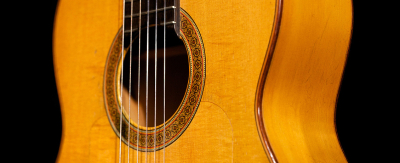
In 1960 they established the use of the "Media Luna" (half-moon) headstock for their top-of-the-line guitars, and this became the symbol of the Conde name. They modified the plantilla and the inner bracing of the top of the guitar. They introduced new rosettes that were inspired by designs from the past. They differentiated the classical and flamenco models in the plantilla and in construction, giving them distinct sounds. They achieved a characteristic sound, with great volume and its own personality, which is recognized throughout the guitar world. In 1971 I, Felipe Conde, entered the workshop at Gravina 7, at the side of my father, Mariano Conde, and my uncle, Faustino Conde, and this marked the beginning of the next generation.
From my father I learned two fundamental lessons that shaped my entire professional career: on the one hand, a respect for tradition and good workmanship in construction; and on the other, how to relate to the public and to guitarists, which gave me the key to improving and investigating the sound of my guitars. Some years later my brother, Mariano Conde, also joined the workshop.
Fourth Epoch: Conde Hermanos Sucesores Sobrinos de Esteso (1980–2010)
In 1980 my father, Mariano Conde, established a new shop at Felipe V #2, and with his sons began the next phase in the family history. Until the death of my uncle Faustino in 1988 we worked in conjunction with the shop at Gravina 7. From 1988 on, the Felipe V shop functioned independently.
In 1989 my father died, and my brother and I took over the shop. At first we continued to make guitars as my father had, but with time and with the improvements in materials, tools and technology we began to innovate, while always maintaining the characteristic sound and the tradition of workmanship in order to give each instrument its history and its own personality.
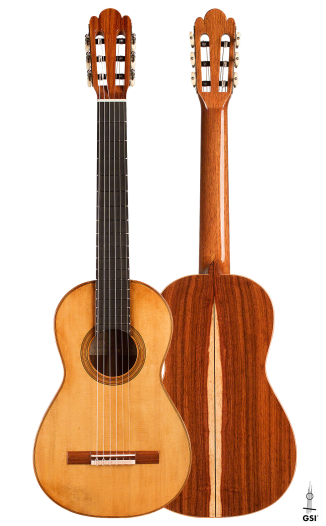
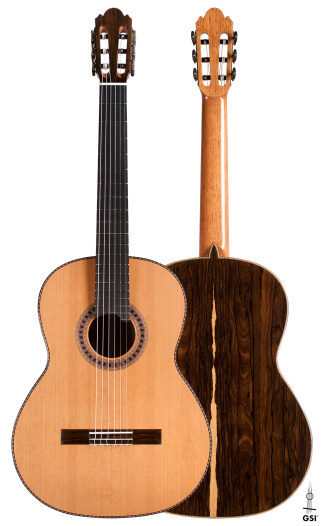
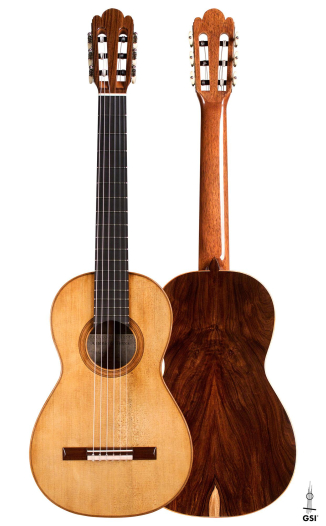
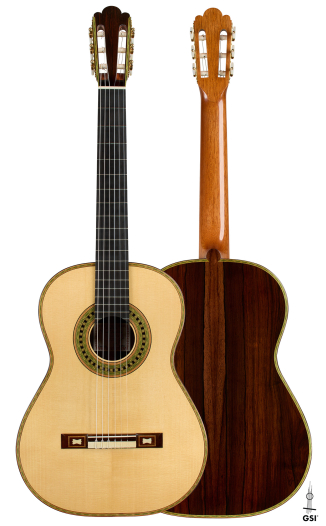
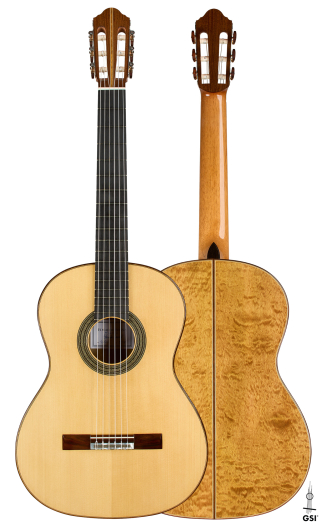
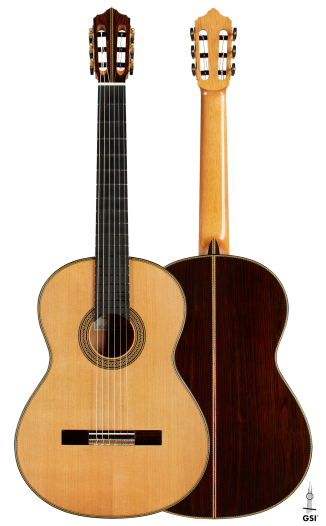
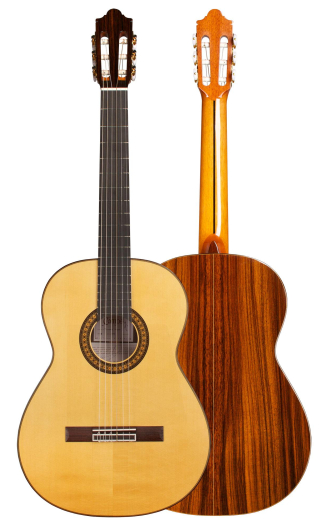
We introduced new models: the Felipe V model, which uses woods that are selected for their beauty, quality and age, with beautifully elegant detailing; and the Domingo Esteso re-edition and the Viuda y Sobrinos de Esteso 1953 re-edition, which was inspired by a guitar from that year that Tim Miklaucic, founder of Guitar Salon International, asked us to make a copy of. These guitars are made with the original forms and plantillas, and with aged woods.
Many of the guitarists who play our guitars during this epoch are the very same ones who had played them in the previous epoch, and who remained loyal to our sound. Added to them were the new generation of guitarists, including Javier Conde, Roberto Morón, Lenny Kravitz, David Byrne, Sergio Vallín and many more. During this epoch I developed the brand, securing the lessons I learned from my father and uncle, and taking the Conde name worldwide by going to international trade fairs such as NAMM, Frankfurt and Japan.
Fifth Epoch: Felipe Conde Guitarrero (2010–Today)
In 2010, in the midst of my personal and professional maturity, I decided to embark on a new era together with my son and daughter, Felipe Jr. and María, with great energy and excitement. The memory of my father is very much present at this time. From him, I learned everything there is to know about this trade, and above all: the taste for a job well done as well as fostering a close relationship with the artist.
I come from a family tradition where I gained decades of experience and acquired a passion for this trade. I began my apprenticeship at the 7 Gravina St. workshop in 1971 when I was only 14 years old. I was taught the art of guitar building principally by my father, Mariano, and my uncle, Faustino, combining this work with my studies. At this time, I got the chance to get acquainted with guitar players such as Niño Ricardo, Regino Sainz de la Maza, Sabicas, Mario Escudero, Melchor de Marchena, Paco de Lucía and many more. A close relationship with the artists is something that drives my passion for this trade and also the constant improvement of the instrument.
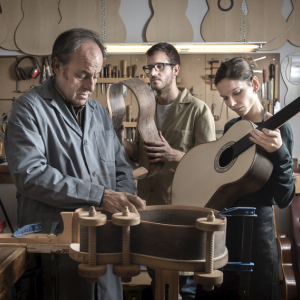
At this new stage of our history I am accompanied by my daughter and son, María and Felipe Jr., who have both been apprenticing at the workshop for several years now. Being able to teach my son and daughter what I am most passionate about is both a privilege and a source of great pride. María and Felipe are very much involved at the workshop and have chosen this trade as their future calling. They have built several guitars already and are slowly developing their own style, underpinned by the great tradition that precedes them.
Since 2010, the workshop has been at 4 Arrieta St., very close to the 2 Felipe V St. workshop. The new space is intimate and ideal for any professional or aficionado who wishes to test out the guitars and see firsthand the process of guitar construction.
María and Felipe Conde Jr. in the Press
Their grandfather built Leonard Cohen's first guitar. Their father built many that were owned by Paco de Lucía. Now, the two young adults continue in the family tradition as guitar makers from a line of genius artisans. "About 40 years ago, I made the trip to Spain to pick up my Conde guitar. I took it out of its case and it was like helium, very light. I put it right up against my ear to really listen to it and thought: it's very well-designed." These words came from Leonard Cohen in a vibrant discussion when he picked up his Conde guitar at the Prince of Asturias Awards in 2011… Read more…

Felipe Conde and his children María and Felipe Jr., who now work full-time in the shop alongside their father, were featured in the April issue of Iberia Excelente magazine, the in-flight magazine of Iberia's business class. We also have some great photos of Felipe Jr. and María working in the shop. Read more…
Videos
Frequently Asked Questions
How are Felipe Conde guitars related to Domingo Esteso? Felipe's father, Mariano Conde, and uncle, Faustino Conde, learned guitar making from their uncle Domingo Esteso in his workshop at Gravina 7 in Madrid, and carried on the workshop after his death in 1937 as Viuda y Sobrinos de Esteso and then Conde Hermanos.
What is the Conde "Media Luna" headstock? A half-moon headstock design created by the Conde brothers before 1953 that, from 1960, became the symbol of the Conde name on their top-of-the-line guitars.
Who has played Conde guitars? Flamenco greats such as Paco de Lucía, Sabicas, Niño Ricardo and Tomatito, as well as artists including Al Di Meola, John McLaughlin, Bob Dylan, Leonard Cohen and Lenny Kravitz.
Where is the Felipe Conde workshop? At 4 Arrieta St. in Madrid, Spain, where Felipe works with his children, María and Felipe Jr.