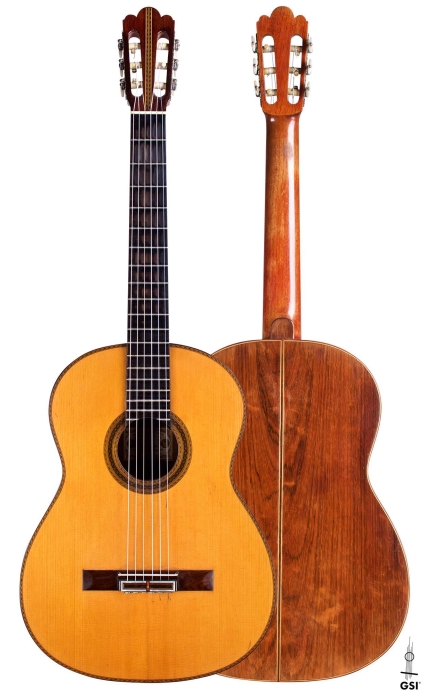
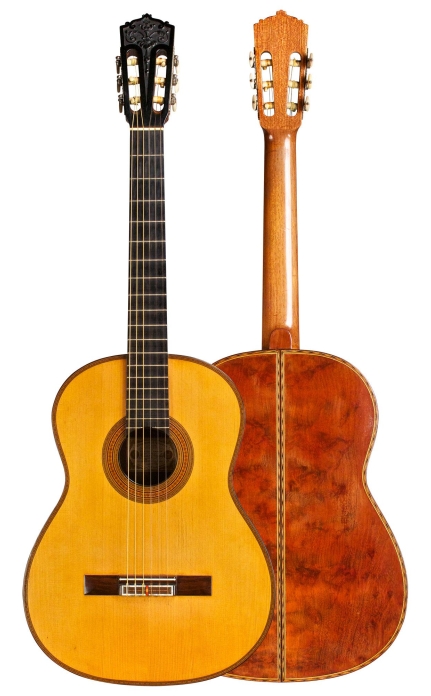
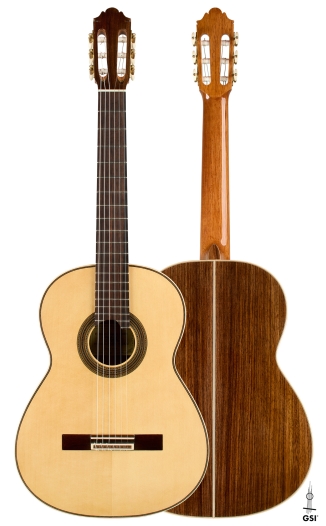
1925 Francisco Simplicio No. 58 SP/CSAR
| Year | 1925 |
| Top | Spruce |
| Back & Sides | CSA Rosewood |
| Scale Length | 646 mm |
| Nut width | 48 mm |
| Finish | French Polish |
| Country | Spain |
| Luthier | Francisco Simplicio |
This guitar is no longer available in our inventory. If it interests you, click the ”notify me when available” button to be notified in the event that we re-acquire this guitar for re-sale.


Taro Wayama Prelude 4 - 1925 Francisco Simplicio
Description

This 1925 Francisco Simplicio is a spruce and CSA rosewood classical guitar from Barcelona, No. 58 – from the Russell Cleveland collection and featured in the book "The Classical Guitar – A Complete History".
In the video above, Taro Wayama plays a Prelude No. 4 on this guitar.
From the Russell Cleveland Collection
This guitar comes from the Russell Cleveland collection and is featured on pages 30-32 of the book "The Classical Guitar – A Complete History". Its label – No. 58, dated 1925 – is one of the first of Simplicio's own printed labels, after his early guitars had gone out with García's. The ornate purfling and rosette detailing and the engraved headstock show this maker at his best.
Sound and Playability
The sound of this Simplicio is magical, with great depth and rich overtones from the lowest bass to the highest treble – and it has ample volume to fill any hall. Playability is a breeze with a more compact neck size and shape. The guitar was also refretted recently by Pat Quinn, who attended to some old cracks that had re-opened, and it is now in concert and recording-ready condition. Overall, a highly desirable guitar from this famous builder.
Orfeo article on Simplicio – the French guitar magazine Orfeo devoted a feature to Francisco and Miguel Simplicio in its first issue.