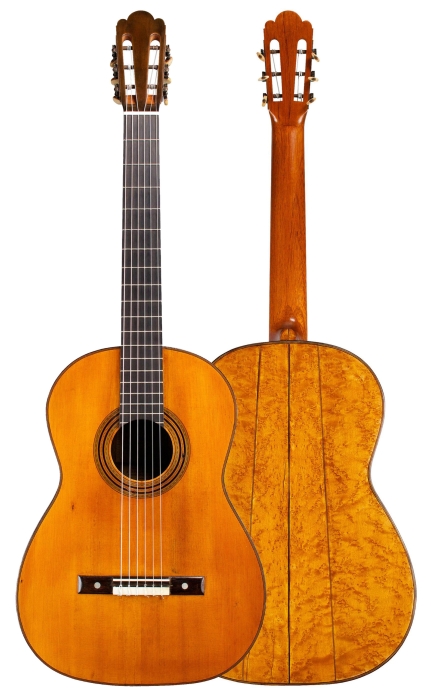
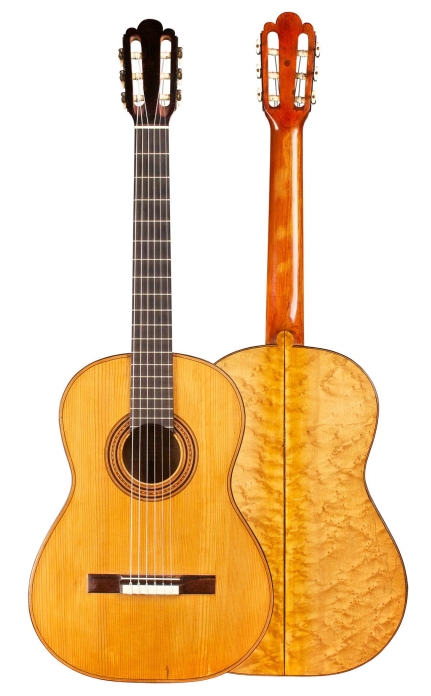
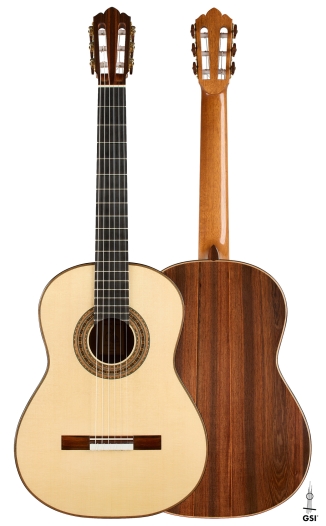
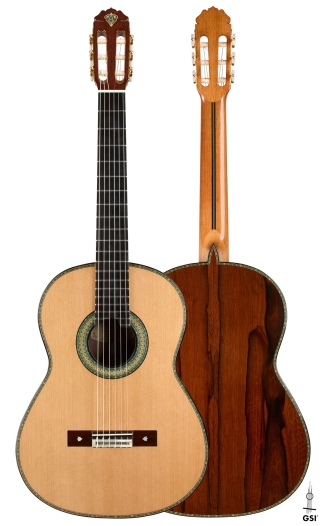
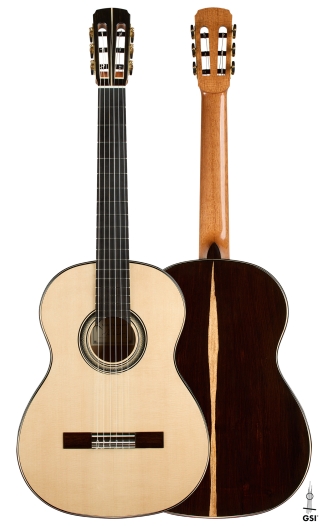
1888 Antonio de Torres "La Itálica" (SE 116) SP/CSAR
| Year | 1888 |
| Top | Spruce |
| Back & Sides | CSA Rosewood |
| Scale Length | 650 mm |
| Nut width | 52 mm |
| Finish | French Polish |
| Country | Spain |
| Luthier | Antonio de Torres |
This guitar is no longer available in our inventory. If it interests you, click the ”notify me when available” button to be notified in the event that we re-acquire this guitar for re-sale.


York 'Yamour' played by Andrew York on an 1888 Antonio de Torres "La Italica"

York 'Squares Suspended' played by Andrew York on an 1888 Antonio de Torres "La Italica"

York 'Knowing' played by Andrew York on an 1888 Antonio de Torres "La Italica"

York 'Quicksilver' played by Andrew York on an 1888 Antonio de Torres "La Italica"

York 'Mechanism' played by Andrew York on an 1888 Antonio de Torres "La Italica"
Description

This 1888 Antonio de Torres "La Itálica", SE 116, is a spruce and CSA rosewood classical guitar from Almería – a near twin of Francisco Tárrega's favorite, SE 114, baptized "La Itálica" by Domingo Prat and Emilio Pujol.
In the videos above, Andrew York plays five of his own compositions – "Yamour", "Squares Suspended", "Knowing", "Quicksilver" and "Mechanism" – on this guitar.
SE 116: A Sister to Tárrega's SE 114
Built the same year as Tárrega's favorite Torres guitar (SE 114) and almost identical in detailing and dimensions, this guitar – No. 116 of the "Segunda Época", as its label reads – is one of the great masterpieces of guitar making history. It is in phenomenal condition with all original elements preserved, including the original polish, tuning machines and internal pencil marks.
Enrique Coll and the Story of "La Itálica"
Accompanying the instrument are some very interesting documents dated 1951 from the Barcelona luthier Enrique Coll (1894–1978), who was a disciple of Francisco Simplicio and mentor to Ignacio Fleta. Among these is an appraisal in which Coll describes a metal plate bearing the name "La Itálica" which is fastened onto the headstock. According to Coll, this instrument received special attention from Miguel Llobet, Domingo Prat and Emilio Pujol. The story goes on to say that Prat and Pujol "baptized" the guitar and gave it the name "La Itálica", while Llobet preferred to call it "La Leona di Farré" – in honor both of the legendary "La Leona" Torres of 1856 and of the owner of "La Itálica" at the time, León Farré, one of the grand guitar aficionados of the Barcelona scene in the early part of the 20th century. Whatever the meaning of all this, we are left only to wonder.
Sound
Words cannot quite capture how rich and harmonious this guitar sounds, how perfectly balanced the notes are as they blend together, or the sensation of the guitar vibrating against the player's body. It is a tremendous experience, possible only with an instrument such as this in one's hands – and one confirmed over and over again with every Torres we see, above all with something as profound as SE 116.
Heard on "Valseana" by Marc Teicholz
"La Itálica" closes Valseana, GSI's CD with Marc Teicholz: Brahms' Waltz, Op. 39, No. 15 (track 18) is the last of 18 waltzes, each played on a different guitar from GSI.

More on Antonio de Torres
Torres' life is told in our short biography, and José Luis Romanillos's book "Antonio de Torres" explains his sound in this excerpt. Pepe Romero shares his own experience of these guitars in an interview with Kenny Hill. Also see Orfeo Magazine #9 – The 200th Anniversary of Antonio de Torres.